Showing posts with label Pink Floyd. Show all posts

Sunday, December 8, 2019

Mini Reviews for December 2-8, 2019

Just reviews.

Movies

The Irishman (aka I Heard You Paint Houses)
For about 2/3 of its gargantuan runtime, The Irishman plays into beats that will be familiar to anyone who has seen Scorsese's other gangster pictures, from Goodfellas all the way up through The Wolf of Wall Street (TELL me that Wall Street isn't organized crime, I dare you)—that is, lots of montage, wall-to-wall soundtrack, copious voiceover. And if that were all there is, it would be a very solid movie and remarkably engaging for a movie of its length, though I do have some gripes about the L.A. Noir-ishness of the de-aging CGI (though it's far and away superior to the horrorshow that is Clark Gregg's de-aging special effect in Captain Marvel, so that's 0 for theme park rides and 1 for ##TRUE CINEMA##). But that is not all that The Irishman is, and in its last hour or so, Scorsese and screenwriter Steven Zaillian pull the rug out from under the whole idea of a "Scorsese Gangster Picture," and the movie becomes something wholly transcendent. The music, montage, voiceover, and all the intoxicating forward motion of a Scorsese mob movie disappear, and in the bare frame of that type of movie, stripped of its plumage, we're given a death-soaked riff on Goodfellas's iconic "Sunday, May 11th, 1980, 6:55 AM" sequence that then breaks free of the genre completely with a hushed coda in a nursing home whose thundering silence is nothing less than apocalyptic. For the first time in his career, Scorsese allows his mob tropes to progress not just to their logical conclusion but also to their ultimate conclusion: the game is up, and all that remains is the empty shell of a life squandered by squandering oneself, nothing left to claw for as gravity brings the grave's icy mouth ever closer. It reminded me of aging family members and family members I've seen die—none as alone as the character at the focus of this sequence but with a similar sense of despair and loneliness as the crows of their demons come home to roost. This is what it means for a generation to die: moral compromises become an ideology, a perpetual motion machine that scrapes every bit of life out from its realm of influence until you sit alone, only half able to understand that your actions had such decaying consequences—if you're capable of mustering that level of self-awareness at all. It will happen to all of us who have any measure of power and movement; I'm sure it will happen to us Millennials and Gen-Z-ers. And so with The Irishman, Scorsese and co. have transformed the gangster picture into not just a specific cultural and sociopolitical document animated by a caustic moral vision (though it is certainly that alongside Goodfellas) but also an anguished treatise of universal human failing that links us all at our worst moments. It's hard to call a new Scorsese film a masterpiece in the context of a filmography that, admittedly, has a handful of better movies, but under another name, this would be a masterpiece indeed. Grade: A

Captain Marvel (2019)
To the extent that I have strong feelings about Marvel movies these days (i.e. not much), I did have a small chip on my shoulder going into this movie regarding the way that this movie was the one where all the film folks started crying foul over the role of the American military in the production of this movie—the military has been funding/involved in the production of Marvel movies for a while now, but somehow it's the movie starring a woman where this finally goes too far? (SureJan.gif) And that's not not an issue here (to be clear, I'm not a fan of the military's role in the production of these movies either, but if we're going to start drawing a line in the sand over this, we should have done so long ago), but it's all kind of a moot point for me now that I've seen the movie and realized that it's just not good. Rare for a Marvel movie, the effects are actually kind of beautiful, and the buddy-road-trip vibes between Nick Fury and Carol Danvers are fun. But the film is a structural mess, and, also rare for a Marvel film, it's actually kind of hard to follow this movie on a beat-for-beat level—part of which is part of the design, as we're following the scrambled memories of Danvers as she's psychologically invaded, Eternal Sunshine-style, but part of it is just that the movie just has a hard time stringing events together in a way that make the basic point-A-to-point-B sense that Marvel movies usually do pretty well, and that also goes for the straightforward bits after the intentionally disorienting opening half hour. Plus, for a movie about Carol Danvers re-discovering herself, there's precious little about Danvers herself outside of how she acquired powers—like, what is going on with this character? Who is she? Beyond the fact that she was once in the USAF and got blasted with superpowers, I honestly have very little idea. To the extent that I enjoy Marvel movies these days (i.e. merely intermittently), I've got to give it to the disgruntled film folks on this one and concede that this is one of the weakest MCU features. Grade: C


American Dharma (2018)
In interviewing Steve Bannon, Errol Morris sometimes seems out of his depth—a first for Morris in his series of movies interviewing American villains. Bannon is an incorrigible figure without shame or morality, someone who (as this movie amply shows) cares about nothing but power and destruction. He excitedly outlines his philosophies and political successes with fists banging on the table as Morris walks through his history with Breitbart and then the 2016 Trump campaign, and he just grins as Morris occasionally interjects, sputtering with frustration and barely cloaked rage at the self-impressed evil coming out of Bannon's mouth. Morris doesn't seem to know quite what to do with him, interrupting to argue with Bannon at points that don't seem to need pushback and then remaining silent at places where obvious questions seem to present themselves. Not that I really blame Morris. Bannon is the architect—or at least claims to be (like most Morris subjects, there's a fair bit of self-mythologizing on the part of Bannon here that I think we can, as Morris does, view with at least one skeptical brow raised)—of so much that I hate, and I probably would be at a sputtering loss as to how to respond to him in person, too. But Morris's relative shakiness in engaging Bannon does make American Dharma the weakest of his American villain series, and it's not hard to imagine the richer movie that might have come out of this interaction. That's not to say that there isn't plenty good going on here. There are some tremendous moments that arise from the dynamic between Bannon and Morris, starting with the bizarre parasitic relationship Bannon himself has with Morris; The Fog of War apparently inspired Bannon as a filmmaker, and while Morris doesn't exactly dwell on this inspiration, there's a queasy camaraderie the two share over filmmaking, culminating in an incredulous Bannon asking Morris how he could have made The Fog of War and The Unknown Known and still voted for Hillary Clinton over Bernie Sanders, which is one of a few truly great self-reflexive moments in this movie. And the visual metaphor of the hangar that this interview takes place in and which, by the end of the film, is set aflame, works really well here—not a foregone conclusion in a movie by a filmmaker who, much as I love his work, has made more than a few overcooked visual metaphors—and strongly underlines the apocalyptic implications of what Bannon is saying. It seems patently absurd to argue, as some have, that Morris is somehow supporting Bannon's views in this documentary or that Morris is complicit in Bannon's views by giving him attention at all (these arguments conveniently ignore that Bannon and the alt-right in general largely rose to power in the first place while being ignored by liberal voices); but I do think that at points, Morris struggles to understand Bannon, and that just makes a documentary like this even more necessary, because I think most of us in the center and left are in Morris's position here of being apoplectic at Bannon while at the same time being somewhat befuddled. Those of us who can look should not look away. Confronting Bannon and his like is crucial, before, as the movie loudly argues, the world burns. Grade: B

Idiots and Angels (2008)
My second Bill Plympton feature (after Cheatin'), and my feelings remain about the same: intoxicating animation style mixed with an appealing mix of surreality and black comedy/misanthropy that simply cannot be sustained over a feature-length runtime, and it definitely sours for me around the halfway point. I probably just need to check out this dude's shorts, though this movie is not without its charms. Grade: B-


The Last Waltz (1978)
The interview footage is pretty tedious—the copy for this movie promises "probing backstage interviews," but all we get are dull chestnuts like, "Why are you called The Band?" Chalk it up to the cocaine, I suppose. But the concert footage is basically wall-to-wall bangers (give or take Eric Clapton and Neil Diamond, who both feel way out of place here), so it's a pretty masterful 90-100 minutes embedded inside the total 120. Also, Bob Dylan in his appearance here resembles Weird Al to a distracting degree, which gets this movie another half star, for sure. Grade: A-


Books

Epileptic (L'Ascension du haut mal) by David B. (2005)
A pretty harrowing graphic memoir about the author's experiences growing up with his brother, who has epilepsy. I appreciate the completely unsentimental approach that David B. takes here, and the violence and sheer resentment depicted here resonates with what I know about growing up with someone with a mental disability—sometimes it's just hard to be compassionate, and then you hate yourself for lacking that compassion but also lack the ability to figure out how to act any differently. I've never read a book that captured this before, much less so well. The parents' reliance on pseudoscience and esoterism in treatment for their child, on the other hand, is wild and wacky and something I cannot relate to at all, though it certainly makes the book more interesting and gives the starkly simple black-ink imagery here an infusion of mysticism that separates it from the likes of the Persepolis and a lot of those other cartoon-styled graphic memoirs. The book could probably have a tighter structure; there's definitely a meandering quality to the story, and I'm not sure whether this would work better if I had read it in installments as it was originally published instead of the complete edition I read, but for all its emotional intensity, it does feel like drudgery in stretches, all the more so for its prickly, dour emotional territory. But there's a lot to recommend about Epileptic, too, and for those willing to deal with its unflinching rendering of its subject matter, it's a rewarding read. Grade: B+

 
Music

Pink Floyd - The Final Cut (1983)
The Final Cut started out as a collection of The Wall leftovers, and that's pretty much what it sounds like in its final form, sharing the acerbic worldview (personified by Roger Waters's shrill, yelping vocals) and grandiose rock instrumentation as that prior albums while lacking most of the pathos and melodic sweep (to say nothing of conceptual vision) that made The Wall compelling. Look, I love anti-war protest songs as much as anybody, but by this time, Roger Waters had pretty much bled all the rest of the members of Pink Floyd dry, and there's none of the chemistry and sonic grandeur of Floyd's best work and all of the bile of Waters's most indulgent work. Still, there are solid moments: Gilmour's solo on "Your Possible Pasts," the saxophone on "The Gunner's Dream," the melodic, jazzy touches on the closer, "Two Suns in the Sunset." There are also a few great songs that actually do stand up to Pink Floyd's previous work: I'm thinking specifically of "The Hero's Return," a song written from the perspective of the schoolmaster in The Wall, and "The Final Cut," which uses orchestration heavily reminiscent of "Comfortably Numb" to drive that prior song's despairing alienation to a harrowing intensity devoid of any of the catharsis that Gilmour's two solos bring Pink in "Numb." I get why people like this album. But if I'm in the mood for what this album's going for, I can't ever imagine going for The Final Cut over The Wall. Grade: B-

Sunday, November 24, 2019

Mini Reviews for November 18-24, 2019

A thoroughly meh week at the movies, aside from watching The Tale of the Princess Kaguya and Inside Llewyn Davis, two of the best movies of the decade.

Movies

House of 1000 Corpses (2003)
My first Rob Zombie movie. Based entirely on this, I understand why his filmography has the rapturous following that it does, but I couldn't really get entirely onboard myself—though I'm given to understand that this isn't really the best of his anyway (we'll see, I guess). The hallucinatory vibes / psychedelia of the film style is memorable, and the conceit of taking the nightmare Americana of the infamous dinner scene of The Texas Chainsaw Massacre and making it the movie's entire thrust is definitely a choice with lots of potential to be harvested (and presumably Zombie's more acclaimed films do just that). As it is here, though, whatever striking effects Zombie gets out of these features eventually gets run into the ground by the film's somewhat exhausting, busy cinematic energy and its oddly meandering, structureless screenplay, and it definitely feels more like shtick by the end than anything truly inspired. Parts of it are legitimately cool, though (I deeply dug the Murder Ride, for example), and Zombie's got a good finger on the pulse of just what can make something like The Texas Chainsaw Massacre (or honestly, while we're on it, The X-Files, which I think this movie strongly evokes, too) so unshakeably chilling—that visceral fear that the warped histories and environments America has willfully forgotten in its drive toward modernization have curdled into unspeakable malice. Looking forward to seeing how Zombie approaches that idea in a more overall successful package. Grade: B-

Grotesque (1988)
A supremely weird slasher-ish movie, though it's not really clear how weird it is at first. The early goings play like a proto-home-invasion film, involving a special effects artist and his family being terrorized by a group of "punkers" while on vacation. And then it takes a turn. Several turns. By the end, it's become this goofy treatise on the nature of film and its role in flattening/distorting reality itself. Whether you're in the movie's meta final act or the relatively more conventional first two thirds, it's pretty consistently entertaining, elevated by some truly gonzo performances (particularly Brad Wilson, who plays the leader of the punk gang and gives the most intense iteration of that archetype this side of Wild at Heart) and a devilishly unpredictable plot. It of course doesn't all work, but the whole package is something to behold. Grade: B

Heavy Traffic (1973)
Probably the most Bakshi film I've seen, which means that you've got this awesome mix of urban grit with jazzy alt-comics character models and a singularly feverish ambition to re-invent the language of animation itself. This one also has some really great music, too—pretty much wall-to-wall songs, including a sublime recurring cover of "Scarborough Fair" performed by Sérgio Mendes and Brasil '66—and Bakshi's attempt to capture the vibrancy, beauty, and terror of '70s NYC results in a deeply evocative film that pulses with an organic life uncommon within animated features. But unfortunately, being the most Bakshi film I've seen also means that Bakshi's usual fixation with unquestioned sexism, racism, and puerile sex acts for the sake of """transgression""" gets dialed up to the nth degree. It ruins a would-be great movie, and that ain't no fun. Also, given how much Bakshi has griped about the pat sentimentality of Disney films, it's pretty dumb that this movie goes with the dopey happy ending that it does. Still on the hunt for a Bakshi movie that isn't heavily compromised in some way. Grade: C

Music

Pink Floyd - More: Original Motion Picture Soundtrack (1969)
The older I get, the more I'm interested in that odd transitional period Pink Floyd went through in the late '60s and early '70s, after Syd Barrett left but before they found their role as rock odyssey philosophers. More (the soundtrack for a movie I've never seen) is a pretty good encapsulation of the spirit of that era: a hodgepodge album in search of an identity that flirts with hard rock, ambient, and the early sounds of what would eventually be kosmische musik, but that nonetheless coasts along on vaguely unified psychedelic vibes. It is slight and messy, but it is also appealingly cozy in that particular way that this period of Pink Floyd's career tends to be. I dunno, I like it. Grade: B

Tuesday, March 13, 2018

Prog Progress 1977: Pink Floyd - Animals

Hi, everyone! Welcome to Prog Progress, a blog series in which I journey through the history of progressive rock by reviewing one album from every year of the genre's existence. You can read more about the project here. You can learn about what I think are some of the roots of progressive rock here. You can see links for the whole series here.


One of the most enduring images of British punk rock's first wave is that of John Lydon, alias Johnny Rotten, the rambunctious lead singer for the Sex Pistols, wearing a Pink Floyd t-shirt, on which he has scribbled "I HATE" above the band's name.

In 1977, Pink Floyd released Animals. Also in 1977, punk rock killed progressive rock.

That's the standard logline. The likes of Yes, Genesis, and Jethro Tull had made rock fluffier and stuffier, and it took Johnny Rotten and co. to destroy these lumbering dinosaurs once and for all and return rock to its pure, anarchic roots. And on the surface, that idea makes sense: The Clash, The Sex Pistols, Wire, The Damned, and The Jam all released their debut albums in '77; Johnny Rotten really did wear a shirt that said "I Hate Pink Floyd"; punk's urban, working-class aesthetics seem an obvious foil to the puffed-up medievalry and prep-school roots of prog's image; punk's short, punchy songs with traditional instrumentation are definitely striking compared to prog's sprawling, symphonic compositions, and the socially conscious, snide lyrics seem a far cry from the sci-fi epics of prog's lineage. It's a conflict between a bloated monarchy and a scrappy proletariat uprising, and it's one from which punk emerges triumphant. The king is dead, long live the king.

However, as is usually the case with historical loglines, it's not nearly so simple as that. For starters, prog never really had a throne to depose; critics were, with a few exceptions, never super keen on prog to begin with, favoring instead glam (in the UK) and proto-punk (in the US) all throughout prog's golden years, and neither were audiences, at least not in the monolithic way suggested by the narrative of punk usurping prog—even in prog's home field of the UK, it was radio mainstays like Led Zeppelin, Rod Stewart, and Elton John who ruled the album charts during the prog years, so if punk deposed anyone, it was them (and looking at the charts from the end of the '70s, not a lot of deposing was had anyway; Zeppelin's still there, and Blondie's the only punk-adjacent group to get a #1 album by the end of the decade, unless we're counting Gary Numan [1]). The punks didn't even consider themselves completely in opposition to prog, and Johnny "I Hate Pink Floyd" Rotten apparently liked Van Der Graaf Generator.

Closer to the truth is that progressive rock killed itself. As I've mentioned several times in the last few posts of this series, the mid-'70s were a bloodbath for prog, as groups fractured or went on hiatus and key creative figures left to do their own thing outside of the prog idiom, and by 1977, you've got Yes (the real canary in prog's coal mine) doing fine but inessential work like Going for the One and Queen completely jumping ship with News of the World. Even assuming that punk did replace prog (a dubious assumption, but fine), it was hardly a battle; progressive rock practically opened the door and said, "You take over, punk; I'm going to take a nap."

There's also the strangeness of Pink Floyd being the prog band for Lydon to hate [2]. Pink Floyd often get lumped in with the progressive rock movement—sometimes even evoked as the embodiment of progressive rock—and there are reasons for that. Their peak commercial era is right smack in the center of the prog's golden era in the early-to-mid '70s; they did a bunch of concept albums; they had elaborate live shows; they're closely associated with psychedelic drug culture; their albums often have lengthy, multi-part compositions with unconventional instrumentation; they are almost certainly the most commercially successful band with proggy tendencies. If I went out into my hometown of Knoxville, TN, and asked random people on the street to name a progressive rock band, Pink Floyd is probably the name I would get most often.

And yet, Pink Floyd has never really been an easy fit with the prog world. The band formed way back in 1965, making them the second-oldest band, behind The Moody Blues, that I've covered in this series, and like The Moody Blues, Pink Floyd (or The Pink Floyd Sound, as they originally went by) was much more closely associated with the avant-garde psychedelics of London's UFO Club than the conceptual arms race that occupied a lot of the mainline prog bands in the late '60s and early '70s [3]. Their debut, The Piper at the Gates of Dawn, is comprised of mostly short, trippy rock songs, including one about band leader Syd Barrett's cat and another about riding bikes, the exception being "Interstellar Overdrive," which, even at 10 minutes, still feels a lot more spacey than proggy. Even once Barrett (in an oft-chronicled mental breakdown) left the band and Pink Floyd tended toward more sinister, experimental work on A Saucerful of Secrets (1968) and Atom Heart Mother (1970), the band never quite loses that sense of goofy whimsy that defined the early years in London's musical underground [4], and even the side-long experimental suites (which include, for example, an orchestra and a sound collage of field recordings on Atom Heart Mother) feel more in tune with the kitchen-sink ethos of Frank Zappa or what Brian Eno would be doing by the end of the '70s than it does in league with contemporary Genesis or even King Crimson. Even once you get to their albums that are often most confidently named "progressive rock"—The Dark Side of the Moon (1973), Wish You Were Here (1975), and Animals (1977; hang in there, I promise I'll talk about this album eventually)—the band's sound has funk and soul touches that in some ways make these albums more in step with George Clinton's psychedelic funk of that era.

All that is to say, they're a weird choice to be the prog band.

But even so, it's hard to deny that there's something essentially proggy about Pink Floyd. They are still making sonically and lyrically ambitious rock music within epic compositional structures, even if it's not emblematic of progressive rock's most common lyrical or sonic traits. And further still, the idea of punk killing prog in 1977 is, like Nevermind killing hair metal or The Sopranos inventing artsy television, one of those helpful synecdoches for describing broad cultural changes, even if it's not quite true in the specifics. There really is a change in musical sensibilities and personnel as rock music transitions from the mid-'70s into the late-'70s, and the fading of prog and the growth of punk makes a convenient narrative out of that.

All of this makes it particularly interesting that in 1977 Pink Floyd released Animals, an album that is at once Floyd's proggiest and also their punkiest release. On the prog side, you've got the usual suspects: it's a concept album; all of its songs (except for the less-than-two-minutes-apiece bookends of "Pigs on the Wing") easily pass the ten-minute mark, and one of them, "Dogs," is over 17 minutes long; there are long instrumental passages and strange production effects and inflections of jazz (especially on "Dogs," which, if I'm not mistaken, relies on a jazz chord progression in its main verse). Nobody's going to mistake this for anything but a prog album. But for an album from the band that Johnny Rotten singled out as the enemy, Animals also shares a lot in common with its punk contemporaries. It's a concept album, sure, but it's a particularly socially conscious one, spooling out a bitter allegory of how the UK's population is divided into back-stabbing dogs, wealthy pigs who manipulate the dogs for profit, and mindless sheep who do what they are told until they rise up in a violent wave to kill the dogs. Animals is far from prog's first socially conscious work or even the first work critiquing the social structures of UK society (Gabriel-era Genesis comes to mind); however, the way this album foregrounds economic power hierarchies and the fascist tendencies of capitalism puts it much more obviously in-line with punk's leftist leanings. These lyrics are straight punk, rendered with an eye for sarcasm and irony that walk the album right up to the edge of nihilism in much the same way the prodigious punk debut albums do. And then there is Roger Waters's sneering delivery of those lyrics, an intentionally ugly and grating vocal affectation that's new to this album (as compared to the generally smooth vocals of previous PF albums).

In fact, in many ways, this is Roger Water's album. The group in-fighting and growing dominance of Waters over the band's creative direction in the '70s is well-documented, and Animals probably represents the tipping point that sent the band shooting toward the Waters-controlled The Wall (1979) and The Final Cut (1983). Waters had been the sole author of Pink Floyd lyrics since The Dark Side of the Moon, and they all share a certain cynicism and worldview that feels consistent. But Animals and the two albums that follow show a rapid intensification of this worldview that's also reflected in the music of those albums, as the band lost the saxophones, vocal harmonies, and female backup singers that had given their previous '70s albums a warmth that counterpointed the lyrical pills, and whether or not Waters was solely the cause of this change, it's clear who was steering the ship.

But part of what's fascinating about this album is that in other ways, this record belongs at least as much to guitarist David Gilmour's record. As the '70s progressed, Gilmour became Waters's foil in the band, and by this point, they were essentially the two combative elementary forces that drove the band, Waters the bitter realist responsible for the scathing lyrics and ragged vocals and Gilmour the melodic romantic responsible for the sense of grandeur and sonic expansiveness. Gilmour's guitar was long a staple of the Pink Floyd sound, but Animals is practically wall-to-wall guitar, especially the long instrumental passages that feature Gilmour throwing down his typically melodic, twisty style for five minutes at a time. Past Pink Floyd albums had been more collaborative efforts among the band's four members (the other two of whom are drummer Nick Mason and keyboardist Richard Wright [5]), but with Animals, aside from a few keyboard passages and tape loops, this is basically the Waters and Gilmour show, and a violent one at that—by the album's climax, "Sheep," the embittered vocals and the screeching guitar are at war with one another in a scorched-earth battle to drown each other out in the mix. This isn't just an album about class conflict; it's an album about band conflict, one that Gilmour would briefly lose on The Wall and The Final Cut, where the band's prog elements are essentially dropped entirely in favor of hard rock, before winning once and for all when Waters left the band in the mid-'80s [6].

It's also not hard to view this as a battle between the punks (Waters) and the proggers (Gilmour), the cynical social commentary versus the high-minded sonic experimentation. That would likely be a simplistic interpretation, but whatever; as long as we're leaning into dubious cultural narratives, we might as well go whole-hog (or whole giant inflatable pig). And regardless of how "true" the narrative is, it's hard to argue that 1977, after which the surviving prog bands go even more into free-fall than they already were, isn't the end of the first prog era along with Pink Floyd's second. Whether you're reading the lyrics or looking at broad historical trends, Animals ends with a revolution.

Until 1978!


1] Bowie wouldn't.

2] For the record, Lydon did walk back the PF hate in 2010. I'd like to think he was always a closeted Floydhead.

3] I've already touched on this slightly in my pre-prog piece.

4] Which we should distinguish from prog's sense of whimsy, which is much more interested in what happens when you jam Tolkien into Buck Rogers rather than it is in psychedelic breakfasts and hearts of the sun.

5] Wright would, as a result of the progressive sidelining of his and Mason's contributions, leave the band after Animals.

6] Though we the listeners all lose—the Gilmour-led albums that ended Pink Floyd's run (A Momentary Lapse of Reason, The Division Bell, and The Endless River) are by-far the band's weakest.

Sunday, February 12, 2017

Mini-Reviews for February 6 - 12, 2017

One-day work weeks are the best. It makes me feel better about the fact that this post has more negative reviews than I think any other post I've made so far.

Movies


Deadpool (2016)
Of all the myriad things I can be thankful for, I now realize near the top must be the merciful blessing that this movie did not come out during my high school years and thus subject me to months and even years of having to hear this film's smarmy, self-impressed vulgarisms repeated from the mouths of my peers. Rather, I merely have the choice to endure this film's 108 minutes of juvenilia once, which is quite enough. I'm not sure if it's an indictment of the modern superhero blockbuster that a movie with all the flaws of the genre's most pedestrian works can feel fresh to so many by merely slapping on some R-rated violence, profane dialogue, and the flimsiest of metacommentary, but it sure isn't a ringing endorsement for the health of the form. Grade: C


Manchester by the Sea (2016)
The crushing sadness of Manchester by the Sea's shaggy plot would be suffocating if it weren't for the film's idiosyncratic and often gut-busting sense of humor—it's not black humor specifically, at least not in the satirical sense that the term often connotes. Rather, the jokes here are the only joy that our characters can find in the spaces surrounding the death of a family member and a whole host of other experiences and memories I can only assume would be absolute hell to live with. I'm being a bit vague here because the movie seems to want the specifics of these characters' lives to read as surprising reveals within the film's tightly edited flashback structure, so for now, just know that while the tragedy here would be bleak by any sense of the word, the movie itself is not bleak. That's not to say it's uplifting either--this is just life that Manchester by the Sea depicts, with all its little moments of connection and pain. It no doubt helps that every actor here—even Matthew Broderick, in a somewhat ill-conceived tangent from the film's generally rough-around-the-edges, working-class sensibilities into Christianized suburbia—play human beings of such vigor and life that there's no way not to care for every person onscreen. Grade: A-


Loving (2016)
The better of Jeff Nichols's two 2016 films is also the more grounded—literally, as it turns out. Instead of Midnight Special's multi-dimensional-alien sci-fi, Loving gives us a tender and altogether moving portrait of the couple whose Supreme-Court-decided lawsuit ended all laws prohibiting marriage on racial grounds. A lesser (or at least a less poignant) movie may have focused obsessively on the injustices the Lovings face and the legal procedure that lead to eventual justice, and those things are there to a certain extent. But first and foremost, this is a movie about its two central characters and the ebb-and-flow textures of their life together. In short, it's a romance, and a darn good one at that. Grade: B+


Nuts! (2016)
A "mostly true" documentary tries to mix historical fiction and nonfiction into a folk concoction that's reminiscent of the fibs of its central huckster, John R. Brinkley, who claimed to have cured impotence by transplanting goat testicles into human males. It's a funny, outrageous bit of historical oddity, but the film's approach—a mix of talking heads and shoddy, frequently glib animation—lacks the precision needed to make its fictionalized nonfiction work like it should. In the hands of more skilled filmmakers, this might have been gold. Instead, it feels like a half-baked internet flash animation. Grade: C


Somewhere (2010)
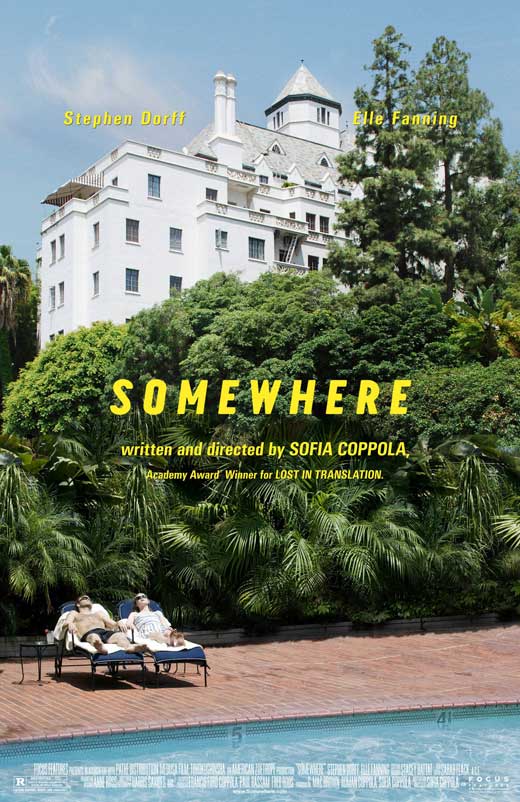
When Sofia Coppola is on her game, the results are often hypnotic, using music and images to imbue that space between mundane and just slightly alien with unexpected verve and beauty. When she's off... well, you get Somewhere, my least-favorite S. Coppola film that I've seen and something of a chunkily textured anti-character study. The feeling of deflation that the protagonist feels near the end of the movie when his daughter's visit ends rings true, but it's one of the only engagingly human moments in the film, the rest meandering through the irritations of minor celebrity and wealth with a stateliness that approaches staleness. Look to pretty much any other of Coppola's films for a more compelling take on these same themes. Grade: C+


Pink Floyd: The Wall (1982)
Often clumsy and flimsy in its live-action segments, The Wall falls far short of the pedigree of its namesake album. However, when it works—and, like the album, it works most brutally in its latter half—the film is absolutely aces, as compelling a portrayal of misery and psychological anguish as the album itself, and even more effective as a slice of the British counterculture and its fallout. And let's not forget the animation, which is always excellent and the best part of the film, despite clocking in at just over fifteen minutes collectively. What I would have given to have had this entire movie animated. Grade: B+


3 Women (1977)
As someone who's only seen the big three from Robert Altman (those being M*A*S*H, McCabe & Mrs. Miller, and Nashville), I found 3 Women to be pleasantly small turn from the guy's normal ensemble jigsaws. A psychological thriller very much in the vein of Bergman's Persona (if slightly less deconstructive) and what Roman Polanski was doing in the late '60s, it's a mesmerizing, head-scratching piece of filmmaking, made all the better by an all-time-great performance from already all-time-great performer Shelley Duvall. It's far too often that we forget that she pretty much batted 1.000 throughout most of the '70s and '80s. Grade: A-


Attack of the 50 Foot Woman (1958)
The title's a bit misleading, given that the giant woman doesn't attack until the last ten minutes of the movie (and isn't even giant for the majority of the preceding film). Also, characters repeatedly marvel at how the woman (and her male counterpart) must be "thirty feet tall." So that's strike two. Look, I'm probably not going to convince any haters that this is a good movie—there's plenty of ammunition there: titles aside, the special effects are startlingly bad, particularly the matte effects, and the dialogue is tepid. But I dunno, guys, I found this charming in all its raggedness, and from the way it's pretty much 80 percent domestic crime smut to the exaggeration of the "vengeful, wronged wife" trope to this level of sci-fi melodrama. Fans of second- (or third-) tier sci-fi from the era shouldn't miss it. Grade: B

Television


Crazy Ex-Girlfriend, Season 2 (2016-17)
While its shorter episode count makes Season 2 feel a little less complete than Season 1—character arcs feel rushed, plots feel underdeveloped—the second year of what's likely TV's best comedy right now is bolder, more complex, and more sure of itself than the first, which had a slightly rocky beginning. The end result is just tremendous TV, consistently hilarious, often hummable, and completely hitting its stride. Rachel Bloom's Rebecca Bunch is no less frantic and unwell—if anything, she's more so—which makes it all the more impressive that the series is able to find so much tenderness and compassion within a character who should, by all logic, be a whirlwind of irritating tropes. But as we all know, the situation is a lot more nuanced than that. Grade: A-


Crisis in Six Scenes (2016)
Woody Allen made it abundantly clear prior to the release of Crisis in Six Scenes that his undertaking a TV series was a colossal mistake. And now, having seen the finished product, I'm unfortunately compelled to agree with him. An aimless, horribly paced, unfunny six episodes of tired Allen tropes, Crisis is just over the length of his longest feature films (not coincidentally, among his worst), but the good material within amounts to little more than an hour's worth of watchable work—to say nothing of the horrible structural issues the show faces as Allen apparently has no idea of the concept of a distinct episode and instead sequences scene after scene until he hits twenty-plus minutes and cuts it off until the next episode, whether or not the drama requires it. I'll go to bat for the fifth episode, centered around a bungled crime that makes it reminiscent of the bumbling capers of Manhattan Murder Mystery or Scoop, and overall, Allen has fun with the lightly satirical depiction of 1960s counterculture, both with Miley Cyrus's anarcho-Marxist revolutionary and the escalating gag of the old-ladies book club who decides to read her literature. But there's very little here to recommend that isn't found in better form in any number of Woody Allen's cinematic work, and even then, it's encased in so much lard that it wouldn't be out of case in a frontier butcher shop. Skip it. Grade: C

Books


The Vegetarian by Han Kang (2016)
I was going to avoid referencing Kafka in describing this book (not the least because he's already mentioned in one of the critical blurbs on the book's back cover), but how else do you describe unsettling surrealism that at first feels satirical before turning heartbreaking? It's Kafkaesque, through and through: a woman decides to become a vegetarian after unsettling dreams (see??), and the book follows the escalating fallout on her husband, her father, her brother-in-law, her sister, and her own psychology. The gorgeous translation by Deborah Smith manages to evoke the strange proceedings with wit and kinetic energy that never loses track of either the central horror or underlying sadness that imbues the work with its magnetic power. Grade: A-


The Sculptor by Scott McCloud (2015)
Color me disappointed. A cursory glance through The Sculptor promised a strikingly illustrated fable about an artist's bargain with Death. What it ends up being is a bit of a one-dimensional mix of romance and struggling artist clichés that indulge in the worst of Manic Pixie Dream Girl and "nobody understands my work" artist tropes. David is an artist who's of course above irony and instead wants to make people feel something; Meg is a woman whose sole purpose seems to be to brighten his existence with her quirky lust for life and the inevitability of her eventual sleeping with him. Also, she's bipolar but won't take her medication because she wants to "feel everything." If you can't tell, that's the sound of my eyes rolling. It's not all bad: the story gets pretty good toward the end, and the fantasy elements (pretty much everything to do with death) are both cool and poignant. And those striking illustrations the book's initial pages promised me are totally there and totally great. It's just frustrating that those elements couldn't have concealed into a more consistently good package. Grade: B-

Tuesday, March 11, 2014

Reappreciating Dark Side of the Moon: "On the Run" and "Any Colour You Like"


I listened to Pink Floyd's The Dark Side of the Moon the other day. On its own, that's not such an notable occurrence. There was a time in my life (and not too long ago at that) when listening to that album was an almost daily ritual.

Actually, it's kind of amazing that I haven't written about DSotM yet on this blog, considering that Pink Floyd's 1973 opus holds a significant place in my development as a music listener. Like, really significant. Not only is it the first album I ever bought (I had been mooching off my brother's CD collection beforehand), but its psychedelic, existential ways are also responsible for the broadening of my horizons beyond the classic-rock-and-Green-Day listening habits I stuck to in my early teens. I haven't taken a census of my current music library or anything, but I bet that at least 82 percent of the artists I listen to now I listen to because of some taste-related chain reaction started by my falling in love with The Dark Side of the Moon. For example: Pink Floyd got me listening to Radiohead, which got me listening to prog and indie rock and eventually jazz, all of which got me listening to like a trillion other bands, which turned me into an insufferable music snob. I've tried to cut back on the snobbery bit, but however you slice it, The Dark Side of the Moon is pretty dear to my heart.

So no, it's not at all surprising that I was listening to it. What was surprising, though, is how little my feelings on the album have changed since I first heard it when I was sixteen. That's not the case with a lot of music I listened to in my teens. I mean, sure, I still like most of the music I listened to back then, but my relationship with a lot of that music is kind of like returning to a favorite camping spot at some state park—I still enjoy the sights, but the location has lost some of the mystery and grandeur it held for me at first. To put it another way, I still like Coldplay, but "The Scientist" no longer seems like the soul-shaking powerhouse I once thought it was.

But The Dark Side of the Moon? Man, that's still one friggin' great album. And returning to it now, I realize that one of the great things about this album is that it's grown with me. At each stage of life I listen to it, I find something new to love about it.

When I was sixteen (and the most pretentious, insufferable teenager you've ever met), I was drawn to the way the songs faded into one another to form one big song, the psychedelic flourishes, and the philosophical lyrics (all of which were novel to me—hey, all I was really listening to at the time was Aerosmith and Journey). Also, that guitar solo in "Money" was pretty cool, too. As I've gotten older, I've had phases when I was more interested in the existentialism in the album's lyrics or with the cool pathos of the jazz touches or that weird, almost inaudible string music at the very end of "Eclipse." Always something new.

So when I listened to the album again the other day, it wasn't the jazz or the guitar solos or existentialism that stood out to me but rather how awesome "On the Run" and "Any Colour You Like" sound now. Until recently, I had considered these two tracks (the only instrumental songs on the album, by the way, depending on how you classify "The Great Gig in the Sky") to be minor pieces, the necessary connective tissue to get from "Breath in the Air" to "Time," or "Us and Them" to "Brain Damage," to make the album cohesive. But I'm a different listener now than I was at sixteen, and something about those intervening years has brought me to a place where I now not only appreciate those two instrumentals but think they're two of the best songs on the album.

With "On the Run," I now see this song as, among other things, Pink Floyd's take on krautrock. That driving synthesizer pulse, the chaotic percussion, the disembodied human voices—that's all stuff right out of Kraftwerk and Can's respective songbooks, mixed with some of the freakier elements of Pink Floyd's psychedelic past (e.g. the penultimate movement of "Echoes" from their previous album, Meddle). It's also a killer sonic experience to enjoy with a good pair of headphones. My melody-driven listening habits as a sixteen-year-old didn't have much to do with the non-melodic sonic experimentation of "On the Run," but now that I care more about ambient textures and mood in music, it's absolutely riveting. A lot of songs seem less fresh once I become acquainted with other genres of music. "On the Run," though, has only become more interesting.

The cover from the 2003 re-release of the album (which is the one I own).
Not as fond of it as the original cover, but part of me wishes this had kicked off a
trend of iconic album art being rendered in stained glass.

And then "Any Colour You Like"—oh man, what to say about this gem? There are points of comparison to be made with the song, but honestly, I can't think of any other piece in Pink Floyd's discography (heck, in pop music in general) that sounds like the jubilant synth-funk symphony that is "Any Colour You Like." On the one hand, there's the playful main melody that's especially prominent toward the end, a plucky tune that seems prescient of a certain strain of disco that would arise later in the '70s. David Gilmour's funky guitar noodlings in the background give the track a jammy flavor that interplays nicely with the melody in this regard. But then there are those synthesizers! Synths get a lot of flack in certain circles for their role in the rise of corporate rock, but holy cow, if "Any Colour You Like" doesn't have the best classic-rock-era use of synthesizers, it's pretty dang close. The way they run up and down those jazzy arpeggios early in the song is beautiful and more evocative of the album's famous prism cover than any other moment on the disc. Even better is the climax of the song, when these two movements—jazz-synths and disco-funk—converge in a glorious pileup of sound that is at once pop-music catchy and classical-music complex.

New knowledge, expanded listening habits, and a differing ethos opened up a whole new level of appreciation of this album for me. I guess that's how it is with favorite albums (and just in case I wasn't clear earlier, this is one of my favorite albums). It's not just the familiarity that makes you return, but also that the music keeps blossoming into new experiences.

Of course, not everyone feels this way about The Dark Side of the Moon. I've heard many great people call this album slow and boring. And it's okay that they feel that way (even if they're dead wrong[1]). That's another thing about favorite albums: they're personal. So yeah, I'm sure many of y'all out there don't share my enthusiasm for The Dark Side of the Moon. But I bet a lot of you have experienced something similar with your own favorite album or song, that feeling of having that music grow with you.

And that's about all I have to say about that. Feel free to share your own favorite music experiences in the comments—that's what that box down there is there for. Until next time.


1] Kidding, kidding. You like what you like, and there's no quantifying or disproving taste[2]. One of my least favorite things about my sixteen-year-old self post-DSotM is that I held the seriously misguided belief that a person's aesthetic tastes were a reliable indicator of that person's worth or that person's intelligence. I can't tell you how many conversations surrounding that idea I now regret.

2] Which isn't to suggest some sort of all-encompassing relativism here. I think it's totally possible to argue for some kind of non-subjective worth in a piece of art while still acknowledging that everyone enjoys different things and that everybody enjoying different things is okay. Those of you who don't care for The Dark Side of the Moon, I'll try to convince you that it really is a great album, but if you still don't agree, that isn't some character flaw of yours or anything. We can respectfully disagree, right? [steps off soapbox]