Showing posts with label Taylor Swift. Show all posts

Sunday, October 30, 2022

Mini Reviews for October 24 - 30, 2022

My wife and I released a new episode of our podcast, which you can listen to here if you're interested!

Movies

Lightyear (2022)
I went into this expecting it to be bad, and it was, but I think this actually would have been a tolerable, if forgettable, piece of children's sci-fi if it weren't for the fact that it's about the "real" Buzz freaking Lightyear. It's a weird bind that I'm sure the filmmakers found themselves in making this movie: scrubbed of its forced connections to the Toy Story franchise, the screenplay is not nearly good enough to make this movie be notable as a standalone film, but the Toy Story connections that make it notable unmistakably flag this movie as a piece of cynical corporate brand management as opposed to the sincere work of middlebrow family entertainment it wants to be. I'm sorry, but I just cannot suspend my disbelief enough that I can hear the characters in this movie on multiple occasions saying word-for-word memorable lines from the first Toy Story and not come to the conclusion that some middle-management Disney husk with an MBA ghost-wrote the film. It's like watching that unbearable pre-show Regal ad where everybody just says random famous movie lines, only at feature length. Also, on the animation front, this is a major step back from the past few Pixar films' attempts to broaden the studio's style outside of their familiar aesthetic. We're in mildly cartoony photorealismville again, baby, and it's boring. Complete dreck. Almost certainly the worst Pixar movie—or at least the most dispiriting. Grade: C-

Bride of Chucky (1998)
Easily the best Chucky movie up to this point in the series. Chucky as an entity was never particularly scary to me anyway (even when I was a kid), so this movie's abandonment of any semblance of "scary" plus its commitment to weird camp and outsider sensibilities helps it sail past every previous movie in the franchise. Explicitly tying itself to The Bride of Frankenstein should be a movie-ruining bit of hubris, but it's absolutely deserved here, as it embraces that early classic's penchant for the playful and absurd over the spooky. Plus, my god, the voice acting of the central duo: the addition of Jennifer Tilly as functionally the lead is an incredibly canny move, and Brad Dourif puts in his series-best performance. Also, barely related, but I just happened to click on Dourif's Wikipedia page when writing this up, and I realized he plays Wormtongue in Lord of the Rings, which is kinda blowing my mind at the moment; I should have made that connection before the fourth entry in this series. Grade: A-

Seed of Chucky (2004)
What an absolute blast. Some of the running bits don't really work (e.g. the "Made in Japan" thing or Jennifer Tilly's eating disorder), but for the most part, this is intoxicating and ridiculously fun and has the good sense to realize that two Jennifer Tilly performances are better than one. Whereas Bride of Chucky explicitly presents itself as the Chucky analog to The Bride of Frankenstein, Seed openly claims to be the Glen or Glenda of the franchise, which is 100% the logical conclusion to the camp flourishes of the previous film. Along the same lines, I gotta hand it to this movie for having the guts to evoke one of the most repulsive parts of Pink Flamingos (the kidnapping/insemination plot). Speaking of insemination, people talk about weird Hollywood synchronicity like the time there were two Snow White movies in the same year, but I've never heard anyone talk about the much more improbable parallelism of 2004's duology of CGI sperms (i.e. this and She Hate Me). A true unicorn pairing. Grade: A-

Curse of Chucky (2013)
A soft reboot after the franchise reached the delirious heights of Bride and Seed was not at the top of the list of things I would want to see out of the follow-up. But allowing for that, this was really solid—probably the most overtly "scary" (relatively—Chucky's not very scary) Chucky movie since the first one, and it does a lot of good with that aim to return to the series's horror roots. It's set in a big, spooky house, which is a tremendous setting, and appropriately, the direction is the series's most baroque, filled with moody lighting and sweeping steadicam shots (maybe my favorite direction of the series). And for us lovers of post-Child's Play 3 Chucky, the last ten minutes or so does let us know that Don Mancini hasn't forgotten about us. So, a good time, if not the great time delivered by its immediate predecessors. Grade: B


Books

A Gathering of Days; A New England Girl's Journal, 1830-32 by Joan W. Blos (1979)
What if a children's book looked exactly like a child's journal from the 1830s? Impressively committed to its conceit, to the point that it's willing to be extremely boring in the interest of looking like a historical document. If that sounds cool to you, you can listen to my wife and I talk about it on our podcast. Grade: D


Music

Taylor Swift - Midnights (2022)
I've heard people call this album a "grower," and it certainly has the hallmarks of that: low-key production, murmured melodies, few open bids for radio play. However, after having spent a week with this album, I'm feeling like it's the opposite... a shrinker? I'm sad to report that the more I listen to it, the thinner Midnights feels. Everything on here is something that Taylor Swift has done elsewhere (and better): the nocturnal Antonoff production hearkens back to the simmering, weary back-half of Reputation and the warmth of the Lover deep cuts; the semi-ironic self-critique of "Anti-Hero" is a less sardonic revision of "Blank Space"; "Vigilante Shit" and "Karma" again evoke Reputation, but this time the cringey, forced "bad girl" camp villainy. I wouldn't mind as much if the writing on these songs were actually good, but a lot of these lyrics feel like first-drafts, with a main idea only barely developed (and certainly not as idiosyncratic and nuanced as I'm used to hearing from Swift). That's to say nothing of the outright howlers, like the already infamous "sexy baby" line on "Anti-Hero" or how Taylor Swift still seems to employ the word "fuck" like a middle-schooler giddy about saying grown-up words. The melodies on the tracks fare better, but there isn't a single song where I enjoy both the melody and the lyrics, which is disappointing coming from Taylor Swift. It's disappointing after folklore seems to usher in a new phase of maturity and hindsight for Taylor Swift that she's come up with an album that feels like ersatz Taylor Swift, mimicking the rhythms and themes of past successes without the spark of what made those earlier works cook. I guess we'll see how I feel after spending a little more time with this—maybe this will prove to be a true grower after two weeks, or ten. But right now, this strikes me as one of Taylor Swift's weakest album, if not her outright worst. Grade: C+

Sunday, January 10, 2021

Mini Reviews for January 4 - 10, 2021

 What a boring week with absolutely nothing interesting in it to talk about going on in the world.

Movies

City Hall (2020)
Even for a Frederick Wiseman documentary, City Hall takes a looong time to reveal its shape. The whole film documents the activities of the titular Boston city hall, and like many a Wiseman film, we watch extremely long scenes of meetings chronicling these activities; admittedly, for the first half of this 4.5-hour movie, there are a fair number of these scenes that are pretty tedious, even for me, who watches public meetings for fun. But by the end, the film has become something rather stunning, one of the most comprehensive portraits of a public system in Wiseman's career. I realize that I sound like the boring version of one of those people who says that a television series gets really good after you get through the first five episodes, but you have to trust me that I've never seen a movie that so thoroughly articulates the limitations of the liberal capitalist urbanism that basically all major American cities seem to be operating under right now. It's a movie filled with dedicated public servants who undoubtedly have the best of intentions as they pursue equality and inclusivity, and the film has a certain admiration for their buttoned-up dedication to procedure and ideals. But by the end of City Hall, these public servants are shown to be altogether inadequate to address the very real material concerns that Boston residents bring to the numerous public forums depicted here because they are working within a system that has been structured to prioritize development over living conditions. You can have programs and outreaches and the purest of ideals, but at the end of the day, it's capital that calls the shots. This all comes to a head in a breathtaking sequence near the end of the movie, set at a public forum where the residents of a low-income neighborhood interrogate a representative from a company who intents to build a cannabis business in their area; the residents demand from the company meaningful systemic contributions to improving the lives of locals, and the representative heeds these demands with what seems like the utmost sincerity and says that they will take this all into account as they move forward with the project, and in the context of the other 4 hours of the film, it's crushingly apparent that regardless of whether or not this company actually intends to help the community, ultimately it's the company who will most benefit from this arrangement. In a world in which urban governance is premised first on the generation of revenue from land (we're shown a budget presentation at the beginning of the film), there is an extraordinary momentum granted to developers that residents must overcome to have their needs met, and simple "inclusion," however noble, can never be sufficient on its own in empowering regular people to be successful at organizing for their own interests. The tragedy is that Boston's mayor, Marty Walsh, seems to have niggling doubts about the efficacy of that the current system for everyday people (he talks about exploitative pharmaceutical prices at one point, for example) while also being seemingly unable to realize that his basic posture of capital-friendly liberalism is complicit in the factors that produce those very doubts. I can't watch a movie like this and not think of my own Knoxville, TN, which faces the exact same fundamental problem while also having a less inclusive ideology; in particular, a recent city council meeting saw the same elected officials passing a (long-overdue) resolution to pay reparations for urban renewal projects that decimated several black neighborhoods several decades ago, while also on that same night approving another resolution that moved the ball forward on building a baseball stadium in the same area of those urban renewal projects, despite the protestations of residents who asked for the process to be slowed down to ensure that benefits could be secured for the community. At this meeting, as with a meeting depicted in the film, community land trusts were briefly brought up before being lost in the noise about regulations and revenue, and that's basically my takeaway from this movie in microcosm, whether in Tennessee or Massachusetts: public ownership and true collaboration between governments and the people being elbowed out by this incessant and ultimately dehumanizing push for revenue from the supposed benevolence of much larger capital interests. Like, who serves whom, you know? Grade: A-

The Land of Steady Habits (2018)
In the movies of hers that I've seen, Nicole Holofcener always focuses her movies on terrible people, but this one might take the cake. Usually a Holofcener protagonist is just low-grade terrible, saying insensitive things and acting self-interestedly but within the broad boundaries of polite society. In The Land of Steady Habits, the protagonist (played with impressive misery and self-loathing by Ben Mendelsohn) has more or less absconded himself from polite society before the action of the film proper begins, having left his wife and decided to live in bachelor squalor while occasionally swooping into his old life to cause anguish. The movie makes a point of showing that so-called polite society is just a papering over of this rather nihilistic self-interest anyway and basically invites the humiliation it suffers at Mendelsohn's hands in this movie, but also, the collateral damage of Mendelsohn's actions here is staggering and bleak, and by the time that we get to the requisite "dude shows some measure of self-awareness and personal growth" ending, in the context of the destruction that has just elapsed, that growth feels entirely hollow and itself an obligation to the expectations of polite society—to the point where I would not be surprised if Holofcener intended it as a caustic, ironic embrace of convention rather than a good-faith use of it. It's a truly feel-bad movie, and I felt bad after watching it, but there are also some terrific scenes, almost all of which hinge on fleeting moments of honesty and human connection, brief illustrations of what is lost in a world premised on the solipsism displayed here. Grade: B

Real Women Have Curves (2002)
The sweetness of America Ferrara's really vulnerable performance (her feature-film debut??) is cut by the somewhat bleak tragedy of her mother, who to the bitter end of the film is unable to disentangle her love for her daughter from her internalized body shame. It leans a little hard on dialogue that states its themes just a tad too on-the-nosedly for my tastes ("I want to be respected for what I think, not for how I look"), but it at least doesn't feel out-of-place with a movie that refuses to pull its punches in depicting the relationship between mother and daughter here. Grade: B+


Shock Treatment (1981)
As far as sequels to The Rocky Horror Picture Show go, this is definitely the only one of them! I have mad respect for the idea of this movie. As a narrative, it's conceptually bold (basically Brad and Janet, who somehow responded to the events of the original Rocky Horror by getting married and turning into normal schmucks, get put on this proto-reality-TV show that traps them in this nightmare version of normie America), and as a piece of cinema, it's striking (especially the garish, almost expressionist sets that comprise the reality show). But in practice, this movie just isn't very much fun, and while this movie intentionally frustrates any and all comparisons to Rocky Horror, the one thing that original movie never felt like was a slog; Shock Treatment is pretty sloggy at times, especially toward the end as the conceptual stuff escalates. The music is at least lively, though the few times near the beginning that the instrumentation interpolates parts of "Time Warp" do kind of call attention to just how much more I enjoy the music from the other film more. Part of this obviously is tied up in the fact that The Rocky Horror Picture Show is one of the most iconic movies of the past half century, whereas Shock Treatment mostly languishes in obscurity and lacks cultural osmosis to buoy its ambitions. But also, this just isn't as good. Obviously. I mean, to the extent that this movie has a reputation, that's it. But also, this movie is way too ambitious and weird to simply relegate to the shadow of its cooler older sibling. I realize I've spent most of this review doing just that, but as much as this movie didn't completely work for me, it's definitely worth checking out and definitely worth a minor cult status of its own. I wish more sequels would take erratic left turns from their predecessor. Grade: C+

Daisies (Sedmikrásky) (1966)
Such an infectious sense of mayhem. There is an important political context to this movie's Czech release, but the spirit feels universal, and it's inordinately cathartic to watch these two women chaotically dance on the grave of every stupid, elitist bit of etiquette out there. It's so universal that when I watched this with two toddlers in the house, they were both absolutely enraptured. I mean, who doesn't want to trash a fancy dinner with their bare hands and feet? The art house is for the children, I tell you. Grade: A


A Report on the Party and the Guests (O slavnosti a hostech) (1966)
I'm not going to pretend like I understood this movie, because I didn't. Something about a critique of authoritarian Communism—might have made more of an impact on me if I knew literally anything about Czech history. The thing about Buñuel-style satires is that they only really work if you understand the target of the satire or enjoy the absurd premise on its face. I had neither going for me here. Grade: C


The Return of the Prodigal Son (Návrat ztraceného syna) (1967)
Of the three movies I've watched so far from Criterion's Pearls of the Czech New Wave set, this is by far the most grounded in reality and the least prone to the appealing sense of anarchy and humor that has characterized the rest. I at least understand this movie significantly more than I did A Report on the Party and Guests. This one is a pretty straightforward depiction of the psychological malaise brought on by the advances of the 20th century (which, in the case of this protagonist, includes the conformity brought on by the communist system of Czechoslovakia—I know nothing about Czech history, so I have no comment on the politics of this) and of the ways that the then-current mental health institutions are inadequate in treating that malaise. Stretches of this movie are pretty interesting, especially the last 15 minutes or so, which veer the movie toward the more metaphorical style of the other two Czech New Wave movies I've seen. But for other long stretches, this movie just feels kind of staid: mid-century European cinematic drama on autopilot. So mixed feelings here overall. Grade: B-


Music

Taylor Swift - evermore (2020)
I've heard a lot of people say that Taylor Swift's second surprise release of 2020 is basically just folklore part two, which I think is overstating the similarities between the two. Definitely both share the same broad autumnal "indie folk" sensibility anchored by Aaron Dessner collaborations and containing a Bon Iver duet. But to say that evermore is the same as folklore overlooks the presence of "dorothea," a piano ballad with a big singalong chorus; "no body, no crime," a full-on country-pop murder ballad; "cowboy like me," another country song that bears a lot of kinship to Taylor's first two albums, "closure," which contains a percussion track that sounds like it came from Bon Iver's 22, A Million. For sure, there is overlap with folklore, but evermore, appropriate for an album with full-color cover art after its predecessor's tasteful monochrome, is a much more varied, scattershot listening experience than folklore. This means that folklore is the more cohesive record as far as front-to-back unity and thematic connections go, but it also means that evermore is a much more surprising album with interesting little nooks to explore. Being the "listen to an album front-to-back" guy that I am, I prefer folklore (and I think the mean songwriting quality is just a tad higher in that one, too). But evermore doesn't feel so much like a sequel as it does a really solid b-sides/odds-and-ends compilation—messier and less considered than a Taylor Swift album proper, but also maybe more interesting and revealing because of that. Grade: B+

Wednesday, December 23, 2020

Favorite Music of 2020

These list preambles get harder to write each year, and as the world gets increasingly complicated, I find myself struggling more and more to say anything about it. What on earth am I even supposed to say about 2020 that hasn't been said ad nauseum? At any rate, a silver lining is that we had great music to listen to while the pandemic raged (continues to rage).

I still don't listen to enough metal or hip-hop, and instead, I listened to a larger proportion of jazz and electronic music than in probably any year prior. Plus, I still have probably a hundred albums I want to listen to more but haven't done so enough to justify putting them on this list. Let me know what your favorite music was this year, too, because that's always fun!

Anyway, here's the list.

Favorite Albums:

1. Fiona Apple: Fetch the Bolt Cutters
This seems like a pretty consensus pick, to be honest, at least among music critics, so I'm not going to pretend like I have anything new to say about Fetch the Bolt Cutters. Such chaotic yet elegant music. It's the album I've returned to most this year, and it still gives me chills at times.

[Read original review]


2. NEPTUNIAN MAXIMALISM: Éons
Not much has changed since I wrote my review. Still definitely my thing: a 2-hour noise-jazz epic. Wonderful.

[Read original review]


3. Kelly Lee Owens: Inner Song
Boss beats and terrific tunes. The best fusion of electronic music and pop music I've heard in a while.

[Read original review]


4. Nate Wooley: Seven Storey Mountain VI
This is a late-year find for me: a single, 45-minute track that builds from a choral chant into an extended improvisation and then back into the chant. It's utterly transfixing and beautiful, indebted to minimalism and jazz but also unclassifiable in its own right. Building from Peggy Seeger's song "Reclaim the Night," the chant itself offers a meditation on gendered violence, and the music connects this idea to something much more cosmic as it dissociates from melody into soaring dissonance. I've not listened to much of the other entries in Wooley's Seven Storey Mountain project (as the title indicates, this is the sixth one), but they all apparently follow variations on this format. I guess I should listen to more, because this is great.

5. Taylor Swift: folklore
I still need to listen to evermore more, but I've listened to this one a lot. It's very good (of course)—Taylor's most songwriterly album since Red and proof, if we needed it, that she hasn't lost those chops since her pivot into full-on radio pop. A lot of albums this year have been billed as "quarantine records," but this is the only one I've heard that makes me feel happy.

[Read original review]


6. Idris Ackamoor & the Pyramids: Shaman!
Throwback spiritual jazz-fusion. Moving and personal and enormous-sounding. A lot of the albums on this list are improvisatory and elaborate, but I haven't heard one all year that does a better job of connecting those instrumental flourishes with small personal resonances.

[Read original review]


7. Bob Dylan: Rough and Rowdy Ways
Bob Dylan's been playing the part of old man for longer than he's actually been an old man (he wasn't even 60 when he released the record that inaugurated his "I've seen things, and now I'm on death's door" phase, 1997's Time Out of Mind). But Rough and Rowdy Ways finds him as an actual old man (he's nearly 80), and he's eulogizing like never before: eulogizing himself, his career, and even the 20th century itself.

[Read original review]


8. Lyra Pramuk: Fountain
The liner notes call this "future folk music," which seems about right. For most folk music, the human voice is a foundational instrument, and Fountain is a record consisting entirely of samples of Pramuk's voice. A lot of people consider electronic music to be cold and robotic, but this very concept collapses the distinction between electronic and organic music, if there ever was one. It's hypnotic, warm, peaceful, and beautiful.


9. Grimes: Miss Anthropocene
This one's grown on me a lot since I first reviewed it, and it contains some of Grimes's best songs to date, especially "Delete Forever."

[Read original review]


10. Frédéric D. Oberland & Irena Z. Tomažin: ARBA, DÂK ARBA
This random Bandcamp find hasn't lost an ounce of its power for me. Modern classical drone, that's where it's at.

[Read original review]


Great 2020 Songs Not On These Albums:

Ariana Grande: "positions"—I didn't have a chance to listen to Ariana's new album much, but I do love this song, a slinky, slick piece of pop R&B, smoother than I'm used to hearing from Grande but all the better for it.

Bruce Springsteen: "If I Was the Priest"—Bruce Springsteen got the E Street Band back together and recorded some songs the old-fashioned way, live in the studio, for his new album, Letter to You. To inaugurate the event, the band recorded some songs that Springsteen wrote in the '70s but never put to tape, and those songs are definitely the highlight of the album. "If I Was the Priest" is the best of that bunch, hailing from the Greetings from Asbury Park, N.J. days; like most of that album, it's a fire-hose of words and metaphors and melodies, intoxicated on the possibilities of rock music and trying to cram all of those possibilities into one song. I've liked a good deal of Springsteen's output in the 21st century, but boy is it nice to hear him in his classic mode like this.

Cardi B: "WAP" (feat. Megan Thee Stallion)—I mean, what else is there to say? Slaps. Most clever rauch-rap lyrics since CupcakKe retired (ed. to say: she's apparently un-retired now?). Share your favorite lines in the comments. Mine is the one about the "dangly thing in the back of my throat."

Cracka Khan: "Cardi B - WAP (feat. Megan Thee Stallion) But It's Dire, Dire Docks"—Exactly what it says. Best "WAP" remix in a year full of them.

Fleet Foxes: "Sunblind"—Fleet Foxes at their most lovely and effervescent.

Frances Quinlan: "Your Reply"—Really catchy mid-2000s-throwback indie rock song by Hop Along's Frances Quinlan. I've kind of fell out of love with a lot of mid-2000s indie rock, but this makes me feel like I haven't.

HAIM: "The Steps"—Major Shania Twain vibes on this song. Between this and their work on Taylor Swift's evermore, I think I'm ready for HAIM to go '90s pop country.

Illuminati Hotties: "Lucky"—A cover of (easily!) Britney Spears's best song by the plucky, self-proclaimed "tenderpunk pioneer" Illuminati Hotties. I like Illuminati Hotties just okay, but I wish I loved them, because this is great.

Jeff Rosenstock: "Scram!"—"I've been told for most my life / 'Try to see the other side' / By people who have never tried to / See the other side," this song goes, a perfect lyric for the year of the disingenuous centrism of Joe Biden's Democratic party. Rosenstock's shout-along punk has never been more cathartic.

Lianne La Havas: "Weird Fishes"—2020 was apparently the year for Radiohead covers (I can't count how many of those "artist in the bedroom" livestreams included Radiohead songs), and between this and the song on Kelly Lee Owens's Inner Song, 2020 was apparently the year for covering this specific Radiohead song. La Havas's version is a slow-burn soul take on the record, which is the perfect mode for In Rainbows covers, I think.

Megan Thee Stallion: "Shots Fired"—I don't know what actually went down between Megan Thee Stallion and Tory Lanez, but I know whose music makes a better case for their version of the story. Lanez never had a chance. The best diss track all year, which is saying something in a year that also included Noname's J.-Cole-withering "Song 33."

Neil Cicierega: "Fredhammer"/"Limp Wicket"Mouth Dreams was a little disappointing for me, but this mini-suite in the middle of the album was among my favorite minutes on any album this year. Cicierega mixes Peter Gabriel's "Sledgehammer" with Limp Bizkit's "Nookie" and (eventually) a Star Wars Ewok rap, and it improves on all of them.

Sufjan Stevens: "The Ascension"—Hands-down the best song on the new Sufjan album, as pained and beautiful an exploration of faith as he's ever written. Sufjan is another of my favorite artists who underwhelmed at the album length in 2020, but this song can stand up to anything he's ever done.

U.S. Girls: "4 American Dollars"—Extremely catchy economic-downturn disco.

Yves Tumor: "Kerosene!"—Yves Tumor has grander ambitions than to just be a rock star, but this song is truly a rock star turn: a wailing, bleak anthem of twisted love, anchored by a wicked guitar solo. 2020's "Gimme Shelter."

Sunday, December 6, 2020

Mini Reviews for November 30 - December 6, 2020

blah.

Movies

Bill & Ted Face the Music (2020)
Like all of the Bill & Ted movies, this very belated threquel is genial and has some great bits, and it's clear that Keanu Reeves and Alex Winter are having a great time. Samara Weaving and Brigette Lundy-Paine are great additions, too, as Bill and Ted's daughters. But these movies have always been far better at incident that they are at plot, and this one leans way too heavily on plot for its own good—far too many schemes and villains and mythologies. It kind of bogs down the otherwise very enjoyable moments, like Mozart meeting Jimi Hendrix, Bill and Ted meeting themselves, and everything meeting Kid Kudi. Grade: B-


Dick Johnson Is Dead (2020)
I was going into this expecting that the whole movie would be the kind of tongue-in-cheek gallows humor described in the film's premise, where filmmaker Kirsten Johnson confronts her father's mortality by staging a bunch of imagined death scenes for him. And the movie's not not that, and a bunch of those scenes are pretty funny/engaging, if occasionally a little too mannered (I go back and forth on whether or not the sequences where she depicts her dad in heaven are moving flights of fancy or irritatingly twee). But I wasn't expecting that during the course of filming this movie, Dick Johnson would actually begin to succumb to dementia, and that aspect of the movie is absolutely gutting. I've seen several family members go through this (and I'm honestly terrified that I will, too, one day), and it's just a punishingly bleak thing to witness, to say nothing of how angry and scared the people actually losing their cognitive function feel as they descend into the fog. In that light, even the most twee aspects of the film become retroactively kind of rebellious: a furious refusal to let one of the worst parts of human aging steal her father's sense of play. Very moving. Grade: B+


Over the Moon (2020)
Really fascinating animation here, which was exactly what I was expecting from a feature directed by legendary Disney character animator Glen Keane. This is one of the only CG-animated movies that I've seen that uses the technical tools of CG—lighting, surface texture, etc.—as techniques not for photorealism but for achieving these impossible effects like having light come not from an external source but inside the characters themselves. The result is some really arresting, semi-abstract imagery that I dig quite a bit. The rest of the movie is not good, though. I guess it would make sense that Keane would care more about animation technique than narrative, but you'd think a few of the literally hundreds of people working on this film would have thought better than to try to cram every single trope of children's animated films into this movie. The movie is all over the place, introducing new conflicts while barely resolving the old ones, yearning desperately for its emotional beats to land without ever staying narratively still enough to give these moments any kind of firm footing. Some of the 2010s Disney animated movies suffered from a kind of modular storytelling, where the films' narrative approach is something like a perpetual present, where individual sequences work really well in isolation but have trouble creating a completely cohesive larger context, and Over the Moon (not a Disney movie, though certainly not for lack of trying) feels like the logical escalation of this trend, with a movie so focused on its own present that almost nothing connects to anything that just elapsed. It's really weird to be pulled along by a narrative like that, though it does work pretty well as a showcase for the animation, since it's literally the only thing I care about here. Grade: C+


Taylor Swift - Folklore: The Long Pond Studio Sessions (2020)
The interludes where Taylor Swift is talking with Jack Antonoff don't illuminate the songs on folklore nearly as much as this movie seems to think they do. Like a lot of great artists, as erudite a songwriter as Swift is, she's often not especially interesting to listen to talk about her own music. But folklore is one of my favorite albums of the year, and this movie was a major good vibe because of that. I need good vibes these days, so thank you, Taylor Swift. Grade: B


The Monkey King (aka Havoc in Heaven) (aka Uproar in Heaven) (大闹天宫) (1961)
I don't think I've ever watched a Chinese animated feature before, so I was basically going in blind to this one. But man, I sure got lucky, because this rocks. A revisionist take on the early part of Journey to the West that foregrounds the monkey Sun Wukong as this agent of pure chaos—like, this movie is basically wall-to-wall antics and mayhem that give a gigantic middle finger to the divine hierarchy ruling over the world, which is consistently hilarious and entertaining while also making sense as a product of a Chinese society on the eve of Mao's Cultural Revolution. On top of this, there's some seriously lush animation, and I love the way that the film moves in this constant dance with the almost constant accompaniment of the traditional Chinese music in the score. Something I don't think people talk enough about is how animation completely revolutionized film's relationship with music; my son has been watching a lot of Bambi recently, and that movie's dynamic approach to music is so sophisticated and forward-thinking and like nothing else in live-action American cinema of the time. The Monkey King feels like it's doing something similar, basically making the score not just a mood but a lively participant in the film's action, a spry partner to the visuals. Anyway, this is very good. It would have been even better if some of the fight scenes were maybe a tad shorter (I watched the 114-minute cut, so maybe I'd think the more widely available 90-minute cut is superior?), but as an introduction to Chinese animation, I think this served me pretty well. Grade: A-

P.S. I was part of a discussion about this movie on the Cinematary podcast. If you're interested, you can listen here.


Books

Paradise by Toni Morrison (1997)
So it's a novel about liberation ideology and the formation of a community over decades, which means it's absolutely up my alley. Whereas something like Beloved tries to embody history through individual characters, Paradise tries the opposite, using the collective evolution of the black-separatist town of Ruby as a synecdoche for the post-Reconstruction history of Black America. It's a fascinating, sometimes mysterious, often compelling work reminiscent of sprawling magical-realist history novels like One Hundred Years of Solitude and House of the Spirits, and there are sections of this that I would count among some of the best work of Morrison's career. The novel sometimes stumbles when it tries to scale down to the individuals that make up this town, though; the way the novel jumps throughout history has the effect of obscuring some character conflicts, particularly for characters who only directly show up a few times, like Dovey and Soane Morgan, who play pivotal roles late in the novel but remained something thin on the ground for me because of the relatively small amount they were engaged in the plot early on. Maybe a re-read would fix this, now that I'm familiar with the whole picture. Either way, it's a small gripe in an otherwise absorbing novel. Grade: A-

Sunday, August 16, 2020

Mini Reviews for August 10-16, 2020

Just reviewin', ya know?

Movies


The Assistant (2020)
I'm usually an aesthetic maximalist with film, but The Assistant is one of the most thematically resonant uses of filmmaking minimalism I've seen recently: a film about a mundane setting (the nondescript, visually drab office of some entertainment production company) hiding untold depths of cruelty as told through a pointedly mundane filmmaking aesthetic yielding depths of insight. I legitimately don't think this story could have been told as well with even the slightest bit more visual panache, because that would be a betrayal of the fundamental corporate tedium that props up the insane abuses of power. There's this recurring motif in the movie, where following the titular assistant being verbal harangued by her very Weinstein-esque boss, she is forced to write a boilerplate apology email for whatever extremely minor faux pas triggered the harassment, and that's exactly it—volcanic evil dressed in boring office decorum. Grade: A-

Driveways (2020)
An exceptionally poignant film of well-observed humanity. Its premise (old man befriends friendless kid next door) feels insufferably twee, but the movie itself is much more quiet and warm than that. There are pieces of this movie that are a little too low-key to completely work, but other parts are entirely effective. The whole birthday party sequence alone had me near tears because it's just such a perfect encapsulation of a particular type of loneliness and embarrassment, succeeded by probably the sweetest scene I've seen in a movie this year. Feels like the movie Up would have been if Mr. Fredricksen had been out of balloons. Grade: B+


Wine Country (2019)
It's hard to fault a movie like this for being exactly what it sets out to be: Amy Poehler, Maya Rudolph, Rachel Dratch, and co. just having a good time in the Napa Valley while they riff about middle age. I just didn't find it particularly funny. That said, the film walks a fascinatingly fine line between these characters being sympathetic and these characters being just the absolute worst kind of people—probably no better exemplified than by the scene in which they all crash a young person's art show and complain loudly about millennials, which is an inscrutable intersection of legitimately crotchety and slyly self-satiric. I'm also a little disappointed that nobody ever got to take molly or try Jason Schwartzman's paella, though, both of which are heavily foreshadowed. Grade: C

That Thing You Do! (1996)
I don't think I've ever seen an entire movie carried by a 2-minute pop song until now. That Thing You Do! has almost nothing going for it: a pretty dopey screenplay that manages to zig-zag around interesting conflicts instead of actually engaging them, a cast of characters that are likeable enough but mostly forgettable and broad archetypes (Tom Everett Scott's jazz-head drummer is the only thing approximating an engaging character here), a largely toothless early attempt at Tom Hanks playing the type of prickly streetwise presence that he'd perfect in something like Catch Me If You Can but here is stumbling out the gate. But the movie has exactly two things in its favor, and those two things mean the world. First, it has probably THE greatest fictional-band pop song of all time (the titular song), and second, it has the good sense to get out of the way of this song when it needs to. Everything good in this movie happens in conjunction with the song "That Thing You Do," and the gamble this movie makes is that if it plays the song enough times, it will elevate itself into being an enjoyable movie. Incredibly, that's exactly what happens. The song plays probably a dozen times over about 100 minutes, and the tune just gets better every go-round. Unbelievable. Grade: B

Candyman (1992)
A delicious stew of ideas (systemic racism, housing projects, sexism in academia, misguided white saviorism, and urban legends all intersect each other) served up with some really terrific, gross gore and giallo-esque style-over-coherence storytelling—plus bee horror, i.e. one of the scariest horrors known to humankind. It's the kind of movie where professors give literal lectures about the film's themes, but amazingly, those lectures don't diminish the movie one bit; in fact, they improve it, because of how interesting these ideas are in conversation with one another. The more I think about this movie, the more it just keeps opening up. Grade: A-


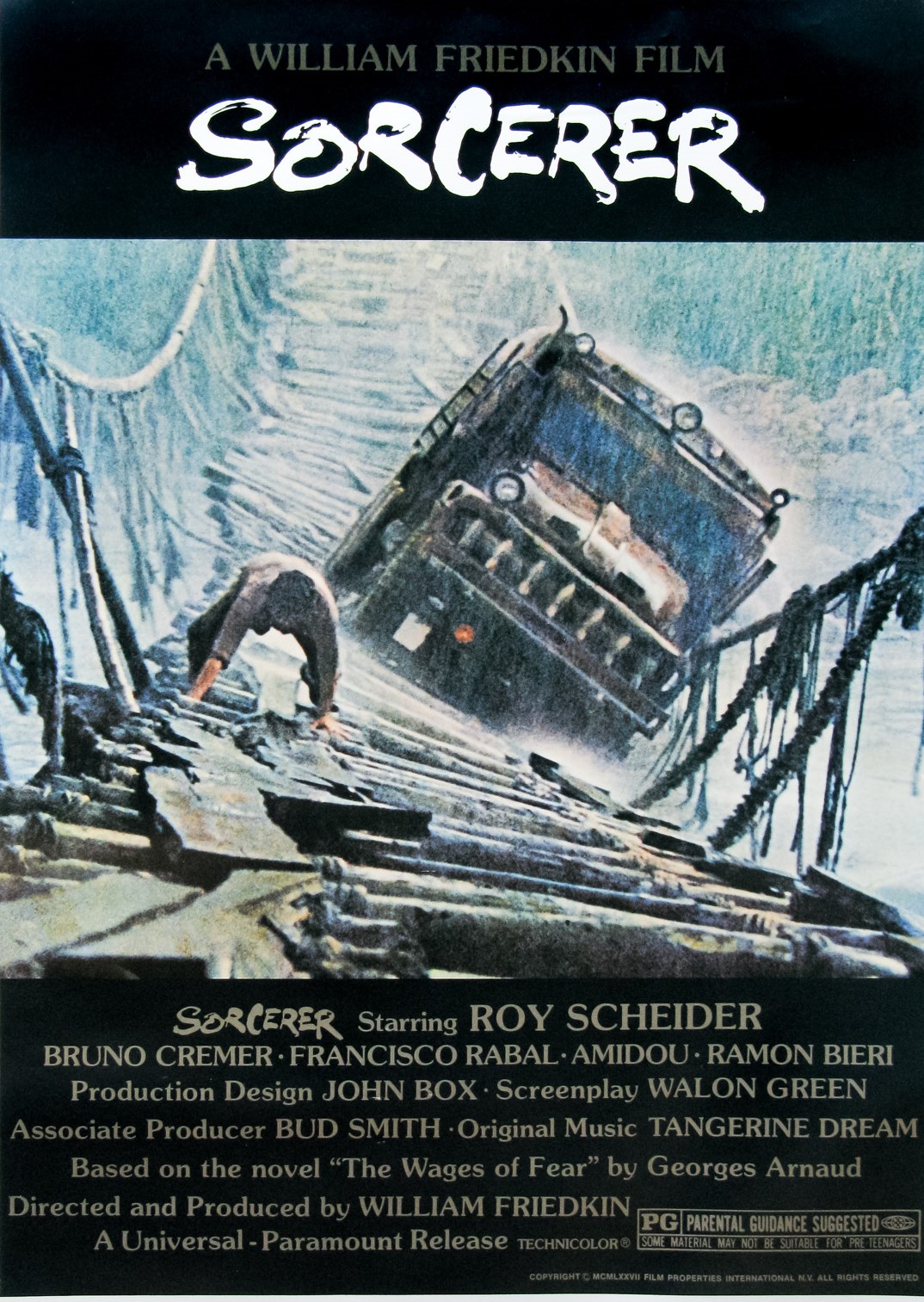
Sorcerer (1977)
One of the grimiest movies of all time. You can practically feel the mud and motor oil. Like any human being with a beating heart, I more or less hyperventilated during the bridge scene. On a more holistic note, I know this is basically a remake of The Wages of Fear, but the whole time I was watching this movie, I couldn't stop thinking about how a year prior to Sorcerer's release, the Little House on the Prairie TV show had done its own episode with the same plot about transporting nitroglycerine in a vehicle over unsteady terrain—I'd kind of like to imagine that Friedkin was doing a gritty Little House remake instead (hey, this one's at least a little more honest than the show about the white people's relationship with indigenous people). Grade: A-

Books


The Prime of Miss Jean Brodie by Muriel Spark (1961)
On the one hand, it's a comic novel about a misfit teacher with an outsized personality at a girls school in Scotland, and as that, it's very funny. Spark is a terrifically efficient writer who can turn a phrase on a dime and a scene in just a paragraph, and she makes this story just pop with hilarity. But by the same turn, it's also a deconstruction of that Dead Poets Society trope of the misfit teacher with an outsized personality (was this a trope in 1961?), turning it into a fable about the rise of fascism in Europe that gives the humor a striking, heart-in-the-throat edge. I loved it—a nearly perfect novel. Grade: A


Music

Taylor Swift - folklore (2020)
A lot of the press surrounding folklore has focused on the idea that this is Taylor Swift's "indie" album, and there admittedly is a generally pan-indie sound here that feels like the line of best fit from the indie cohort that was cresting around 2007-2009: a little bit of Seven Swans-era Sufjan here, a little bit of Death Cab for Cutie there—not to mention the presence of Bon Iver's Justin Vernon on the song "exile" (doing a rare non-falsetto vocal, I might add, which is wonderful) and The National's Aaron Dessner credited as co-writer and producer on more than half the tracks. But less commented on is how folklore is a different kind of throwback, one to the kind of music Taylor Swift herself was making during that same era as those indie touchstones were breaking into the mainstream. In a lot of ways, this album feels like a revival of Taylor Swift the Songwriter that blossomed on Fearless and Speak Now. She's never not been a songwriter's songwriter on any of her records, but the pop idiom that she's embraced since Red has been increasingly persona-driven and self-referential and universal—its own pleasure, to be sure, but with folklore, Taylor Swift as storyteller and Taylor Swift as chronicler of personal detail return in full force, but with the twist that she's looking at her own life and especially the character-driven teen narratives later in folklore from the perspective of a thirtysomething instead of as a teen herself. To put it another way, she never sounds like anything but an adult on the record and specifically like the adult version of the public and artistic face of the Taylor Swift seen on a record like Fearless (unlike her other recent albums, which often seemed to be interested in progressing the concept of "Taylor Swift" into a new kind of person: for instance, 1989 and reputation represent evolution rather than simple growth). It lacks the diaristic intimacy of her early work, but the aged point of view turns familiar Swiftian tropes into thornier and more elliptical shapes, a kind of large-scale deployment of the teenagerdom-as-hindsight premise of something like "Fifteen." This album's "betty," for example, feels both like a song that Taylor might have written for Speak Now (that key change in the final chorus) but also unmistakably colored by the fact that Taylor Swift is writing as someone twice the age of the song's protagonist. It's incredibly satisfying, rewarding attention to Taylor Swift lore and meta-narrative without ever getting lost in the weeds that might obscure just how pristine and craftsman-like these songs are just as songs. Like most Taylor Swift albums, folklore could probably have been a stronger whole if it had shed a few tracks, particularly in the back half (to name one, I'd happily give up "hoax" so the album could end on the much better closer, "peace"). But this is some good, comfy music anyway, so on the other hand, it feels kind of appropriate that it would be billowy. Grade: A-

Sunday, February 2, 2020

Mini Reviews for January 27 - February 2, 2020

Had most of the week off of school. Praise be.

Also, if you like weird slacker prog, don't forget to check out my new Prog Progress post on Dün's Eros.

Movies

Miss Americana (2020)
Will write a more in-depth review for Cinematary in the next couple of days, but for now, I'll just say that this is a good—if unspectacular—documentary about all the various political and psychological tensions inherent in what it means to be Taylor Swift (and, more generally, any female celebrity). It's unabashedly in the pro-Taylor camp, and I imagine that people who aren't might accuse this movie of committing sins of omission; I myself would have liked for it to have been just a little thornier, too. But if the relatively unironic embrace of the Taylor brand is the price of having this close of access to Taylor herself, then I'd say it paid off. Grade: B

Edit: Here's the in-depth Cinematary review!

Taylor Swift: Reputation Stadium Tour (2018)
The music is good, of course (minus "End Game," an album highlight that loses a lot of its energy without that weird, compelling interplay between Swift, Sheeran, and Future). But the filmmaking made me want to pull my hair out. So much editing (did any single shot last longer than two seconds?), and that mixed with some astoundingly poor shot composition chops up the presumably impressive stage setup and dance choreography into a jumble of hard-to-contextualize imagery. I'm tilting slightly above the completely middle-of-the-road rating, though, because I want everyone to know that, two years later, the backlash is a lie: Reputation is one of Taylor Swift's best albums—good enough, even, to counteract filmmaking this aggravating. Grade: C+

Paint It Black (2016)
As it turns out, Amber Tamblyn is a really good writer/director—I guess all the hard work that went into the "suckumentary" in Sisterhood of the Traveling Pants really paid off, huh? Seriously, though, this is super solid: a taut indie that pivots effortlessly between warped psycho-drama and a tender exploration of grief, with a great eye for visuals/editing and a great ear for sound design. It's also the acting showcase that Alia Shawkat has deserved since forever. Grade: B+


No (2012)
The story and screenplay themselves have this kind of Argo-ish vibe that takes a real-life event (in this case, the advertising campaigns surrounding the 1988 vote to remove Pinochet) and spins a broad and bright yarn that alternates between humor and dead seriousness. It works well here, though it's nowhere near as deconstructive or bold as director Pablo Larraín's later features like Neruda, and I kind of missed that formal and thematic playfulness. The real draw here is Larraín's decision to film the whole movie on magnetic tape rather than celluloid. It's a choice that not only makes the movie's constructed scenes virtually indistinguishable from the archival footage Larraín often inserts (an effect that gives a striking power to scenes like the one where the police violently break up a "No" rally) but also gives the movie an uncommonly beautiful aesthetic as its rickety, slightly-color-separated video tape limitations collide with some world-class cinematography in breathtaking and unexpected ways. Grade: B+

Wuthering Heights (2011)
Andrea Arnold's arrestingly beautiful and relentlessly patient cinematic style reinterprets Brontë's heavily Gothic/Romantic novel through the lens of crushing Naturalism, which obscures some of the primal power of its plot. At the same time, the film also complicates a lot of the novel's ideas about class by also highlighting the novel's very sub-subtext about race (Heathcliff is explicitly black in this adaptation and the subject of some unambiguous racism), which does a lot to bring out a lot of the under-explored geometries of the plot's drama. I'm not sure if it completely works (environmental determinism by way of racial hate definitely fits within the broader philosophical context of Naturalism, but does it work within this specific plot? Still mulling it over), and there are a few unambiguously bad choices—e.g. the fact that there is no way in heaven or on earth that young Catherine as Shannon Beer could have grown into adult Catherine as Kaya Scodelario—that make the film not quite work anyway, even if you buy the intersection of its aesthetic and philosophy. But it's a striking movie whose risks demand consideration, and more classic literary adaptations could stand to be as daring as this one. Grade: B

Dil Se.. (दिल से..) (1998)
Really dug the musical sequences (especially the one on top of the train—y'all know I'm here for train musical sequences), and for a 2.5+ hour movie, this remains startlingly energetic throughout. I'm also very much interested in the romantic elements of this movie and how they intersect the ultimately deeply tragic ideas about the irreconcilability of moderate and radical politics—the shameless romance of the movie's early goings feels bitterly ironic and uneasily complicated by where this movie eventually goes, and that's really interesting. I'm honestly probably a little more positive on this movie than my rating indicates, but I'm hedging my bets with a kind of generically positive rating here because a lot of my positive feelings have to do with some hunches that I have about the way that the movie deconstructs Shah Rukh Khan's protagonist, hunches that I'm not entirely sure are correct, given my near total ignorance of contemporary Indian cinema and culture. Grade: B+

Anyway, if you'd like to hear me say a more in-depth version of the above or if you'd like to hear some other people say a few more interesting things, you can listen to Episode 284 of the Cinematary podcast, where a group of us talk about this movie!


9 to 5 (1980)
Ridiculously entertaining and far stranger than at least I had been told: the first half is basically what I was expecting, albeit much sharper—a workplace comedy surrounding entrenched misogyny and generally dehumanizing conditions at a large corporation. But then in the second half, the ladies steal a corpse from a hospital, and it's somehow not the wackiest thing that happens. Through all the hairpins turns, though, it never loses its wicked sense of humor nor its focus on the wage theft and exploitation inherent in a corporation, and given the sheer number of comedies whose thematic and comedic ideas just spin out of control by the end, I have mad respect for the screenplay and all-star leads who keep all this together. I know that it's unlikely that Dolly Parton has kept her political views secret for so long because she's a red-blooded communist, and yet... and yet... Grade: A-

Music

Pavement - Slanted and Enchanted (1992)
I'm confused by the discussion surrounding whether it is this album or Crooked Rain, Crooked Rain that is Pavement's best—Crooked Rain is clearly better than this album in every conceivable way, while Wowee Zowee is obviously superior to them both. Slanted feels very much like the low-budget EP before their real albums, which isn't a criticism, really, but they would go on to do much more complicated and interesting work. I do like how noisy and lo-fi the album is, even compared to Pavement's famously fuzzy aesthetic throughout the rest of their career, but time and again I find myself drifting toward the songs like "Here" that manage to lift their heads and melodies above the static, and then I just find myself wanting to go to Crooked Rain again. Still, it's not without its moments. Grade: B

Sunday, October 27, 2019

Mini Reviews for October 7-27, 2019

It's been several weeks since I've made a blog post, and for those of you who don't know, this is because my brother died two weeks ago. It's been a difficult time for my family, and even though I was still reading books, watching movies, etc., I really didn't feel like writing about them until just a few days ago. I don't know how much my brother read this blog, but my relationship with him casts a long shadow over my reviews. Who I am as a viewer and critic is inextricable from my relationship with him. A lot of our childhood together was spent—as is the case with most siblings, I'd guess—sharing movies, music, and television. We watched Batman: The Animated Series and played "Batman and Robin" together (though neither of us liked being Robin); we rented The Iron Giant from Blockbuster and liked to joke about "coco-lax"; we spent a lot of time doing Toy-Story-inspired surgery on stuffed animals we had. When we were teens, there was a lot of arguing over media, particularly music: he was into blink-182 and Sum 41, whereas I was a budding indie-rock snob. We both liked Dark Side of the Moon, though, and I remember loaning him my CD a lot in high school at night so he could go to sleep to that beating heart. The music fights died down once we were no longer living together and subjecting each other to each other's taste, but I still think about those fights sometimes and the ways in which I've decided he was right and I was wrong (Rage Against the Machine, for example: I of course realize now that they rock).

When somebody close to you dies, the impulse is to try to conceptualize the entire person in your mind, since that's all you have left, but it's hard to the point of impossible to fit a whole human being inside your head because when they're alive, there's no need—what forms in the mind is the organic outgrowth of life and the afterimages of experiences. So when I think about my brother now, it's only pieces of who he is that come to me at a time. Right now, as I'm putting together this blog post, it's these little fragments of shared media that bob to the surface. We are everyone we have ever known, and our relationships with art are part of that, since our experience of art is the collection of these relationships' intersections with the now. To write a review is to remember what fragments you can, as incomplete of a reckoning of a whole life as that is.

Anyway, here are the reviews.

Movies

The Lighthouse (2019)
Man, how do I even describe The Lighthouse? I guess I can now call it a hallmark of writer/director Robert Eggers that his films are heavily steeped in a meticulous recreation of arcane English dialects; in the same way that The Witch had its characters speak in Puritan English, The Lighthouse has its Willem Dafoe character go full-on Captain Ahab/Mr. Krabs seaman English—whatever that's called. The degree to which that sounds goofier than The Witch is a good indication of the difference between the two projects: The Lighthouse is the unhinged-to-the-point-of-hilarity but no less frightening cousin to The Witch's relatively serious drama of isolation. There's a lot to, uhh, behold in The Lighthouse, from its deeply rattling evocation of post-Romanticism "weird" fiction like Melville and Lovecraft to its smotheringly lush late-1800s sea-shanty production to its fevered imagery and unstable reality to its (I kid you not) mermaid genitalia, but the absolute best of it all for me is the complete and total control Eggers and Dafoe have over the effect of this dialect. Long, careening scenes will take hairpin turns of tone bent around ornate speeches and turns of phrase: Dafoe goes from lamenting that Robert Pattinson's character doesn't like his cooking to delivering two minutes of the most elaborate, blistering maritime curse I've ever heard then finally to a small, tender word all in the space of like five minutes, and it's by turns riveting and funny and scary and kind of sad—amazingly, without ever feeling unnatural or out of place. It all just is, spewing forth from this totemic force of a man inside this totemic force of a movie, high and low brows crashing together like waves whipped up by a nor'easter emanating from the deepest well of the masculine psyche. The movie is, among other things, about all the ways in which we humans—but especially we males—cloak our basest urges in all sorts of hierarchies and rituals and how quickly these hierarchies and rituals become indistinguishable from those base urges themselves when we cling to them tight enough. Dafoe's intricate dialect is a vehicle of both his rigid rules for keeping up the lighthouse and also these deeply ancient curses and superstitions that envelope his rules like a force of nature. It's bewildering, terrifying, and very, very funny. Martin Scorsese says that Marvel movies are like amusement park rides, but honestly, none of them ever took me on a ride as wild and thrilling as this. Grade: A

The Raid: Redemption (Serbuan maut) (2011)
I care not a whit for any of the plot or human beings within this movie. But the action is very super good, y'all. I mean, that's the only thing people talk about with this movie, so it's not like I'm blowing any minds. Sometimes consensus is just right. Grade: B


The Happening (2008)
I'm not going to say that people "misunderstood" The Happening upon its release, because so much of what's here defies the typical sort of appraisal: the dialogue has the almost-human surreality of one of those AI-generated scripts ("We ate tiramisu together, that is it"); Mark Wahlberg and Zooey Deschanel give two of the most idiosyncratic and unnatural performances of 21st-century mainstream cinema; the score is ham-fisted to the point of self-parody; Shyamalan's motif of wind blowing through trees feels laughably flimsy. There's nothing here that's conventionally entertaining, that's for sure, and it's no surprise that audiences and critics bristled at this deeply off-beat horror-melodrama-thriller oddity. But I dunno... I kind of liked it. Kind of. I'm not fully with the re-appraisers who want to call this an outsider masterpiece or whatever, but like most of Shyamalan's movies, there's this undeniable energy to the whole thing that's pretty compelling when it isn't just confounding. The way this threads the needle between an evocation of '50s-style B-movie kookiness, an almost arthouse level of seriousness regarding the lived experience of humanity on the brink, and (intentional?) absurdist comedy is just so undeniably its own thing. To be honest, the alchemy of it all feels just a few clicks away from the otherworldly camp that David Lynch taps into, and if people hadn't taken The Sixth Sense so po-facedly seriously and did the whole "Next Spielberg" jig, we might be talking about Shyamalan more in that vein. Maybe. Like Lynch, it's easy to chuckle at the window dressing, like the off-kilter dialogue and weird acting, but its themes (in this case, ecological collapse and the horrifying unpredictability of human self-destruction) are so unrelentingly bleak and unshakeably tethered to my own real-world terrors that it's hard to feel comfortable sitting unambiguously in the "so-bad-its-good" enjoyment mode. Tell me, what on earth are you even supposed to do with First Reformed as filtered through Plan 9 from Outer Space? Grade: B-

The People Under the Stairs (1991)
This movie definitely bites off more than it can chew as far as ideas go. There's so much crammed into this gleefully dark satire that there are a lot of elements that feel half-baked—including the titular people under the stairs themselves, who are never as engaging or interesting or developed as the children protagonists or the maniacal villains. But holy moly, what works here works. I'm all about this movie's hatred of vulture landlords, and I'm especially all about this movie's villains as the Reagans from Hell. Plus, the "'80s family movie, but a Hard R rating" is a very fun vibe. As a movie, it's a LOT, but gloriously so. Grade: B+


Gremlins 2: The New Batch (1990)
Demented and gonzo to an absurdly delightful degree: I almost died of happiness when the gremlins break out into a big musical number to the tune of "New York, New York." The chief pleasure here is just how anarchic it is (very); the movie opens with an animated bit involving the classic Looney Tunes opening, but with Bugs and Daffy fighting for control over the segment, and this is a pretty great microcosm for the level this is working on—quite explicitly a live-action cartoon. As a result, the movie is a little less sharp in its satirical targets than its predecessor's shredding to pieces of Christmas Americana, but '80s NYC yuppies and real estate barons are still worth the chaos that's wreaked on their world here. In a 2019 in which Donald Trump is leading a quasi-fascist regime seemingly bent on destroying everything I like about America, I can see how some people might feel like this movie softballs its depiction of its very Donald-Trump-in-the-'80s-esque villain (he has a semi-sympathetic redemption arc); however, it is a marvelously bitter pill that The New Batch ends with this theoretically reformed villain cashing in his newfound goodwill by deciding to profit from the mass-manufacturing/exploitation of the first movie's small town. It's not just (as the first movie argues) that the concept of "Americana" is flimsy kitsch that can bear none of the weight of reality; it's that this kitsch is a pandering lie cooked up by a craven corporation, and any humanity that once existed within this concept has been wrung out for all the shareholder value it's worth. It's a good thing this movie is an all-time blast, or the cynicism would collapse under its own weight. Grade: A

Halloween III: Season of the Witch (1982)
This movie's reputation as the supreme oddball of the Halloween franchise (taking place in a universe outside the continuity of the Michael Myers entries) led me to believe that it was going to be a lot more meta and self-reflexive in its posture toward the series as a whole. Instead, its relationship with the rest of the series boils down to a few cheeky references, and otherwise, this is a fun little one-off sci-fi horror movie reminiscent of The Stuff and that kind of thing. Most slasher franchises would probably be improved if they eventually just became anthology series like Season of the Witch was apparently trying to make of the Halloween series, so I applaud the attempt here, however unsuccessful. I guess there are already a couple other Halloween continuities we could try this with again, though—get on it, Universal! Grade: B+

Ganja & Hess (1973)
The first Capital-G Great horror movie I saw this October. Spike Lee of course remade Ganja & Hess in 2014, but Lee's somewhat terrestrial preoccupations never manage to hook the deep mysticism of this original. Actually, it's 2012, with Red Hook Summer, that shows ol' Spike most dedicatedly carrying forward this movie's torch—a sprawling, searingly fervent reckoning of Christianity's role in colonialism and slavery, set to wall-to-wall gospel music. Bitter and evocative: eternal life is the price of vampirism, resurrection its perverse horror. But the magic is that oppression never overwhelms the film itself, which blooms into a liberated beauty from the husk of its plot. It is a profoundly spiritual experience—neither the social treatise of Spike's Red Hook Summer nor the neutered eroticism of his remake two years later—but rather inventing its own sublime cinematic language of cross-fades and double-exposures and slow-mo, seemingly from the ground up. Its radical freedom of style and substance forms the perfection of blaxploitation; Curtis Mayfield and stuff form the cultural memory of that movement, a monolith of groovy bass and bottomless cool for semi-ironic appropriation. But at least to me, the elliptical mysticism and self-made mythologizing of this movie (and, to a different degree, Sweet Sweetback) form a much more compelling soul to the whole scene. If you couldn't tell, I loved this. Grade: A

The Blood Spattered Bride (La novia ensangrentada) (1972)
The marketing promises a kind of Spanish giallo, but it plays like a grindhouse take on a Val Lewton picture. Ancient curses and lesbian vampires cooked in a visually rich slow-burn. I'm not always the biggest fan of exploitation cinema, but this is kind of the platonic ideal of it for me: in which it's a trojan horse for the marginalized to wield the lurid tropes of the genre as weapons against its own audience, right up to that final shot, which is probably the most shocked I've been by a movie this whole horror season. It's a pretty nasty movie, and I wish it had made as much space for onscreen queer sexuality as it makes for onscreen sexual violence, but as an indictment of masculine sexual entitlement/aggression, it's damning—not to mention pretty riveting. Grade: B+

Daughters of Darkness (Les lèvres rouges) (1971)
I'm writing this review a couple weeks after I actually saw this movie, and I honestly don't remember the plot hardly at all. But I do remember Delphine Seyrig's wonderful performance—a more sympathetic, vampire iteration of Mrs. Danvers from Rebecca—and I do remember the pretty lush scenery and cinematography, which itself feels like a vampire old-soul version of cinematic styles gone by. Anyway, I remember enjoying this overall. Grade: B


The Velvet Vampire (1971)
A really dope score and some very cool hallucinogenic/dream imagery buoy this movie a bit for me, and there's a deep sadness to the ending that I wasn't expecting. But I guess I'm not really invested enough in vampire stories to begin with to be all that entranced by a revisionist one. Then again, I did love Ganja & Hess, so I dunno why I'm not more excited. Grade: B-


Music

Lover by Taylor Swift (2019)
The first half of this album is fantastic, and things like "Cruel Summer" and "Miss America and the Heartbreak Prince" are some of the best Taylor Swift's ever been at pure pop music: shiny, pristine, hooky, thoughtful. But there's a lot of pretty weak material buried deep in this record, too, material like the lead single "Me!" and the honestly pretty dumb pileup of Britishisms that is "London Boy," and the fact that anything can be buried deep in this album speaks to the biggest issue, which is that it's just too long and, with that, has some really awful track sequencing—the supremely goofy "London Boy" goes right into "Soon You'll Get Better," a song about her mother's battle with breast cancer? Who thought that was a good idea? I'm probably in the minority in thinking that Lover as a whole is a step down from her previous record, Reputation; it lacks that album's thorniness or the arch-villain camp or the thematic complexity. But it's certainly not a weak album, and if we're going just on the basis of high points, Lover has several very high ones. Grade: B