My son was born, though, which is just such a wonderful ray of positivity in my life while at the same time ushering in a kind of mournfulness for him and the world he will inherit from my generation and the ones prior. I want my son to have a world full of joy and beauty, and while certainly those things will persist, they will do so alongside God only knows what horrible inheritance of the modern age. But in the absence of a material reality that's going to leave a more beautiful world for my son, there is at least art and the legacy it can leave on the human earth for my son to encounter, and readers, you all know that the cinematic arts are near and dear to my heart.
So here are my favorite movies of the year. When my son asks me about this year (if he cares to—and honestly, why would he? I certainly wouldn't want to hear about 2019), I'll have to tell him about children in cages and my brother's death and my grandfather's decline and Jeff Bezos hoarding his billions like a really boring version of a fairy tale dragon. But I also hope to be able to tell him about what made me feel awe and wonder and that rush of being alive, and these movies will undoubtedly be a part of that.
Anyway, enough hand-wringing. Here's the list. As always, it's limited to movie that had either a streaming or theatrical release in the United States during 2019. Also limited to the movies I actually had a chance to see in 2019. So before you ask, no, I didn't get to see Knives Out or Rise of Skywalker.
Also, don't forget about my Favorite Music of 2019 post, in case you missed it and are interested!
Favorite Movies
 1. Long Day's Journey Into Night
Filmmakers have long compared cinema to dreaming, but when the protagonist of Bi Gan's towering Long Day's Journey Into Night falls asleep, it results in one of the most thrilling and transporting sequences of film I've ever seen: an hour-long single take that affirms that filmmaking is the nexus between waking and dreaming, heaven and earth. The movie is one half mystery and one half that dream sequence, and honestly, I couldn't describe much more about the opaque plot. But it doesn't matter when it's composed of some of the most dazzling minutes of film ever. The Wizard of Oz for the arthouse. This is why I love movies.
[Read original review]
 2. The Lighthouse
Both an unsettling dream of a film and also the funniest comedy of the year. Melville meets Beckett meets whatever strange thought is in director Robert Eggers's head. Willem Dafoe is mesmerizing. The cinematography is lush. The Lighthouse is God. Why'd ya spill yer beans?
[Read original review]
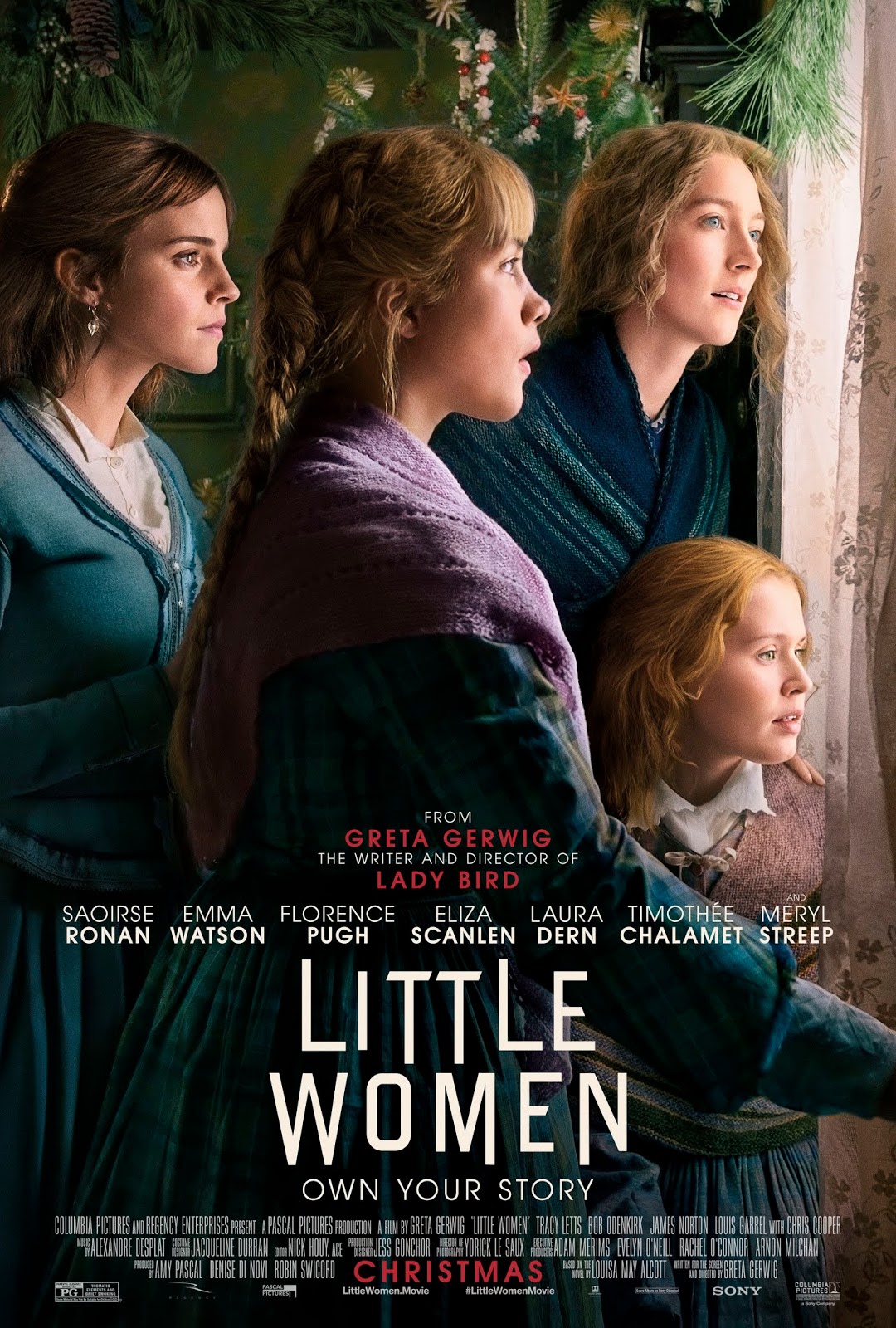
 3. Little Women
The kind of movie that makes you glad you were alive to see it. I wouldn't be surprised if after repeat viewings, this became my favorite movie of this year.
[Read original review]
 4. The Irishman
Scorsese's death-obsessed swan song for the modern gangster genre is one of the man's best. Like Silence a few years ago, it's about grasping for God and some sense of meaning within a life that has caused immeasurable suffering and resulted in crushing isolation: a bleak rumination on fevered and heartbreaking memories that try desperately (and unsuccessfully) to obscure the wasted life and rotten soul of the protagonist.
[Read original review]
 5. Uncut Gems
The most intense movie on this list by far. Adam Sandler's turn as a jeweler who pays his debts with gamble upon gamble is one of the more visceral depictions of the aftershocks of the Great Recession put onscreen (the movie takes place in 2012), Darius Khondji's grainy, nervous cinematography and Daniel Lopatin's relentless, pulsing score highlighting the sweaty desperation of Sandler's character. It's a movie of almost transcendent griminess, and when it reaches its inevitable, heart-stopping conclusion, you'll realize you haven't taken a breath for two hours.
[Read original review]
 6. Parasite
Twisty and tense, provocative in its ideas—Gatsby-esque in its critique of capitalism and the pretensions of the upper class, Hitchcock-esque in its propulsive, deadpan drive.
[Read original review]
 7. Hustlers
The best mainstream Hollywood release of the year (if we don't count Little Women); the best Goodfellas riff since the OG itself; a rip-roaring heist film by way of a female friendship dramedy. A lot of the movies on my list appeal pretty much to my own niche set of interests, and Hustlers does that, too, but it's also far and away the biggest crowdpleaser of all ten here. I can't say enough good things about it.
[Read original review]
 8. Her Smell
Terrible title. Good movie. I can't think of a "rise and fall and rise of a musician" movie that does that arc more effectively than this one. One of Alex Ross Perry's best.
[Read original review]
 9. Us
9. Us
Get Out's messier, more ambitious younger sibling. There's an intensity to the sheer commitment to its host of wild ideas, and the resulting movie is breathtaking in its scope. Jordan Peele's got it, that mad Twilight Zone energy. Lupita Nyong'o's got them, the best performance(s) of the year.
[Read original review]
 10. Transit
Transit takes a WWII novel and transplants it into contemporary Europe, provoking questions like: What if there were Nazis in 2019? What if they marched through the streets to round up refugees? What if they didn't wear swastikas and stuff and instead just had on riot gear and police uniforms? Weird, right? Guess we'll never know what that would be like.
[Read original review]
Appendix: Miscellaneous Movies Also Worth Noting
Best Screenplay: High Flying Bird—I'm pretty sure it's Little Women. But if it isn't Little Women, then it's certainly Tarell Alvin McCraney's electric writing on High Flying Bird. And I don't even follow basketball.
Best Florence Pugh in a Flower Crown: Midsommar—Again, this maybe should go to Little Women. But this one gets bonus points for putting Pugh in a flower dress, too. I admire the commitment to the bit.
Best Action: John Wick 3: Parabellum—I mean, it's John Wick. He has a fight on top of a galloping horse.
Animated Corner Award: I Lost My Body—At least among the ones I saw, 2019 was a distressingly weak year for animated movies, hence nothing making my top 10. But animation is also the thing I love most about cinema, so I feel weird leaving it off completely, so here's this movie that was interesting but that I wasn't super enthusiastic about.
Documentary Corner Award: Apollo 11—On the other hand, this was a tremendous year for documentaries (honestly, a great decade for documentaries, which is a relief after the 2000s were a nadir for the form), and Apollo 11, the movie made of mostly previously unseen footage of the original moonshot, is the very best. Its focus on the mundane details of the mission and the spaces around its most famous moments cut through the cultural mythology of the event and emphasis just what a jaw-dropping feat of engineering and physical dexterity landing on the moon was. Stunning.
"Documentary" Corner Award: Rolling Thunder Revue: A Bob Dylan Story—Too good not to include, too fake to call a documentary.
Concert Documentary Award: Homecoming: A Film by Beyoncé—Completely thrillingly assembled footage of the instantly iconic "Beychella" performances. It also probably belongs alongside Rolling Thunder Revue in its work in furthering the mythologizing of its central artist.
Best Outer Space Award: Ad Astra—2019 was a really tremendous year for space movies. If you're looking for "hard sci-fi," you can't get much better than this movie's rigorously thoughtful, realistic depiction of near-future space travel.
Best Philosophical Implications of Outer Space: High Life—I wrote about this at length for Cinematary, if you want to read that.
Best Conspiracy: Under the Silver Lake—A conspiracy film for the internet era. The biggest conspiracy of them all is that you're inventing it all yourself. Facts may not care about your feelings, but what if they also don't care about making any coherent sense?
Best Ghost Story: Atlantics—It's kind of a ghost story. I dunno. See it yourself and find out.
Best UFO Enthusiast: Ash Is Purest White—You'll know him when you see him.
"More People Should See This" Award: Greta—Don't remember too many people talking about this thriller, but it's a good one. Go see it!
"Thank Goodness I Don't Live In Florida" Award: Crawl—Hurricanes? Alligators? No thanks.
"Nope, Florida's Still Not Worth It" Award: Beach Bum—Not even a ridiculously fun Matthew McConaughey performance and some really cool cinematography can make this place somewhere I want to be. Plus: SHARKS??
"You Do You, Man" Award: Glass—M. Night Shyamalan is just doing his thing, and this year "his thing" was making a logically suspect, bizarrely paced mythological elevation of the Avengers. It's very odd, it's not really that good, and it's entirely a Shyamalan joint. Glad our test-grouped-to-death corporate blockbuster age somehow made room for a movie like this.
Least-Favorite Trend of the Year: "Hello, my name is the Walt Disney Company! Remember that thing of ours that you like? We're here to make it worse!"
Worst Disney: Dumbo—A very crowded field; I can't remember a year in which I found so little to like among the corporate titan's film output. And I didn't even get a chance to see The Lion King. But this completely misbegotten live-action adaptation of the bona fide animated classic gets the dubious honor as my least-favorite out of a whole host of rotten.
Worst Movie of the Year: Climax—Gaspar Noé can go sit on a tack. An LSD-laced tack.
Best Non-2019 Movie I Saw for the First Time in 2019: Dusty Stacks of Mom: The Poster Project—Jodie Mack's beautiful, idiosyncratic, personal re-interpretation of Pink Floyd's Dark Side of the Moon, by way of the collapse of her mother's poster business. It's basically perfect, and while it's devilishly hard to track down, if you can do it, DO IT. It's so great.
So here are my favorite movies of the year. When my son asks me about this year (if he cares to—and honestly, why would he? I certainly wouldn't want to hear about 2019), I'll have to tell him about children in cages and my brother's death and my grandfather's decline and Jeff Bezos hoarding his billions like a really boring version of a fairy tale dragon. But I also hope to be able to tell him about what made me feel awe and wonder and that rush of being alive, and these movies will undoubtedly be a part of that.
Anyway, enough hand-wringing. Here's the list. As always, it's limited to movie that had either a streaming or theatrical release in the United States during 2019. Also limited to the movies I actually had a chance to see in 2019. So before you ask, no, I didn't get to see Knives Out or Rise of Skywalker.
Also, don't forget about my Favorite Music of 2019 post, in case you missed it and are interested!
Favorite Movies

Filmmakers have long compared cinema to dreaming, but when the protagonist of Bi Gan's towering Long Day's Journey Into Night falls asleep, it results in one of the most thrilling and transporting sequences of film I've ever seen: an hour-long single take that affirms that filmmaking is the nexus between waking and dreaming, heaven and earth. The movie is one half mystery and one half that dream sequence, and honestly, I couldn't describe much more about the opaque plot. But it doesn't matter when it's composed of some of the most dazzling minutes of film ever. The Wizard of Oz for the arthouse. This is why I love movies.
[Read original review]

Both an unsettling dream of a film and also the funniest comedy of the year. Melville meets Beckett meets whatever strange thought is in director Robert Eggers's head. Willem Dafoe is mesmerizing. The cinematography is lush. The Lighthouse is God. Why'd ya spill yer beans?
[Read original review]

The kind of movie that makes you glad you were alive to see it. I wouldn't be surprised if after repeat viewings, this became my favorite movie of this year.
[Read original review]

Scorsese's death-obsessed swan song for the modern gangster genre is one of the man's best. Like Silence a few years ago, it's about grasping for God and some sense of meaning within a life that has caused immeasurable suffering and resulted in crushing isolation: a bleak rumination on fevered and heartbreaking memories that try desperately (and unsuccessfully) to obscure the wasted life and rotten soul of the protagonist.
[Read original review]

The most intense movie on this list by far. Adam Sandler's turn as a jeweler who pays his debts with gamble upon gamble is one of the more visceral depictions of the aftershocks of the Great Recession put onscreen (the movie takes place in 2012), Darius Khondji's grainy, nervous cinematography and Daniel Lopatin's relentless, pulsing score highlighting the sweaty desperation of Sandler's character. It's a movie of almost transcendent griminess, and when it reaches its inevitable, heart-stopping conclusion, you'll realize you haven't taken a breath for two hours.
[Read original review]

Twisty and tense, provocative in its ideas—Gatsby-esque in its critique of capitalism and the pretensions of the upper class, Hitchcock-esque in its propulsive, deadpan drive.
[Read original review]

The best mainstream Hollywood release of the year (if we don't count Little Women); the best Goodfellas riff since the OG itself; a rip-roaring heist film by way of a female friendship dramedy. A lot of the movies on my list appeal pretty much to my own niche set of interests, and Hustlers does that, too, but it's also far and away the biggest crowdpleaser of all ten here. I can't say enough good things about it.
[Read original review]

Terrible title. Good movie. I can't think of a "rise and fall and rise of a musician" movie that does that arc more effectively than this one. One of Alex Ross Perry's best.
[Read original review]

Get Out's messier, more ambitious younger sibling. There's an intensity to the sheer commitment to its host of wild ideas, and the resulting movie is breathtaking in its scope. Jordan Peele's got it, that mad Twilight Zone energy. Lupita Nyong'o's got them, the best performance(s) of the year.
[Read original review]

Transit takes a WWII novel and transplants it into contemporary Europe, provoking questions like: What if there were Nazis in 2019? What if they marched through the streets to round up refugees? What if they didn't wear swastikas and stuff and instead just had on riot gear and police uniforms? Weird, right? Guess we'll never know what that would be like.
[Read original review]
Appendix: Miscellaneous Movies Also Worth Noting
Best Screenplay: High Flying Bird—I'm pretty sure it's Little Women. But if it isn't Little Women, then it's certainly Tarell Alvin McCraney's electric writing on High Flying Bird. And I don't even follow basketball.
Best Florence Pugh in a Flower Crown: Midsommar—Again, this maybe should go to Little Women. But this one gets bonus points for putting Pugh in a flower dress, too. I admire the commitment to the bit.
Best Action: John Wick 3: Parabellum—I mean, it's John Wick. He has a fight on top of a galloping horse.
Animated Corner Award: I Lost My Body—At least among the ones I saw, 2019 was a distressingly weak year for animated movies, hence nothing making my top 10. But animation is also the thing I love most about cinema, so I feel weird leaving it off completely, so here's this movie that was interesting but that I wasn't super enthusiastic about.
Documentary Corner Award: Apollo 11—On the other hand, this was a tremendous year for documentaries (honestly, a great decade for documentaries, which is a relief after the 2000s were a nadir for the form), and Apollo 11, the movie made of mostly previously unseen footage of the original moonshot, is the very best. Its focus on the mundane details of the mission and the spaces around its most famous moments cut through the cultural mythology of the event and emphasis just what a jaw-dropping feat of engineering and physical dexterity landing on the moon was. Stunning.
"Documentary" Corner Award: Rolling Thunder Revue: A Bob Dylan Story—Too good not to include, too fake to call a documentary.
Concert Documentary Award: Homecoming: A Film by Beyoncé—Completely thrillingly assembled footage of the instantly iconic "Beychella" performances. It also probably belongs alongside Rolling Thunder Revue in its work in furthering the mythologizing of its central artist.
Best Outer Space Award: Ad Astra—2019 was a really tremendous year for space movies. If you're looking for "hard sci-fi," you can't get much better than this movie's rigorously thoughtful, realistic depiction of near-future space travel.
Best Philosophical Implications of Outer Space: High Life—I wrote about this at length for Cinematary, if you want to read that.
Best Conspiracy: Under the Silver Lake—A conspiracy film for the internet era. The biggest conspiracy of them all is that you're inventing it all yourself. Facts may not care about your feelings, but what if they also don't care about making any coherent sense?
Best Ghost Story: Atlantics—It's kind of a ghost story. I dunno. See it yourself and find out.
Best UFO Enthusiast: Ash Is Purest White—You'll know him when you see him.
"More People Should See This" Award: Greta—Don't remember too many people talking about this thriller, but it's a good one. Go see it!
"Thank Goodness I Don't Live In Florida" Award: Crawl—Hurricanes? Alligators? No thanks.
"Nope, Florida's Still Not Worth It" Award: Beach Bum—Not even a ridiculously fun Matthew McConaughey performance and some really cool cinematography can make this place somewhere I want to be. Plus: SHARKS??
"You Do You, Man" Award: Glass—M. Night Shyamalan is just doing his thing, and this year "his thing" was making a logically suspect, bizarrely paced mythological elevation of the Avengers. It's very odd, it's not really that good, and it's entirely a Shyamalan joint. Glad our test-grouped-to-death corporate blockbuster age somehow made room for a movie like this.
Least-Favorite Trend of the Year: "Hello, my name is the Walt Disney Company! Remember that thing of ours that you like? We're here to make it worse!"
Worst Disney: Dumbo—A very crowded field; I can't remember a year in which I found so little to like among the corporate titan's film output. And I didn't even get a chance to see The Lion King. But this completely misbegotten live-action adaptation of the bona fide animated classic gets the dubious honor as my least-favorite out of a whole host of rotten.
Worst Movie of the Year: Climax—Gaspar Noé can go sit on a tack. An LSD-laced tack.
Best Non-2019 Movie I Saw for the First Time in 2019: Dusty Stacks of Mom: The Poster Project—Jodie Mack's beautiful, idiosyncratic, personal re-interpretation of Pink Floyd's Dark Side of the Moon, by way of the collapse of her mother's poster business. It's basically perfect, and while it's devilishly hard to track down, if you can do it, DO IT. It's so great.