Showing posts with label The Marvelous Mrs. Maisel. Show all posts

Sunday, June 12, 2022

Mini Reviews for June 6 - 12, 2022

Not much to say here. Read on.

Movies

The Bob's Burgers Movie (2022)
This was nice. A lot of sitcoms struggle when they try to break out of the half-hour format (including Bob's Burgers, whose two-parters have always felt ungainly to me), but I actually thought this did a good job of preserving the rhythms of the show while also still making it feel plotted and paced like a movie. Ditto the animation, which is noticeably more fluid and dynamic than a typical episode of the show without ever really being distractingly different from the show. My one real quibble is that making the Belchers and the Fischoeders allies here feels weird, but there are a dozen great little character beats to outweigh that—I don't know why, but Teddy calling the food cart "Bob Burger" made me chuckle every time I saw it. Anyway, I wasn't going to be hard to please with this movie; Bob's Burgers has been comfort television for me for basically a decade at this point, so all this really had to do is not be terrible, and it's not. It's good, actually, and it made me feel good to see it. Grade: B+

The Voyeurs (2021)
Knowingly ridiculous but also About Stuff (in this case, the lack of privacy in the digital/social media age), which makes it a tad frustrating that it isn't quite what it would be if Paul Verhoeven were actually directing instead of the movie just really, really wanting to pretend he's directing. Just imagine what Sydney Sweeney's kinda forced performance here could have been under the for-real Verhoeven magic? Anyway, regardless, this is still fun, and there's a plot beat that happens about half an hour from the end of the film that's so audacious and bananas that it made me want to stand up and cheer. I'm seeing a lot of people talk about how nice it is to have eroticism back in a mainstream movie, too, though I'm having a hard time figuring out if the movie is sexy or if these actors are just sexy, which is a distinction I want to believe is meaningful? Anyway, something is sexy here. Good time. Grade: B

Wake Wood (2009)
Pretty unremarkable folk horror only remarkable for its cast (Timothy Spall! Aidan Gillen!) and for the fact that it's a Hammer production. There's nothing particularly wrong with the movie—it's basically Pet Sematary but Irish—but it never quite tips over from "vaguely unsettling" to "pit-in-stomach scary," which is what I'm usually waiting for with folk horror. Grade: B


A Boy and His Dog (1975)
Really unpleasant, which I probably should have braced myself for, given that it's based on a novella by the notoriously unpleasant Harlan Ellison—but seriously: what if Lassie, but it's in a post-apocalyptic world and the dog helps his boyish owner by helping him find women to rape? This is just gross, pointlessly edgy nonsense for a good chunk of its runtime. It gets a lot better when the boy enters an underground biosphere run by a fertility cult nostalgic for the rhythms of small-town America, which, credit where credit is due, is actually something with satirical bite (maybe more so now than in 1975). This part actually is close to great, but boy oh boy, I just hated the first 45 minutes or so of this. Grade: C


Le Mans (1971)
Points for the audacity of the concept and the purity of vision, i.e. a nearly dialogue-free movie mostly involving Steve McQueen just zooming around in European race cars as his character participates in the 24 Hours of Le Mans. It's occasionally very striking, especially when this leans into a fractured, almost experimental European New Wave/New Hollywood style to depict the racing (and especially the handful of crashes that happen during the race). But I gotta be honest here: I'm not nearly interested enough in cars to feel very strongly about this film. Remake this movie but about trains instead, please. Grade: B-


Hawks and Sparrows (Uccellacci e uccellini) (1966)
Pasolini isn't, like, an unfunny director, but I was pretty shocked to see something as openly jokey and hilarious as this is from him. This is extremely funny to me. For example, there's this one bit where this talking crow is telling this story about a couple of Franciscan friars who are told by St. Francis to preach to hawks and sparrows, so the two of them go through this years-long process of learning how to speak to birds, and once they have, they preach the gospel to them and are dismayed to see that the hawks are still killing and eating the sparrows, and when they tell St. Francis about it, he's all like, "Oh here's your problem: you didn't put enough Marxism in your gospel," and then the parable ends, and there's this intertitle tells us that just so we know, the crow is a left-wing intellectual. I dunno, writing it out like this, it doesn't actually sound that funny, but trust me: it is! The movie is also a pretty direct satire of Italy's relationship to communism at the time, which is maybe a little more obvious from my summary of this one scene. Oh, and it's also a send-off to the career of an Italian clown named Totò, for whom this was his final role, and honestly, I probably need to learn more about him and rewatch this, because some of this feels like watching Limelight without knowing who Charlie Chaplin is. But I at least know a little about communism, so I'm good on the rest of the movie! Grade: A-

Macbeth (1948)
Orson Welles going ham on some Shakespeare, as he was wont to do. He's apparently (as a cost-cutting measure) repurposing material from his own stage production of the Scottish play, but this feels undeniably cinematic, as informed by German Expressionism and the abstractions of the silent era as Joel Coen's adaptation, only whereas the Coen film feels hermetically sealed, Welles's has a barely contained manic energy born from its limitations. Both films have very cool depictions of the Weird Sisters, though—here, they're these faceless, shadowy figures, which are super unnerving. Grade: A-


Television

Atlanta, Season 3 (2022)
Props to the Atlanta team for just doing whatever the heck it is that they want. I'm not sure it's exactly what I want. On paper, this sounds awesome: Paper Boi is doing a European tour, and the fractured experience of touring in different countries also fractures the show itself, which pivots unpredictably this season from existential vignettes involving the main cast to episodes without any of the characters we know at all, usually centered around speculative concepts or thought experiments. It's the sort of audacious, episode-focused television that should be right up my alley, but it never quite adds up for me. The main-cast episodes feel about right, precise little stories about the intersections of race, class, and fame, this time inflected with ex-pat experiences reminiscent of James Baldwin's writing about Europe. But the standalone episodes without the main cast, which comprise four out of the ten episodes, feel a little thin. It at first feels bewildering and exciting that the show will zag into new directions like this, but eventually, once it becomes clear that each one is going to be basically a fairly obvious parable about the same themes that the regular episodes handle with a lot more subtlety and strangeness, the shine wears off. There's an episode imagining reparations; there's another one about a white family attending the funeral of their son's black nanny; etc. It's not like they're bad, but a lot of them have a kind of Black-Mirror-esque quality of being able to be reduced to its thesis, and after a while, I would have rathered the show process these ideas through its normal storytelling modes, which end up being much more interesting. Any one of these episodes is pretty cool, but collectively, as 40% of the season, they feel like less than the sum of their parts, I guess. Kudos for Atlanta just going for it, though. More shows should do that. Grade: B-

The Marvelous Mrs. Maisel, Season 4 (2022)
I still enjoy some of the ambitious aesthetic and writerly flourishes: the show always looks great, and the dialogue can still be very fun. But I'm mostly just tired of this show, I think. The characters are constantly circling around the same beats and conflicts iterated again and again in ways that promise us that this time, the drama will actually have consequences and matter, only to have it not matter and not have consequences. On top of this, the writers seem to have forgotten how to plot a season of television. Mrs. Maisel has never been a super-plotty show, but it's usually had consistent plot threads throughout. This season, however, picks up and drops plots at random, and it's never clear what is significant and what isn't. I don't mind shows that are purely episodic, but this show isn't structured episodically, either; it treats its plot threads as if they will be significant later on rather than one-and-done episode plots or even just series of incidents for character flavor. As a result, the bottom completely falls out of the drama, and frankly, I'm not sure why I'm supposed to care about anything happening in this show anymore. Grade: C+

Sunday, December 29, 2019

Mini Reviews for December 23-29, 2019

Ahhh, Winter Break.

Movies

Little Women (2019)
There are minor spoilers in this review, so I guess if you don't want to be spoiled on the plot of one of the most widely known stories in American literature, beware.
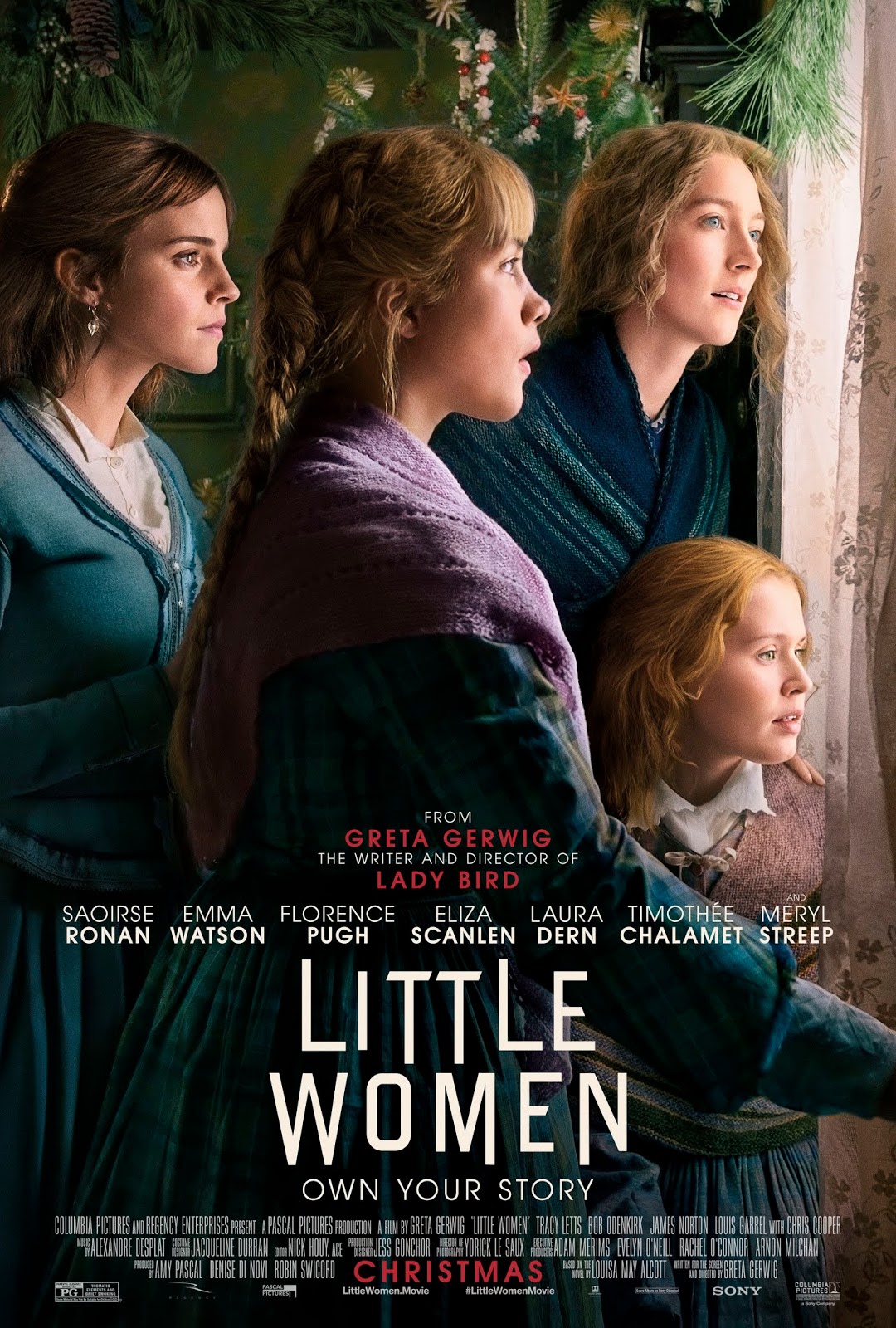
To call this "Greta Gerwig's" Little Women undersells, as auteur theory always does, the tremendous collaborative authorship among the writer/director Gerwig, the composer Alexandre Desplat, the cinematographer Yorick Le Seaux, and what is undoubtedly one of the most perfectly assembled casts of the past decade—all of whom take their various roles and inhabit them to such a deeply magnificent extent that they feel like individual works of art of their own authorship. And yet the most impressive and marvelous feat about this particular adaptation of Alcott's oft-adapted novel seems directly attributable to Gerwig herself, and that is the way the movie positions itself in relationship to its source text. This movie is cinematic literary adaptation executed to perfection; Gerwig has scripted the film with a clear and earnest love for Alcott's work, but crucially, more than any other Little Women adaptation I've seen, she also understands this story deeply enough that she's not too precious with it to tweak and tighten in order to make it the best version of itself, underlining buried subtext, inventing incidents to fill in gaps, drawing connections between seemingly unrelated character beats, shuffling the structure to draw out the poignancy of its arcs, all while feeling 150% within the spirit of what Little Women has meant to its millions of fans for the past 150 years. It's Gerwig's structure in particular that's such a remarkable act of creation; rather than tell the novel's story chronologically, she's taken its two volumes and cross-cut between them, jumping back and forth between the March women's adulthood and idyllically remembered childhood. It's a seemingly simple creative decision, but the story flourishes around it. Little Women has always been a story about siblings, but with its cross-cut structure in this movie, it becomes—and whether this is in the book and lost in other adaptations or simply Gerwig's own spark, I'm not sure (I've never actually read the book)—it becomes a bittersweet rumination of the interplay of memory and the passage of time within a family unit and the ways in which adulthood transforms sibling relationships and inevitably scatters and isolates siblings from one another. This—along with some judicious tweaks of iconic scenes from Gerwig's screenplay, to say nothing of the cast's work in sculpting these characters—magically makes some of the story's more befuddling and flat choices (e.g. Amy and Laurie, Jo and Bhaer, etc.) feel like rich and melancholy realities of growing up. This is no more true than in its depiction of Beth's death, which, in most versions of Little Women I've seen, has always felt somewhat like a forced dramatic climax to a story that isn't really in need of a climax. But Gerwig's split structure gives Beth's fate a weight that goes far beyond the loss of a sibling; it is a manifestation of the unstoppable march of time and how it robs and pillages from childhood, how it fundamentally imbues memory and the self-identity built upon those memories with a twinge of pain. I found myself thinking a lot about my own brother, who died in October, and how the pain of his death was not just on the basis of his death in and of itself but also on the ways in which it bifurcated the lives of me and my siblings into a Before and an After and threw into relief the whole host of changes my family has undergone, both big and small, that have made life a little sadder, a little more complex, a little richer. There's a way that the wholesome purity of the Little Women story can feel a little precious and alien in relation to lived experiences, but the fundamental triumph of this particular version is that it's not just the story of this one family rendered in deep emotional hues but also so achingly real at every turn that it becomes, improbably, the story of families writ large. To turn to the old adage about how the specific becomes the universal in fiction would damn to the realm of cliché a movie that sails beyond the dichotomy of "original" and "cliché" into the realm of Truth. A complete triumph. As advertised, one of the best of the year. Grade: A 

Uncut Gems (2019)
Basically a two-hour stress attack. For those of you for whom that sounds unpleasant, don't worry: it's also a very funny, very exciting thriller that's also a tremendous showcase for both a magnificent, throbbing score by Oneohtrix Point Never and a towering tragicomic performance from Adam Sandler. Sandler in particular is a marvel; as with his iconic Punch-Drunk Love performance, he knows how to take the particular quirks of his comedic persona and twist that into a terrifying intensity that feels both of a piece with his broader body of work and also complements the particular vision of the directors (here, the Safdie brothers, whose vision feels very much of a piece with the nightmare anxiety cinema of Good Time and Heaven Knows What). It also bears mentioning that I probably laughed more during this movie than I did during any of those Adam Sandler movies I had to watch this summer. Grade: A

Atlantics (Atlantique) (2019)
For a deconstructive ghost story, Atlantics is not nearly as oblique as it could be. It is, in fact, a pretty straightforward forbidden-love romance with a pretty straightforward class conflict as the backdrop: a woman is engaged to be married to one dude, but she is in love with another dude (that her family doesn't approve of); this dude is a construction worker whose boss is exploiting him and his colleagues. Even when the supernatural stuff starts creeping into the story about halfway through the movie, these threads still follow familiar paths. It's just that these paths weave together in unexpected and completely striking ways that feel as indebted to the folkloric slow cinema of Apichatpong Weerasethakul as they do to, like, Ghost and stuff like that. This isn't slow cinema, though, and the movie remains accessible and briskly paced throughout, animated by a row of truly great performances from its main cast and some stunning cinematography by Claire Mathon (who also shot Portrait of a Lady on Fire, which I haven't seen but by its reputation seems to be setting Mathon up for an all-time-great 2019). I was a little less thrilled about the conventional early stages of Atlantics, but once it gets going, it's spectacular. Grade: B+

The Art of Self-Defense (2019)
This movie adds absolutely nothing new to the cinema of deconstructed toxic masculinity that wasn't already done by the likes of Fight Club and stuff. But there are some extremely solid jokes in its extremely arch rendering of male social codes, and Jesse Eisenberg is pitch-perfect as the lead—his thousand-mile mannequin stare has never been better suited. Grade: B


Another Year (2010)
Mike Leigh has a knack not just for achingly humanist stories but for finding richly specific nooks of the human experience that often go unexplored. Another Year is, in many respects, a film about class and the anxiety and insecurity that comes out of the financial and social precariousness of the lower-middle class. But Another Year goes for none of the tried-and-true tropes of depicting class struggle, instead focusing on one single sliver of that experience: the ways in which the disorienting unsteadiness of being lower-middle class and isolated from others by the grinding machine of living in a capitalist system intersects your relationships with those who are just slightly more stable and comfortable than you are. It's a warm, tender, quietly wrenching story that finds its beating heart in its human characters, rendered brimming with life by the core cast of Jim Broadbent, Lesley Manville, and Ruth Sheen. Here at the decade's end, it seems like people have gone a bit quiet on Mike Leigh, and he's certainly not the flashiest director out there. But movies like this are a perfect example of just how much of a treasure his work is. Grade: A-

Television

The Marvelous Mrs. Maisel, Season 3 (2019)
This show's commitment to high-wire dialogue acrobatics and sweeping visual designs is still as on-target as ever, but Mrs. Maisel is running into some serious problems dramatically this season. It's increasingly clear that the series has no idea what to do with the privilege of its characters, which gets highlighted this season with Midge's arc on tour with a black (and closeted gay) musician, a plot with an intriguing premise but little payoff. It's also clear that the show has no idea how to grow these characters past the types established in the first two seasons; there's a lot of struggle on a scene-by-scene basis, but (with the exception of Susie, who this season gets probably the best arc of the show since Midge's back in Season 1) almost none of this coalesces into forward momentum or change, despite near-constant crises that would seem to warrant some kind of growth. The very final scene of the season seems to portend some pretty big changes on the horizon, and if Season 4 can use that to freshen up these characters, then great. But until that happens, we're left with a show comprised entirely out of scenes that are immensely enjoyable in the moment but have little dramatic tissue connecting it all together to move things forward. Grade: B

Books

The Things They Carried by Tim O'Brien (1990)
I read this so I could teach it to my AP students this spring, but I'd been meaning to read it since forever anyway. I don't know why, but I'm surprised that it's as great as I'd heard. I was expecting an honest, emotionally intense short story cycle about the experiences of soldiers in Vietnam, which this totally is. But I was not expecting the metafictional elements at all, and they kind of blew me away, deflating a lot of the stodgy traditions of typical "vérité" war literature. So uhhh... if you're interested in taking AP Literature & Composition this spring, you'll get to hear me stan this book pretty hard. Grade: A

Sunday, January 13, 2019

Mini Reviews for January 7-13, 2019

School has begun. It's no fun.

Movies

If Beale Street Could Talk (2018)
I've not read the original James Baldwin novel, so this is just my hunch based on what I saw here. But I suspect that Barry Jenkins's movie is just a tad too reverent in adapting its source material, which explains the over-reliance of voiceover and the elliptical, literary-novel storytelling. There's never a moment where you forget this story came from a novel. The thing is, though—it works, and not just mildly so either but terrifically, totemically. Well, the voiceover hardly ever works, and it brings at least a few otherwise transcendent sequences down to earth. But the rest is magnificent. The movie's positioning of itself as synecdoche for the entirety of the 20th-century African-American experience somehow miraculously never smothers the intimacy of this film's specific story; every human who walks into the frame carries with them a whole teeming history, both of themselves and of society's relation to them—Brian Tyree Henry's character is on screen for maybe ten minutes total, and Emily Rios's character even less than that, but either one of them could fill an entire movie. The movie's delights don't end with its narrative, either: Nicholas Britell's score is probably the best film music that 2018 gave us, to say nothing of the exquisite sound mixing. And every movement of the camera is its own mini-masterpiece. I doubt if this will connect with people long-term as tenaciously as Jenkins's Moonlight did, being much more diffuse and by-design a lot less emotionally close. But the more I think about Beale Street, the more I think it's only one or two clicks below being that previous movie's equal. Grade: A

Mirai (未来のミライ) (2018)
It's not often that protagonists who are in the 4-to-6-year-old range appear in films and even less often that they regarded with as much empathy and insight as Mirai gives its protagonist. The movie's opening minutes—a gentle and naturalistic slice-of-life depicting Kun, our preschool-aged protagonist, meeting his baby sister as his parents arrive home with her from the hospital—are both a perfect introduction for the film's key concerns (the psychology of this young child) and also completely inadequate at preparing viewers for just how deeply seriously it will take Kun as a character nor how vibrantly inventive its rendering of Kun's psychology will be. Basically a series of disconnected scenes that set up domestic situations that we then see Kun deal with through colorful flights of fantasy (and occasionally horror), Mirai is the best cinematic dramatization of the interior life of a child this young I've seen since Where the Wild Things Are. Like that film, this one recognizes that the transition from early childhood into the middle years of the first decade is wracked by the severe identity crisis of realizing that, for better or for worse, you are defined in relation to those around you, and that with that definition comes a crushing set of responsibilities to the humans with whom you come in contact, especially your family—which, by tandem, you are also increasingly realizing isn't defined by the routines by which you have known it but rather the smashing together of histories and personalities into a larger whole. I think we adults tend to belittle or forget entirely this journey, but it is world-shattering for the children who experience it, and it's no wonder that kids spend so much time crying. All this is a long way of saying that I was not expecting to be in tears by this movie's end. Grade: A-

Assassination Nation (2018)
Reactionary cinema in ways that feel alternatingly cathartic and irritating. But mostly irritating. The frenetic style can be uproarious and kind of punk rock in a really fun way, but only in pieces. An early party scene uses some of the very coolest split-screen footage I've seen in a long time. Then there's the rest. Ironically detached violence? A joke at the expense of trigger warnings? How profound. I'm too out of touch with the vanguard of teen digital life to know if its depiction of high schoolers is sharply satirical or of the "kids these days" variety, but I do know that the film barely gives any depth to anyone here, and it honestly just kind feels like a pileup of the worst elements of A Clockwork Orange's busily nihilistic attitude, just with bass drops instead of the ol' Ludwig Van. Just as aggravating is the film's commitment to playing both liberal and conservative sides of the "online shaming is problematic!"; the movie's shotgun approach to social commentary, wherein it just rapidly fires sprays of charged ideas and modern internet slang into the air, largely negligent of how each piece actually lands in relation to the others, yields some occasionally interesting juxtapositions but just as often results in discourse salad or, worse, some legitimately edgelord-ish implications. What the movie gets right most consistently is the idea that whatever mixed feelings we all might have about internet mobs in general, they have been most dangerous when targeting women and the queer community, something the movie dramatizes very well. But lord, this movie just can't pull it together into a cohesive whole. Grade: C

The Overnight (2015)
An intermittently funny riff on that old indie staple of the "dinner party of strangers." The movie moves along at a good, reasonably interesting clip, and the cast is winsome (Adam Scott, Taylor Schilling, Jason Schwartzman, Judith Godrèche), which is far and away the best thing about the film. It doesn't really have the guts to get as weird or as prickly as it needs to to make its "crucible of marriage" back half have much impact, which is fine; the movie doesn't want to be much more than a low-stakes, pleasantly off-beat 79 minutes, and it succeeds. I probably won't remember much about it a few years from now, but I enjoyed myself enough while watching it. Grade: B-


From Up on Poppy Hill (コクリコ坂から) (2011)
There's something uncomfortable about how whenever Studio Ghibli releases a movie without fantasy elements, people are lukewarm on it—as if all we want from Ghibli is "Disney, but cooler." Seems like an unnecessary limitation for the medium of animation. Anyway, at the risk of immediately contradicting myself, I don't think there's any way I could muster up the enthusiasm to rank this with the studio's best. But at the same time, it's a lovely little period piece that deploys "Ue o Muite Arukô" perfectly, so I can't help but feel that people slept on this one. Grade: B


The Day He Arrives (북촌방향) (2011)
As if stuck in my own Hong Sang-soo film, I keep watching these strikingly similar but crucially different films one after the other, and the little minute variations slowly build into what seems like the whole thesis of my viewing. They all remind me of Woody Allen, but with each Hong iteration, the relationship between the two fluctuates: how key is the fact that Allen's foundational text is the work of Freud, while Hong's seems to be that of quantum physics? Is Hong's relative self-awareness of the limitations of his "auteur" archetype preferable over the often messy and inconsistently reflexive tropes of Allen's typical protagonist? Or is Hong's studied nuance-upon-nuance-upon-nuance a more dangerously calculated self-justification than Allen's apparent guilelessness to his own reactionary iterations of his own (equally self-serving) ideas? In the cases of both filmmakers, the answer lies not in one single film but in the accumulation of their life work, one minor variation piled upon another. The Day He Arrives finds Hong Sang-soo in something of a Shadows and Fog mode, not just for its vividly monochrome aesthetic but for its chronologically slippery, repetitive narrative of a man adrift in a city among psychological and sexual foils—which is different from the Deconstructing Harry of On the Beach at Night Alone or the Melinda and Melinda of Right Now, Wrong Then. Perhaps I'll find that my comparison between these two dudes is reductive, but having not experienced nearly enough iterations of Hong's central story, I can't say for sure yet. So I guess I'll keep chipping away at them until a clearer picture forms. My chilliness toward these movies remains, although this is probably my favorite since Right Now, Wrong Then, if only for the gorgeous b&w cinematography set in a curiously underpopulated and exquisitely snowy Seoul—the ideal aesthetic for a movie (for a filmography) this insular and interior. Grade: B

The Lord of the Rings (1978)
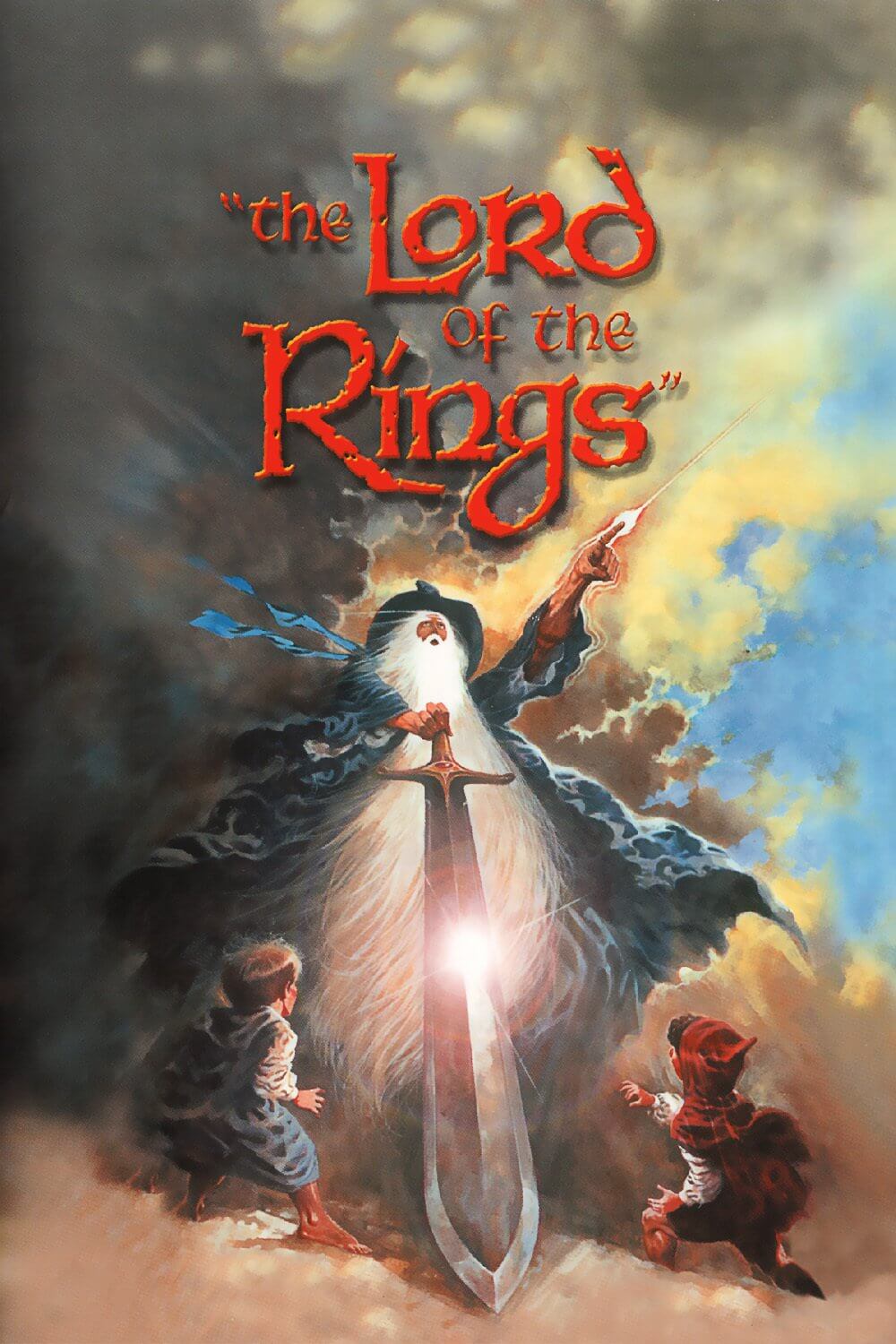
An unmitigated disaster on a storytelling metric, essentially pushing fast-forward through the first half of Tolkien's trilogy with a few judicious edits (bye, Tom Bombadil) alongside a few injudicious ones (Treebeard has, like, one scene, and a completely incongruous one at that). Whether or not this is also an aesthetic disaster probably depends on your feelings about Ralph Bakshi's obsession with perversely jamming together cel animation, rotoscoping, and live-action footage. I myself have mixed emotions about it, but I certainly cannot deny that it is an Aesthetic with a capital A, and at times—particularly regarding the Black Riders—it is stunning, though it is just as often stunningly ugly (the character designs of the principal cast are an abomination). This is all undoubtedly visionary, both in awe-inspiring and mad-scientist kinds of ways, and I'm apparently not the only one who thinks so; one of the biggest shocks of watching this now is realizing just how much of the film (especially in the Fellowship of the Ring sections) was lifted nearly whole-cloth for Peter Jackson's 2000s trilogy—not just specific shots and setpieces but also entire stylistic devices (e.g. the borderline camp use of slow-motion footage). It turned out better the second time around, I think we can all agree, but still, credit where credit is due. Grade: C

Television

The Marvelous Mrs. Maisel, Season 2 (2018)
In some respects, The Marvelous Mrs. Maisel's second season is a return to what everybody loved about the first: the rat-a-tat banter, the effervescently prickly characters, the roundabout pathos, the gorgeous sets and costuming, the long takes (those long takes!). But in other ways, Season 2 is oddly challenging—not in any sort of avant-garde way, but just for the sheer amount of off-format content (to the degree that a show with only one prior season has a format). For example, nearly a third of the season takes place at a resort in the Catskill Mountains (which, for the record, seems like the vacation from Hell—summer camp for adults, and isn't the whole point of summer camp is that the usual adults aren't there?); there's an ongoing subplot involving military espionage; Midge's parents live in Paris for a few episodes. It's an unpredictable, diffuse set of episodes without nearly the dramatic forward momentum that the first season had, which is both sort of frustrating but also admirable, that the show, just like its protagonist, will not rest on its laurels; nor will it, like so many direct-to-streaming series, allow its serialized stories to take over to the extent that its episodic structure turns to mush—say what you will about the season, but Mrs. Maisel still knows how to craft a tight hour of television, which is welcome. So this second season clearly is not just idly losing the thread of its series; there's a real intentionality to every weird decision it makes, and those decisions all pay off, even if it takes a meandering path to get to that payoff. It's purposeful television. Which is why (for now) I'm going to abide what the show is doing with Joel—for now. I would have been content to have had the Season One finale be the last we ever saw of him. But here he is back and whiny as ever, and his presence is the biggest liability in this season. The intent seems to be to give him something of a redemption arc after being such a total heel last season, and while that's interesting in theory, what this "redemption" actually boils down to is not giving him any sort of moral reckoning but instead making him more "marriageable" in that old, Jane-Austen sense—i.e. having him gain wealth so that he can "provide for his family" or some such nonsense. The fact that this seemingy ignores that the biggest problem with Joel's behavior was not his career stagnation or money problems but that he left his wife for his secretary. But... well, like I said, the show seems to know what it's doing, and maybe it's playing a long game here that's smarter than it seems. For now, though, he's reminding me a lot of Christopher from Gilmore Girls, which is a big red flag in this otherwise delightful season. Grade: B+

Music

De La Soul - De La Soul Is Dead (1991)
The legendary hip-hop trio's sophomore release is an intentional subversion of De La Soul's feel-good-classic debut, 3 Feet High and Rising—if the dead flowers and broken pot on the album cover didn't clue you in, then certainly the music makes it clear that these guys are leaving the D.A.I.S.Y. Age behind. There are songs about drug addiction and abuse ("My Brother's a Basehead" and "Millie Pulled a Pistol on Santa," respectively—both highlights on the album, too), and while the group maintains its sample-heavy approach to song structure, the results are decidedly less sunny. Then there are the skits, which bitterly mock "hardcore" hip-hop fans alongside De La Soul's previous fanbase. It's a sprawling, twisty album fragmented by this darkness, and the record is both intermittently compelling and quite a bitter pill. I can't blame them; to be hip-hop's ambassadors of peace and love is undoubtably wearying, but also, I can't help but prefer the fun times of 3 Feet High and Rising. Does that make me shallow? Grade: B+

Sunday, November 11, 2018

Mini Reviews for November 5-11, 2018

Hopefully y'all are more interested in these movies/shows than you were last week's.

Movies

The King (2018)
Any evaluations of his art aside, Elvis Presley is a figure of such titanic stature for two reasons: 1. His life is so richly metaphoric and fundamentally Americana that he can't help but resonate deeply as a secular icon, and 2. Any part of his life that didn't innately align with the broader institutions and iconography of America became coerced into alignment anyway via the mass-media commercial forces of the last half of the 20th century. And so, for better or for worse, Elvis represents Institutions in a way that very few pop stars do—not the Beatles, not Dylan, not Sinatra, certainly not the rock-and-rollers of color that Elvis surpassed: your Chuck Berrys and Bo Diddleys. It's that representationalism that made me, a white dude growing up in the Memphis area, roll my eyes so intensely at Elvis growing up: Elvis was the cranky white people fighting for noise ordinances and gated communities, and the slightly crankier old white people waxing nostalgic about Jim-Crow Memphis; he was The Man. It's also what makes The King, the second of the major essay docs getting distribution this year (after Did You Wonder Who Fired the Gun?), tick—the idea of making Elvis Presley's life a metaphor for America in general is practically baked into the artist's legacy. When it sticks to that, The King is frequently dazzling, using a bevvy of shockingly good celebrity interviews: Mike Myers? Ashton Kutcher?? Both good, somehow. I love Ethan Hawke, but could anyone have predicted he'd be the most perceptive Elvis critic in the film? I certainly didn't. And then you have Chuck D, who is unsurprisingly great, as well as the random people in Tupelo and South Memphis the doc runs across who have fascinating things to say about Elvis's legacy on their region. And this kind of gets to the documentary's critical flaw—none of these fantastic interviews—especially those of the people in Tupelo and Memphis—get anywhere close to the screentime they deserve. Someone (usually Chuck D) will say something fascinating, and then the movie will cut to a different scene rather than pulling on that thread. Part of this is the runtime, which is a far too short 107 minutes (if anything, this material deserved the O.J.: Made in America treatment—and how great would that have been? The privileged white other side of the coin??). More damnably, though, is how much time The King spends making an extremely labored and at least 50% bogus parallel between Elvis's life and the 2016 presidential election. Elvis as a symbol of America is richly symbolic; Elvis as a symbol for Hillary vs. Trump is tedious and perfunctory and yields exactly one good moment in the film: Alec Baldwin looking directly into the camera and stating, dead seriously, "Trump won't win." The film has nothing to say about 2016 that hasn't already been said in a thousand different ways, and put together with the existing Elvis metaphor and the wealth of often too-cute archival footage the movie crams in, it's Just Too Much. As great as some of the individual moments are, The King just can't bring it all together [insert hackneyed old, fat Elvis joke]. Grade: B-

Let the Sunshine In (Un beau soleil intérieur) (2017)
I am all for the idea of this film's exploration of middle-aged female sexuality—a refreshing change from the normal cinematic man's game of sexual conquest + ennui. And the film's methodical repetition as Juliette Binoche's character cycles from one man to the next allows for some precise attention to detail: a hand moving slightly over a leg, a winding conversation animated not by the participants' words but their stutters and silences. But... I dunno, the repetition also makes this movie a little tedious, too, and in practice, there's nothing in this movie that makes me feel anything too strongly, neither on a visceral level nor on an intellectual one. I've been thinking that maybe I need to give Claire Denis's filmography another chance after feeling the same way about Beau Travail a few years ago, but maybe the problem is just that Denis and I don't connect. This movie is fine, but fine isn't something I'm going to stand up and sing about. Grade: B-

Custody (Jusqu'à la garde) (2017)
There's not a lot to this movie besides it's viscerally intense depiction of domestic abuse, and honestly, it's somewhat frustrating that the film, for example, makes a dead end out of the daughter's plot. But the final thirty minutes are severely potent on a level that I wasn't at all ready for based on the relatively docile first hour of this film. And on an aesthetic note, I am overjoyed to report at least one European film with thoughtful compositions and a lack of dependence on handheld camera work. Grade: B


Take Me to the River (2015)
What an unbelievably tense movie, hoooooly cow. What gestures toward a somewhat typical "coming out" movie in its early goings (Ryder is going to visit "the Nebraska family," who doesn't know that he is gay) slowly morphs into something that's not not a coming out movie, exactly, but is also one of the most hair-pullingly uncomfortable thrillers I've seen in a long time. More so than most other movies that try to wring the "regressive backwoods" trope for tension, Take Me to the River understands the specific layers of social nuance that can make rural America so frightening to those who aren't part of it (or to those who can't fit in with it): the searing quiet, the disorientingly labyrinthine fields that stretch acres between the houses on a sprawling property, the intensely performative masculinity, the uncanny valley of feeling the difference in social mores without ever quite being able to pinpoint what exactly is different (and of course without anyone saying anything directly to you about it). More than anything, though, this movie understands the alien echo chamber of Family—the way that idioms and behaviors build upon one another until family becomes a world unto itself, and you don't realize it until you step out and then try to step back in and see everyone who's still inside, like tranquil frogs in a pot as the water creeps toward boiling. Grade: A-

The Wolfpack (2015)
The ethics of this documentary are dicey, to say the least; I'm not saying that director Crystal Moselle is taking advantage of the hyper-reclusive homeschooled family that she chronicles here, exactly, but seeing these kids—and most of them are kids, if not by age (I think at least two of the siblings here are legal adults) then definitely by temperament, talk frankly about the borderline-abusive upbringing they've experienced at the hands of their father while their father lumbers around in the back of the frame raises some real questions about the documentarian's role in a situation like this. But assuming you can put those questions on the back burner, there's something kind of profound—albeit rough-cut—going on in this documentary. There's the cynical way of looking at this, I suppose, that views these secluded folks become a walking IMDB forum in their film enthusiasm ("The best movie of all time is definitely Godfather: Part Two," says one of them, dressed in the black-tie attire of Reservoir Dogs) and thinks about the invasive power of toxic masculine film culture. But there's also the broader, much more idealistic idea of the transformative, even liberating power of film, the way that wide-eyed individuals use film to contrast the boundaries of their own homes with the wider, more wonderous world of cinema—the way we crave cinema as a way of modeling behavior, as a way of educating ourselves about the world as a whole because we are terrified that our own context is too small to do so on its own, so small that on its own, it will leave us hopelessly ignorant and helpless abroad. I wasn't brought up anything like the boys in this documentary, but I'd be lying if I didn't see at least a little of myself in them and the role of film in their lives; I suspect the same is true for a lot of us. Grade: B

F for Fake (1973)
Probably the most delightful I've ever seen a hyper-meta, post-structuralist, experimental arthouse movie be. Aesthetically, you can practically see the birth of Errol Morris here in the film's use of re-enactment for documentary purposes and the loquacious, essayist impulse in the film's pileup of tangentially connected images and words (Fast, Cheap & Out of Control-style Morris in particular). But Orson Welles flips the Morris script—or, I suppose, Morris flips Welles's script, given the chronology: instead of an a faceless documentarian bending the magnetically showman and storytelling impulses of his subjects into profound philosophies, Welles steps in front of the camera himself, caped and hatted in a magnificently flamboyant black, to be his own documentary's showman and storyteller. In that regard, it feels a little bit like an experimental documentary iteration of vaudeville, with Welles as the extraordinarily camp and completely magnetic MC tying everything together with a winking, sonorous presence. It's of course a work of high ego (because it's Welles), and it's a thematic snake eating its tail (because hyper-meta post-structuralism). But it's entirely great, I promise. Grade: A

Television

The Marvelous Mrs. Maisel, Season 1 (2017)
I've always wanted Amy Sherman-Palladino to just go full-on Howard Hawks and write a screwball comedy, and The Marvelous Mrs. Maisel is probably as close as I'm ever going to get. I'll take it. Lead by an effervescent Rachel Brosnahan playing Midge Maisel, a woman in late-1950s Manhattan who, when her husband leaves her, decides to take up a career in standup comedy, the show is a cascade of barbed and frequently hilarious dialogue in the same rat-a-tat cadence that animated the best of Sherman-Palladino's Gilmore Girls—and miraculously, none of this is undercut by the involvement of Sherman-Palladino's husband, Daniel, whose contributions are somehow not irritating this time around. Even more miraculously, unlike so many shows centered around a fictionalized entertainment act, Brosnahan-as-Maisel-as-standup-comic is actually quite funny, and it requires little imagination to see how Mrs. Maisel could actually find success as a comic. On a writing level, all this is girded by a strong emotional core and mercifully nuanced depiction of class and family—those worried that Sherman-Palladino had lost her ability to pierce with her writing the subdivisions of the middle and upper classes after Gilmore Girls: A Year in the Life (me) need worry no longer. It helps that Marin Hinkle and Tony Shalhoub, who play Midge's wealthy, straight-laced parents, are superb in their roles as a jointly satiric and emotionally resonant presence. And on a cinematic level, this is all depicted through an unusually thoughtful attention to camera movement and lighting (even for our current "peak TV" moment), most notably in the dialogue-free musical interludes wherein the characters move in the naturalistically choreographed rhythms of their day-to-day lives as the camera glides around them as if on skates—put together with the dialogue, it's scratched my screwball comedy itch with aplomb. This is the most consistently good thing that Sherman-Palladino has done since maybe the third season of Gilmore Girls, and I'm retroactively calling this one of my favorite shows of last year. It's wonderful. Grade: A-

Music

Joni Mitchell - Song to a Seagull (1968)
Joni Mitchell was already an accomplished songwriter by the time her debut album dropped ("Both Sides Now" had been a hit for Judy Collins, for example, though Mitchell herself wouldn't record her own version until her sophomore album, Clouds), but Song to a Seagull is her entrance as a performer. In some regards, Song to a Seagull is a good establishment of who Joni Mitchell is: it's a sturdy collection of ethereal and literary-minded folk songs, sung with Mitchell's typically winding vocals. But this is still very clearly a debut, and Mitchell is either holding back on some of her more adventurous impulses or has not yet fully realized them—either way, not her best work and more than a little hippy-ish in a way that Mitchell would reject in the coming years. But to say that Mitchell has not yet achieved the heights that she would reach in the '70s (some of the greatest music of the 20th century) is not to say that she has failed, and Song to a Seagull is a fine sequence of late-'60s California folk with at least one great song (the closing track, "Cactus Tree"). Not essential, but certainly not a waste of time. Grade: B