Sunday, November 29, 2020

Mini Reviews for November 23 - 29, 2020

Happy Thanksgiving, etc.

Movies

Time (2020)
An incredibly moving documentary of prison abolitionist Sibil Fox Richardson's fight to get her husband released from prison. To the extent that it's trying to portray the fight itself (only occasionally), Time isn't really that effective, and the details of the case remain hazy throughout. But as a deeply subjective (I don't think there's a shot in the film that doesn't include Richardson) exploration of not just the passage of time but also the way that prison compresses enormous fractions of a person's life into lonely captivity, this movie is a powerhouse. The decision to color-match home-video footage to the modern-day original b&w footage is a masterstroke, and the way the movie uses this simple aesthetic choice to blend the past with the present is one of the best formal decisions I've seen in a documentary in years. Grade: A-

I Am Greta (2020)
I would have been interested in learning a bit more about her family and the dynamics through what is obviously an incredibly difficult time for them, and the glimpses we do get of her father hint at some really complex tensions among the parental roles of caregiver, protector, and advocate (though given the amount of vitriol Greta has received as a public figure, it's understandable that the family might not have wanted to invite a more intimate depiction of their lives). As such, it's a somewhat surface-level treatment of Greta Thunberg's activism leading up to her famous UN address. Luckily, the surface of her activism is still pretty inspiring, and I'm pretty impressed with the extent to which she is able to immediately recognize her inclusion on the global political stage as merely virtue-signaling theater. I kind of wish the movie had done a little more of a deep-dive into that idea, too. Grade: B-

First Love (初恋) (2020)
I was really tracking with this at first (the idea of two down-on-their-luck folks getting unintentionally swept up into organized crime drama is solid stuff), but I lost interest hard in the second half as this devolves into some pretty tired crime violence and some forced humor. I know the guy has like two billion movies and I've only seen three of them, so maybe this is premature of me to say, but I'm starting to wonder if Takashi Miike just isn't for me. Audition is great of course, but the other two I've seen (this and 13 Assassins) have been middling experiences for me. Grade: B-


Nomad: In the Footsteps of Bruce Chatwin (2020)
Catches Herzog in a rare sweet and sentimental mood. The film is basically an elegy of sorts for writer Bruce Chatwin (who died of AIDS in 1989), and Herzog himself is (despite his explicit denials) as much the film's protagonist as Chatwin, as the film basically involves Herzog's spiritual and thematic communion with his deceased friend as he travels to various significant locations from Chatwin's career. More so than a lot of Herzog's work, much of this movie only really works in conversation with Herzog's past films (a lot of it involves him recounting stories from productions of his films), which has the unintentional(?) effect of highlighting this movie's comparatively minor achievement in the context of a towering filmography, but also, there's an enormous, beating heart put on the film's sleeve that makes it feel kind of unique as a Herzog work in and of itself. If nothing else, it's really disarming to see Herzog actually get choked up on camera. Grade: B

Rio Bravo (1959)
Rio Bravo is a movie in which a bunch of good guys have to make sure a bad guy stays in jail, so it's a movie almost premised on hanging out and stasis. For that purpose, it's got an almost perfectly calibrated screenplay: a bunch of characters are set up at the beginning of the movie and allowed to ping against one another for the subsequent couple of hours as the drama from both internal and external forces escalates in the closed environment of the small Texas town, and the pleasures of seeing those characters in motion around each other is immeasurable (though rest assured, I'll try my best to measure it with my grade on this movie). It's also the rare Hollywood western that is entirely free from any Manifest Destiny baloney, which makes it a lot easier to enjoy these characters without the ironic distance I sometimes feel like I need to keep in old westerns. It's a pretty long movie, though—too long, actually, and I know exactly what I'd cut: that dumb romance between John Wayne and Angie Dickinson. It adds nothing but bloat to a movie that's otherwise impressively svelte, and it's got some of those trademarked iffy John Wayne gender dynamics, to boot. Single-handedly brings this movie down from a higher rating. Grade: A-


Music

Joni Mitchell - Wild Things Run Fast (1982)
This is basically Joni's emergence from her highly experimental, jazz-inflected period of the mid-to-late '70s, and she's definitely staking a claim here as an artist that can be trusted with, like, conventional pop song structure and melody again—perhaps no better communicated than by the fact that Mitchell includes an uptempo Elvis Presley cover on here. I far prefer her wild experiments in the '70s, but this isn't bad. It might be easy to forget when you're in the thickets of "Paprika Plains" or something, but Joni is pretty good at conventional pop song structure and melody, and this record is imminently listenable and even catchy, without completely leaving behind the jazz spirit. And yeah, that Elvis cover is pretty good. Grade: B

Sunday, November 22, 2020

Mini Reviews for November 16 - 22, 2020

 I'm already tired of being cold when I wake up.

Movie Reviews

Residue (2020)
This movie is incredibly good, one of the best movies of the year, and also probably the best film depiction of gentrification that I've ever seen as well as an absolutely gutting take on the trope of returning home and finding yourself an outsider after everyone else's lives have moved on. The low-ish budget and occasional on-the-nose screenplay (this is the kind of movie that drops its title conspicuously in dialogue) make sense with this being Merawi Gerima's debut feature, but also, this is a tremendously assured debut, and for any minor quibbles I have with the screenplay, there are a dozen more moments of technical and aesthetic bravura that are honestly breathtaking—to say nothing of the clearly personal connection Gerima has to the subject matter (he's a DC native himself). This movie should have generated major buzz, and the fact that it didn't is yet another indictment of Netflix, where this film languishes; people have a lot of justified criticisms of Netflix's business model and monopolistic tendencies and occasional artistic bankruptcy, but I think one of the absolute worst things about Netflix is how completely dysfunctional it is as a distributor. Things pop in and out of the algorithmic lottery with no clear rhyme or reason, and the effect of it is that everybody with Netflix knows about the same half-dozen lowest-common-denominator titles Netflix is promoting at a given moment, but the rest of the literally thousands of catalog titles get hidden in this gigantic Raiders of the Lost Ark-style warehouse that's impossible to browse or search with any sort of effectiveness unless you're going in looking for a particular title you've already heard about—and Netflix almost never does the work to ensure you've heard about a title. Like, come on; this movie is basically Michael Catnip; Netflix's algorithm should have been recommending this to me HARD. Instead, I was completely ignorant of this movie's existence until tonight. I follow a lot of people on Letterboxd, critics and casual users alike, and only one of them has even logged this movie, which makes me think that most cinephiles are basically in the same boat I am. I'd probably never have watched this movie if a friend hadn't randomly told me about it after he'd just happened to stumble across a review of the film. And now it's probably going to be in my top 10 films of the year. This should have been a slam-dunk for Netflix—recommend this to the same people who watched Da 5 Bloods or Atlantics and get some good word-of-mouth promotion. This isn't even a remotely hard marketing decision for a distributor. But instead, Netflix just sends me emails about Tiger King or whatever, and this movie flies under everybody's radar. BOOOO. Go watch Residue, folks! Grade: A-

Greener Grass (2019)
This certainly isn't for everyone; it definitely tries WAY too hard to hit the intersection between David Lynch and Adult Swim, and stretches of this are pretty tiresome in the way that someone who strains too much to be "weird" can sometimes be. But a lot of the more overtly absurd/fantastic elements of this movie struck me as deeply hilarious, too. Like, in the movie there's a TV show called Kids with Knives that comes on after Little House on the Prairie reruns, and it's just kids waving around knives, and the show is such a bad influence that it instantly turns any kid who watches it into a major delinquent—I dunno, stuff like that I'm still giggling about days later. Grade: B


Let's Scare Jessica to Death (1971)
I was not expecting a movie with this title to actually be a serious, melancholy exploration of a woman's struggle with mental illness. It's one of those slow-burn horror movies that's basically just a single acting performance set against a strong vibe, and I'm good with that for the most part. Grade: B+


A King in New York (1957)
A movie that doesn't really have a lot on its mind besides Charlie Chaplin's seething rage at the United States' mid-century red scare. And while Chaplin certainly has every justification to be mad at that, I wish there was more to this movie than that plus a few limp gags. It's not terrible; the melodrama hits better than the humor—luckily, since the drama overtakes the humor entirely by the end—but there are a few good comic bits. I like that when the kid character (Chaplin's son!) first shows up, he basically just launches directly into a bunch of anarchist talking points without much preamble, and the facelift part is funny. But overall, the movie is like a lot of Chaplin features in that it's pretty disjointed and episodic, and unlike most Chaplin films, this movie has a hard time making enough of its disparate parts work well enough to justify the haphazard structure. Grade: C+

A Woman of Paris: A Drama of Fate (1923)
Easily the worst Chaplin feature I've seen. The fact that Chaplin himself doesn't even appear in the movie (as a disclaimer warns the audience at the beginning) is a problem, as it leaves basically a charisma void in the middle of the movie. But a far bigger problem is the fact that the characters in this supposedly serious-minded drama are incoherent outside the most basic immediate motivations. The titular woman decides to leave the dude of her dreams at the beginning of the movie because he didn't show up at the train station on time, but why? The former dude of her dreams becomes a starving artist who pines for this woman, but why? Like, in any given scene, the characters' actions can be explained, but none of this ever adds up to complete human beings who make sense as a whole. Normally, this wouldn't matter so much in a Chaplin feature because of the way that (as I mentioned in my A King in New York) Chaplin movies tend to rely on semi-standalone setpieces rather than holistic character development, but this movie explicitly presents itself as a drama and barely includes any comic setpieces, so it's as if Chaplin took the best parts of his normal filmmaking instincts out without replacing them with anything good. There are a few good moments, and I'll never get tired of Chaplin's complete and utter disdain for rich people (the movie's epilogue, where this disdain most openly raises its head, kind of comes out of nowhere, but it's probably my favorite part of the movie). But overall, this is pretty drab. Grade: C


Music

Kelly Lee Owens - Inner Song (2020)
Kelly Lee Owens doesn't sound at all like New Order, but the formula is basically the same as the legendary UK group: music that pivots with grace from art-pop to synth-pop to no-bones-about-it club bangers. Opening with an instrumental IDM cover of Radiohead's "Weird Fishes / Arpeggi" (this has apparently been the year for great covers of that song), Inner Song announces itself as a record that, like the best New Order releases, straddles the familiar and the exploratory, and those impulses continue throughout, as Owens goes from spare synth-pop ballads like "L.I.N.E." to the 6-minute electronica odyssey "Jeanette" to the smooth, soul-tinged closer "Wake-Up." It's a fantastic journey, and I've been putting this on heavy rotation in my life. Definitely going to make my list of favorite albums of the year. Grade: A-

Sunday, November 15, 2020

Mini Reviews for November 9 - 15, 2020

Random transmission from my life: if I were accurately representing my media-watching activities here, I would have to include like half a dozen watches of Bambi and The Lion King, which my son insists on watching daily. I'm actually finding Bambi to go down a lot easier than The Lion King on extreme repeat, which is something I never would have thought I'd say (Bambi has always mildly bored me). It's low-key slow-cinema/ambient impulses make it much easier just to vibe to than The Lion King's constant LOUD, IMPORTANT DRAMA.


Movies

Water Lilies (Naissance des pieuvres) (2007)
Céline Sciamma writes/directs a remarkably cutting screenplay about the ways in which teen girls have to reconcile the politics of their bodies with the politics of their peers. As with all of Sciamma's work, it's laser-focused on its theme while also finding ways to be consistently generous and unpredictable in its stance toward its characters; for example, Adèle Haenel more or less becomes a kind of villain in the second half of the movie, but rather than make her a thinly sketched Mean Girl, Sciamma (and Haenel herself) make her development into that antagonist role a kind of tragedy born from social pressures and psychological anxieties that are really deftly laid out by the movie's opening half, and as a result, nothing here feels so simple as the straightforward protagonist/antagonist binary that another movie might have been tempted to make it. Water Lilies is Sciamma's feature debut, though, and it's clear that, unlike in, say, Portrait of a Lady on Fire, Sciamma is still working out her style here, and it's a little more home-grown in terms of camerawork and lighting than I'm used to seeing from her films. That said, there are some pretty strong images that crop up here from time to time, and if the only thing that changes as you go back to the early stages of Sciamma's career is that it just feels a little more low-budget and indie-ish, then I think she's got to be one of the great directors working today, right? Grade: B+

Weathering with You (天気の子) (2019)
I'm never coming to Makoto Shinkai movies for the plots, which is good because this one is irritating. Even laying aside some of the niggling inconsistencies in the plot mechanics and characters themselves, it's pretty dumb that this movie presents its plot as a symbolic analogue to climate change—not just for the way that it shyly celebrates the protagonist's choice to destroy Tokyo with climate change just so he can get with his girlfriend (it's a long story), but also for the fact that the movie sets up this trolley-problem-type scenario in the first place (as if climate change really hinged on individual [ir]responsibility in choosing one lifestyle over another instead of multi-national corporations and nation states exploiting half the global population). But like I said, I'm not really here for the plot; I'm looking for that shimmering, detailed, achingly colorful animation that forms the backbone of everything I like about Shinkai movies. And Weathering with You delivers that and more. It's probably the best-looking Shinkai movie to date; the setting's constant rain pierced by only intermittent rays of sunshine is the perfect conduit for some of the most breathtaking animated flourishes in Shinkai's career: the flashes of deep green as a beam of sunlight plays over raindrop-bejeweled grass, the swirling azure depths of the towering clouds, the stark gloss of a waterlogged Tokyo—it's all just so beautiful and striking. I'm really having a hard time figuring out what to do with a movie whose plot I dislike so strongly but whose aesthetic I love so much, sooo... Grade: B-

One Sings, the Other Doesn't (L'une chante, l'autre pas) (1977)
I've seen a lot of reviews complaining about this movie's didacticism and its focus on bad, second-wave feminist folk music, but I feel like those criticisms are kind of missing the forest for the trees. Admittedly, most of the songs are pretty bad (though I gotta stan "Papa Engels Was Right"), but I really don't think they're a vehicle for tidy lessons about feminism; from where I'm sitting, they're clearly an extension of the character of Apple's arc as a woman finding a meaningful framework for her gender through explicit political action, and while the songs' ideas about female liberation and bodily autonomy aren't exactly antithetical to this film's worldview, I also don't think they really represent the film laying bare every stitch of thematic ambition it has. Specifically, the presence of the entire other half of the film that focuses instead on Suzanne, who ends up living a much more domestic life in which she also finds meaning, does a lot to, if not problematize, then definitely enrich the absolutism of the folk songs, and whatever holistic thesis the movie has on the female experience, it emerges from the juxtaposition of these two stories, not simply the overt political slogans we hear. And what emerges is complex and beautiful and poignant. So says I, a man who definitely understands everything that there is to know about femininity. Anyway, I do think the screenplay is a little shoddy at times, particularly in its use of overlapping voiceovers (the "narrator" sections always felt extremely artificial and jarring to me), and it feels a tad too long, too. But this movie's core relationship between Apple and Suzanne is so strong that none of that ever becomes too big of a problem for the movie's overall impact. Anyway, after all this rambling, I guess my take is that the best thing about this movie is that core friendship, which is so good. Grade: B+

The 7th Voyage of Sinbad (1958)
Outside of the special effects, there's not a lot to recommend about this movie. The cast is alternatingly bad and bland (and in the case of Sinbad himself, badly bland), the script is leaden, the aesthetics are hardcore orientalist (and very reliant on brownface). But the effects, by legendary stop-motion effects maestro Ray Harryhausen, are great, if (in retrospect) a little too obviously doing a beta for the much more technically impressive Jason and the Argonauts—there's even a skeleton sword fight. If I'd seen this movie first, I'd probably be a little bit more positive toward it, but I made the mistake of watching Jason before this, so this can only pale in comparison. Dragon vs. Cyclops was very cool, though. Grade: B-

Sunday, November 8, 2020

Mini Reviews for November 2 - 8, 2020

Nothing going on out there. Totally a normal week in America.

Movies

Where Is the Friend's House? (خانه‌ی دوست کجاست؟) (1987)
I'm used to heady meta games from Abbas Kiarostami, but the first movie in his Koker trilogy is beautiful in its straightforwardness. Where Is the Friend's House is exactly what the title indicates, and very little more: a kid's quest to find his friend's house so he can give him the notebook that his friend needs to do his homework. But from that simplicity emerges a pretty profound reflection over human decency and the kindness we owe each other. It's wonderful. Grade: A-

I talked about this movie (and the rest of the Koker trilogy) with some pals on Episode 324 of the Cinematary podcast, and if you're interested, you can listen to that episode here.


Life, and Nothing More... (زندگی و دیگر هیچ) (1992)
The second Koker trilogy movie is my favorite by far—a tremendously moving meditation on hope and community-building after disaster, filtered through Kiarostami's typical pseudo-documentary meta-commentary. In the film, as not-Kiarostami travels to Koker to check in on the stars of Where Is the Friend's House? in the aftermath of the devastating 1990 Iran earthquake, he again and again encounters small cells of people who have very little but each other and their faith in God, both literally and figuratively shaken by the earthquake but neither broken, and these encounters collectively present a towering tribute to humanity's ability to create meaning and beauty in the face of what could be an insurmountably chaotic world. One way this especially struck me is through the use of automobiles in the movie; more than perhaps any other figure in history (and certainly in film), Kiarostami over his career worked to reclaim the automobile from its legacy of individualism, capital, and destruction and turn it instead into a conduit of human connection. Life, and Nothing More... presents maybe the height of this project in his filmography, as the car the filmmaker travels in becomes a collective resource for the people he passes on his way to Koker, giving rides, towing cargo, facilitating dialogue—the collective human project in microcosm. Cars are still terrible, but the fact that Kiarostami is able to make me believe in them as a force for good for 90 minutes speaks to the sheer redemptive power of this film. Grade: A

Through the Olive Trees (زیر درختان زیتون) (1994)
Big step down for the Koker trilogy in its final installment, which is too bad. Kiarostami is usually able to wring something poignant or meaningful or at least interesting out of his metatextual stuff, so it's not an inherently failed premise that for this movie he pulls back another layer to make this movie a fictionalized version of the making of Life, and Nothing More.... But I'm having a hard time connecting to the specific way he does it. All of the Koker trilogy films center on a character on a quest, and usually that quest intersects some parable-like spiritual significance, but this movie's quest involves an actor from the previous film working through his feelings of completely unrequited love for his screen partner, and I just can't find any way to invest myself in this plot. The film has plenty of interesting individual moments—I love the opening scene, for example, in which a ton of women who are auditioning for a role in this movie cheer on the director, and the numerous retakes of the Life, and Nothing More... scene whose filming this movie focuses on are fascinating and hypnotic—but the core of the movie just feels impossibly cold to me. Why should I care if this guy who knows nothing about this woman convinces her to love him? Maybe that's the point, in which case I think that it's a kind of bleak and nihilistic conclusion to a trilogy that has otherwise been anything but, or maybe I'm missing some cultural context that would make this one-sided relationship more meaningful, in which case I guess I need to do some homework. But either way, I'm disappointed here. Grade: B-

Something Wicked This Way Comes (1983)
It lacks a lot of the texture of Bradbury's prose (very difficult to pull off in screenwriting, imo, even for Bradbury himself), but the effect is still pretty good, the liminal, carnivalesque Americana evoked by Bradbury's novel twisting into a dreamy version of the "let's scare these kids to death" ethos of '80s children's fantasy. I remember the novel being kind of hard to follow in spots, and that's definitely the case here, too, and I don't care a thing about any of the characters. But that's beside the point, probably, for a movie that ranks up there with Return to Oz on the "traumatizing children" scale. Grade: B+


The King and the Mockingbird (Le roi et l'oiseau) (1980)
Very strange, fevered-dream animated feature that's more or less a satirical take on a mercurial, dictatorial French king, though with a heaping dose of surreal juxtapositions thrown in for good(?) measure: a gigantic, animatronic Spartan warrior controlled by a musical orchestra, portraits whose figures can step outside their frames and nonchalantly replace their real-life counterparts... it's all very strange, sometimes in a way that's a little exhausting. But there's never not something interesting to look at, and the craft of the animation is undeniable: Fleischer Brothers on acid, basically. Even if it doesn't narratively/thematically hold together at every moment for me, there's always that animation itself. Grade: B


Meet Me in St. Louis (1944)
A warm, charming golden-era MGM musical with a song about trolleys (good) and some absolutely demented children who spend Halloween throwing flour in adults' faces and burning random garbage they find in the street (great). Make Halloween like this again, please. Also, count me among the ranks of people who had no idea that "Have Yourself a Merry Little Christmas" was from this movie. Grade: B+


Music

Bismuth - The Slow Dying of the Great Barrier Reef (2018)
I got this album on Bandcamp a year or so ago, and it languished on my hard drive until just a couple weeks ago when I added it to iTunes. Big mistake on my part—letting it languish, that is. Because this album rocks. It's one of those doom metal albums in the tradition of Dopesmoker or Earth 2 that takes a single guitar riff and just repeats it with various pedal/feedback effects over a very long track (in this case, the title track, a 32-minute epic) until it basically becomes an ambient record. It's an apocalyptic listen, full of huge sounds and wailing synths, and as bludgeoning as that can be, the environmental despair undergirding it all feels completely earned. This would have been one of my favorite records of 2018 if I'd listened to it then. Grade: A-

Sunday, November 1, 2020

Mini Reviews for October 26 - November 1, 2020

 Spooky season has ended. Alas. In case you missed it, I'll link here to the post I made earlier this week, which is a new entry in my prog series!

Movies

Wolfwalkers (2020)
Easily my favorite movie of the year so far and probably my favorite Cartoon Saloon feature now (sorry, Secret of Kells, you're still great!). If nothing else, this is just a tremendous aesthetic leap forward for Tomm Moore and his studio; previous Cartoon Saloon features have had to make virtues out of the limitations of the noticeably digital animation tools the animators had to work with, creating films that are geometric and smooth and dependent on crisp, clean lines at the edges of characters, and while those movies all do great work with that look, Wolfwalkers finds the Saloon with a much larger budget and hence a much more dynamic set of techniques at their disposal. The result is something that maintains the basic geometry of their earlier work while also finding ways to make the animation miles more textured and dynamic. It's just stunning, gorgeous work, the best-looking 2020 movie I've seen, animated or live-action, and what's even better is that it's in service of a terrific anti-imperialist tale that maps a variation of werewolf mythology onto the English occupation of Ireland and the intertwined birth of capitalism and English Protestantism, all bound up in an intense and often achingly sweet coming-of-age/coming-out story surrounding the friendship of an English girl with a "wolfwalker" girl. The movie is practically bursting with incredible narrative turns illuminated by breathtaking aesthetic flourishes, but my favorite is the visual motif of having the wolves' character models preserve the pencil-sketch lines around their edges, giving the wolves a noticeably freer visual palette compared to the English and occupied Irish in the town. The more I think about this movie, the more I like it, and I'm really tempted to pull the trigger on that A+. I can't imagine anything else this year captivating me like this. Grade: A

Ponyo (崖の上のポニョ) (2008)
I remember when this first came out hearing a lot of people dismiss it as "just a kids' movie," and 1. Good kids' movies are really hard to do, and Ponyo is a very good kids' movie; 2. It's also a pretty complex movie with a lot of different thematic angles to its environmental/apocalyptic themes, so it's not as if by being a kids' movie, this shows Miyazaki soft-balling any of his usual preoccupations; 3. It looks incredible, a colorful and surprisingly rich transition of Miyazaki from his usual ornateness into something that resembles the cartoonish fluidity of, like, Masaaki Yuasa. So yeah, I feel like those people I heard really made the wrong call on this one. Grade: A-


Ghostwatch (1992)
An extremely early found-footage example in the style of Orson Welles's infamous War of the Worlds radio program (this one was actually broadcast on the BBC!). It's a little aimless and goofy for the first hour or so, but that only makes it all the scarier when the real deal starts happening, revealing a close attention to pacing and structure all along. And the final fifteen minutes or so are VERY scary—if not on the scale of, say, the ending of Blair Witch Project then definitely just a few clicks below that. Grade: A-


Angel's Egg (天使のたまご) (1985)
This feels like the closest thing I've ever seen to an animated Tarkovsky movie: a meditative, oblique, spiritual movie involving two characters walking through a landscape of ruins and biblical allusions. The mid-film monologue recounting the revised version of the Noah's Ark story feels like it could have come right out of Stalker or something. The film's an incredible experience. The film is co-created by Yoshitaka Amano, whom I'm sure a lot of people know through his artwork for the Final Fantasy games, and as much as those games can be great, they're often busy and over-explained in ways that openly contradict what makes this movie so powerful, and I wish that Amano would have more of a chance to work in this mode, because his world clearly thrives on the slow, deliberate pace here. To wrap back around to Tarkovsky, my one wish for this movie is that it were even slower; a late-film shot of a campfire lasts for nearly a minute, and it's one of the best parts of the movie. Imagine a movie filled with shots like that. Even so, this is great. Grade: A

Soylent Green (1973)
The ending is so famous that I don't feel like I really need to warn people that this review spoils it. I'm actually kind of curious why it's such a famous twist, considering that it's not any more surprising than an average Twilight Zone twist, though I suppose that years of allusions to "It's people!" made me kind of primed to look for clues. What I'm surprised isn't as famous is the scene where riot-control cops scoop of crowds of people into big tanks, presumably to turn them into soylent. It's by-far the most haunting thing in the movie, and it's kind of wild that a movie would be that openly anti-cop—like, the cops in this movie are literally there to protect the state's process of turning political dissidents into crunchy food tablets. Hm. Makes ya think. Other than that, though, I actually think this movie is just kind of okay? It's way more of a neo-noir detective thing than I was expecting, kind of like Blade Runner without the philosophy and stunning production design (which is just run-of-the-mill '70s grime here), and not a particularly interesting central mystery either, though Heston gives 110% in his performance, as he was wont to do in these '60s/'70s dystopian films. It's a movie with striking moments but also long sections of drag. Grade: B-

Television

Steven Universe, Season 3 (2016)
My issues with Season 2 basically continue unabated in Season 3, mainly that some of the mythology overrides some of my favorite elements of the show's wonderful Beach City setting. I said this in my review of Season 2 also, but I really enjoy the small-scale Beach City storytelling that the first season balanced so well with the big, dramatic stuff. That balance is all out-of-wack here, most notably for the way that the first 20% of the show take place in a barn outside of Beach City, an arc that I didn't actually enjoy that much, especially because they focus so heavily on Peridot, a character whose thematic/dramatic purpose is clear (to show a character basically deprogramming after having been trained to follow a cold, abusive authority) but whose presence I never actually enjoy. The later arc-heavy episodes that end the season are much stronger, but they're often stronger not because they advance the contemporaneous plot but because they deal with the central characters' pasts with one another—this season deals a lot with, for example, the dynamics of Amethyst's being so much younger than the other Crystal Gems, and it's rich character work with that vein of melancholy that Steven Universe does so well. The same goes for the more standalone episodes in the middle of the season when the characters have returned to Beach City. Increasingly, the show is drawing from the past to inform the present as the denizens of the city mingle with one another, from the relatively inconsequential ("Restaurant Wars," which has two restaurateurs rekindling an old conflict) to the more serious (everything to do with the ongoing relationship between Lars and Sadie). In fact, my favorite episode of the season, the musical episode "Mr. Greg," is purely about characters dealing with the past, as Pearl and Greg come to grips with their complicated relationship with each other in the context of their past relationships with Rose Quartz; it's funny and fleet and sad and moving—Steven Universe at its very best. Grade: B+

Music

Neil Cicierega - Mouth Dreams (2020)
Internet savant and spicy meme lord Neil Cicierega returns with another of his "Mouth" mixtapes. These mixtapes are some of my favorite things on the internet, so it's a little disappointing that Mouth Dreams is uncharacteristically hit-and-miss for Cicierega. There are some truly great songs on here in the classically devilish Cicierega mode: songs such as "Just a Baby" (which mashes up Hoobastank's "The Reason" with Justin Bieber's "Baby" with Johnny Cash's "Folsom Prison Blues" in a way that makes Cash's opening line "When I was just a baby" not just a flashback but the entire premise of the song), "Fredhammer" (miraculously turning Limp Bizkit's noxious "Nookie" into a certified bop by the addition of a beat made from a sample of Peter Gabriel's "Sledgehammer"), and "10,000 Spoons" (Alanis Morissette's "Ironic" set to the Knight Rider theme). Elsewhere on the album, Cicierega is legitimately pushing himself into new territory, finding interesting textures and sounds seemingly as an end to themselves without the usual jokiness undergirding his work, and these are often rewarding: "Aammoorree," for example, or "Cannibals." But outside of these high points are some serious low ones, sometimes as Cicierega wrings far too much time out of an iffy or overwrought idea ("My Mouth," a mashup of Green Day with Aerosmith, is pretty weak, and it's far from the only such weaksauce mashup here), other times as Cicierega tries to expand his palate and it just plain doesn't work (the Beethoven's 5th with Britney Spears "Brithoven," for instance). More so than any of the other "Mouth" tapes, Mouth Dreams is something of a slog to get through, and its best moments are best in isolation rather than what they are in the context of the record: oases in the middle of a desert. The highs are certainly high, though, and I'm glad I have them, even if I'll probably not listen to the whole record all the way through that much. Grade: B-

Thursday, October 29, 2020

Prog Progress 1983: Marillion - Script for a Jester's Tear

Hi, everyone! Welcome to Prog Progress, a blog series in which I journey through the history of progressive rock by reviewing one album from every year of the genre's existence. You can read more about the project here. You can learn about what I think are some of the roots of progressive rock here. You can see links for the whole series here.


Over the past few posts, I've made a few passing references to "neo-progressive rock." Neo-prog is basically a prog revival; as a bunch of the bands in the original prog wave pivoted toward pop, new wave, and arena rock, a group of younger musicians who had grown up on the '70s prog canon decided that they actually still liked progressive rock a lot, so they picked up the torch and started making their own music in the style of Genesis and Yes (and a few other bands, but mostly those two), with a shade of modern '80s production. And so here we are, in 1983, at the dawn of that whole movement. And so we have Marillion. Welcome back, my friends, to the show that never ends, indeed.

There are neo-prog records before 1983: Twelfth Night (a major neo-prog band) had released a couple albums by 1983, and IQ (another big deal in the movement) had released a demo the previous year. But in the same way that King Crimson's In the Court of the Crimson King in 1969 signaled a watershed moment for progressive rock's first wave, when O.G. prog truly came into its own, the release of Script for a Jester's Tear is very much a coming out for the neo-prog movement at large, the coalescing of underground momentum into a mainstream (or at least mainstream-adjacent) force.

Even from the beginning, Marillion felt like a prog cliché, which makes them the perfect band to put neo-prog into drive, and the band is honestly kind of charming for that. The group was formed in 1978 by drummer Mick Pointer (who would be fired from the band shortly after the release of Script) and bassist Doug Irvine (who was dismissed from the band before the recording of Script—Marillion clearly wasn't a great band for job security in its early years) on the basis of, as I hope is the case of any self-respecting prog group, the members' common bond over the works of J. R. R. Tolkien. In fact, the band's original name was just "Silmarillion," a straightforward advertisement of nerdom bona-fides that would put even Dün to shame.

With the addition of keyboardist Brian Jelliman (who, naturally, also was replaced before Script, by Mark Kelly, the eventual long-term keyboardist for Marillion) and guitarist Steve Rothery (who—surprise!—not only made it to the recording/touring of Script but is actually still with the band as its longest continuous member), they just kind of puttered around southern England's concert scene as a fairly anonymous but evidently hard-working pub band. My impression is that things were going okay but not spectacularly for Marillion as they worked their way up the local scene ladder, and were it not for one important development, it seemed likely that they would remain one of those townie-type bands that populate a parochial circuit without ever really transcending that setting[1]. That particular development happened in 1981, when Diz Minnitt and Derek William Dick joined the band. Minnitt isn't particularly important; he replaced Doug Irvine as bassist, but, typical of an early Marillion member, was soon replaced himself (by Pete Trewavas, who still plays bass for the band to this day). But he's worth mentioning for the sole reason that he came as a two-for with Derek William Dick. And that guy: in the context of Marillion history, Derek William Dick is huge.

Marillion fans might not recognize the name Derek William Dick, and that's because he went by "Fish" instead, apparently a nickname Dick, not at all fond of his admittedly poindexter-ish given name, embraced after it was given to him by a landlord who was upset at how much time Dick spent bathing[2]. Fish is basically the Peter Gabriel to Marillion's Genesis (if not quite the Robert Fripp to their King Crimson), and an incredible amount of the character of Marillion's first few albums can be attributed directly to Fish. In 1981, though, Fish was just a working-class dude with a deep interest in poetry who had just begun performing as a singer the previous year, and after he and his friend Diz Minnitt were dead broke after having unsuccessfully tried to form a group together, the two came across an advertisement for a band looking for a vocalist/bassist. That band was Marillion, having just parted ways with Irvine, and Minnitt apparently convinced the existing members of the band not to find just a singing bassist but rather two new members: a bassist and a singer[3]. Fish wasn't just a singer-for-hire, though. Along with his reedy voice (the Peter Gabriel comparison was not just an idle parallel[4]), Fish brought with him his love for poetry and actual lyric-writing acumen in tow, which meant that Marillion was not only no longer a solely instrumental band but also a band with actual literary/thematic ambitions: i.e. Fish's. He's the final piece of the puzzle that leads us up to the recording and release of Script for a Jester's Tear. Not to diminish the considerable talents of the rest of Marillion, but from where I'm standing, Fish's contributions to the band really are what were ultimately most responsible for turning Marillion from a band that people listened to in the pub to a band that people wanted to listen to at home, a band that could get a record deal, a band that could sell a pretty sizeable chunk of records. For lack of a better word, the addition of Fish to Marillion gave the band personality.

And what exactly was that personality? Perhaps this is where I should start talking about the record itself. Fitting of neo-prog's ambitions of sounding like regular prog, Script for a Jester's Tear is basically a meat-and-potatoes prog album, with a few technical upgrades (some of these guitar tones don't sound like anything you'd hear outside the '80s). There are six lengthy tracks (the shortest clocks in at 5:07 and most of the others go upwards of 8-9 minutes) full of tempo shifts, winding instrumental passages, guitar and keyboard theatrics, and self-serious tones. The instrumentation will be familiar to prog fans: keyboards and guitars as the main melodic instruments (though a bit heavier on the guitar than a '70s prog album may have been—another concession to the '80s, I'd imagine), bass and drums making up the rhythm section, most of them given a chance to solo at one point or another. None of the tracks are officially divided into separate sections in the liner notes, but several of them are definitely multi-part compositions, with songs changing gears every few minutes: "The Web," for example, is cut in two, a palate-cleansing pair of consecutive solos (first keyboard and then guitar) dividing the ominous, wordy opening from the fist-pumping finale. The record doesn't have anything particularly epic or ambitious in terms of the format-pushing suites and 20+-minute arrangements (Marillion's signature LP-side-filling opus at this point, the 19-minute "Grendel," was left off for reasons I'll get to in a minute), but there are plenty of classic prog records without those compositional flexes, too, and Script is definitely in the spirit of prog even if it doesn't shoot for the genre's biggest flourishes.

The most nonstandard element of the record is Fish's lyrics. They are still overwrought in the grand prog tradition, with wonderfully purple turns of phrase like, "The rain auditions at my window, its sympathy echoes in my womb," from the beginning of "The Web," which is a heck of a mouthful to open a song with. However, for a band as consciously evocative of prog's past and despite the medieval allusions of the title, Script for a Jester's Tear is strikingly free of the fantasy/sci-fi tropes a lot of people associate with prog (and that someone might fairly expect from a band named after a Tolkien book). In fact, Fish goes in the opposite direction, often bending his florid songwriting toward distinctly modern concerns; "The Web" is about an isolated, self-destructive loner trapped in his "rubber plant"-furnished apartment, paralyzed by depression and malaise; "He Knows You Know" is a bleak portrait of drug addiction; "Forgotten Sons" is about homeless veterans struggling with the psychological fallout of their war experiences; the title track itself is just straightforwardly a breakup song. It's a bleak, melodramatic album, but it's also one in which the lyrics don't really feel abstracted from the material reality of the world around it. There's a remarkable lack of pretension about Fish's writing as compared with the kind of metaphysical gobbledygook that prog is famous for. As overcooked as some of the turns of phrase can sound, the simple griminess of lines like the part in "Forgotten Sons" that talks about how "your father drains another beer" or the yearning magazine fantasies of a working-class girl "living in her cellophane world in glitter town" on "Chelsea Monday" have a blunt down-to-earthness about them that feels grounded and stark. The interplay of bog-standard prog instrumentation with grim and gritty (if elaborate) realism is the fundamental personality of the Marillion that I'm familiar with[5], and this texture is Fish's biggest contribution to the group.

Well, that and his voice. So I guess we need to get to that. I've already hinted at this, but there's no point in further beating around the bush: Fish sounds like Peter Gabriel. Not exactly like Peter Gabriel, but enough that it makes you turn your head, and paired with the band's pretty by-the-numbers prog instrumentation, the result is a group that sounds an awful lot like Genesis. And they knew it, too. The whole reason why "Grendel," their 19-minute epic, was left off Script is that the band members were worried that it sounded too much like "Supper's Ready," Genesis's massive opus that fills up most of Side Two on their 1972 album Fotxtrot. I like "Grendel," but the band is right; it sounds a lot like "Supper's Ready," though I'm not so sure why they drew the line at "Grendel," since Script is pretty reminiscent of Gabriel-era Genesis anyway.

There's a delicate balance between tribute/revival and just plain pastiche that Marillion straddles in this album, and while I don't think they ever bend to Greta Van Fleet levels of mimicry, there's no doubt that this album, and neo-prog in general, lean heavily on the tribute aspect of things by design. After all, that's the whole project of neo-prog: to bring back classic prog. For Marillion, that meant bringing back classic Genesis[6].

I'll go ahead and just lay my cards on the table by admitting that I am not a huge fan of neo-progressive rock. People complain about Spotify Core, and I basically feel the same way about a bunch of neo-prog in the sense that it often sounds like a bunch of the most obvious hooks of '70s prog (literary references! Moog synths! long instrumental passages!) stitched together into a facsimile of progressive rock designed to scratch the prog itch but with little of the sense of adventure that defined the '70s heyday. Progressive rock is sometimes derided for its misleading title, with its focus on recreating classical musical motifs (or even whole classical compositions) being much more backwards-facing than "progressive" [7]. But for as much as that retrograde strain manifested itself in, like, Emerson, Lake & Palmer, prog's first decade could also be wildly unpredictable and pretty radical in terms of composition and concept. You flip on a prog record from 1972 or 1974, and while there are some tropes you could reasonably expect, there was no telling what exactly you would be in for: a cha cha breakdown? an improvised, lyric-less vocal track? I guess my point is that '70s prog is, in its own dorky way, pretty visionary. But neo-prog? Neo-prog is the first purely regressive movement in prog history, premised entirely on the idea of recreating a kind of music from ten years ago. You put on a neo-prog record (at least one from neo-prog's mainline, non-metal wing), and the ratio is flipped from their '70s prog antecedents: while there are some moments of surprise, you pretty much always know what you're getting each time. And what you get is a group of people trying very hard to sound like golden-era Yes or Genesis, only with David-Gilmour-inflected guitar work and more straightforward songwriting.I'm of course painting with an overly broad brush, but I stand by the preceding sentences as a general rule-of-thumb when approaching neo-prog.

Marillion is a fine band, and Fish brings some interesting thematic preoccupations to the table[9]. And Script for a Jester's Tear is a solid album that I enjoy when I put it on—there's no denying the melodic swing of the final section of "The Web," for example, and "Forgotten Sons" is a tremendous closing track and certified bop from beginning to end. But I also find it hard not to be distracted by just how self-consciously this album inserts itself within the prog legacy. Everything about the record seems carefully calibrated to be a throwback to the halcyon days of progressive rock: the music itself, of course, but also the LP sleeve[10] itself, whose back cover completes a panoramic look at the "jester's" apartment, on the floor of which there is a record player surrounded by some Marillion singles set next to a Pink Floyd album. It's not really subtle; these guys saw themselves as the progeny of '70s prog. They even were going to get Dave Hitchcock, producer of several classic prog records from Camel, Caravan, and even one from Genesis[11], to produce Script until he was in a serious car accident and the label, EMI, put in Nick Tauber instead, a new wave producer who is probably responsible for the few ways in which Script sounds like an album of the '80s.

I'm okay with people just really being into the old sounds and wanting to revive genres. But I can't help but feel that Marillion, and neo-prog as a whole, hemmed themselves in and made themselves a somewhat kitsch enterprise by being so ostentatious in their connections to old prog and so preservationist in their definition of what prog should sound like. In my opinion, the most interesting attempts at picking up where '70s prog left off are within '80s metal, and I regard Marillion (and neo-prog in general) to be something of an evoluationary dead-end, capable of some good moments (Script is one of them!) but also kind of trapped in amber. I may cover more neo-prog albums in future posts—it is, after all, arguably still kicking in the 21st century—but probably not many. After all, this series is called "Prog Progress." I'm interested in how this progressive rock grows.

Until 1984!


1] A good portion of the band was basically just drawing unemployment this whole time, apparently, so they clearly weren't making a ton of money.

2] The only reason I can imagine that the landlord was upset about this is that he must have pro-rated the water bill, and I applaud every effort of Fish's to not only remain squeaky clean but also stick it to a landlord.

3] He didn't convince them too well, apparently, given that the band gave him the boot after touring a little with him. Apparently Fish himself drew the short straw and had to deliver the news to Diz, which must have been a knife to the back, though in the liner notes to Script for a Jester's Tear, Fish doesn't seem too torn up about it ("The unit had to come first," he writes, which... I mean, I guess nobody was in Marillion to make friends—or keep them).

4] Fish says that Marillion basically sounded like Camel when he first heard them, actually.

5] Which basically consists solely of the Fish era, which would last though the band's fourth album in 1987, after which Fish would leave, citing the physical and mental toll of touring.

6] Genesis themselves, of course, were by this time firmly entrenched in the pop world. I'm curious what they thought about Script.

7] And to be fair, prog rock feels downright conventional compared to jazz fusion and kosmische musik, the other two major "progressive" wings of experimental, rock-adjacent music in the '70s [8]

8] This is, of course, assuming that progressive rock is meaningfully separate from fusion or kosmische musik, an assumption about which I've already expressed some skepticism.

9] Though it's worth pointing out that the class satire of "Garden Party" feels very much the kind of thing that the Genesis of Selling England by the Pound would have written.

10] Or for me, CD case.

11] None other than Foxtrot, home of "Supper's Ready," which you might know by way of Marillion's song "Grendel."

Sunday, October 25, 2020

Mini Reviews for October 19 - 25, 2020

Spooky season's almost over, which makes me sad. But I saw some good movies this week, which makes me happy.

Movies

Creep 2 (2017)
A very clever riff on the first film, which I thought was good but also kind of forgettable (I myself had to skim Wikipedia to remind myself of some of the details before watching this). This is much better and also not forgettable. Creep 2 is both a retread and a subversion of its predecessor, playing out a lot of the same beats but contextualizing them in a way that makes them land with a completely different effect. Duplass really comes into his own here, too, with a much fuller embodiment of the central character than in the first film, and Desiree Akhavan is a great foil. BIG laugh that Netflix lists these two movies together as "The Creep Collection," though, like it's a set of fine china or something. Grade: B+


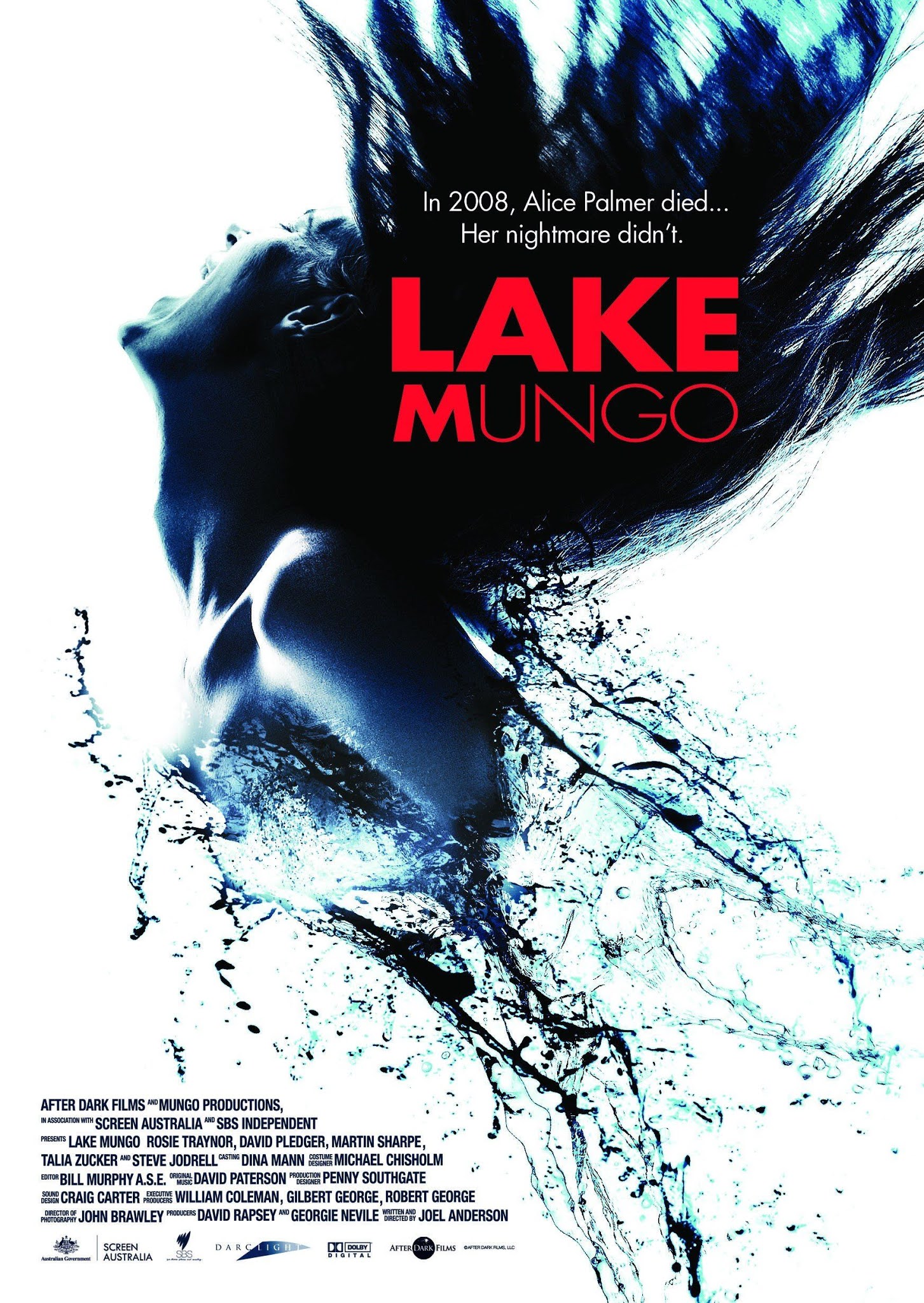
Lake Mungo (2008)
Holy cow. I'm not sure why this isn't mentioned more often in the same breath as David Lynch's 21st century output or The Blair Witch Project, but alongside those works, this Möbius strip of a movie feels like one of the definitive statements of the haunting, reflexive unreliability of humanity's quest to document itself in at the overlap of digital and analog spaces. It's also bone-chilling, and also heartbreaking. This is almost certainly going to be my favorite new watch of my October horror viewings. Grade: A


Bloody Mama (1970)
A kind of admirable attempt at a gangster picture totally de-glamorized from any residual Bonnie and Clyde mythic counter-culture associations. These are some wicked, wicked people trapped in a go-nowhere cycle of violence. But I say it's only "kind of" admirable, because to be completely admirable, it'd have to have been anything but a amateurish collection of disjointed scenes just piling up one after the other without any sense of pacing or character until the shootout. This was sooooooooooo boring. Grade: C-


Kill, Baby... Kill! (1966)
A fun little Gothic horror movie heavy on the cobwebs and spooky atmosphere and light on the sensible plot or interesting, which is fine by me. Plot should always be subservient to mood in these kinds of stories, and this one delivers that, though I do wish that it would stop explaining its creaky plot so insistently so long as it's going to take as lackadaisical an approach to tying everything together as it is. Just let me vibe, you know? When the movie gets out of its own way, there are some delightful proto-giallo touches, like the way that the creepy estate is bathed in green-tinted light for no apparent reason except that it looked cool—and speaking of the lighting, Wikipedia says that the lighting was an influence on the look of Scorsese's Last Temptation of Christ, so if that's true, I suppose we have this movie to thank for that exquisite aesthetic. So thanks, Kill, Baby... Kill! Grade: B

Werewolf of London (1935)
I like some of the individual moments here, like the first transformation scene. But on the whole, there's really not a ton to recommend about the first big Hollywood feature about a werewolf, given the tedious stretches between the good moments, and oddly focused on botany to boot. I almost wish the movie were given over entirely to the batty secondary characters that populate the margins of this movie; I would definitely spend more time with the kooky landlady. Grade: C


Music

Sufjan Stevens - The Ascension (2020)
Sufjan Stevens has never been an apolitical artist, nor has he even been an exclusively optimistic one, but with The Ascension, he's really going full-bore into the kind of disillusioned, terrified fervor that right now animates everyone left-of-center in the United States political spectrum. The Ascension is, with little contest, Sufjan's most embittered, confrontational record, and Sufjan knows it; even if he hadn't declared the album "bossy and bitchy" in The Atlantic, there's no mistaking an album that closes with a 12-minute song called "America" as anything other than that. The feeling of betrayal is inescapable when at the chorus of that song, Sufjan sings, "Don't do to me what you did to America," and it makes sense; early records like Michigan, Illinois, and (to a slightly more opaque degree) Seven Swans show a Sufjan Stevens preoccupied with a sense of Americana that, while not always innocent, has a kind of romanticism to it: the Midwest suffused with a divine light, an imago dei. But now, over a decade removed from those albums, Sufjan finds those ideals sick and corrupted, perhaps even revealed as total sham."I have lost my patience / Make me an offer I cannot refuse," Sufjan sings on the opening track, a kind of last-ditch ultimatum before launching into this profoundly weary, emotionally grueling album. "There is no time for innocence," the song goes on, as if reflecting on and rebutting the wide-eyed wonder of the "States" albums and the state of our country in general (and I can definitely relate). The obvious companion record to The Ascension in Sufjan's discography is The Age of Adz, another anxious double LP positioned as a repudiation of Sufjan's past work by way of heavily electronic production. But unlike Adz and its glitchy, noisy beats, The Ascension is much more musically straightforward, opting for smoother and more immediate beats and more melodically accessible song craft. I know people who have found this change of pace from Adz's production to be refreshing, and I'm happy for them, but for me, the more pop-oriented sounds of this album are a big part of why I don't think The Ascension is nearly as good as The Age of Adz—not because I have anything against pop music, but on specifically this album, I just don't think Sufjan finds a good way to sustain this sound over the course of 80 minutes. Adz is a long album, but the relentlessly busy, often thorny nature of the instrumentation is a lot better at finding interesting permutations over the course of the record's lengthy run than the beats on The Ascension (a longer album than Adz, but only barely), which get a little thin and redundant over the procession of mid-tempo club-music downers. The stretch of the album from "Landslide" to "Sugar" is pretty weak, honestly, not because the individual songs are bad (though I really don't care too much for "Sugar," the most obvious and uninteresting song Sufjan has made in quite a while) but the sequencing of them one after the other after the other makes their individual moments kind of collapse into each other as a monochromatic sludge of samey music. I'm not at all sure why some of these songs made the cut when a song as good as "My Rajneesh," the B-side to the single "America" that Sufjan dropped a couple months before the full album itself, was left out. I'd happily replace "Sugar" and one or two other songs on here to make room for "My Rajneesh," not only because it would give the record some sonic diversity in its third quarter but also because it would have some fruitful interplay with The Ascension's deconstruction of Americana and Sufjan's older releases—the focus on a personally transcendent but ultimately hallucinatory and even dangerous cult in the Pacific Northwest is an intriguing mirror to Sufjan's sentiments on the album proper of having been mislead and lied to by our national ideology and also having participated himself in perpetrating the fiction of the American myth. Like "My Rajneesh," the best moments on The Ascension render broader sociological observations through personal and spiritual anguish. Sacramental imagery abounds, marriage and Eucharist and death twisted and maybe even blasphemed by the rituals of nationalism and personal pursuits: "I have broke your bread / For a splendor of machinery," Sufjan confesses on "America"—"I have worshipped, I have cried / I have put my hands / In the wounds on your side / I have tasted of your blood / I have choked on the waters." Elsewhere on the record, Sufjan is even more explicit: "Is all for nothing? Is it all part of a plan?" he asks, Job-like on "Ativan," and on "Tell Me You Love Me," it's simply, "I've lost my faith in everything." As with the best of Sufjan's work, it's never quite clear where he is talking to a lover and where he is talking to God and where he is talking to himself, and The Ascension adds the component of conflating a national identity with those things, too. It's often be sublime, especially when Sufjan takes all of this thematic complexity and turns it completely inward, as he does on the title track, hands-down the best song on the record and one of the greatest songs of Sufjan's career. Here, the slick production fades to negative space that allows Stevens's voice to fill a void, confessing and prophecying like nowhere else in his career: "And now it frightens me / The dreams that I possess / To think I was acting like a believer / When I was just angry and depressed," he says, only to invert this despair a couple verses later to declare, "Now it strengthens me / To know the truth at last / That everything comes from consummation / And everything comes with consequence / And I did it all with exultation / While you did it all with hopelessness." Sufjan Stevens has written a lot of good lyrics over his decades as a songwriter, but I don't know if he's ever written something as piercingly true about a specific moment in history as he does in that song. At its worst, The Ascension merely dilutes that insight, but at its best, the record becomes luminous. Grade: B