Sunday, June 4, 2017

Mini-Reviews for May 29 - June 4, 2017

Out-of-towning is making this post late, but I hope y'all enjoy it anyway. Peace!

Movies

My Life as a Zucchini (Ma vie de Courgette) (2016)
Everything about this movie works, but none of it works greatly—the Playdough-looking visuals, the warm characterizations, the lightly optimistic upturn to what should otherwise be a crushingly sad plot. In fact, this last one is the film's most impressive achievement, given that it deals with an orphan who has accidentally killed his mother, a mean and alcoholic woman whom he remembers with a revisionist kindness. This movie should, by rights, feel oppressively cruel, but instead, it simply feels rather melancholy; the way I've worded it makes it sound like it doesn't take its tragedy seriously, but that's not what I mean: it's just that the world of the movie is one where kindness exists alongside its unspeakable meanness, such that it's much less a wallow than it might be. Another example: Simon, another orphan in the orphanage who seems, based on his picking on our protagonist, to be set up to be a bully is given a wonderful humanity, too, that transforms him into something far richer than his presumed archetype. Simon is, by far, the best thing here outside the protagonist, and a big part of the movie never being more than "pretty good" is that none of the other characters or situations transcend their archetypes: we have the kindly cop, the inspirational teacher, etc. Perhaps if the movie were a bit longer (it's barely an hour now), the additional time with these characters would have granted them more life. But as it is, there are merely flashes of inspiration that make this any better than a run-of-the-mill inspirational picture. Grade: B
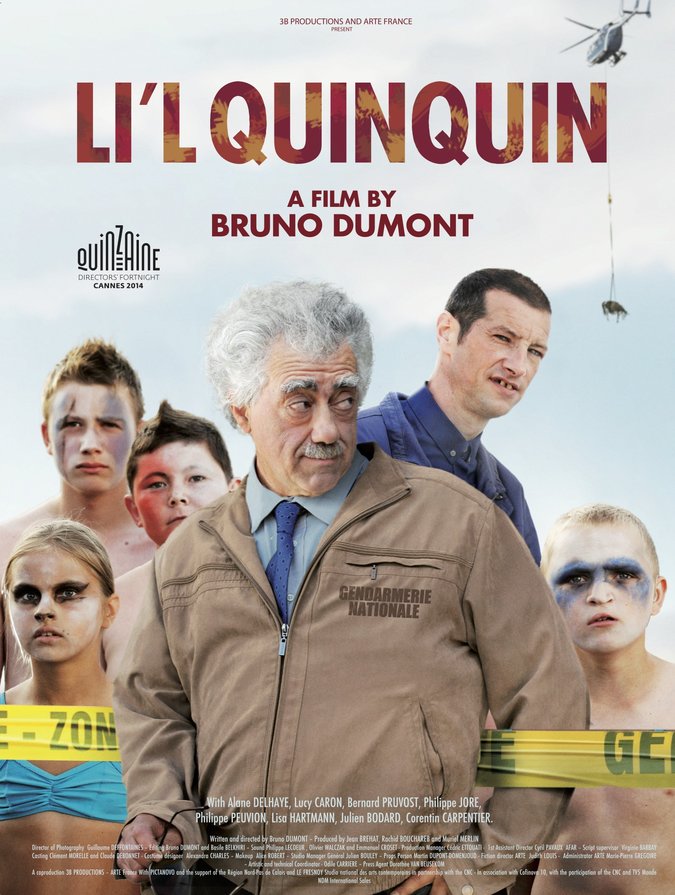
Li'l Quinquin (P'tit Quinquin) (2014)
Something of a murder mystery crossed with a philosophical treatise crossed with a very off-beat comedy, Li'l Quinquin is a strange duck. Probably the closest analogue here is Twin Peaks, for the way that it explores the dual absurdity and darkness hiding within small-town life through the eyes of an unconventional-but-wise detective. But even that doesn't really capture the bizarre, mesmerizing energy of the film—we are, after all, dealing with a mystery involving corpses found inside the digestive tracks of cows, not beautiful dead girls wrapped in plastic. It's utterly confounding, but there's a magnetic power to it as well, one that feels like it's tapping into something both goofy and elemental. Grade: B+


Billy Elliot (2000)
A very sweet coming of age film that strikes me in the same way that I think last year's Sing Street struck a lot of people (not me) last year, only with dance instead of song. The T. Rex-filled soundtrack makes it even sweeter, and the backdrop of working-class strife and a coal miner strike to all the ballet makes for some interesting social textures. There are some potentially worthwhile ideas left to wither on the vine—virtually every side character gets short shrift, but the worst is Billy's gay friend, Michael, who gets about two scenes of any weight; his other friend, Debbie (who gets what is probably the best image in the entire film as she drags her stick across a fence that then turns into police riot shields), receives even less screen time. But everything with Billy and his family is great, particularly the time spent between Billy and his father. Seeing the father's sympathies slowly turn toward Billy and his ballet ambitions is beautiful to behold and is the best this film has to offer. Grade: B+

Fire in the Sky (1993)
There are two very interesting premises embedded in Fire in the Sky. The first is a crime mystery involving a group of men who cite a flying saucer as the explanation for the disappearance of their friend and a highly dubious town and law enforcement cohort. This is a story about truth and the limitations of eye-witness reports, and it's fascinating. The second is a horror movie involving a man's abduction by aliens and the psychological fallout from that abduction as he attempts to reintegrate back into his former life after his return. This is a story about trauma and body autonomy and the terrifying smallness of humanity within the larger context of an uncaring universe, and it's also fascinating. But taking both of these stories and mashing them both into a 109-minute film does a disservice to both, and we're left with a muddled, confused movie that's never quite sure how to fit all its various lumps into its '90s middlebrow box. Grade: B-

Wild at Heart (1990)
David Lynch's follow-up to his indie smash Blue Velvet is, like Lost Highway, a transitional work between two career monuments: this time, between Blue Velvet's off-kilter crime thriller and the full-on affectation and absurdity of Twin Peaks. And it's nuts. It's a movie with Wizard of Oz obsessions (often to an absurd degree, mimicking specific iconic shots from the classic) and Nicolas Cage playing a character who has all the style and mannerisms of an alternate-universe Elvis who was born and raised in L.A., and those two things don't even begin to describe the frantic energy that animates every single shot—this is, without a doubt, Lynch's more frenetic film. It's goofy and grotesque in equal measure (I'm astonished that the film only had to alter one shot to avoid the X rating), but it's beautifully realized and, for all its proclivities for idiosyncratic parody and irony, also ends up being a sincere treatise on love and commitment that's quite moving. Laura Dern's character's wounded infatuation with Cage's aloof Elvis-impersonating makes for a truly great screen romance that only gets sweeter as the movie progresses. The film isn't perfect—a late-film subplot with Willem Dafoe is a misstep, for sure—but for any flaws, it hits eloquently the immaculate emotional range that only David Lynch can deliver. Grade: A-

Books

Still Life with Tornado by A. S. King (2016)
Last year's release from the prolific and frequently excellent A. S. King may be her best. To say that this novel is a painfully sharp depiction of domestic abuse makes it sound like a miserable experience that it absolutely is not (though its depiction of its subject matter is very sharp), so I'll instead frame it this way: given how crushing being a teenager can actually be, YA lit is a genre that is almost laughably in love with self-actualization for brooding, existentially adrift adolescents, but Still Life with Tornado is one of the few that actually manages to build its protagonist's self-actualization with weight and meaning. Yes, she's an artsy teen wandering through urban landscapes (Philadelphia, in this case), but way she finds her way out of that headspace is earned and real. This is a book in which victories are not a foregone conclusion but an actual extension of who these characters are. I dig it. Grade: A-

Sunday, May 28, 2017

Mini-Reviews for May 22 - 28, 2017

Reviews, etc.

Movies


Pirates of the Caribbean: On Stranger Tides (2011)
It's a modern action blockbuster, so it's like at least thirty minutes too long, and the plotting is convoluted. But thank heavens that it has the good sense to jettison anything resembling the cumbersome mythology of the original two sequels and focus on the humor and swashbuckling action. It's a saving grace that makes the movie more enjoyable than it should be, and I liked it overall, if a bit tepidly. Grade: B-


Pirates of the Caribbean: Dead Men Tell No Tales (2017)
After the first (and still obviously best) Pirates of the Caribbean movie, there's been a bit of a trade-off, franchise-wise: the original two sequels that rounded out the trilogy had the madcap energy of gonzo director Gore Verbinski, but they also had a truly cumbersome plot deadened by everything to do with its convoluted maritime mythology and the lifeless romancing between Orlando Bloom and Keira Knightley. The fourth movie lacked Verbinski's weirdo charms but in exchange threw out the insipid mythologizing and instead offered a much lighter, more swashbuckling movie that hearkened back to the charms of the first. It was alright (see previous review). Now we have the fifth movie in the franchise, and shiver me timbers, the freaking mythology is back, and this time without Gore Verbinski in the director's chair. So what we're left with is something of the worst of both worlds: dour, byzantine, and shakily directed, not to mention dull. The movie can't even get Jack Sparrow right, which seems like the bare minimum we could expect of this franchise up to this point—gone is the winking irony and failing-upward luck, and in its place is something resembling emotional stakes and relentless backstorying (did you ever wonder where Jack got his compass? Well, fasten your seatbelt). Midway through the film, there's even a literal jumping-the-shark moment involving Sparrow; it's come three movies too late, of course, but it's never too late to listen. Grade: C


Paterson (2016)
By feelings toward Jim Jarmusch usually fall somewhere within the realm of disinterested admiration: I can see the craft of his films, but they never do a whole lot for me. Now enter Paterson, and that trend seems to have changed. Centering on a married bus driver (Adam Driver) who writes poetry in his spare time, it's possible that this film just intersects too many of my own personal passions in real life to avoid awakening some strong feelings in me. The movie is a quiet, well-observed rumination on the creation and role of art within the repetition ebbs and flows of a life, and I found it tremendously moving. Grade: A-


Hidden Figures (2016)
This kind of history-as-drama-with-overly-broad-emotional-beats film isn't really my cup of tea anymore, but there's no denying that this is a particularly well-acted one of that kind. And I'm all for movies about space, especially those that shed light on (or at least adapt a book that sheds light on) new angles to the same familiar Space Race moments. Grade: B


The Black Power Mixtape 1967-1975 (2011)
"Mixtape" is exactly the right word for this: a hodge-podge of footage (taken by Swedish journalists, which... okay, I guess) of prominent Black Power Movement events and leaders that, collectively, makes a collage of the era. It's an interesting experiment, particularly in the way it uses modern-day audio by those same leaders (esp. Angela Davis) to comment on the decades-old footage, and I can't deny that it's successful at crafting evocative sights and sounds. But there is something vaguely frustrating about the way the movie has little interest in going beyond those sights and sounds—if you know anything about Black Power at all, there's nothing particularly new or enlightening here, while if you're looking for a decent primer on the subject, there are far better resources for that sort of education than this film. But still, as collages go, you can do worse, too. Grade: B


Adventureland (2009)
Well, here's something of a time capsule—an indie dramedy from the days in which Kristen Stewart was still coasting on those Twilight/girl-next-door vibes rather than being an art-house trailblazer and Jesse Eisenberg, pre-Social Network, still hadn't figured out that he was way better at playing sociopaths than Michael Cera clones. It's also an indie dramedy about a sensitive, literate guy with hip music taste who just really, really wants to get laid, a plot that's its own sort of time capsule. I used to eat these sorts of movies for breakfast, and I won't deny the charms of a movie that features this much Lou Reed. But I've also become way more sensitive to the tropes of this kind of film, and while I appreciate the low-keyness of everything, there's also something solipsistic and dull about the way it frames dude-in-his-20s life as a lackadaisical movement between super goofy comedy and angsty pathos. The performances are decent, and the screenplay is warm, but, like... is this all there is? Grade: B-

Television

Anne with an E, Season 1 (2017)
In approaching this series, it's important for diehard fans of the original book series (and the superb 1985 TV miniseries) like myself to realize that Anne with an E (or simply Anne, as it was released in its original run in Canada) is much more of a reinterpretation and modernization of the original Anne story than it is a straight and faithful adaptation of Anne of Green Gables. This can be a little hard to swallow at times such as the second episode, where a wholly new plot digression alters the relationships among the principal three characters (Marilla, Matthew, and Anne) in a way that feels almost like a deliberate attempt to encourage hand-wringing among Green Gables purists; the same goes for the decidedly more mature content of this series (which includes semi-direct discussions of sexuality and abuse), which aims this show more at a teen audience than the traditional elementary-aged audience of the books. However, this looseness with the source material is also the key to this series's success, too. Any adaptation of a work that already has a successful and beloved adaptation in wide circulation has to contend with the completely reasonable question of why it even needs to exist in the first place, and the same goes doubly for Anne with an E in its opening hour, as it runs through familiar beats and verbatim lines from the book as if it were going through a fandom checklist. It's only when the series digresses in tone and content from the book that it becomes clear that Anne is doing something interesting and rather compelling with its source material: using the familiar, lackadaisical warmth of the novel as a stark counterpoint for the striking psychological realism it gives Anne. A subtext of the novel was the way that Anne's vivid imagination and flights of fancy were coping mechanisms for her impoverished and traumatic life as an orphan before coming to Green Gables, and that idea basically becomes the text of Anne; the cruelty she has experienced in her prior life is depicted unflinchingly here, and it stands in such vivid contrast to the sunny loquaciousness of Anne Shirley that it's not hard to see the heartbreaking desperation behind that cheer (an effect bolstered by a fantastic performance from Amybeth McNulty). The show uses this vantage point to inform all the various wrinkles of Anne's relationships with her new family and peers, from the ways that it causes her varying levels of trust and mistrust of the Cuthberts to how her extreme experiences at society's bottom rung have deteriorated her frame of reference for what is and isn't appropriate human behavior, something that manifests itself most potently in the ways that Anne struggles to make friends in the context of the post-Victorian propriety of the Prince Edward Island middle class. There are things about this series that don't work—the frequent discussion of gender politics and progressive values feels, at times, anachronistic and on-the-nose, and the introduction of a pair of villains in the series's final episode feels way off-base. But on the whole, Anne with an E is way more vital than I was expecting it to be, worthy of its source material even as it innovates on it. Grade: B+

Brooklyn Nine-Nine, Season 4 (2016-17)
Not a lot to say here: Brooklyn Nine-Nine has long been a pleasure, and this season represents no great change in that paradigm. The show's pursuit of consistency over ambition is less a liability (though it does continually keep this show short of greatness) than simply a commitment to classic sitcom craftsmanship, but that said, I'll be interested in seeing how the show restores its status quo after the cliffhanger in this season's finale. Grade: B


Books

Born to Run by Bruce Springsteen (2016)
As with most autobiographies, Bruce Springsteen's autobiography has dead zones that line up with the ebb and flow of the high points of interest in his life. Most exiting are what's expected—his rough-and-tumble childhood, early bar-band career, assembling of the E Street Band, relationship with his father, struggle with clinical depression, etc.; least exciting is his 1990s, i.e. the era of Human Touch, Lucky Town, and domestic stability. The depressing fact remains that as happy as I am that the Boss was so content in these years, it's just not that interesting to read about someone whose life is going very, very well. But even these dull spots are ameliorated by Springsteen's voice, which is about exactly as you'd expect it to be: thoughtful, down-to-earth, idiomatic, impassioned, charismatic. And when the autobiography is at its best (as it frequently is), the pages fly by. Overall, it's an engaging intersection of an artist's life with an artist's voice. Grade: B+

Music

Harriet Tubman - Araminta (2017)
Complex, nervy jazz-fusion for complex, nervy times. This is a political record in the style of old-school political jazz records from the '60s and '70s, more implicating politics and philosophy through dissonant rule-breaking than making any clear text within the album (though Wadada Leo Smith's contribution, "President Obama's Speech at the Selma Bridge" comes close). So what we're left with is a work that feels important in indefinable but grimily tangible ways that make for one of the year's best. Grade: A-

Sunday, May 21, 2017

Mini-Reviews for May 15 - 21, 2017

Just survived the last full week of school. Commence celebration!

Movies

Alien: Covenant (2017)
Ask a dozen people what was wrong with the 2012 Alien prequel, Prometheus, and you'll get a dozen different answers. Based on the online reaction thus far, the same seems to be be true of Prometheus's sequel, Alien: Covenant. And make no mistake: this is not a perfect movie. The plotting is haphazard, lurching awkwardly from cheap-thrills horror (there is a shower scene that is already, and justifiably, becoming infamous) to cosmic philosophizing, and the screenplay underwrites several key characters, most significantly Katherine Waterston's. But whereas I thought Prometheus failed by leaving its most intriguing philosophical ideas on the table to grow cold and mangled by a dysfunctional screenplay and a reckless abandon for grotesque action, Covenant actually manages to pick up those ideas and run with them in absolutely fascinating ways. The xenomorph action is interesting enough (and appropriately disgusting), but where this movie really shines is in its Big Ideas: the ideas of creation as sadism, of biogenesis, of the relationship between creator and creation—ideas gestured toward in Prometheus but only truly realized here. And they're all developed mesmerizingly via a Michael Fassbender performance (performances, really) to die for. The xenomorph is a sideshow, honestly. The movie (after a brief prologue) begins and ends with Fassbender's android in isolation, and I can't think of a better way for the film to introduce its most compelling character—it's this guy you should be watching. Grade: A-

Nocturnal Animals (2016)
The first thing you'll notice about Nocturnal Animals is its exquisite formalism—this movie looks ravishing, nearly every frame (especially within the nighttime scenes) crafted with the eye of a master stylist. In fact, it looks so great that the second thing you notice might not even register on any level but a naggingly subconscious one. But pay attention; this second thing is very important, and that is that this movie kind of sucks. Aside from its stunning formal achievements (nothing to sneeze at, believe me), the movie is a failure on nearly all narrative and structural metrics. Splitting the story between a "real life" art gallery owner (Amy Adams) and an enactment of the novel manuscript she's reading, the movie cross-cuts between the psychological Expressionism of Amy Adams's plot (where the novel, written by her ex-husband, triggers memories of her tumultuous relationship with the author) and the B-movie smut of the novel's boilerplate murder/revenge saga. The B-movie segments are by-far the superior of the two halves, but by switching frequently between the occasionally robust novel narrative and the positively anemic and thin Amy Adams plot, the film saps the energy out of all of it. At least it's pretty to look at. Grade: C

Fireworks Wednesday (چهارشنبه سوری) (2006)
Released in Iran a decade ago but only recently in the United States, Fireworks Wednesday is a minor, early work by Iranian master Asghar Farhadi. But given that this is Farhadi, of course "minor" still means "quite good." Containing elements of the domestic thriller that Farhadi would later refine to high art, Fireworks recognizably belongs with his filmography, a tense, often exciting, ultimately crushing drama involving a marital spat and the housekeeper unlucky enough to be positioned between the spouses. It's a much looser, less precise feature, being split between the two spouses, than the taut, brutally efficient plotting of A Separation or The Past, but the grounding of the film in the housekeeper's POV is an interesting wrinkle, using her limited knowledge to craft the film into a low-key mystery. Farhadi wouldn't achieve real greatness until his next feature, About Elly, but Fireworks Wednesday is a robust accomplishment regardless. Grade: B+

Solaris (2002)
I haven't read the original Stanisław Lem novel, but word on the street is that when adapting the book—a tall order, given that it already had a masterful and beloved adaptation by Andrei Tarkovsky (my least-favorite Tarkovsky, but of course great nonetheless)—Steven Soderbergh aimed to stick closer to the novel's vibes than the earlier Soviet classic. I can't tell you if Soderbergh succeeded on that metric, but on a regular old movie metric, Soderbergh's Solaris succeeds tremendously, maybe even as much as Tarkovsky's. Relative to the Soviet classic, there are definitely far fewer color-tinted driving, and the runtime is handsomely trimmed by a third (both welcome modifications), and in general, the vibe is much more tactile than the occasionally opaque Tarkovsky touch—we really feel the tangible reality of these characters, which makes it all the more unsettling when their identity is called into question. It's a hypnotic, creepy, and fascinating film; in re-adapting classic source material, Soderbergh crafts one of his absolute best. Grade: A-

Music

Kendrick Lamar - DAMN. (2017)
DAMN. is not as good as any of Kendrick Lamar's last three releases. But since that is just to say that DAMN. is not a mind-bending masterpiece, that's not really much of a qualification. So how about this: DAMN. is Lamar's most scattered, inconsistent release yet, and it's one where he, seemingly intentionally, plays up his most #problematic characteristics—his use of the word "bitch," his depictions of women, etc.—in the interest of rigorous self-reflection that sometimes feels more like some dissonant combination of punishment and aggrandizement than commentary. Which is its own kind of commentary, and interesting commentary at that. But an "interesting" work is not necessarily a successful one. DAMN. is certainly successful—very successful, even—in stretches: the scathing, Fox-News-gutting "DNA.", the despairing, world-weary "FEEL.", the U2-featuring "X*X.", to name a few. It's cool to see Kendrick performing in what is, on the surface, a more mainstream-ready sound than he's touched in several years, and that's offset nicely by what is probably the most interior, abstract concept he's yet tackled—basically, a at-times stream-of-consciousness exploration of the competing impulses of his psyche and the ways that manifests itself in his life, his relationships, and his belief in God (lampshaded most prominently by the juxtaposition of mirror-image track concepts: "LUST." followed by "LOVE.", etc.). But the execution of that concept is where things get a bit dicey, not just because the track-to-track excellence wavers (e.g. I'm not a huge fan of "LOVE." or "LUST.") but because his commitment to the concept itself is slippery. Parts of the album are as incisive and biting as Kendrick Lamar has ever been, but other sections feel only cursorily thought through, skimming over the surface of interesting issues. It's not fatally flawed, and given the way Lamar's music has a way of opening up and metamorphosing over time, I may be premature in writing this review. But as it is, the album feels wounded in such a way that keeps it from stretching up toward greatness. Grade: B+

Sunday, May 14, 2017

Mini-Reviews for May 8 - 14, 2017

Reviews. Come and get 'em.

Movies


Jackie (2016)
Not a biopic so much as the use of Jackie Kennedy's life as an excuse to explore ideas about the creation of history through narrative and media, which is really interesting, but given how distracted I was with the film's meticulous recreation of Jackie Kennedy, the figure known to history through narrative and media (Portman's Oscar nomination is richly deserved, as is the one for Costume Design), I should probably watch it again with its more philosophical themes in mind. As it is, I found the movie more clinical and "interesting" than anything close to emotionally engaging (even given the film's focus on Jackie in the hours, days, and weeks surrounding her husband's assassination). But as far as clinical goes, it's pretty striking. Grade: B+


I Am Not Your Negro (2016)
Using James Baldwin's unfinished Remember This House as a jumping off point for an ambitious and genre-expanding documentary that's as much poetry and montage as history, I Am Not Your Negro is the graceful and vital Important Movie that's absolutely riveting to watch—this is nothing resembling eating your vegetables. The film's genius lies in the way it marries Baldwin's elegant, confident prose (rendered convincingly in voiceover via Samuel L. Jackson) to some truly potent political and historical imagery by way of precisely chosen footage that ranges from interviews of Baldwin himself to familiar historical moments of the Watts Riots and Rodney King beating to contemporary videos of Ferguson, Eric Garner, and more. It's a fiery and thoughtful look at American racial identity and race relations that's a worthy inheritor to Baldwin's brilliance. Grade: A


The Death of Louis XIV (2016)
There's not a lot to the movie beyond the title: over the course of 115 languorous minutes (and 15 days of movie-world time), we watch Louis the Great slowly wither from the most powerful man in the Western world into the pale, deflated shell we all inevitably become as we approach Death's door. The film's cool, medically obsessed point of view (doctors are constantly prodding and examining, and we're even "treated" to a post-death autopsy) makes this for one of the more bracing depictions of death I've seen in a movie, while the psychology of the king himself from frustration to resignation to oblivion is a startling mirror to what I've seen among those I've personally watched in their last days. But what strikes me most about this movie is the way it treats the hollow courtesy of those who talk with the dying; you know what I mean: the soft, tragic irony in the way they refer to the increasingly further gone man as "Sire" and applaud at the smallest bit of food he manages to consume and continue, with grave faces, to talk continually of the possibility for "hope" and "recovery," as if such a fate is actually avoidable. As if we all don't stare down this exact unavoidable end, unsure of which end of the binoculars we're squinting through. Grade: A-


Woman in Gold (2015)
A disappointingly pedestrian treatment of a topic (the reclaiming of art stolen by Nazi Germany) I find fascinating. While there are good touches here—mostly in the flashback portions involving the actual Nazi occupation and especially in scenes involving the always-great Tatiana Maslany (speaking fluent French, no less—is there anything she can't do?)—the majority of the film is choked with prestige-film tropes. Ryan Reynolds wears glasses, so you know he's serious; Katie Holmes is a nagging wife, so you know Reynolds is playing a Great Man because she's holding him back. Etc. The photography is handsome, and, as I said earlier, the WWII-era flashbacks have an emotional urgency and Maslany. But on the whole, I didn't find this very interesting. Grade: C+


Antichrist (2009)
In a film whose litany of offenses includes rampant misanthropy, juvenile psychologizing of grief and sex, explicit genital mutilation, and a fox that howls "Chaos reigns!" in an unapologetically Optimus-Prime voice, the sharpest slap to the face is the end-of-film title card that dedicates this rat pit of a movie to Andrei Tarkovsky. Yes, Lars von Trier, your leering salute to sadism, sophomoric philosophizing, and nature as "the church of Satan" is, on a purely imagistic level, tremendously beautiful in a way that recalls the pristine severity of a Tarkovsky picture. But Tarkovky was one of the most profoundly religious filmmakers we've ever had, capable of infusing his images with an unspeakable meaning of what it's like to yearn for the transcendent, whereas your film, Mr. von Trier, is merely an ode to the aforementioned obscenities and trendy nihilisms. Clever. Grade: D

Television


The Last Man on Earth, Season 3 (2016-17)
As inconsistent as it can be (and it is mighty inconsistent, often not working for multiple episodes at a time), The Last Man on Earth continues to be one of the strangest, most ambitious sitcoms in what is shaping up to be sort of a golden age of network sitcoms right now. It mostly manages this through a combination of its winsome love of silly puns and situational humor and a willingness to take its apocalyptic setting dead-seriously—for real: main characters die! And not infrequently! The tandem goofiness and astounding cruelty of this show's world makes for some strange tonal tightrope walks that the show doesn't always manage, but when it does (as in a standout episode starring Kristin Wiig), it's gold. And even at its worst, it's no exaggeration to say that this is like no other show on TV right now. Grade: B+


Superstore, Season 2 (2016-17)
It's always a pleasure to see a promising show find its voice, and that's exactly what's happened with Superstore in its second season. The character dynamics have been ironed out and optimized, the writing has gotten more consistent, and the deep ensemble bench has figured out how to make their characters feel lived-in and familiar without broadening them beyond what is recognizably human. The result is a show that feels something like a gentler version of the early couple seasons of America's The Office mixed with a more traditional workplace sitcom a la Cheers, a light satire of American consumerist mundanity and corporate oppression with a sometimes startling commitment to sharp character development. Those of you who've been on the fence with this show, now's probably the time to jump in. Grade: A-

Music


Shamir - Hope (2017)
Released out of the blue last month, it's hard to call Hope, Shamir's followup to 2015's excellent Ratchet, a "disappointment," exactly, given that there was no expectation or buildup. And given the album's hyper-low-fi, indie-rock/R&B-ish vibes, it's also hard to complain that it's left behind the infectious disco production of Ratchet, since it's clear that Shamir is trying something of a palate-cleanser here. It's admirable that he's trying something this tossed-off and different. I'm all for artists pushing themselves in new directions. But darn it all, Hope just isn't as good as Ratchet: the lo-fi production doesn't really accommodate Shamir's style, and the songwriting is clearly suffering from the quickness of the recording. It's not terrible, but it's got little of the promise or go-get-'em excitement of what Shamir's done in the past. These are exactly the sort of comparisons Shamir was hoping to dispel by releasing something this off-the-cuff and stripped back, and I respect that. But I can't help it. Grade: C+

Sunday, May 7, 2017

Mini-Reviews for May 1 - 7, 2017

Movies and a TV show. Go get 'em!

Movies

The Red Turtle (La Tortue Rouge) (2016)
This animated feature begins as a kind of Castaway situation and ends as a moving and unspeakably gorgeous rumination on life itself. If that sounds pretentious, just wait until I tell you that there's not one jot or tittle of dialogue and that its plot involves a turtle that inexplicably turns into a woman. This is definitely one of those types of movies where you pretty much know from the outset if this will be your cup of tea or not, but good golly, is this ever my cup of tea, and I will gladly sip from this exquisite mug time and time again. This is the best animated movie I've seen in quite a while, and if I were to go back and revise my "Best of 2016" list, this film would land at the very top. At only 80 minutes, it's a blessed trifle of a watch, too, so even if it doesn't sound like your thing, I'd highly recommend checking it out anyway. And for anyone who's on the fence, I'll close by pointing out that the movie is a collaboration between Studio Ghibli and Dutch animation master Michaël Dudok de Wit, though I suppose that if you know who those are (particularly the latter), then you're probably already in the bag for this movie to begin with. Grade: A

Winter Sleep (Kış Uykusu) (2014)
This three-hour-and-fifteen-minute Turkish drama is too long by a significant margin, which makes it all the more impressive that it's able to be as powerful as it is, considering how diluted that power is by long, meandering scenes full of bourgeois misery and stark, striking, but altogether too lengthy shots of the Cappadocian wild. Depicting a class struggle between a wealthy and blindingly arrogant and self-possessed writer who owns some property and his tenants who are having difficulty paying the rent on that property, the movie is at its best in two centerpiece conversations the writer has between his sister and his wife, respectively. These conversations are riveting, pivoting from abstract philosophizing to trenchant social commentary to piercing character work to just plain old verbal sniping among the principal characters, and they form the backbone over which the movie is able to hang its rather cumbersome whole on without it collapsing entirely under the weight of the runtime. Grade: B

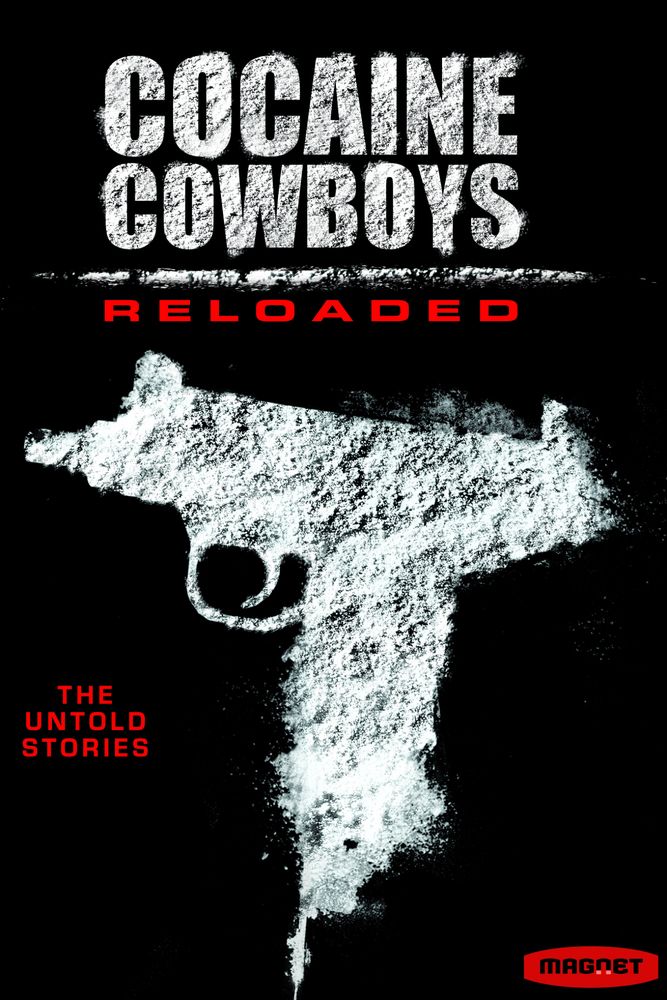
Cocaine Cowboys: Reloaded (2014)
A wild, sprawling, maximalist documentary about the '80s/'90s Miami cocaine trade that itself feels cocaine-addled for all its frenetic energy: the film cuts from interview to interview, splicing together shot after shot into a furious, 2.5-hour montage of talking heads and archival footage. The component parts are great—the interviews are mostly with either law-enforcement officials from the era or, stunningly, with major players in the cocaine trade itself—but frequently, the way it's assembled, with its driving music and frantic cuts and incessant sound-biting, is just way. too. much. I would have preferred a much more methodical, structured documentary that allows its subject to breathe, but this is what we have. And it's decent as it is: informative and shocking as it is crazy, if a bit scattershot. Grade: B

Great Expectations (1998)
It's directed by Alfonso Cuarón and filmed by Emmanuel Lubeski, one of the greatest director-cinematographer power couples in contemporary cinema, so you know it looks great. It's also a movie that adapts Charles Dickens's stone-cold 19th-century classic into a modern erotic romance starring Gwyneth Paltrow at her blankest and Ethan Hawke at his '90s brattiest. I guess you can't win 'em all. Grade: C+


Television

Orphan Black, Season 4 (2016)
After a scattered and convoluted Season 3, everyone's favorite clone sci-fi series returns (correction: returned—I'm about a year behind, as you can see) with what's something of a course-correction, reigning in the discursive plots from the previous season to refocus on its core characters. Most notably, the season is centered around what happens when the main characters pull on the loose thread that is Beth's suicide, bringing the plot full-circle back to the very event that kicked off the show's first (and still best) season. This is a fantastic move by the series writers, deepening existing plots rather than crowding them out with new and emotionally flat mythos expansion (*cough*Proletheans*cough*). There's still the feeling that the show has reached the point The X-Files ran aground of in its fifth and sixth seasons, where the overarching series mythology feels too big for the characters themselves. But as long as the show is able to continue to ground its world-spanning themes in compelling moment-by-moment dramatic writing as it does here, this should only be a minor issue. Grade: B+

Music

Matthew Sweet - Girlfriend (1991)
One of the saddest facts of rock music history is that Big Star has only three albums, and only two with power-pop saint Chris Bell. And as much as the subsequent power pop descendants tried to mimic that band's particular charms, nothing has quite scratched that itch for me. Until now, that I've discovered 1991's Girlfriend. To quote one of the album's best songs, "I didn't think I'd find you perfect in so many ways." It's exactly that kind of sweet, catchy, and achingly melancholy pop/rock that I've been waiting for so long. At fifteen songs and over 60 minutes, the album is far too long, but that's pretty much the sole strike against it. Grade: A-

Sunday, April 30, 2017

Mini-Reviews for April 24 - 30, 2017

A higher percentage of negative reviews this week than normal. Enjoy?

Movies


Your Name (君の名は。) (2016)
A drop-dead gorgeous film on a technical level that services a pretty okay plot (basically, a body-switch movie) with a screenplay that struggles to make that story move—though, to be fair, a gigantic step forward from Garden of Words, writer/director Makoto Shinkai's previous feature. It's a very good movie, but it's almost entirely carried by the visuals and pathos of the operatic teen romanticism; moment-by-moment writing is pretty weak. But sweet jumping Jehoshaphat, is it beautiful, especially toward the film's end, where the visuals get cosmically oriented and the silent moments where everything drops away and we're left to only contemplate a hanging piece of visual lyricism come plentifully. Seen on the big screen, it's transcendent. Grade: A-


A Monster Calls (2016)
Criminally ignored by audiences last fall (including by me, as I'm just now getting around to it via Netflix disc delivery [yes, that still exists]), A Monster Calls is a kind of movie that comes along very, very rarely, especially nowadays when the family film is virtually extinct: a piece of cinema aimed very specifically at precocious middle-school-aged children and their parents. Even rarer, it's a movie that wants precocious middle schoolers and their parents to cry their eyes out. This is a movie about death—not about avoiding or defeating it but coming to terms with the terrifying fact that every single person you love will eventually be pulled into its hungry maw. And it's not subtle about it; a recurring image in the film involves a boy watching his mother fall into a crumbing hole in grounds of a church graveyard. The movie is filled with such symbolically loaded images, particularly in the two luscious animated sequences that mime the slippery fables told by the titular monster (this is very much one of those stories were sublime fantasy and piercing real life collide). The end result is as moving as it is visually sumptuous. We all missed this in the theaters; let's not miss it again. Grade: A-


Sinister (2012)
In what turns out to be one of the best horror movies of the 2010s, Ethan Hawke is a struggling writer with demons of alcoholism taking his family to a house that may or may not be haunted by evil spirits that are either leftover from or caused a horrific tragedy at that same location. If this is all reminding you of The Shining, then you and I think a lot alike, and in a lot of ways, this is a stealthy re-adaptation of the King book—specifically the book and not the Kubrick movie, because Sinister is very much interested in the psyche of Hawke's character and the ways that it intersects the supernatural evil, something Kubrick was almost gleefully disinterested in. Anyway, I don't want to belabor the Shining comparisons (although this definitely feels like it could be a Stephen King short story), because Sinister ends up being quite its own animal by the end, mostly aesthetically: Frédéric Thoraval, the film's editor, deserves a mountain of awards for his work here, and the cinematography, music, and lighting all pull their weight beautifully, too. Until its final act (which, typical of even the best modern horror, kind of wets the bed), this is a languorously patient film, making its bump-in-the-night moments effective through an impressively tight control of craft that elevates its mostly typical ghost story underpinnings with something approaching a work of art. Grade: A-


Monkeybone (2001)
Monkeybone is a special kind of bad movie that we don't get too often anymore in this era of hyper-competent studio mediocrity and cinematic-universe house styles: a movie with a manic disregard for taste, continuity, and logic, all in the name of... style? Yeah, we'll go with that. This is a movie in which a man calls his penis "Monkeybone;" it's a movie in which Monkeybone is also the name of a main character, who is also a stop-motion animated monkey; it's a movie in which the souls of comatose humans congregate in some weird Freudian space visualized as the unholy love child of Mos Eisley Cantina and The Muppets; it's a movie in which one escapes that coma place via the open mouth of a CG rendering of the Great Emancipator himself, Abraham Lincoln; it's a movie in which Bob Odenkirk is a surgeon who chases after a reanimated corpse with a cooler in the hopes of being able to save any spare organs that drop out; it's a movie in which Brendan Frasier kisses an orangutan and watches with unfettered lust a nature documentary on monkey mating habits. If this sounds like zany fun, you're in the same boat I was before watching it. Oh, but it's dreadful. It's also bonkers to such a degree that I'm being kinder to this movie than it probably deserves, probably out of some sense of admiration that something this disastrously off-the-wall managed to be greenlit by a major Hollywood studio. There are also some pretty cool stop-motion effects, which is about the least backhandedly kind thing I can say about the movie. On the whole, though, this is a movie that has to be seen to be believed—but better yet, don't. Grade: C-


Jurassic Park III (2001)
Two significant factors set the second Jurassic Park sequel above The Lost World (though still significantly below the quality of the original and even just the basic sea level of "good"). First is that it's a nearly forty minutes shorter, bringing the whole production into a brisk 92 minutes—an absolute game-changer after the lethargic, lumbering Lost World. Second is that director Joe Johnston, a modern master of sorts within this dubious genre of mid-budget pulp fare (for example, directing the sterling The Rocketeer and later the first Captain America film with Chris Evans) has absolutely none of post-Schindler's-List Spielberg's care for dignity and instead commits totally to this film's B-movie status. As I said, it's still not particularly good—characters, again, are an issues (we again have parents trying to reconnect with their kid, wtf), as is coherent plotting and anything resembling wonder or ambition. But at least Jurassic Park III knows what it is; I can respect that. Grade: C+


The Lost World: Jurassic Park (1997)
Though the idea of taking the original Jurassic Park's comic relief character and overall thematic bludgeon Ian Malcolm and making him a protagonist creates its own structural issues for the movie—namely, the introduction of his gymnastics whiz kid (why oh why does every one of these movies have to be about people trying to reconnect with their children??), it at least means we have some solid Goldblum comedy throughout, which is one of the few bright spots in this otherwise dire sequel. The other bright spot is the cinematography, which captures the Cretaceous (these guys are not from the Jurassic era) imagery with a lush and evocative eye for lighting that bests even the original. As for the rest, well, like I said: dire. It's a movie that simultaneously takes itself far too seriously and not nearly seriously enough: characters we are supposed to care deeply about without the film actually having given the effort to imbue them with any humanity to care for; dinosaurs that supposedly pose even greater threats but without any of the sense of awe or grandeur that made the beasts so otherworldly and magnificent (and hence, terrifying) in the original. Worst of all, it's just terrifically boring. This, in fact, is the film's greatest crime: a movie about dinosaurs that's BORING. This is shooting fish in a barrel and missing. Grade: C-


Shadow of a Doubt (1943)
A relentlessly tight psychological thriller, but what did you expect from Hitch? What's interesting here, beyond the usual formal mastery, is that Shadow of a Doubt seems to be, at least in part, a revision and rebuttal of Suspicion, Hitchcock's 1941 film that's similarly preoccupied with the possibility that a family member is a cold-blooded murderer. But whereas Suspicion remains an unsatisfying tease of a film, Shadow of a Doubt goes for broke with a fireworks finish that's every bit the fears-turned-to-cheers that Suspicion sadistically refused to be. They both have lame romances, though, so that's a strike against each. Grade: A-


Music


Spoon - Hot Thoughts (2017)
At this point, it almost goes without saying that a new Spoon album will be good. Of course Hot Thoughts is good; I'm reasonably confident it's impossible for a Spoon album to be bad. What's more interesting is that the specific pattern of the last decade of Spoon output seems to be alternating crowd-pleasers with more experimental work: 2007's pop-rock triumph Ga Ga Ga Ga Ga gave way to 2010's groovy, opaque Transference, and now Spoon has followed up 2014's warm, welcoming They Want My Soul for this, a mysterious, nervous album with few obvious hits and that ends with an out-of-nowhere jazz instrumental. The result is something funkier and dancier than Spoon have been in the past, while naturally still being recognizably Spoon. These guys continue to find variations and nuances on their core sound, and I'll be along for the ride for pretty much forever. Grade: B+

Sunday, April 23, 2017

Mini-Reviews for April 17 - 23, 2017

Y'all know what it is.

Movies

Toni Erdmann (2016)
The buzz surrounding this movie was that it's "hilarious," "absolutely nuts," and "wildly inventive" (actual pull quotes from the movie's poster), and while I won't deny that this movie is entertaining—especially for a nearly 3-hour(!) German film—but come on: Toni Erdmann is only "absolutely nuts" in the context of the soundtrackless, handheld-camera'd austerity of contemporary European neo-realism, of which Toni Erdmann totally is one for most of its lengthy runtime. The glaring exception here is a climactic scene that's too wonderful to spoil except to say that it's probably the best use of cinematic nudity in at least a decade. That moment is made all the better by the far more conventional but uncommonly moving scene that immediately follows it and provides the image for the film's poster, a perfect culmination of the father-daughter relationship that animates the best ninety percent of the film. So yes, this is a good movie, and please don't take this review otherwise—I just feel like the buzz needs to be reigned in a bit. Grade: B+

Lion (2016)
At the movie's beginning, Saroo is a five-year-old living in India; he's soon separated from his family, and inadvertently takes a train hundreds of miles from his home, where he dodges various adult predators until finally being taken into government custody and put in an orphanage. This section of the movie is great, and it lasts over 40 minutes. The problem is that this movie still has another 80 minutes to go, and those 80 minutes take place in Saroo's adulthood as he searches for his hometown and his family. It's not an inherently bad idea, and given that it's based on a true story, there probably isn't much the film could have done differently, plot-wise. But Saroo is using Google Earth to locate his village, and this is a very bad thing—not for Saroo, who (spoilers? it's basically the entire reason this was made into a movie) finds his town—but the movie itself, which essentially becomes a very dramatic version of watching a guy click around on a laptop, with just a touch of Rooney Mara thrown in for flair. It's a film impeccably crafted throughout, both visually and aurally (the score is magnificent), which is why I'm rating it as highly as I am, and what the movie is dramatizing is a truly wonderful inspirational story. But as any spouse of a grad student (you're looking at one) can tell you, computer research just isn't interesting to watch if you aren't participating. Thank goodness for the rest of the movie. Grade: B

A Girl Walks Home Alone at Night (2014)
This Persian-American vampire movie is very stylish and cool, as all vampire movies should be. There isn't a lot of substance to it—the characters are sketched so broadly that it's occasionally difficult to tell them apart, and the themes of gender (the vampire is female and kills some greasy dudes, so, you know, feminism) are at least as broad—but that's by design. This isn't a movie that wants to be grand or big; it's a movie content with the little things, like moody b&w cinematography and chilling to cool music. I can respect that. Grade: B


Alien: Resurrection (1997)
In a franchise noted for icky body horror, it's worth noting that Alien: Resurrection is the series' grossest entry by a large margin. The other films have chest-bursting and blood/guts, sure, but do they have a guy's head being bitten in half? A room of demon-spawn fail experiment grotesqueries preserved in transparent vats of urine-like liquid? A creature sucked through a tiny hole in the ship that slowly strips it of flesh and skin as it pulls the poor thing into space all spaghetti-like? I think not. There are quibbles to make with the script and characters (though as always, the reveal of who is and isn't a robot is great), and apparently Joss Whedon was upset at the implementation of his screenplay. But when it's a movie as wall-to-wall disgustingly entertaining as this, who cares? Grade: B+

Books


Surviving Nashville by Stacy Barton (2007)
A brisk short story collection about Southern women: lots of screen doors, Ma's cooking, ice tea, furtive sexual encounters—you know the drill. It's very MFA-feeling, which can be both good and bad, and there are some pretty good stories in here (my favorites are the folk-tale-esque "On Tuesdays" and the religiously tragic "Hail, Mary"). But there are also a lot of stories that either don't have a lot of heft or mine such already thoroughly mined themes (housewifery is oppressive, etc.) that there's really not much left for Barton to carry away. Grade: C+


Music


Father John Misty - Pure Comedy (2017)
A lot of people (myself included) have assumed Josh Tillman's Father John Misty moniker to be a joke persona steeped in irony and affectation, and no doubt that has been true at various times in the past few years. But between 2015's I Love You, Honeybear and this year's sprawling, definitely overlong Pure Comedy, the FJM identity also seems like a device for trenchant self-reflection and self-critique. Take "Ballad of the Dying Man," one of the album's best and sharpest tracks, in which the eponymous dying man spends his last moments in self-important narcissism online—interesting, coming from a singer-songwriter with a habit of dropping in on the comments sections of his own Stereogum reviews (with a username, no less, of "Dying Man," created when he forgot the password for his old "J Tillman" account [yes, I might spend too much time reading the comments on Stereogum]). "Leaving LA," the album's meandering 13-minute centerpiece, is more directly critical, calling Misty/Tillman "another white guy in 2017 who takes himself so goddamn seriously." And yes, for all the jokes and quips on the album (and there are quite a few, many of them excellent), he absolutely takes himself seriously. Much as Tillman sneaks in some introspective barbs, this is very much one of those albums: about politics, about the state of the world, about God, etc. "Total Entertainment Forever," another of the album's best and brightest, describes an Infinite-Jest-ish world in which humans consume entertainment so voraciously that they cease to consume anything else and simply die; "When the God of Love Returns There'll Be Hell to Pay" is venom-filled critique of God Himself and the way that He structured the world. Your tolerance for this probably depends on how much you enjoy John Lennon/Plastic Ono Band and the work of Randy Newman (two obvious thematic and musical influences on the record) and how much you'll allow the frankly gorgeous guitar/piano arrangements to offset the bitterness of Misty's deeply cynical lyrics. There's an undeniable "Josh discovers Christopher Hitchens for the first time" vibe to a lot of the album's discussion of politics and religion, and on the whole, the perspective displayed here is one of trendy nihilism with commentary that's more blunt than insightful. But I dunno—there's something really cathartic in this sort of blunt contempt, and in a political season when I feel myself angrier and more frustrated by the day, I savor that catharsis, even when it comes by way of analysis with which I have strong reservations or even just I flat-out disagree. Plus, there's always the beautiful instrumentation and Tillman's unparalleled ability to turn a phrase, even if I tap out of the actual content. Not bad. Grade: B+