Showing posts with label Chance the Rapper. Show all posts

Sunday, November 3, 2019

Mini Reviews for October 28 - November 3, 2019

Spooky movie season has sadly come to a close. Eleven more months of non-spooky entertainment, I suppose.

Movies

Toy Story 4 (2019)
None of the Toy Story sequels ever had a reason to exist, but Toy Story 4 is unique among them in that doesn't ever figure out a convincing way to pretend to need to exist during its runtime. So I guess it's to its credit that it isn't actively bad, given its lack of conviction. It's a collection of reasonably good ideas—Forky, the carnival setting, the Key & Peele-voiced plush prizes, etc.—but most of these simply remain good ideas unto themselves without ever cohering into a thematic whole. To be fair, this was also true of at least Toy Story 3 (I think people tend to forget its kind of wacky second act in the daycare), but the momentum of that movie's existential dread was so powerful that it kind of made everything cleave together by sheer force of will. Toy Story 4, on the other hand, has a much gentler emotional core, teasing out the implications of the final scene of Toy Story 3 by turning toy ownership into a religious/ideological framework by which toys form meaning—something touched on by the other movies but much more centered here. It's never as intense as either of the two previous Toy Story sequels, which is fine, since I like the relative subtlety of the first movie better; but unlike even that first movie, none of the existential concepts become a true backbone for the movie to hang itself on; these themes just exist alongside all the other pieces of the movie as simply "good ideas" that haven't done the work to fit with one another. Toy Story 4 is certainly near the bottom of the Pixar canon, and while it's not quite the studio's weakest or even just the weakest of the sequels, at least Cars 2 has a cohesive emotional core and story structure, ya know? On a completely different note, as weird as it is to say, I think Pixar's CG rendering technology is getting too good; the limitations of the tech in the previous three entries gave their worlds a cartoony look, while Toy Story 4 is as photorealistic as a Pixar movie has ever been outside of the landscapes in The Good Dinosaur, and honestly, it's distracting to a fault how different these characters look from their previous iterations when they have minutely detailed textures and lighting—everything's just so shiny and fuzzy in ways that my brain refuses to acknowledge. The worst is in a flashback of a young Andy, and while I never would have said I had any affection for the dead-eyed animatronic doll that was Andy in the first two movies, the realistically proportioned and textured boy we see in this flashback is almost unrecognizable as the character he's supposed to be, and it's more unsettling than any of the poorly aged CGI of the earlier movies ever was. Take it easy, Pixar. Grade: B-

Anna and the Apocalypse (2017)
Ugh, not another one of these zombie Christmas musical movies—enough is enough, Hollywood! But in all seriousness, it's a pretty good execution of that batty premise. I was never really feeling that connected with the character beats, so when the movie tries for some emotional gravitas toward the end, it doesn't do a lot for me. It's also got some pretty connect-the-dots music—but the lyrics are great. Also great is the cast, who are super charming even though the screenplay never got me that invested in the characters themselves. There are also some of the most fun gore effects I've seen in a zombie movie in a while. The zombie parts of the movie crib maybe a bit too liberally from Shaun of the Dead, but then again, my favorite moment of the film by far is basically a musical reworking of the Shaun gag where he's always improbably looking in just the right direction that he never notices the zombies around him. Good stuff, for the most part. Grade: B

Hocus Pocus (1993)
Finally catching up with this one, I guess. Bette Midler is having a great time, and that's contagious to an extent—which is saying something for me, who usually isn't too entertained by Bette Midler. And there are some kind of fun, old-fashioned effects, which are charming. The rest is pretty drab and mediocre, though. I don't hate anything here, but there's also not a whole lot for me here either. Millennials have terrible taste in their nostalgic favs, so the best I can say (and I am very thankful for this) is that Hocus Pocus at least isn't the worst of those. Grade: C+


Lady Frankenstein (1971)
A boilerplate Frankenstein story, only imagine that Dr. Frankenstein is killed by his monster at the beginning and his daughter decides to enact revenge by taking her aging romantic interest whom she will not have sex with on account of his aging flesh and putting his brain into a younger, more bang-able body that will, in addition to rocking her world, also allow said love interest to kill her father's monster, sating her vengeful spirit. Wild, right? But oh no! The boring boilerplate elements of the story basically overwhelm everything until like the last 30 minutes! Too bad. Grade: C


Books

American Born Chinese by Gene Luen Yang (2006)
The way this book combines typical coming-of-age tropes (first crush, new friends, new school, etc.) with a really complex wrestling with ideas like double consciousness is fascinating and compelling, and I love the tri-part storytelling structure, which breaks the novel into one third a realistic narrative about Chinese-American boy's experiences in a mostly white school, one third a pseudo-sitcom involving exaggerated racist tropes, and one third a re-telling of part of Journey to the West. Even before the ending ties all these together, it's not hard to understand how these three are all related thematically, each exploring the nuances of being a minority in a majority-white society. Very good stuff. The ending does end up linking it all—in a device I don't really find convincing, to be honest, and it's super-rushed, to boot. I wonder if the book would have worked better just leaving the connections between the three parts implicit, as I really don't think the book sticks the landing. Which is a shame. Grade: B+

Music

Chance the Rapper - The Big Day (2019)
After several mixtapes that were basically albums by another name, Chance the Rapper finally released what he's calling his debut album, The Big Day. It's sort of a worst-case scenario in some respects, as Chance takes the absolute worst elements of the past couple decades of big-budget mainstream rap albums (77 minutes long! too many features! freakin' skits!) and at the same time loses a lot of the ebullience and sonic personality of his mixtapes. Chance the Rapper has never been boring before, so I guess you could call this a new direction? It's not a total wash, though; people like to make fun of Chance the Rapper for his corniness, but I do think that's an asset here; The Big Day is pretty short on posturing and pretension, which I appreciate—if the most important things in your life are your family, your child, and God, then by golly, sing about that (and he does, a lot). There are also a few tracks that hint at the lush heights of Coloring Book, most notably the closer, "Zanies and Fools," which uses a gospel choir to interpolate "Impossible; It's Possible" from Rodgers and Hammerstein's Cinderella alongside some pretty strong verses, and it's great. Wish I could say so of the album as a whole. Grade: C+

Sunday, June 12, 2016

Mini-Reviews for May 23 - June 12, 2016 (aka "Sorry for more delay!")

So, I've been in the middle of a move, which means that I haven't had a whole lot of time to blog. Again, sorry! I promise (I think...) that I won't have to make this feature a once-a-fortnight thing. Anyway, here's a super-sized post to make up for the missed week. Enjoy!

Movies

Bridesmaids (2011)
This movie is funnyat times, very funny. Jon Hamm's louse of a friend-with-benefits is hysterical; Rose Byrne's shade-throwing villainy is pitch-perfect; Kristen Wiig's gentler, tragicomic turn is the best she's ever been, before or since this movie. But damn it all, this movie falls for that same post-Apatow horror of being over two hours long, and that just really topples the whole thing. There is nothing about this movie that justifies its runtime, and in fact, there are several moments that actively argue against its long cut: I'm thinking specifically of the rehearsal dinner toast scene, which pivots distressingly quickly from funny to "why haven't they cut to the next scene yet?" Funny is funny; it's true. But given the option between one slice of cake and ten, it's generally better to play it safe. Grade: B

The New World (2005)
The New World, Terrence Malick's second post-hiatus movie after The Thin Red Line, has several things going for it over its immediate predecessor: First, it's uncommonly beautiful, visually speaking, even by the already high Malick metric. It's hard to call this a career best from a cinematographer as legendary as Emmanuel Lubezki, so I won't, but his fantastic work in The New World is definitely up there. Second, (and this gets a huge "Praise the Lord" from me), Malick's trademark interior monologues/voiceovers are grounded in the concrete events that the characters experience, a merciful change from the meandering, half-poetic philosophizing that bloats lesser Malick like The Thin Red Line and the later To the Wonder. The result is that The New World is Malick's plottiest film since probably Days of Heaven, which gives these characters an immediacy that even superior Malick features have lacked. Plot isn't a necessary feature of any movie, of course, but nonnarrative film can be a tough beast to tackle, so it's a nice surprise to go in expecting a bull and to get a delicious dairy cow instead (don't read too much into that analogy). That said, this movie still meanders, and even as artfully done as it is here, did we really need another John Smith/Pocahontas story onscreen? Mileage may vary, naturally (and it has, with the critics being mostly split between lukewarm and ecstatic reviews back in '05), but my mileage runs pretty low on this kind of story these days. Grade: B

The Thief and the Cobbler (1993)
Speaking strictly of the animation, this is one of the smartest, funniest, most creative animated movies of all time: the way the action plays around with the geometry of the backgrounds and forced perspectives, creating spaces where there seems to only be generic patterns, is wonderful in a way that's difficult to describe without just linking to clips of the movie itself, and the fact that this was all hand-drawn is seriously, seriously impressive. Speaking of everything else besides the animation, though, this movie is a train wreck. Cobbled (ha) together from over twenty years' worth of fragments, the movie is clearly unfinished, and in an attempt to stitch everything together into something that vaguely (and ultimately unsuccessfully) resembles a completed whole, we're subjected to awful narration and heinous celebrity voice acting that litters the story with irritating, sub-Dreamworks anachronism and pop cultural references. Never has the chasm between technical craft and narrative execution been so wide or so disastrous. But man, that animation is something to behold. Grade: A-

Mulholland Drive (2001)
It's as great as its sterling reputation suggestsa nightmarish thriller about the nature of reality and filmmaking with just enough metaphysics thrown in to make that sort of investigation more interesting than the Vertigo/Persona pastiche that the plot synopsis suggests. I do wonder if maybe all the discussion about it being incomprehensibly mysterious is a tiny bit overblown, though. Surely there are opaque edges here and there, as there are with most of David Lynch's work, but the central plot seems straightforward enough: the first 2/3 are a dream that the main character wakes up from in the last 1/3. Although maybe my confidence in that interpretation is misplaced, and I just haven't got far enough down the rabbit hole... erm, blue box. Grade: A

Anomalisa (2015)
Probably worth watching for the animation alone, which ranks among the most technically impressive and thematically resonant uses of stop-motion ever. If it weren't for that (and maybe even still), Anomalisa isn't quite the heavyweight that Synecdoche, New York was, nor is it the brain-bender of Being John Malkovich nor the well of pathos of Eternal Sunshinewhat I'm saying is that among the major works of screenwriter (and co-director here) Charlie Kaufman, this ranks as relatively slight, although that doesn't keep it from being both tender and terrifying by turns in that typically Kaufman-type way. Probably the single most enduring touch to the movie (besides having Tom Noonan voice nearly every character) is the way the stop-motion models have seams left deliberately visible, which has the tremendous effect of making these character all seem as brittle as their psyches. This is not a happy moviein fact, it shares quite a lot with late-period Mad Men, where Don Draper was at his most both narcissistic and fearfully aware of the catastrophic effects of that narcissism. But it's a striking, intimate, even frightening one that's not bound to leave your mind soon. Grade: B+

The Revenant (2015)
Oh, it's exquisitely made, for sure. The "we're only going to shoot with natural light, and oh yeah, in the actual wilderness, maaan" actually pays off with a nearly nonstop parade of gorgeous imagery that almost justifies the conceit of a ra-ra, fist-pumping, pulp remake of The New World. Almost. It would help if the whole thing weren't so criminally boring or if every scene between the admittedly impressive action set pieces weren't another redundant iteration of either DiCaprio doing hardcore wilderness survival stuff or Hardy making his way back to civilization looking villainous. Grade: C


Godzilla (2014)
The structure is lumpy, perhaps even broken: there's nothing inherently wrong with focusing on the human drama in a Godzilla story, but there is something wrong with focusing on drama that's so inert and tepid. But once you get to the creature-feature back half of the movie, all that doesn't matter. The design, direction, and mood surrounding the monster battles are so captivating that you're likely to forget all about the boring character drama (and maybe even who the characters are to begin with). I can't think of another recent blockbuster that's managed to achieve a sense of just how titanic its monsters are and just how insignificant its humans are in comparison. Godzilla is the most artfully directed, atmospherically immersive blockbuster of its size in years, so lumps and all, it's worth your time. Grade: B+

Television

Bob's Burgers, Season 6 (2015-16) 
If you aren't watching Bob's Burgers yet, well, why not? You're missing out on some of the most potent combination of silly, sweet, and gleeful anarchy to hit Fox's animated programming since the heydays of Futurama and The Simpsons, although the best point of comparison is probably the gentle realism of King of the Hill (given that Bob's Burgers has a far longer absurdist streak than Hank's adventures ever did). If you're already watching it, well, congratulations! We got another great season! I suppose if you're keeping count, the hit-to-miss ratio is just slightly smaller than in the past, which might be either a statistical blip or a sign of the show's age. But whatever minuscule dip in quality we've seen is only noticeable if you're looking hard. This show is still a weekly delight for me. Grade: A-

SpongeBob SquarePants, Season 1 (1999-2000)
I've seen it before; you've probably seen it before, too, if you're anywhere near my age. Just in case you had any doubts: yes, it holds up. Gloriously. A big part of what's so incredible here is how much it takes advantage of the fact that children have few fully formed ideas about what constitutes "weird" and "normal." A sponge lives in a pineapple at the bottom of the Bikini Atoll? Well, okay! It's occasionally narrated by an anonymous French-accented voiceover? Sure! The show plumbs some sublimely surreal depths, sometimes to hilarious effect, sometimes to nightmarish effect, often to both, as in the series-best contender, "Rock Bottom." Beautiful stuff. Grade: A


Books

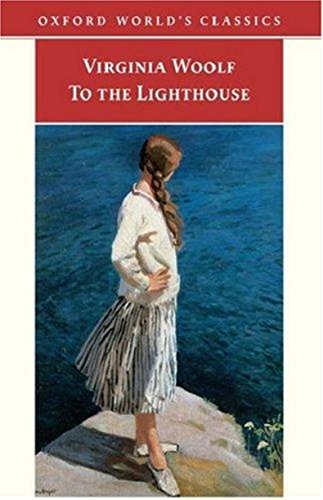
To the Lighthouse by Virginia Woolf (1927)
In the ranks of Virginia Woolf novels, it's slightly Mrs Dalloway's inferior, largely due to the lengthy opening section, "The Window," which occupies nearly half of the novel and is saddled with the unglamorous task of setting the table for the final two sections, both of which are sublime. "Time Passes," the second section, is a particularly moving passage that delivers just what its title implies, reversing the languorous pace of "The Window" by fast-forwarding through the lives of each of its characters until gut-punching consequence after gut-punching consequence hits the reader in succession as the characters hurtle toward the end of time. "The Window" is almost surely too long and too lyrical, but I'll forgive it since it allows for that wonderful, heartbreaking middle. Grade: A-

The Absolutely True Diary of a Part-Time Indian by Sherman Alexie (2007)
Almost any contemporary YA novel owes at least a little to Catcher in the Rye, but Sherman Alexie's breakout novel is one of the few that I've come across that seems to understand just how important the relative aimless and episodic plotting was to the oblique pathos and wounded voice in Salinger's work. Modern YA is plotty, which sometimes has the effect of turning its world into mechanical structures with "trauma" on the front end and "self-actualization" on the back. There are few mechanics in The Absolutely True Diary, at least not ones as angular and squeaky as those in, say, a John Green novel. Thankfully, Alexie allows his protagonist lyrical moments; he lets the characterization breathe. It's wonderful. The last few moments of the book are some of the best YA pages I've read in ages. Grade: A

Music

Chance the Rapper - Coloring Book (2016)
Chance the Rapper has long been modern hip-hop's resident cornball, which is both an asset when he's releasing work like last year's exquisite "Sunday Candy" or this tape's "Finish Line" and a liability when it leads him to incongruously silly lines promising to "give Satan a swirly" (actual quote from Coloring Book). Coloring Book is a tad more consistent than previous Chance the Rapper releasesit lacks the immediacy of a clear masterwork in the vein of "Sunday Candy" or "Pusha Man," but it also doesn't get nearly as silly as some of his least successful work from last year's Donnie Trumpet collaboration, Surfalthough those looking for a fulfillment of Acid Rap's scrappy promise are probably going to be disappointed. It's a slick, gorgeously produced mixtape that focuses way more intently on Chance's Christianity than his drug-related neuroses (unlike with Kanye, that Kirk Franklin collaboration actually means something hereColoring Book is the first secularly released album I've heard that trades in on CCM influences [seriously, there's a very prominent Chris Tomlin allusion], which is kind of cool, but it's also CCM, which... urg). The music is idiosyncratic, personal, and sincere, and even if it's not always successful, there's a lot of value in those qualities. Grade: B

Grimes - Art Angels (2015)
I really haven't much listened to Grimes before this, so I have no stake in the battle of whether or not this is her sellout record. What I do think is that it's this lovely, trash-can-punch mix of '90s Euro-dance, noise, and K-pop that's every bit as infectious and strange a confection as I could want from 2010s pop music. The album has a few duds (I love Janelle MonĂ¡e passionately, but her guest track, "Venus Fly" is pretty thin), but on the whole, this is probably the best possible product of poptimism. Grade: A-


TEEN - Love Yes (2016)
Love Yes fills a very St. Vincent-shaped hole in my heart. I haven't heard any of the band's other albums, but man, if TEEN is going to tread the St. Vincent territory, they might as well do it in this much style. I do miss Annie's guitar theatrics, though, which makes TEEN a slightly less interesting inhabitant of the St. Vincent world. Grade: B


Suede - Suede (1993)
If Oasis were the Beatles of the Britpop era, then Suede was the David Bowie, albeit a considerably narrower version of Bowie than Bowie himself ever allowed, and without the sense of humor to boot. Comparisons aside, though, these are stupendously crafted songs, and if there was one thing that mattered about Britpop, it wasn't all the allusions to British Invasion rockers; it was each band's proficiency with razor-sharp songwriting precision. Suede's got that in spades (suedes?). Grade: B+