Showing posts with label SpongeBob SquarePants. Show all posts

Sunday, August 1, 2021

Mini Reviews for July 26 - August 1, 2021

Goodbye, summer vacation.

Movies

The Boss Baby: Family Business (2021)
Even more so than its already-wild predecessor, Family Business is buck-wild cinema, but also tediously so at times. There are only so many out-there ideas (e.g. baby ninjas, extended Harold and Maude tributes, incestuous undertones, a dialectic reading of history with parents as oppressors and children as the oppressed—I could go on [and on]) you can stuff into a movie without giving any one of them time to develop beyond their one scene of introduction before everything becomes a numbing slurry that's hard to look at without your eyes glazing over. I'm still vaguely positive on this overall because it retains the first movie's manic obsession with cartoonish kineticism, stretching and squashing and zipping characters around in uninhibited movement with as much perverse glee as Chuck Jones and Tex Avery of yore. DreamWorks Animation isn't quite as inventive as it was back in the unprecedented innovation that gripped the studio in 2016/17, but this movie still handily slides into that legacy—a legacy I wish would cross-pollinate with some other animation studios, tbh. There are so many interesting things going on in specifically American animation right now, but there is never enough of those things happening in the same place to reliably create top-tier work. Grade: B-

Old (2021)
Your mileage with this movie is probably going to vary as a function of how much you're willing to embrace the typical M. Night Shyamalan tics: stilted dialogue, precocious kids, off-beat humor, just a general feeling that the world depicted in his movies has been created by someone not entirely familiar with real human life. I mean, these are incontrovertible facts of Shyamalan's filmography by now, and whether or not you're into them is of course a personal choice. But this far into his career, I think the impulse some people have to act as if Shyamalan is trying and failing to make more conventional films is just ludicrous; the hump you have to get over to move from Shyamalan skepticism and Shyamalan respect (if not outright fandom) is acknowledging that he's doing these bizarre things on purpose, at least most of the time, and as long as you can buy into that, I don't think it's too far of a jump toward finding those habits actually really funny in a way that has us laughing with Shyamalan rather than at him—there's no way that you can convince me that, for example, having a rapper named "Mid-sized Sedan" isn't meant to be as hilarious as it is. The same goes for his more serious impulses—yes, the logic of the movie is... unconventional, especially once you get to the final piece of the movie where you see what's really going on, and even without that, "there's a beach that makes you age quickly" is kind of an inherently silly concept to take as seriously as Shyamalan does here (though in fairness, this concept was taken from the graphic novel he's adapting in this movie). But also, as off-kilter the journey is getting there, the movie does end up being a pretty engaging rumination on mortality and time and the ways that these two things intersect our bodies and our relationships, and I think there's an argument to be made that this rumination is so engaging precisely because of Shyamalan's off-kilter approach. There's just something about his dorky sincerity and sense of pacing and character that can click together at times into this otherworldly, even profound effect that I don't think I've seen in other filmmakers. And even putting all that aside, I just had a good time with this movie; I'm sure some people are going to be too busy rolling their eyes at the movie to enjoy it, but those people are missing out on a really fun, Twilight-Zone-esque chiller. This movie's good, is what I'm saying. Grade: B+

The Green Knight (2021)
Technically, this is hypnotic: the droning score, the whispering sound design, the buttery-smooth camera movements, the dream-like lighting, the meticulously designed costumes and iconic location shooting—everything bubbling together in this thick, unsettling texture. Narratively, this feels in the vein of Neil Gaiman's screenplay for Robert Zemeckis's Beowulf (though the rest of the movie resembles nothing about that earlier film) in terms of how it takes a famous piece of very old English literature and wrenches it into a non-canonical left-turn that basically twists the story into being about itself: a hero narrative about the limitations of heroism, an Arthurian story that questions how we slot its characters into the archetypes that populate it, a myth about our own personal and cultural mythologies. There's some opaque stuff here that I'm still sifting through (I'm intrigued but ultimately nonplussed at Morgan Le Fey's role here), but it's the kind of movie that feels like it's going to open up with a little time rather than shrivel under scrutiny, which is always a good feeling to have walking away from a movie. Grade: A-

Fear Street: 1994 (2021)
I found this to be dumb and undercooked, and for a significant part of its runtime I actively disliked it. Its '90s references are extremely surface-level (weird to see the Stranger Things treatment given to an era I can actually remember), the pacing is haphazard, and the characters have virtually no personality beyond their most basic identity labels: "the lesbians," "the computer nerd," "the comic-relief dummy," "the one who gets put through the bread-slicing machine," etc. That said, the climactic confrontation in the convenience store (wherein the aforementioned bread slicing occurs, among other insanity) is legitimately great, and it tempered my negativity toward the rest of this movie a good deal. Plus, I have it on good authority that the next movie is better, so I guess I'm continuing with this series. Also, there was this one part where a character starts puking, and at the very same time my infant daughter spit up in my lap, so I must say that I am intrigued by this new Netflix experiment in 4-D cinema. Grade: C


The SpongeBob Movie: Sponge on the Run (2020)
On a storytelling level, just a dull, dispiritingly corporatized SpongeBob; the usually delightful absurdity and silliness of the series is replaced by a mandatory-fun-esque set of lazy pop-culture gags and only theoretically absurd non-sequitur, and what's worse is that a significant portion of the climax is a backdoor pilot for the SpongeBob spin-off series Kamp Koral, which looks like the most excruciating thing imaginable to do to these characters. I suppose the animation here it technically impressive in the extent to which it manages to evoke the aesthetic sensibilities of the show with entirely computer-generated animation, but to what end? How in the world does it help anyone (including the studio, for whom computer animation is surely more expensive) to turn characters most familiar for their hand-drawn looseness into highly detailed 3D facsimiles? Is there a tie-in video game they are trying to create assets for or something? I would be in love with this animation if it were for a completely new world, but for SpongeBob, it just feels like a careless disregard for the sensibilities of the show, which I suppose is true of the movie as a whole, so points for coherence of purpose. Grade: C-

My Dinner with Andre (1981)
People say, "They made a whole movie out of a single conversation," and while that's 97% true, it does leave out Wallace Shawn's voiceovers at the beginning and end, which are absolutely key to what makes this movie so riveting and dynamic. The crux of Wally's rebuttal to Andre's pompous and privileged but ultimately sincere assertion that people need extraordinary experiences in order to find true happiness is that Wally insists that he doesn't need to "go to Everest" to be happy because he's happy where he is; there's beauty in the mundane of his own life, and happiness is in taking the time to realize that. But it's in the voiceover that we're given the context to know that Wally is, on some level, lying—whether to Andre or just to himself, it's hard to tell, but lying nonetheless. At the film's beginning, he rather miserably tells us how consumed he is with the drudgery of modern NYC life: the bills, the routine, the rejection, nostalgia—"When I was ten years old I was rich, I was an aristocrat, riding around in taxis, surrounded by comfort, and all I thought about was art and music. Now, I'm 36, and all I think about is money." And over the next hour and change, we watch him listen to Andre monologue about his travels, watch his face make these inscrutable little inflections that have such rich ambiguity. Is he bored? Impatient? Intrigued? Does he pity his friend, who, despite his telling tale after tale of transcendental enlightenment, is clearly sad? Does he envy his friend for his willful abandon of the very constraints that make Wally so morose in the opening voiceover? And then Wally finally says he's going to say what he's really thinking, and then gives his proto-"This Is Water" treatise, and the beauty of this unquittable movie is that it does nothing at all to clear up any of the previous ambiguity. Does Wally truly believe what he's saying? Is he merely trying to win points against this irritating monologuer with whom he didn't want to have dinner anyway? Has listening to Andre's own life philosophy in such detail clarified for Wally what's actually important? Has it merely made him believe in the intoxicating moment that it's what's most important, despite his deeper, material frustrations? In the movie's closing voiceover, Wally is no less wrapped up in nostalgia for the perceived comforts of childhood: "There wasn't a street, there wasn't a building, that wasn't connected to some memory in my mind." But is he any happier or more enlightened after his dinner with Andre? It's impossible to know, just as it is impossible for Wally (and we viewers) to know if Andre himself isn't pulling some kind of self-deluding facade about his own life philosophy. The whole film is this beguiling, fathomless investigation of the ways in which we struggle to know ourselves completely and then have to use that incomplete self-knowledge to try to understand even more unknowable others—how human connection is this delicate dance of shadows, grasping for meaning and belonging in the dark contours. "It is not good that the man should be alone," God famously says in Genesis, and yet that's how humankind is said to have come into being: alone, desperate for connection, not knowing that he is naked. Grade: A

Sunday, June 9, 2019

Mini Reviews for June 3-9, 2019

HELLO! The randomly selected reader suggestion for this week is Spanglish! I'll keep the rest of the suggestions in the pool, and if you want to put in a suggestion for next week (or put in a second one), here's the link:

Just click here to submit a suggestion for next week's review post!

Movies

Spanglish (2004) Reader Suggestion!
There are a lot of well-observed dynamics and moments in Spanglish of the sort that only a smart writer like James L. Brooks could pen. The central relationship between Flor (the Mexican single mother who is ostensibly the movie's protagonist) and her daughter Cristina is the best in show, built on a complex web of tensions regarding class and race and identity and personal psychology specific both to these characters and their larger social milieu of undocumented immigrants, but even smaller-scale bits like how Adam Sandler's character and his daughter share moments of understated, elliptical conversations that communicate a lot more than what is actually said have a great deal of heart and nuance. Unfortunately, the movie has just as many dysfunctional pieces, pieces so ill-conceived that only a writer as comfortable and privileged as James L. Brooks in the mid-2000s could have allowed them past his inner critic, and these begin to crowd out and undermine what should otherwise work well. Téa Leoni works thanklessly and unsuccessfully in a bizarrely and erratically written role as the wife of Sandler's character, John, a role so harpy-ish and shamelessly "hysterical" in the Victorian sense of the word that it flirts with open misogyny, and while Sandler himself gives a pretty strong dramatic performance, John's relationship with Leoni's character—easily the least-interesting and actively bad part of the movie—gets so much screentime that it upstages the much more engaging relationship between Flor and Cristina, to agonizing effect. And I don't think I need to spell out just what is so uncomfortable on a macro-social level about a movie that purports to be the story of an undocumented family but gets distracted and sidelines that family in favor of airing the petty problems of the rich, white family who employs them. And this is all before the romantic tension between John and Flor develops, a would-be affair between employer and employee that is Woody-Allen levels of ick without Woody-Allen levels of wit. These are the worst of the bunch but far from the only things that turn this movie into a gnarled, frustrating mess—a real shame, because the pieces of the movie that are good hint at a much richer, more compelling movie than the movie I found on this library DVD. Grade: C

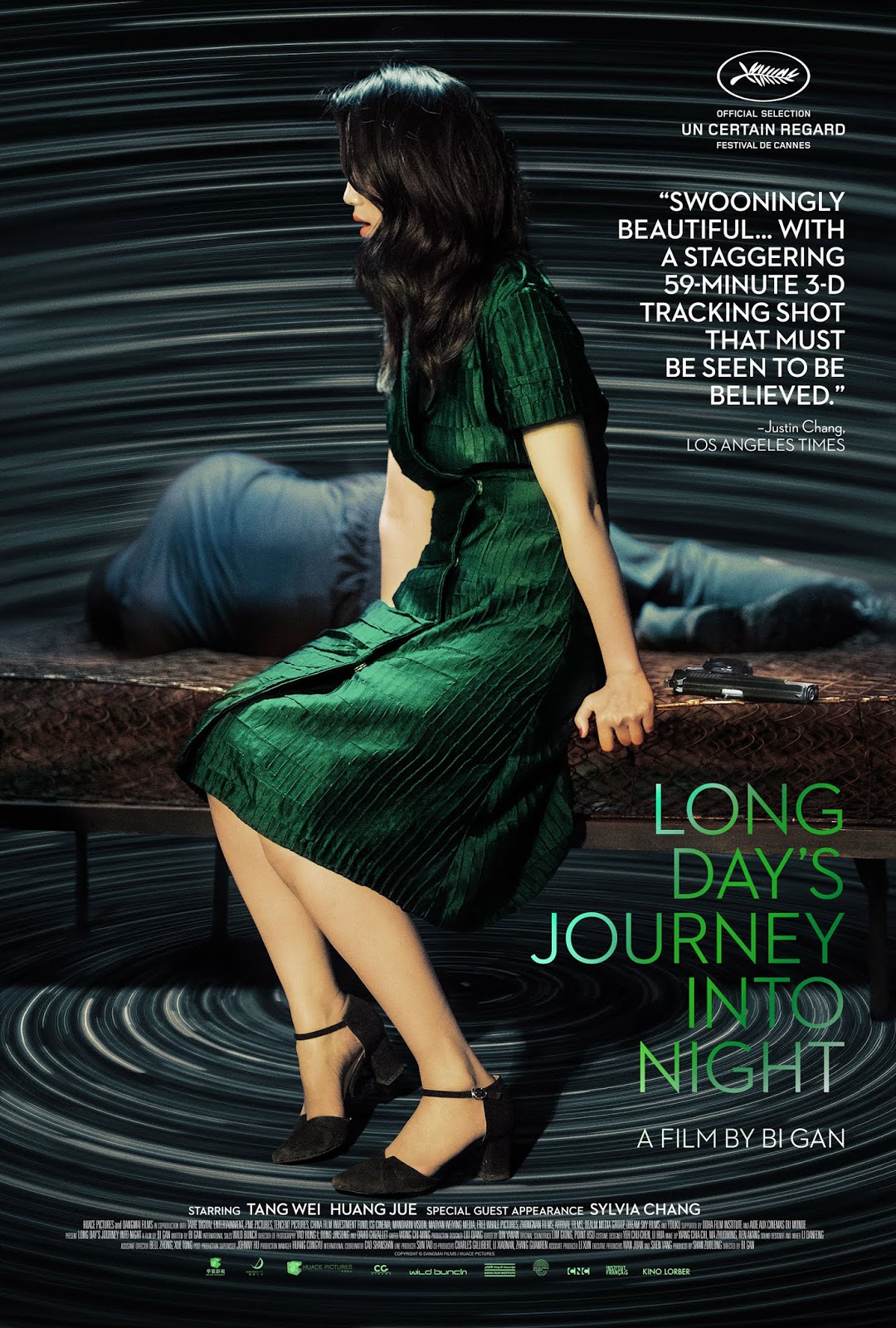
Long Day's Journey into Night (地球最后的夜晚) (2018)
I recently complained that Kaili Blues, director Bi Gan's previous feature, loses some magic when it transitions into its 40-minute single-take shot in its back half. So by all means, I should be leveling the same complaint against Long Day's Journey into Night, a movie with almost the exact same structure as Kaili Blues, only about forty minutes longer: an opening sixty-ish percent of the movie involving a man's personal search is transformed both thematically and formally by a ridiculously long take that occupies the rest of the movie and that blows the movie's plot up to mythic proportions that accentuate a dream-like geography. And yet here I am, left completely stunned by Long Day's long take (as well as with pretty much everything else here). It's not just that this movie's long take is a much more technically virtuosic feat than Kaili Blues's, though it most certainly is; it's nearly a full hour long and involves the camera following characters into increasingly tricky spaces like a zipline and even the sky itself, to say nothing of the incredibly risky bits of choreography like a character having to make difficult billiard play that show up late in the shot. There are some parts of the shot that actually seem logistically impossible to me, and I have no idea how some of this was filmed. But there's also the substance of the shot itself. Extraordinarily long takes like the one in Kaili Blues or the entirety of Victoria, the single-take German heist film from a few years ago, tend to have a lot of emptiness as characters move in transit from location to location, which results in these takes often becoming about the spaces in between the shots of a conventionally edited scene. The characters in Long Day's shot spend a lot of time in transit as well, but part of the magic of what Gan accomplishes is that every moment of this shot feels like a piece of a real scene with form and function, without any of the dead air that often accompanies intense shot length. All this comes together to make the magic of Gan's camera movement merge with the literal magic we see onscreen to make the single most mystical and transcendent hour of cinema I've experienced all year. And that's not even bringing up the first 80 minutes of the movie, which, while consisting of more conventional shot lengths, is its own kind of magical cinematic experience, its editing cutting across time and space in a way that's mesmerizing. Like Andrei Tarkovsky before him, Gan takes the central plot of this movie (straight out of a classic Hollywood film, a man searching for his lost love) and builds it from time sculpted into striking shapes and images molded into psychologically and spiritually profound frames. In a manner not unlike Nostalghia or Mirror, Long Day languishes on those thin places where the boundaries between our own material world and the world of transcendent spirituality become porous; it's very much an Art Film, but like the films of Tarkovsky, there's a gut-feeling immediacy to this movie entrancingly sensual style that both rewards intellect and also makes that sort of chin-stroking entirely unnecessary in the face of such a majestic audio-visual experience. I was swept away. My favorite film of the year so far by a considerable margin. Grade: A

Greta (2018)
A fun thriller with a tremendous central performance by Isabelle Hupert. A lot of Neil Jordan's normal florid directorial flourishes have been honed down to simple, mean neo-noir edges, which suits this movie just fine—a simple, mean neo-noir itself, about which there isn't a lot surprising other than just how solidly executed everything is. It's a little distracting how it justifies Chloë Grace Moretz's character's naivety by acting like Boston is some down-home backwater where people are good and kind and trusting ("Where I'm from, we return lost purses," is a real line that she says, and when it's finally revealed that it's Boston and not, like, Sweetwater, Tennessee, I almost fell out of my chair), and the movie walks a razor's edge of being tropey enough to be comfortable and too tropey to be engaging, but in the end, its feet are planted pretty firmly in the right places. Grade: B

Climax (2018)
I don't hate this like I hated Enter the Void, mostly because 1) it is an hour shorter than Enter the Void, and 2) the early dance scenes are some of the most hypnotic filmmaking I've seen all year. But I still don't like the movie as a whole. It shares that same faux-profound cinematic flexing that made Enter the Void noxious at 161 minutes (*bong hit* "What if the last ten minutes of the movie were, like, upside-down, maaaaan"), as well as the same dead-end, performative nihilism and provocateurism. I realize that the dissonance between the sensory euphoria of the first half of the movie and the hellish cinematic assault of the back half of the movie is kind of The Point (ominous title cards tell us, alternatingly, that "Birth is an interesting opportunity" and "Death is an interesting opportunity"), but I resent that being The Point, especially when it's in service of such a doggedly myopic and unimaginative philosophy of birth and death. And especially when I have to watch *spoilers* a pregnant woman kicked in the stomach until she miscarries, solely for the shock value. Wow, what a brilliant subversion of the dichotomy of birth and death Gaspar you've really done it this time mind blown this might be your masterpiece oh my gawd so deep bro why can't all filmmakers be deep auteurs like you. Grade: C

24 Frames (2017)
The last film by the late, great Iranian director Abbas Kiarostami is one of his most experimental. Consisting of just 24 shots, each a mostly static image with a few (often digitally superimposed) moving pieces, it's an obvious play on the fundamental building blocks of cinema itself, and a strikingly beautiful one at that, with the starkness of each image contrasting wonderfully with the life communicated by the movement and immersive sound design. It's oddly engaging, too, given its component parts; the premise makes this movie sound non-narrative, but Kiarostami slyly curates small stories within each shot, presenting wordless conflicts among its mostly animal cast that develop and then resolve in the space of each shot's 4.5 minutes. Even without these conflicts, though, I think I would have still found this mesmerizing. With its often obvious digital superimposition and ambient natural sound, 24 Frames strongly recalls '90s PC CD-ROM point-and-click games/edutainment in a way that I found deeply relaxing. I don't think it's too much of a stretch to call this movie a naturalistic adaptation of, say, Myst, or at least the vibes of a game like that, and watching this unearthed some very dear memories of sitting on the floor just staring at screensavers or the looping FMV of game waiting for a click input. This is a completely subjective reaction to this movie, I know, but whatever. Objectivity in art is an illusion, even with something as "objective" as a static image. Grade: B+

35 Shots of Rum (35 rhums) (2008)
This film's characters are so gloriously full of life that I'm disappointed that they aren't contextualized within a story that I found more engaging. The elliptical nature of the film's storytelling is definitely an intentional choice on the part of Claire Denis, and I understand why that choice was made, but it routinely did not work for me. People are going to tell me I'm wrong, and I probably am, because this is the most pedestrian critique ever to make of a movie, but I do think I would have been more engaged if the plot were just a hair more propulsive and cohesive. The reason I know I am probably wrong is that my favorite pieces of the movie—and, to be clear, these pieces are resplendent—are the least-plotty ones: the late-night party set to the Commodores' "Nightshift," the strike/protest bits, the shots of the pressure cooker. Part of me wishes that the movie committed to a complete lack of forward narrative, though that would probably break the movie entirely. Anyway, I feel really weird about High Life now being my highest-rated of the four Denis pictures I've seen, since in some ways, it's the least-interesting. But I dunno. Taste is a fickle friend, and it's the only one of her movies I've seen where I've not been periodically restless. Maybe I just like spaceships. Grade: B

Birthright (1939)
Oscar Micheaux's talkie remake of his (now lost) silent film of the same name is stilted and ham-fisted, and its plot is bonkers in the sense that it just careens from point to point without much regard for structure. In most regards, this is pretty tedious, though at times, it's kind of wild and delightful in its blunt-force craft. There are, in particular, a few line readings by some evil white dudes that are all-timers, my favorite being the way one chortles, "Let's have a Coca-Cola!" in celebration of a black man being swindled (honorable mention to the other evil white guy who convinces a black man to "let [his] seed wither" rather than marry a black woman). The movie has a real "no-B.S." policy when it comes to the racist South, and this is particularly refreshing when it comes to cutting through all the pretense of the stock phrases of Southern politeness to reveal the racism often masked underneath—even if it takes turning characters into mustache-twirling villains to do it! Grade: B-

Television

SpongeBob SquarePants, Season 3 (2001-2004)
It's SpongeBob; whaddya need, a road map? Its production being interrupted by the development of the 2004 theatrical film, the third season feels a little more reliant on the time-wasting Patchy the Pirate segments and gimmick episodes like "The Lost Episode" than previous seasons. But the average quality here is still insanely high, and there are some absolutely classic episodes in the season, including "Chocolate with Nuts" and "Ugh" (i.e. SpongeBob B.C.). This season (and the feature film that followed it) represent the end of that fevered first era of SpongeBob (and in fact, it was initially the planned ending of the show), after which the tone of the show changed somewhat, and as such, it feels like a finale of sorts. And it's a fitting finale, if only a temporary one. Grade: A-

Sunday, February 10, 2019

Mini Reviews for January 21-February 10, 2019

I'm back, baby!

Movies


The Hate U Give (2018)
A mixed-to-positive bag. This adaptation imports some of my least-favorite elements from the original book, from the pointless boyfriend character to the pedestrian style (though it's a better-directed movie than the book is written), while leaving out some of the best elements of the novel—the vibrant sense of place in the book's Garden Heights neighborhood is almost completely gone here, alongside the rich, multi-generational, intra-community response to tragedy evoked by the novel. But on the other hand, the film version wisely streamlines the novel's lumpy storytelling, often to great effect, and even if Amandla Stenberg can't ever make the (awful, tedious, expository) voiceover work, the acting is across-the-board excellent, which gives these characters a lot more life than they had in their novel versions. And for as much as the movie flubs the climax in its seriously ill-advised "hate we give" moment (unique to the film), it generally retains the novel's fearless intersection with incendiary political realities, rendered grippingly here. The whole is far from perfect, but there are some sublime pieces. Grade: B


Never Goin' Back (2018)
I spent most of my high school years scowling at movies like this; there's a LOT of shared DNA between the stoner comedies of the '90s and 2000s and Never Goin' Back, from the, well, the smoking to the pointedly gross scatological humor to the easy-going chemistry between the leads. Nowadays, I've come around to a lot of those old comedies anyway, but even so, it's a wonder how much good gender-flipping the formula does—most notably, by replacing the often bro-y demeanor that is the necessary[citation needed] evil of the male-led iteration of the genre with an almost literally riotous, completely endearing us-against-the-world fury carried to perfection by Maia Mitchell and Camila Morrone in the leading roles. It's hilarious and oddly moving, and I never got tired of the basic gag wherein these girls keep stumbling into a for-real bro-stoner plot, only to express extreme irritation at finding themselves there. So say we all. Grade: B+


The Sisters Brothers (2018)
I've seen a lot of people using the term "black comedy" for this movie, but I think that's selling short just how heavily the specter of death hangs over this movie. In what's probably more accurately described as a slightly more banter-y, slightly more deadly take on The Treasure of the Sierra Madre, The Sisters Brothers is both a lament and a critique of human enterprise—not nihilistic, exactly, but definitely convinced that the worst human impulses are also the strongest. On paper, I love this, and there are definitely things I love (particularly the casting—John C. Reilly and Joaquin Phoenix are a peanut-butter-and-chocolate combo of co-leads). But also, there's something that feels a little slack here; nothing has quite the punch it needs to tip the movie over into greatness. It may be a scripting problem, honestly, or perhaps also a pacing one. Whatever the case, it's good—just not amazing. Grade: B


Curse of the Man Who Sees UFOs (2016)
What initially presents itself as a bemused depiction of eccentric UFO chaser Christo Roppolo eventually turns into a more serious chronicle of Roppolo's personal tragedies (of which he has several). The UFO footage (real videos that Roppolo has taken, complete with his own ecstatic, often-profane commentary) is great, and Roppolo has just the right shades of unself-conscious oddity and pathos to make his mere presence onscreen consistently engaging. It's an affectionate portrayal of the guy, which is good, since this could easily slide into mockery of Roppolo; that said, filmmaker Justin Gaar seems to have mistaken affection for depth, and the movie as a whole is a bit surface-level in its engagement with Roppolo, despite being constructed out of what looks to have been some really engaging interviews. The movie is fun, but you wonder how much better it could have been if it had dug just a little deeper. Grade: B-


Karl Marx City (2016)
Petra Epperlein's investigation into her father's suicide doubles as a memoir of her childhood in East Germany and triples as a survey of East Germany in general. Watching her sort through literally miles of indexed records from the former state is awe-inspiring and terrifying; that sort of imagery, of which this movie is full to the brim, does a really great job arguing for the mid-century surveillance state as both apotheosis and nadir of modernity before digitization papered it all over with the veneer of ethics. Grade: B+


The Transfiguration (2016)
"Let the Right One In but in a NYC housing project" is the pithy way of describing this movie, but honestly, it's about all you need to know about it. Also, it's a nice touch to have a modern-day adolescent vampire obsessed with ranking vampire movies by how realistic they are, as if he were pre-gaming for the YouTube algorithm. Grade: B


Adore (2013)
Kind of reads like someone watched the end of Alex Ross Perry's The Color Wheel movie and thought they could do that sort of twist one better. But you'd think that a movie about best friends having sex with each other's kids would be a little less... boring. Grade: C-


Black Dynamite (2009)
Props to a parody so committed to recreating the lo-fi charms of blaxspoilation that it was filmed over less than three weeks on 16mm. The format here feels of a piece with Walk Hard in the sense that it's looking at a very specific genre and twisting the tropes just enough to the left to register as hilarious, though Black Dynamite is considerably more of an affectionate homage of blaxploitation than Walk Hard is of the musician biopic—to wit, Black Dynamite actually likes its parody target, and as such, this is less about making the genre the butt of the joke than it is about celebrating the genre to excess. It's tremendous fun, although I do wish this movie hadn't had quite so much affection for the sexism of the '70s alongside all the zooms and "jive talk." Grade: B


The Wrestler (2008)
Lacking the sometimes irritating cinematic theatrics of his early work like Requiem for a Dream and the balls-to-the-wall theological anguish of Aronofsky's mature period (that's what I'm calling Noah and mother!, deal with it), The Wrestler finds our ol' boy Darren somewhere in the middle, a gritty, naturalistic companion piece to 2010's nightmarish Black Swan. Like Black Swan, the plot beats here are somewhat obvious in their working through the tortured, self-destructive dedication of a craftsman bent on excellence, but unlike Black Swan, The Wrestler actually finds a beating heart within its inevitable arc. Maybe Aronofsky is just closer to the masculine dysfunction of this film as opposed to the svelte femininity of the other film (which he seemingly can't help but fetishize). No matter; I definitely felt something here, however standard the tragic hero structure is, and the film's final fifteen-ish minutes are powerful. My favorite Aronofsky mode is still when he's basically doing Midrash in cinematic form, but if I can't have that, then The Wrestler isn't a bad alternative. Grade: B+


Beowulf (2007)
I'm kind of gobsmacked by how much I liked this. Most of the negative reviews I see of this movie are grounded in pretty shallow critiques along the lines of "That's not how Beowulf goes!" And, I mean, that's technically correct—this is not how Beowulf goes. But these aren't just idle changes; the specific points at which this movie differs from the original epic are rich in a way that indicates they have been made by people with a deep understanding of the original, such that they know exactly which parts to tweak to completely transform the narrative. For example, the often-excised digressive sections of the original Anglo-Saxon poem are the ones where, in song, the Danes tell the mythological histories of their society, but rather than mythical digressions, what takes their place in this movie (following the fight with Grendel's mother, traditionally where "Hrothgar's sermon" occurs) is a reading of the actual text of the Beowulf poem (in Old English!) by the men of Herot. However ahistorical this is (what are Danes doing speaking Anglo-Saxon?), what it's done is position Beowulf the Epic Poem as mythology within the film, with the film itself occupying a similarly role in revising and mythologizing the stoic yet absurdly out-sized masculinity of both contemporary action films and masculine heroes without history. The whole movie becomes something of a meta-text for our sanctimonious posture toward our own literary heroes. And what are these heroes, as laid bare in this movie? Freakin' toxic males about whom we tell lies to make ourselves feel better for venerating them. I know it feels very "woke in 2019" to say that this movie is about toxic masculinity, but if not that, then at the very least this movie is about the myths about masculinity that our societies tell that end up propping up reprehensible, society-destroying behavior generation after generation. And look, maybe you don't care about yet another movie about bad dudes being bad, which is fair. And further in your defense, I will say this: 2007 gave us two PG-13 animated movies that include lengthy actions sequences hinged on a naked guy running through landscape that hides his junk in increasingly absurd ways, and what a world we live in that the one that actually had the guts to show the penis in the end was The Simpsons Movie. Grade: B+


Lady in the Water (2006)
Finds M. Night Shyamalan in full mad-scientist mode. At once an elaborate piece of dark fantasy, a treatise on the nature of narrative fiction, a testy refutation of The Village's critics, a social allegory, and also a commentary on the Iraq War (?!?), Lady in the Water can't be accused of being understuffed. I'm not sure if it would be a better movie if it were doing less, but lordy, is it doing too much. The oddly convoluted mythology of the fantasy makes an ill fit with some of the more straightforwardly metaphorical moments, and when the movie turns toward a sort of cock-eyed autobiography for Shyamalan, it feels vindictive and petty and self-aggrandizing. But then again, critics were wrong about The Village, which makes Shyamalan's self-mythologizing technically correct in a way that kind of makes all the self-aggrandizing feel somewhat badass, too. The movie's a complete mess, but it's kind of endearingly so, and regardless, it remains one of the foremost examples in recent memory of truly weird cinema somehow Trojan-horsing itself into a mainstream studio release. Grade: B-


All About My Mother (Todo sobre mi madre) (1999)
A lot soapier than I was expecting my first Almodóvar to be, which isn't necessarily bad, although the dramatic beats have that kind of muted impact of those in soaps, too. It has a really stellar score and great acting all around and above all some truly tremendous cinematography/lighting/set design/location scouting, so the movie looks and sounds fantastic front-to-back. But still, I had a hard time connecting to this lumpily structured, winding film, which I think I'm going to have to lay on the writing—there's a thrilling way to be off-format as far as act-structures go, and then there's this, which merely feels mushy and directionless and cloaks its fraught emotional territory in a vague conflictual haze. I enjoy the warmth of the portrayal of the trans community here, but even with that, I've seen some of the modern trans community critiquing the way it frames trans folks through the experiences of a cis woman, which I understand. So yeah. Good pieces, frustrating whole. Grade: B-


Sólo Con Tu Pareja (1991)
A very middling (if raucous) sex comedy is elevated somewhat by some great cinematography from Emmanuel Lubezki. It's amazing how mature the aesthetic dimensions of the Cuarón/Lubezki partnership are at this early a stage in their careers—this is the theatrical debut for both, and even here, it's a fruitful collaboration. So this movie looks great. The rest... ehhh, well, first of all, it's not very funny, outside of one sequence that's basically the adult version of the old "Oh no! I've invited two different girls to the same dance!" plot. And second of all, the idea—esp. in 1991, very much within the peak years of the AIDS epidemic—of using a fake AIDS scare as a tool for teaching some rando dirtbag straight dude a lesson about being a slightly better rando dirtbag straight dude: that scans as majorly iffy for me. Grade: C


The Godfather: Part III (1990)
It's not all that uncommon for a second sequel to be thematically redundant; the Toy Story movies didn't have a single new thematic idea after the first one. So that the third Godfather film isn't really saying anything new isn't an inherent evil, and in fact, the movie does accentuate the religious subtexts of the previous two movies in interesting ways (though again, it's hardly revolutionary in the context of the franchise), which alone makes the movie undeserving of the hate it gets in some circles; that and that the film is sumptuous to an extreme degree, no surprise from a F. F. Coppola production, esp. at this stage of his career—this is essentially the same iteration of Coppola who made Bram Stoker's Dracula two years later, if that gives you an idea of the visual richness here. Still, there's not really a compelling reason for this movie to exist, and certainly not three hours of it; unlike Toy Story, this movie's thematic remixing of its predecessors doesn't result in anything dramatically urgent. Like, in theory I dig the way that this movie links crime and religion and corporate capitalism in a much more explicit way that in the '70s Godfather films, in much the same way that the third Toy Story makes the mortal implications of the series literal. But also, I kind of have a hard time caring beyond that theory; interesting theory, but it's all head and no heart, you know? Grade: B


Cape Fear (1962)
It's fine and good and has a really, really great climax. But the whole time, I couldn't stop thinking how much I wanted to rewatch that episode of The Simpsons where Sideshow Bob is Robert Mitchum's character. It doesn't help that the movie is, in a lot of ways, a less-interesting remake of Night of the Hunter. Grade: B


Bluebeard's Eighth Wife (1938)
A very fun screwball adaptation of a play adapting a very not fun fairy tale. Claudette Colbert is great, per usual, and Gary Cooper is surprisingly good as her co-lead—a far cry from the "strong, silent type" of his reputation. You really can't go wrong with a Billy Wilder screenplay (co-written with frequent collaborator Charles Brackett) directed by Ernst Lubitsch, and while some of the character work gets a little inconsistent at times, the whole is just so airy and hilarious that I'll forgive a few out-of-character moments. Grade: B+


A Story of Floating Weeds (浮草物語) (1934)
My first silent Ozu ever and my first Ozu at all in several years. This is definitely the work of the master of Tokyo Story. Even if that master isn't quite at the top of his game yet (the character of Otaka, for example, feels too one-note both to make her woman-scorned role interesting and to carry the pivot toward nuance in the film's final minutes), it's still got that same heady combination of a simple story dealing with some anguishedly complex emotions—emotions made even more complex by the misogynist violence of the protagonist near the film's climax. We're supposed to feel for this man's situation while also feeling the depth of his destructive impulses while also understanding the social forces that guide him toward resorting to violence while also recognizing the internalized classism he wrestles with daily while also completely understanding the reactions of everyone around him. Like I said, complex emotions. Maybe more complex than is strictly responsible. Maybe more complex than I'm quite up to handling at this particular moment. But also, isn't that what happens when something is truly complex? Grade: B+

Floating Weeds (浮草) (1959)
I'm not sure this story is better served by giving it more space to be naturalistic (and have random comic relief from the stage players?), but it's also much, much more consciously gorgeous in that classic Ozu way—my word, the colors. One of the bit characters says it best: "The sky is so blue; it's sad." So between this one and the 1934 original, I'd say it's six of one, a half dozen of the other. Grade: B+


Television


The Good Place, Season 3 (2018-19)
The third season of The Good Place is by-far its least consistent. In previous seasons, the show's constant shape-shifting has been thrilling; this season marks the first time that the show shifts into shapes that don't completely work. The early goings of the season, in which our cast get a chance to continue their Earthly lives, has some interesting things to say about the show's central inquiry into "What does it mean to be a good person?", but that doesn't stop the majority of these episodes from feeling rudderless at times—simultaneously underdeveloped and not engaging enough to sustain more development. But on the plus side, the show's restlessness in format means it never settles down long enough for the weaker pieces of the season to truly curdle, and along the way, we're treated to some of the very best episodes the series has done yet: the metaphysical "Jeremy Bearimy," the please-give-D'Arcy-Carden-an-Emmy grandeur of "Janet(s)," the deeply wistfulness season finale. For as shaky as some of the individual pieces are, taken as a whole, this season gives the show's emotional core a resonance it's not previously had, and that new resonance lends the show's philosophical and ethical questions a new weight alongside the usual jokiness evoked by past seasons' dalliances with philosophy. That a network comedy would arrive at a particularly meaningful invocation of "no ethical consumption under capitalism" has me thrown completely on my backside. God bless this show. Grade: B+

SpongeBob SquarePants, Season 2 (2000-2003)
It dials back some of the gleeful whimsy of the first season in favor of something more akin to dadaism ("NOSFERATU??"); this mixes with an often more straightforwardly satirical bent, of, for example, language ("Sailor Mouth"), standup comedy ("Squirrel Jokes"), and factory farming ("Jellyfish Hunter"), and the result is some of the show's best and most iconic episodes. This second season is just a tremendous season of television, and it's nice that, for once, an object of such intense millennial nostalgia is actually good. Grade: A


Books


Inspired by Rachel Held Evans (2018)
Rachel Held Evans takes a break from the memoir-ish mode of her previous books to create a work about the big kahuna of all books: the Bible. She seems to be at about the same place I am regarding the Bible, which is to have moved on from the literal, legalistic lens of her upbringing toward a more diverse, open-handed approach to Biblical interpretation, which is cool; I like where I'm at right now. However, as is often true of the whole post-Evangelical crowd once they get past the telling of their own deconstruction/reconstruction stories, Inspired finds Held Evans basically realizing that a key part of moving forward toward a more inclusive faith is the inclusion of more voices. So Inspired is mostly a survey of a lot of different interpretive lenses for the Bible: here's liberation theology! Here's historical criticism! etc. Which is good; those are important ideas to know and use. But also, if these are important ideas, it begs the question of why I'm reading what Rachel Held Evans has to say about these things rather than just going straight to the source and picking up any of the many, many books used as references for Inspired. There's value in an accessible 101 orientation to the broader world of biblical interpretation, which is what Inspired is. I definitely heard from voices I hadn't heard from before, and I got stuff out of this book. But also, if the post-Evangelical movement is going to be worth my time going forward, it's going to have to figure out its place within this broader world rather than just observing it all as if it were a buffet set before it. Honestly, my gut tells me that the post-Evangelical movement's place is in critically engaging with the Evangelicalism of its past, and while I realize that's an exhausting prospect, it's probably the most critical. All of which is to say, this is not Rachel Held Evans's best work, although it's hardly a waste of time either. Grade: B


Wonder by R. J. Palacio (2012)
I guess I thought this was going to be a sentimental message novel. What it actually is is a pretty bracing depiction of the hardships of self-actualization in the early stages of middle school. This is (rightly) focused most on August, the central character whose facial disfigurement throws into relief all the prejudices of the early-adolescent social sphere, but one of the biggest surprises of the novel for me was the extent to which the novel grants a voice to the satellite secondary characters, who also struggle to navigate the nuances of their social strata—either due to their own tangled selfishness or the inconsideration of others. While I did kind of look askance at the extent to which this book resolves each and every conflict in the seeming happiest way possible, its journey there is a lot more honest and mature than most YA books intended for a supposedly more "mature" audience. Grade: A-


The Penultimate Peril by Lemony Snicket (2005)
For its... uh, penultimate entry, the series returns to the social satire of its best books after the lackluster Grim Grotto, and the results are excellent. Being a kind of big reunion novel (the setting this time is a hotel, and the guests are a veritable who's who of the series' characters), there's no particular strata of society that the book puts through its funhouse mirror; rather, this novel positions its hotel as the intersection of all the various settings of the series's past, and as such, the plot becomes something of a culminating satire, an examination of how all these various worlds interact with one another. This feeds right into the book's primary philosophical idea and its most concerted and honest wrestling with the series's ethical questions yet: that the sheer complexity and accumulation of narratives and information in the modern world makes it impossible to gather enough knowledge to make truly informed ethical evaluations—especially compared to the curated, artificially pared down world presented to children. It's a fascinating and sophisticated development for a series that leaned into deceptive simplicity for its early books, and more so than the periodic birthdays that crop up in the series's plots, this development best signals the Baudelaire's growth from childhood into adolescence. The book's climax involves the novel's entire cast trying to run a courtroom while all wearing blindfolds, and really, I can't think of a better evocation of the human condition in all of children's literature. Grade: A


The End by Lemony Snicket (2006)
In one of the more audacious literary allusions in the series, The Penultimate Peril is explicitly centered around a quote from Richard Wright's Native Son: "Who knows when some slight shock, disturbing the delicate balance between social order and thirsty aspiration, shall send the skyscrapers in our cities toppling?" That book answers the question definitively, culminating in the crumbling of the series's plurality of societies in the book's final chapters. The fire that ends the book is, for all intents and purposes, the end of the world as defined by the previous 11 books, so it's unsurprising—though no less audacious—that the final book in this series is about the creation of a new world: physically, socially, and even morally. It only makes sense; each book up to the penultimate one has been, in some form or another, about the dysfunctional orderliness and incomprehensible complexity of modern society, so it's incredibly satisfying that the series would end by examining the cosmic fabric by which social order is created in the first place. What's got me completely gobsmacked is just how intricate and rich this final book's approach to that idea is. Washing up on an island along with the rubble of their past adventures, the Baudelaires end their story with a group of humans trying to build a new society quite literally out of the broken pieces of the past, and on top of that is the way that this new society takes the fragments of all the linguistic tics of the series to try to build a new moral framework by which they can understand Count Olaf, Kit Snicket, and all the other characters who wash up from the series's past. It is supremely complex, bending the series in on itself to build this final novel out of the flotsam of the previous books and in the end arriving at something that's almost literally biblical in its scope (Edenic imagery litters the book): a novel about the entire sweep of human history, realized with beautiful simplicity in the microcosm of the Baudelaire family. If the penultimate book focused on that Richard Wright quote, then this final book could just as easily organized itself around another famous literary excerpt: Faulkner's claim that "the past is never dead; it's not even past." Each generation, The End argues, must build their world from the artifacts left by previous generations—artifacts whose context is increasingly lost to time and yet who inevitably drag that mysterious, obscure context with them into the future. We are both compelled to make our world better and doomed to repeat the errors of the whole series of unfortunate events of human history, and somehow, both of the betterment of the world and the cyclical inevitability of the past's traumas coexist in each new iteration of our universe. The world is both new and the same. Frankly, folks, The End is the best novel I've read in years and a flat-out masterpiece—something I would have never have guessed I would have said about any piece of this series when I started it last year. I'm shocked how good this whole series is but even more shocked that it ended with one of the great novels of the 21st century. Bravo. Grade: A+

Sunday, June 12, 2016

Mini-Reviews for May 23 - June 12, 2016 (aka "Sorry for more delay!")

So, I've been in the middle of a move, which means that I haven't had a whole lot of time to blog. Again, sorry! I promise (I think...) that I won't have to make this feature a once-a-fortnight thing. Anyway, here's a super-sized post to make up for the missed week. Enjoy!

Movies

Bridesmaids (2011)
This movie is funny—at times, very funny. Jon Hamm's louse of a friend-with-benefits is hysterical; Rose Byrne's shade-throwing villainy is pitch-perfect; Kristen Wiig's gentler, tragicomic turn is the best she's ever been, before or since this movie. But damn it all, this movie falls for that same post-Apatow horror of being over two hours long, and that just really topples the whole thing. There is nothing about this movie that justifies its runtime, and in fact, there are several moments that actively argue against its long cut: I'm thinking specifically of the rehearsal dinner toast scene, which pivots distressingly quickly from funny to "why haven't they cut to the next scene yet?" Funny is funny; it's true. But given the option between one slice of cake and ten, it's generally better to play it safe. Grade: B

The New World (2005)
The New World, Terrence Malick's second post-hiatus movie after The Thin Red Line, has several things going for it over its immediate predecessor: First, it's uncommonly beautiful, visually speaking, even by the already high Malick metric. It's hard to call this a career best from a cinematographer as legendary as Emmanuel Lubezki, so I won't, but his fantastic work in The New World is definitely up there. Second, (and this gets a huge "Praise the Lord" from me), Malick's trademark interior monologues/voiceovers are grounded in the concrete events that the characters experience, a merciful change from the meandering, half-poetic philosophizing that bloats lesser Malick like The Thin Red Line and the later To the Wonder. The result is that The New World is Malick's plottiest film since probably Days of Heaven, which gives these characters an immediacy that even superior Malick features have lacked. Plot isn't a necessary feature of any movie, of course, but nonnarrative film can be a tough beast to tackle, so it's a nice surprise to go in expecting a bull and to get a delicious dairy cow instead (don't read too much into that analogy). That said, this movie still meanders, and even as artfully done as it is here, did we really need another John Smith/Pocahontas story onscreen? Mileage may vary, naturally (and it has, with the critics being mostly split between lukewarm and ecstatic reviews back in '05), but my mileage runs pretty low on this kind of story these days. Grade: B

The Thief and the Cobbler (1993)
Speaking strictly of the animation, this is one of the smartest, funniest, most creative animated movies of all time: the way the action plays around with the geometry of the backgrounds and forced perspectives, creating spaces where there seems to only be generic patterns, is wonderful in a way that's difficult to describe without just linking to clips of the movie itself, and the fact that this was all hand-drawn is seriously, seriously impressive. Speaking of everything else besides the animation, though, this movie is a train wreck. Cobbled (ha) together from over twenty years' worth of fragments, the movie is clearly unfinished, and in an attempt to stitch everything together into something that vaguely (and ultimately unsuccessfully) resembles a completed whole, we're subjected to awful narration and heinous celebrity voice acting that litters the story with irritating, sub-Dreamworks anachronism and pop cultural references. Never has the chasm between technical craft and narrative execution been so wide or so disastrous. But man, that animation is something to behold. Grade: A-

Mulholland Drive (2001)
It's as great as its sterling reputation suggests—a nightmarish thriller about the nature of reality and filmmaking with just enough metaphysics thrown in to make that sort of investigation more interesting than the Vertigo/Persona pastiche that the plot synopsis suggests. I do wonder if maybe all the discussion about it being incomprehensibly mysterious is a tiny bit overblown, though. Surely there are opaque edges here and there, as there are with most of David Lynch's work, but the central plot seems straightforward enough: the first 2/3 are a dream that the main character wakes up from in the last 1/3. Although maybe my confidence in that interpretation is misplaced, and I just haven't got far enough down the rabbit hole... erm, blue box. Grade: A

Anomalisa (2015)
Probably worth watching for the animation alone, which ranks among the most technically impressive and thematically resonant uses of stop-motion ever. If it weren't for that (and maybe even still), Anomalisa isn't quite the heavyweight that Synecdoche, New York was, nor is it the brain-bender of Being John Malkovich nor the well of pathos of Eternal Sunshine—what I'm saying is that among the major works of screenwriter (and co-director here) Charlie Kaufman, this ranks as relatively slight, although that doesn't keep it from being both tender and terrifying by turns in that typically Kaufman-type way. Probably the single most enduring touch to the movie (besides having Tom Noonan voice nearly every character) is the way the stop-motion models have seams left deliberately visible, which has the tremendous effect of making these character all seem as brittle as their psyches. This is not a happy movie—in fact, it shares quite a lot with late-period Mad Men, where Don Draper was at his most both narcissistic and fearfully aware of the catastrophic effects of that narcissism. But it's a striking, intimate, even frightening one that's not bound to leave your mind soon. Grade: B+

The Revenant (2015)
Oh, it's exquisitely made, for sure. The "we're only going to shoot with natural light, and oh yeah, in the actual wilderness, maaan" actually pays off with a nearly nonstop parade of gorgeous imagery that almost justifies the conceit of a ra-ra, fist-pumping, pulp remake of The New World. Almost. It would help if the whole thing weren't so criminally boring or if every scene between the admittedly impressive action set pieces weren't another redundant iteration of either DiCaprio doing hardcore wilderness survival stuff or Hardy making his way back to civilization looking villainous. Grade: C


Godzilla (2014)
The structure is lumpy, perhaps even broken: there's nothing inherently wrong with focusing on the human drama in a Godzilla story, but there is something wrong with focusing on drama that's so inert and tepid. But once you get to the creature-feature back half of the movie, all that doesn't matter. The design, direction, and mood surrounding the monster battles are so captivating that you're likely to forget all about the boring character drama (and maybe even who the characters are to begin with). I can't think of another recent blockbuster that's managed to achieve a sense of just how titanic its monsters are and just how insignificant its humans are in comparison. Godzilla is the most artfully directed, atmospherically immersive blockbuster of its size in years, so lumps and all, it's worth your time. Grade: B+

Television

Bob's Burgers, Season 6 (2015-16) 
If you aren't watching Bob's Burgers yet, well, why not? You're missing out on some of the most potent combination of silly, sweet, and gleeful anarchy to hit Fox's animated programming since the heydays of Futurama and The Simpsons, although the best point of comparison is probably the gentle realism of King of the Hill (given that Bob's Burgers has a far longer absurdist streak than Hank's adventures ever did). If you're already watching it, well, congratulations! We got another great season! I suppose if you're keeping count, the hit-to-miss ratio is just slightly smaller than in the past, which might be either a statistical blip or a sign of the show's age. But whatever minuscule dip in quality we've seen is only noticeable if you're looking hard. This show is still a weekly delight for me. Grade: A-

SpongeBob SquarePants, Season 1 (1999-2000)
I've seen it before; you've probably seen it before, too, if you're anywhere near my age. Just in case you had any doubts: yes, it holds up. Gloriously. A big part of what's so incredible here is how much it takes advantage of the fact that children have few fully formed ideas about what constitutes "weird" and "normal." A sponge lives in a pineapple at the bottom of the Bikini Atoll? Well, okay! It's occasionally narrated by an anonymous French-accented voiceover? Sure! The show plumbs some sublimely surreal depths, sometimes to hilarious effect, sometimes to nightmarish effect, often to both, as in the series-best contender, "Rock Bottom." Beautiful stuff. Grade: A


Books

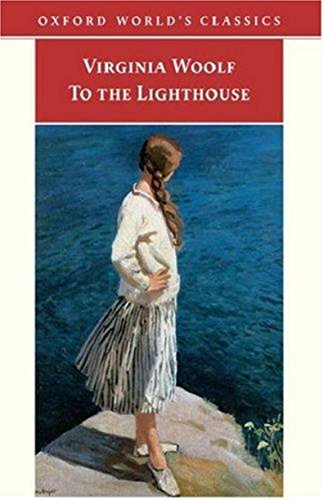
To the Lighthouse by Virginia Woolf (1927)
In the ranks of Virginia Woolf novels, it's slightly Mrs Dalloway's inferior, largely due to the lengthy opening section, "The Window," which occupies nearly half of the novel and is saddled with the unglamorous task of setting the table for the final two sections, both of which are sublime. "Time Passes," the second section, is a particularly moving passage that delivers just what its title implies, reversing the languorous pace of "The Window" by fast-forwarding through the lives of each of its characters until gut-punching consequence after gut-punching consequence hits the reader in succession as the characters hurtle toward the end of time. "The Window" is almost surely too long and too lyrical, but I'll forgive it since it allows for that wonderful, heartbreaking middle. Grade: A-

The Absolutely True Diary of a Part-Time Indian by Sherman Alexie (2007)
Almost any contemporary YA novel owes at least a little to Catcher in the Rye, but Sherman Alexie's breakout novel is one of the few that I've come across that seems to understand just how important the relative aimless and episodic plotting was to the oblique pathos and wounded voice in Salinger's work. Modern YA is plotty, which sometimes has the effect of turning its world into mechanical structures with "trauma" on the front end and "self-actualization" on the back. There are few mechanics in The Absolutely True Diary, at least not ones as angular and squeaky as those in, say, a John Green novel. Thankfully, Alexie allows his protagonist lyrical moments; he lets the characterization breathe. It's wonderful. The last few moments of the book are some of the best YA pages I've read in ages. Grade: A

Music

Chance the Rapper - Coloring Book (2016)
Chance the Rapper has long been modern hip-hop's resident cornball, which is both an asset when he's releasing work like last year's exquisite "Sunday Candy" or this tape's "Finish Line" and a liability when it leads him to incongruously silly lines promising to "give Satan a swirly" (actual quote from Coloring Book). Coloring Book is a tad more consistent than previous Chance the Rapper releases—it lacks the immediacy of a clear masterwork in the vein of "Sunday Candy" or "Pusha Man," but it also doesn't get nearly as silly as some of his least successful work from last year's Donnie Trumpet collaboration, Surf—although those looking for a fulfillment of Acid Rap's scrappy promise are probably going to be disappointed. It's a slick, gorgeously produced mixtape that focuses way more intently on Chance's Christianity than his drug-related neuroses (unlike with Kanye, that Kirk Franklin collaboration actually means something here—Coloring Book is the first secularly released album I've heard that trades in on CCM influences [seriously, there's a very prominent Chris Tomlin allusion], which is kind of cool, but it's also CCM, which... urg). The music is idiosyncratic, personal, and sincere, and even if it's not always successful, there's a lot of value in those qualities. Grade: B

Grimes - Art Angels (2015)
I really haven't much listened to Grimes before this, so I have no stake in the battle of whether or not this is her sellout record. What I do think is that it's this lovely, trash-can-punch mix of '90s Euro-dance, noise, and K-pop that's every bit as infectious and strange a confection as I could want from 2010s pop music. The album has a few duds (I love Janelle Monáe passionately, but her guest track, "Venus Fly" is pretty thin), but on the whole, this is probably the best possible product of poptimism. Grade: A-


TEEN - Love Yes (2016)
Love Yes fills a very St. Vincent-shaped hole in my heart. I haven't heard any of the band's other albums, but man, if TEEN is going to tread the St. Vincent territory, they might as well do it in this much style. I do miss Annie's guitar theatrics, though, which makes TEEN a slightly less interesting inhabitant of the St. Vincent world. Grade: B


Suede - Suede (1993)
If Oasis were the Beatles of the Britpop era, then Suede was the David Bowie, albeit a considerably narrower version of Bowie than Bowie himself ever allowed, and without the sense of humor to boot. Comparisons aside, though, these are stupendously crafted songs, and if there was one thing that mattered about Britpop, it wasn't all the allusions to British Invasion rockers; it was each band's proficiency with razor-sharp songwriting precision. Suede's got that in spades (suedes?). Grade: B+