Showing posts with label Grimes. Show all posts

Wednesday, December 23, 2020

Favorite Music of 2020

These list preambles get harder to write each year, and as the world gets increasingly complicated, I find myself struggling more and more to say anything about it. What on earth am I even supposed to say about 2020 that hasn't been said ad nauseum? At any rate, a silver lining is that we had great music to listen to while the pandemic raged (continues to rage).

I still don't listen to enough metal or hip-hop, and instead, I listened to a larger proportion of jazz and electronic music than in probably any year prior. Plus, I still have probably a hundred albums I want to listen to more but haven't done so enough to justify putting them on this list. Let me know what your favorite music was this year, too, because that's always fun!

Anyway, here's the list.

Favorite Albums:

1. Fiona Apple: Fetch the Bolt Cutters
This seems like a pretty consensus pick, to be honest, at least among music critics, so I'm not going to pretend like I have anything new to say about Fetch the Bolt Cutters. Such chaotic yet elegant music. It's the album I've returned to most this year, and it still gives me chills at times.

[Read original review]


2. NEPTUNIAN MAXIMALISM: Éons
Not much has changed since I wrote my review. Still definitely my thing: a 2-hour noise-jazz epic. Wonderful.

[Read original review]



3. Kelly Lee Owens: Inner Song
Boss beats and terrific tunes. The best fusion of electronic music and pop music I've heard in a while.

[Read original review]


4. Nate Wooley: Seven Storey Mountain VI
This is a late-year find for me: a single, 45-minute track that builds from a choral chant into an extended improvisation and then back into the chant. It's utterly transfixing and beautiful, indebted to minimalism and jazz but also unclassifiable in its own right. Building from Peggy Seeger's song "Reclaim the Night," the chant itself offers a meditation on gendered violence, and the music connects this idea to something much more cosmic as it dissociates from melody into soaring dissonance. I've not listened to much of the other entries in Wooley's Seven Storey Mountain project (as the title indicates, this is the sixth one), but they all apparently follow variations on this format. I guess I should listen to more, because this is great.

5. Taylor Swift: folklore
I still need to listen to evermore more, but I've listened to this one a lot. It's very good (of course)—Taylor's most songwriterly album since Red and proof, if we needed it, that she hasn't lost those chops since her pivot into full-on radio pop. A lot of albums this year have been billed as "quarantine records," but this is the only one I've heard that makes me feel happy.

[Read original review]


6. Idris Ackamoor & the Pyramids: Shaman!
Throwback spiritual jazz-fusion. Moving and personal and enormous-sounding. A lot of the albums on this list are improvisatory and elaborate, but I haven't heard one all year that does a better job of connecting those instrumental flourishes with small personal resonances.

[Read original review]


7. Bob Dylan: Rough and Rowdy Ways
Bob Dylan's been playing the part of old man for longer than he's actually been an old man (he wasn't even 60 when he released the record that inaugurated his "I've seen things, and now I'm on death's door" phase, 1997's Time Out of Mind). But Rough and Rowdy Ways finds him as an actual old man (he's nearly 80), and he's eulogizing like never before: eulogizing himself, his career, and even the 20th century itself.

[Read original review]


8. Lyra Pramuk: Fountain
The liner notes call this "future folk music," which seems about right. For most folk music, the human voice is a foundational instrument, and Fountain is a record consisting entirely of samples of Pramuk's voice. A lot of people consider electronic music to be cold and robotic, but this very concept collapses the distinction between electronic and organic music, if there ever was one. It's hypnotic, warm, peaceful, and beautiful.


9. Grimes: Miss Anthropocene
This one's grown on me a lot since I first reviewed it, and it contains some of Grimes's best songs to date, especially "Delete Forever."

[Read original review]


10. Frédéric D. Oberland & Irena Z. Tomažin: ARBA, DÂK ARBA
This random Bandcamp find hasn't lost an ounce of its power for me. Modern classical drone, that's where it's at.

[Read original review]


Great 2020 Songs Not On These Albums:

Ariana Grande: "positions"—I didn't have a chance to listen to Ariana's new album much, but I do love this song, a slinky, slick piece of pop R&B, smoother than I'm used to hearing from Grande but all the better for it.

Bruce Springsteen: "If I Was the Priest"—Bruce Springsteen got the E Street Band back together and recorded some songs the old-fashioned way, live in the studio, for his new album, Letter to You. To inaugurate the event, the band recorded some songs that Springsteen wrote in the '70s but never put to tape, and those songs are definitely the highlight of the album. "If I Was the Priest" is the best of that bunch, hailing from the Greetings from Asbury Park, N.J. days; like most of that album, it's a fire-hose of words and metaphors and melodies, intoxicated on the possibilities of rock music and trying to cram all of those possibilities into one song. I've liked a good deal of Springsteen's output in the 21st century, but boy is it nice to hear him in his classic mode like this.

Cardi B: "WAP" (feat. Megan Thee Stallion)—I mean, what else is there to say? Slaps. Most clever rauch-rap lyrics since CupcakKe retired (ed. to say: she's apparently un-retired now?). Share your favorite lines in the comments. Mine is the one about the "dangly thing in the back of my throat."

Cracka Khan: "Cardi B - WAP (feat. Megan Thee Stallion) But It's Dire, Dire Docks"—Exactly what it says. Best "WAP" remix in a year full of them.

Fleet Foxes: "Sunblind"—Fleet Foxes at their most lovely and effervescent.

Frances Quinlan: "Your Reply"—Really catchy mid-2000s-throwback indie rock song by Hop Along's Frances Quinlan. I've kind of fell out of love with a lot of mid-2000s indie rock, but this makes me feel like I haven't.

HAIM: "The Steps"—Major Shania Twain vibes on this song. Between this and their work on Taylor Swift's evermore, I think I'm ready for HAIM to go '90s pop country.

Illuminati Hotties: "Lucky"—A cover of (easily!) Britney Spears's best song by the plucky, self-proclaimed "tenderpunk pioneer" Illuminati Hotties. I like Illuminati Hotties just okay, but I wish I loved them, because this is great.

Jeff Rosenstock: "Scram!"—"I've been told for most my life / 'Try to see the other side' / By people who have never tried to / See the other side," this song goes, a perfect lyric for the year of the disingenuous centrism of Joe Biden's Democratic party. Rosenstock's shout-along punk has never been more cathartic.

Lianne La Havas: "Weird Fishes"—2020 was apparently the year for Radiohead covers (I can't count how many of those "artist in the bedroom" livestreams included Radiohead songs), and between this and the song on Kelly Lee Owens's Inner Song, 2020 was apparently the year for covering this specific Radiohead song. La Havas's version is a slow-burn soul take on the record, which is the perfect mode for In Rainbows covers, I think.

Megan Thee Stallion: "Shots Fired"—I don't know what actually went down between Megan Thee Stallion and Tory Lanez, but I know whose music makes a better case for their version of the story. Lanez never had a chance. The best diss track all year, which is saying something in a year that also included Noname's J.-Cole-withering "Song 33."

Neil Cicierega: "Fredhammer"/"Limp Wicket"—Mouth Dreams was a little disappointing for me, but this mini-suite in the middle of the album was among my favorite minutes on any album this year. Cicierega mixes Peter Gabriel's "Sledgehammer" with Limp Bizkit's "Nookie" and (eventually) a Star Wars Ewok rap, and it improves on all of them.

Sufjan Stevens: "The Ascension"—Hands-down the best song on the new Sufjan album, as pained and beautiful an exploration of faith as he's ever written. Sufjan is another of my favorite artists who underwhelmed at the album length in 2020, but this song can stand up to anything he's ever done.

U.S. Girls: "4 American Dollars"—Extremely catchy economic-downturn disco.

Yves Tumor: "Kerosene!"—Yves Tumor has grander ambitions than to just be a rock star, but this song is truly a rock star turn: a wailing, bleak anthem of twisted love, anchored by a wicked guitar solo. 2020's "Gimme Shelter."

Sunday, March 15, 2020

Mini Reviews for March 9-15, 2020

Quarantine, Week 1: Rations running low. Ran out of milk and Kelly Reichardt DVDs today.

Movies

Wild Nights with Emily (2018)
The cinematic style itself is a little shaky, and this movie made me realize that it's kind of strange that the "letter is read by actor talking directly at the camera" technique has becomes something of a cliché for 18th/19th century period pieces trying to court modern sensibilities. But the screenplay and acting are both really tight, and the revisionist historical angle is enlightening—as an English teacher who has taught Dickinson poems in the past, I am embarrassed to admit that I didn't know half the things I discovered in my post-movie Wikipedia dive. Grade: B


Sacro GRA (2013)
Kind of like a Wiseman film if Wiseman were just a tad more interested in people than institutions. As cross-section of the people living along the biggest highway in Italy, it's a pretty interesting study of contrasts, from dudes bathing in literally golden tubs to people essentially living on the streets, and director Gianfranco Rosi gets some really evocative shots both of people living their lives (often filmed through their apartment windows) and of the highway itself. Gotta say, though, I dunno that it really justifies all of its 90 minutes, and I was restless by the end. Would have loved to spend a little more time with the guy making recordings of grubs than with some of the more anonymous folks here. Grade: B-


*Corpus Callosum (2002)
A playful, fun avant-garde feature that's basically just 90 minutes of goofing around with early digital film and digital effects. It feels historically significant that this came out the same year of Attack of the Clones (another landmark in digital cinema), and it makes me wonder what kind of movies George Lucas would have been making in 2002 if Star Wars hadn't ever taken off. Grade: B 

I talked about this movie (and Wavelength) on the Cinematary podcast, if you're interested in hearing about that. You can listen here.


River of Grass (1994)
It's pretty jarring to think of this movie's Badlands-by-way-of-'90s-indie in the context of Kelly Reichardt's broader career, to which it bears little resemblance. But I think if you can put that aside, it's a solid, occasionally lovely picture. I don't know if it's any more than the sum of its influences (a little bit of Breathless, a little bit Drugstore Cowboy, a lot of bit the aforementioned Badlands), but you could say the same of a lot of auspicious, slightly off-format '90s indie debuts: Hard Eight, Bottle Rocket, etc. There's something about the grimy, pre-Pulp Fiction American indie aesthetic that I just can't get enough of, and River of Grass delivers that in spades while also being Reichardt's funniest feature (the last scene is one of the great moments of black comedy in the '90s, on par with "You shot Marvin in the face"). Plus, it has that really awesome jazz score. Grade: B

Police Story (警察故事) (1985)
There are exactly three parts in this movie where I was more entertained than by any other action movie I've watched in recent memory: the opening sequence in the shanty town, the mid-film bit where Chan has to answer all the phones in the police station at once, and (of course) the legendary mall fight at the film's finale. The rest I thought was mostly tedious (with some pretty iffy gender politics to boot). But those three scenes are A+ territory, and Jackie Chan is a freaking Movie Star, so this shook out pretty great on average for me. Grade: B+


Wavelength (1967)
Really hate to be the guy who doesn't like the greatest avant-garde movie of all time, but I didn't like the greatest avant-garde movie of all time. I didn't get a thing out of it, and while I kind of appreciate some of the choices here (the "Strawberry Fields" part is neat, though for me that's likely just because I enjoy the song; some of the color tints are cool; I like where this ultimately ends up re: letting the waves go out of focus; also, that random dude who drops dead in front of the camera is Hollis Frampton??), I mostly just wish I didn't feel like the sound design had actually damaged my hearing. Was thinking I was going to be a Michael Snow head after digging *Corpus Callosum, so color me disappointed. Grade: C


Television

The Show About the Show, Season 2 (2019)
The first season of The Show About the Show was one of the great gems of the "Peak TV" era, a gonzo, hilarious experiment in self-reflexivity with a legitimate edge to it. I suppose it was only natural that a show as recursive as this one would eventually fold into itself and become not about the show itself but the people who make the show, and that's exactly what happens in this season, which essentially becomes a video diary of how Caveh Zahedi's commitment to the show has more or less destroyed his life. The show still has that same live-wire energy and compellingly playful unpredictability as its first season, but it's also excruciating and legitimately uncomfortable to see Caveh just dive into suffering with the abandon he does here. As this season shows, the central conceit of having real-life people recreate the ways in which they have interacted with the show creates a feedback loop that can end in nothing but chaos—interactions that, under normal circumstances, may have been tense but ultimately have dissipated with time become scabs that the show's recreations pick at and pick at until they become infected and even gangrenous. Added to this is the fact that the show now seems much less self-reflexive of its own limitations than it was in its first season; we are stuck in Caveh's point of view as he narrates his own memories, and while the first season did some work to explore the unreliability of this POV, the second season allows for no windows out of this solipsistic, at times genuinely sociopathic perspective, which renders central figures like Caveh's wife sort of incomprehensible as real people, either because Caveh chooses to portray them in fractured, illogical ways or because he doesn't understand these people himself. It's kind of horrific and monstrously sad. The first season was fun; this one is just kind of miserable, and while it's no less fascinating than its first season, I can't get too enthusiastic about this one. Grade: B

Music

Grimes - Miss Anthropocene (2020)
There's a somewhat muddled concept to Miss Anthropocene that you can explore if you want, but I'll be honest that I really just like the sound of this album. It sounds like what I imagine Visions-era Grimes would sound like if she had the Art Angels-era budget, and the result is a beguiling collection of songs, from the ambitious production of something like the opener, "So Heavy I Fell Through the Earth," to the hazy space-pop of "Delete Forever" or "Violence." It's a really solid record, and sure, it lacks some of the punch of Art Angels, but what doesn't? Grade: B+

Sunday, August 20, 2017

Mini-Reviews for August 14 - 20, 2017

Maybe it's just the impending eclipse, but it sure seems like I watched more mediocre/bad movies than I usually do this week—not to mention that long-coveted F review.

Movies

God's Not Dead (2014)
From a distance, God's Not Dead is great fun—my wife and I enjoyed immensely our time heckling this movie's relentless strawmanning and sanctimony, not to mention its laughable grasp of philosophy and opportunistic celebrity cameos (Duck Dynasty's Willie Robertson makes a particularly shameless cameo, while there's enough buildup to the baffling Newsboys concert climax that it wouldn't be far off-base to call the film a gigantic advertisement for everyone's favorite trend-chasing Aussie CCM-ers). But that fun dies the precise moment you remember just how sincerely the Evangelical Christian world regards this movie's worldview, how this is the most lucrative ($62.6 million at the box office??) iteration yet of the memefied misinformation campaign that's plagued Evangelicals for decades, and how this is a particularly vengeful—even hateful—iteration at that. The sheer sadism through which the movie doles out its inevitable conversion scenes (one via a fatal hit-and-run, the other via cancer [because we wouldn't want to be too tasteful]) is condescending and vile to the max, betraying a startling, ugly antipathy toward every character who is not Christian and showing that, at least for the Christian filmmakers behind this movie, the core of the modern American Christian is that winning an argument trumps any semblance of compassion for other human beings. There's something to be said for viewing this movie as a The-Room-esque pile-up of the sheer surreality of every possible mistake being made on the craft and screenwriting level, but unlike the mind of Tommy Wiseau, the world of God's Not Dead is too firmly rooted in a toxic social reality that I, as a fellow Christian, loath to retain any of that so-bad-it's-good charm. Grade: F

Casting JonBenet (2017)
This documentary's clever concept—having actors audition for roles in a film adaptation of the notorious JonBenét Ramsey murder speculate on the truth behind the real-life players in that mystery—is blessed to have an equally clever follow-through. This is a movie that's ostensibly about the sensational death of a young girl, but by the end, it's become a meditation on how the public at large responds to such tragedies, with its cast of aspiring actors forming a chorus of the mortified solipsism with which we approach them. So it's all very clever and interesting, but it's perhaps a little too conceptual to be anything but that. Grade: B+


Get Me Roger Stone (2017)
At its best, this documentary recalls Errol Morris's political duology of The Fog of War and The Unknown Known, wherein powerful political players are essentially allowed to monologue on their strategies and thus reveal far more about the political process and their own character than a more traditional doc would have been able to. Get Me Roger Stone does something similar, and the most engaging parts of the movie by far are the ones in which the titular political strategist and bona fide sleazeball just talks, betraying the rotten core of everything he's ever touched. Unfortunately, those talky segments are nested within the structure of a far less interesting documentary that feels something like a TV special about Roger Stone's history, regurgitating familiar soundbites from famous campaigns in the past and leaning far too heavily on the 2016 Trump campaign. But those Roger Stone talking heads are to die for. Grade: B

The Girl with all the Gifts (2016)
An intriguing twist on zombie tropes, The Girl with All the Gifts is the first zombie movie I can think of that's really embraced the post-human implications of most zombie stories—it's not just that the zombies here are destroying human society; they are creating things to replace human society, culminating in a ballsy finale that rivals The Night of the Living Dead in its despairing grandeur. In this world, a second generation of zombies has been born that is fully sentient, which ends up being a cool exploration of the question of what to do with deadly flesh-eaters when they are able to develop their own moral compass, feel pain, etc. The craft of the movie isn't quite up to making this a great movie, and the child-actor lead is unfortunately way out of her league here (thankfully offset by a fantastic Glenn Close villain). But there are enough interesting ideas at play here that it's worth a watch regardless. Grade: B+

Colossal (2016)
There are a couple of metaphors going on in the situation Anne Hathaway encounters (i.e. realizing that returning to the confines of her childhood playground triggers the appearance of a monster in Seoul that mirrors her every move, wreaking havoc on poor South Korea). The first is one of childhood memory and the cycles of childhood trauma; the second is the idea of the actions of clueless Westerners destroying Asia. Neither one is particularly interesting, but I'll at least give Colossal credit for trying to make them so—it's just such a bizarre concept for a movie that it's hard not to admire it in concept, if not in practice. There really isn't a lot going on here, though, so... oh well. The best-laid plans, etc. Grade: B-


Seeking a Friend for the End of the World (2012)
The movie's vision of a world facing certain and imminent destruction is observant enough and funny enough that the movie's never not pleasant (at least, as pleasant as the end of the world can be). But I'm not buying the central relationship one iota; both Carell's and Knightley's characters are well-formed enough, but the film manages to do that almost entirely irrespective of anything that might connect these two in an actual meaningful bond. I mean, I get it: it's the end of the world, people are desperate for human companionship, etc. But this is triggering my major pet peeve against the depiction of new romances as somehow world-conquering and transcendent-to-the-end-of-time. Grade: B-


Snowtown (2011)
This movie is pornographic—not in a sexual sense (although there is a rape) but in the sense that it seems to be about nothing but the sensual experience of witnessing serial killers do their serial killing. Based on the true story (of course) of a group of guys who decided to torture and kill first pedophiles and then homosexuals, this film points its camera directly at the actions of these men and rarely looks away. What I'm supposed to be getting out of this, I'm not sure, except now I know what it looks like to see a toenail pulled off a big toe. Grade: C-


Television

Adventure Time, Season 7 (2015-16)
After the increasingly serialized and high-minded fourth, fifth, and sixth seasons of Adventure Time, Season 7 feels like a stripped-down, back-to-basics sort of outing, resulting in what's probably the show's least-exciting season since its first. That's not exactly a criticism, as there are some delightful one-offs and silly-for-silliness's-sake episodes like "Cherry Cream Soda" and "The Hall of Egress," not to mention the strangely compelling horror experiment, "Blank-Eyed Girl," all of which make great use of the deep roster of minor and major characters developed over the series's run. The season also gives us at least a few new explorations of the series lore, one of which, "Stakes," is a whole eight-part miniseries devoted to Marceline, and I'll never complain about giving her more screen time. So it's not as if this season is joyless or bad; in fact, it's probably a necessary step for the series, re-establishing its fundamentals after pushing its boundaries to the max. But I'd also be lying if I said that there wasn't something missing here, the way a balloon feels all floppy and wrinkled when you deflate it. There's good stuff here, for sure, but it kind of feel like Adventure Time is no longer aiming for greatness, which is a little bit of a letdown. Grade: B

Music

Grimes - Visions (2012)
I'm sort of backing my way into Grimes's discography, starting first with Art Angels and now going to her next-to-last, 2012's Visions, and doing so, it's fascinating to see all the pieces of Art Angels's greatness intact, just slightly submerged, as if Grimes is slowly excavating them. On Visions, it's the ambient electronica textures that take the foreground, slightly swallowing the '90s-pop/Euro-club melodies that would come roaring to life on the next record. As a result, Visions is, despite it's crazy-awesome cover art, a somewhat more ethereal presence than Grimes's subsequent work, and as such, it's frequently a work of delicate beauty—never more so than on the late-night-driving all-timer, "Oblivion," which ranks as not just Grimes's best-ever composition but one of the finest pop music creations of recent years. I'm looking forward to seeing what she did before this. Grade: A-

Public Enemy - Nothing Is Quick in the Desert (2017)
Thirty years into their career, Public Enemy's music is throwing punches with as much force as ever, although its targets are maybe a bit more questionable. There are the typical rabble-rousing, truth-to-power shout-alongs—"sPEak," "Beat Them All," "Toxic"—and it's here that the album's at its best. However, other sections of the album also betray the ages of the band members, and it's not uncommon for Chuck and Flav's lyrics to come off as the musical equivalent of that Grandpa Simpson "Old Man Yells at Cloud" moment; this hits its nadir in "Yesterday Man," which rants at all sorts of petty and distasteful grievances with modern culture, including Kanye West/Kim Kardashian and Caitlyn Jenner (whom they insist on calling "Bruce"). I guess it wouldn't be a Public Enemy album without a little bit of regressive sexual politics. It's not that there isn't good stuff here; you'll just have to sift through the bad and the tedious to get to it. Grade: C+

Sunday, June 12, 2016

Mini-Reviews for May 23 - June 12, 2016 (aka "Sorry for more delay!")

So, I've been in the middle of a move, which means that I haven't had a whole lot of time to blog. Again, sorry! I promise (I think...) that I won't have to make this feature a once-a-fortnight thing. Anyway, here's a super-sized post to make up for the missed week. Enjoy!

Movies

Bridesmaids (2011)
This movie is funny—at times, very funny. Jon Hamm's louse of a friend-with-benefits is hysterical; Rose Byrne's shade-throwing villainy is pitch-perfect; Kristen Wiig's gentler, tragicomic turn is the best she's ever been, before or since this movie. But damn it all, this movie falls for that same post-Apatow horror of being over two hours long, and that just really topples the whole thing. There is nothing about this movie that justifies its runtime, and in fact, there are several moments that actively argue against its long cut: I'm thinking specifically of the rehearsal dinner toast scene, which pivots distressingly quickly from funny to "why haven't they cut to the next scene yet?" Funny is funny; it's true. But given the option between one slice of cake and ten, it's generally better to play it safe. Grade: B

The New World (2005)
The New World, Terrence Malick's second post-hiatus movie after The Thin Red Line, has several things going for it over its immediate predecessor: First, it's uncommonly beautiful, visually speaking, even by the already high Malick metric. It's hard to call this a career best from a cinematographer as legendary as Emmanuel Lubezki, so I won't, but his fantastic work in The New World is definitely up there. Second, (and this gets a huge "Praise the Lord" from me), Malick's trademark interior monologues/voiceovers are grounded in the concrete events that the characters experience, a merciful change from the meandering, half-poetic philosophizing that bloats lesser Malick like The Thin Red Line and the later To the Wonder. The result is that The New World is Malick's plottiest film since probably Days of Heaven, which gives these characters an immediacy that even superior Malick features have lacked. Plot isn't a necessary feature of any movie, of course, but nonnarrative film can be a tough beast to tackle, so it's a nice surprise to go in expecting a bull and to get a delicious dairy cow instead (don't read too much into that analogy). That said, this movie still meanders, and even as artfully done as it is here, did we really need another John Smith/Pocahontas story onscreen? Mileage may vary, naturally (and it has, with the critics being mostly split between lukewarm and ecstatic reviews back in '05), but my mileage runs pretty low on this kind of story these days. Grade: B

The Thief and the Cobbler (1993)
Speaking strictly of the animation, this is one of the smartest, funniest, most creative animated movies of all time: the way the action plays around with the geometry of the backgrounds and forced perspectives, creating spaces where there seems to only be generic patterns, is wonderful in a way that's difficult to describe without just linking to clips of the movie itself, and the fact that this was all hand-drawn is seriously, seriously impressive. Speaking of everything else besides the animation, though, this movie is a train wreck. Cobbled (ha) together from over twenty years' worth of fragments, the movie is clearly unfinished, and in an attempt to stitch everything together into something that vaguely (and ultimately unsuccessfully) resembles a completed whole, we're subjected to awful narration and heinous celebrity voice acting that litters the story with irritating, sub-Dreamworks anachronism and pop cultural references. Never has the chasm between technical craft and narrative execution been so wide or so disastrous. But man, that animation is something to behold. Grade: A-

Mulholland Drive (2001)
It's as great as its sterling reputation suggests—a nightmarish thriller about the nature of reality and filmmaking with just enough metaphysics thrown in to make that sort of investigation more interesting than the Vertigo/Persona pastiche that the plot synopsis suggests. I do wonder if maybe all the discussion about it being incomprehensibly mysterious is a tiny bit overblown, though. Surely there are opaque edges here and there, as there are with most of David Lynch's work, but the central plot seems straightforward enough: the first 2/3 are a dream that the main character wakes up from in the last 1/3. Although maybe my confidence in that interpretation is misplaced, and I just haven't got far enough down the rabbit hole... erm, blue box. Grade: A

Anomalisa (2015)
Probably worth watching for the animation alone, which ranks among the most technically impressive and thematically resonant uses of stop-motion ever. If it weren't for that (and maybe even still), Anomalisa isn't quite the heavyweight that Synecdoche, New York was, nor is it the brain-bender of Being John Malkovich nor the well of pathos of Eternal Sunshine—what I'm saying is that among the major works of screenwriter (and co-director here) Charlie Kaufman, this ranks as relatively slight, although that doesn't keep it from being both tender and terrifying by turns in that typically Kaufman-type way. Probably the single most enduring touch to the movie (besides having Tom Noonan voice nearly every character) is the way the stop-motion models have seams left deliberately visible, which has the tremendous effect of making these character all seem as brittle as their psyches. This is not a happy movie—in fact, it shares quite a lot with late-period Mad Men, where Don Draper was at his most both narcissistic and fearfully aware of the catastrophic effects of that narcissism. But it's a striking, intimate, even frightening one that's not bound to leave your mind soon. Grade: B+

The Revenant (2015)
Oh, it's exquisitely made, for sure. The "we're only going to shoot with natural light, and oh yeah, in the actual wilderness, maaan" actually pays off with a nearly nonstop parade of gorgeous imagery that almost justifies the conceit of a ra-ra, fist-pumping, pulp remake of The New World. Almost. It would help if the whole thing weren't so criminally boring or if every scene between the admittedly impressive action set pieces weren't another redundant iteration of either DiCaprio doing hardcore wilderness survival stuff or Hardy making his way back to civilization looking villainous. Grade: C


Godzilla (2014)
The structure is lumpy, perhaps even broken: there's nothing inherently wrong with focusing on the human drama in a Godzilla story, but there is something wrong with focusing on drama that's so inert and tepid. But once you get to the creature-feature back half of the movie, all that doesn't matter. The design, direction, and mood surrounding the monster battles are so captivating that you're likely to forget all about the boring character drama (and maybe even who the characters are to begin with). I can't think of another recent blockbuster that's managed to achieve a sense of just how titanic its monsters are and just how insignificant its humans are in comparison. Godzilla is the most artfully directed, atmospherically immersive blockbuster of its size in years, so lumps and all, it's worth your time. Grade: B+

Television

Bob's Burgers, Season 6 (2015-16) 
If you aren't watching Bob's Burgers yet, well, why not? You're missing out on some of the most potent combination of silly, sweet, and gleeful anarchy to hit Fox's animated programming since the heydays of Futurama and The Simpsons, although the best point of comparison is probably the gentle realism of King of the Hill (given that Bob's Burgers has a far longer absurdist streak than Hank's adventures ever did). If you're already watching it, well, congratulations! We got another great season! I suppose if you're keeping count, the hit-to-miss ratio is just slightly smaller than in the past, which might be either a statistical blip or a sign of the show's age. But whatever minuscule dip in quality we've seen is only noticeable if you're looking hard. This show is still a weekly delight for me. Grade: A-

SpongeBob SquarePants, Season 1 (1999-2000)
I've seen it before; you've probably seen it before, too, if you're anywhere near my age. Just in case you had any doubts: yes, it holds up. Gloriously. A big part of what's so incredible here is how much it takes advantage of the fact that children have few fully formed ideas about what constitutes "weird" and "normal." A sponge lives in a pineapple at the bottom of the Bikini Atoll? Well, okay! It's occasionally narrated by an anonymous French-accented voiceover? Sure! The show plumbs some sublimely surreal depths, sometimes to hilarious effect, sometimes to nightmarish effect, often to both, as in the series-best contender, "Rock Bottom." Beautiful stuff. Grade: A


Books

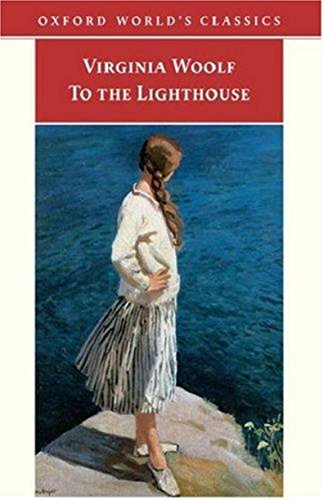
To the Lighthouse by Virginia Woolf (1927)
In the ranks of Virginia Woolf novels, it's slightly Mrs Dalloway's inferior, largely due to the lengthy opening section, "The Window," which occupies nearly half of the novel and is saddled with the unglamorous task of setting the table for the final two sections, both of which are sublime. "Time Passes," the second section, is a particularly moving passage that delivers just what its title implies, reversing the languorous pace of "The Window" by fast-forwarding through the lives of each of its characters until gut-punching consequence after gut-punching consequence hits the reader in succession as the characters hurtle toward the end of time. "The Window" is almost surely too long and too lyrical, but I'll forgive it since it allows for that wonderful, heartbreaking middle. Grade: A-

The Absolutely True Diary of a Part-Time Indian by Sherman Alexie (2007)
Almost any contemporary YA novel owes at least a little to Catcher in the Rye, but Sherman Alexie's breakout novel is one of the few that I've come across that seems to understand just how important the relative aimless and episodic plotting was to the oblique pathos and wounded voice in Salinger's work. Modern YA is plotty, which sometimes has the effect of turning its world into mechanical structures with "trauma" on the front end and "self-actualization" on the back. There are few mechanics in The Absolutely True Diary, at least not ones as angular and squeaky as those in, say, a John Green novel. Thankfully, Alexie allows his protagonist lyrical moments; he lets the characterization breathe. It's wonderful. The last few moments of the book are some of the best YA pages I've read in ages. Grade: A

Music

Chance the Rapper - Coloring Book (2016)
Chance the Rapper has long been modern hip-hop's resident cornball, which is both an asset when he's releasing work like last year's exquisite "Sunday Candy" or this tape's "Finish Line" and a liability when it leads him to incongruously silly lines promising to "give Satan a swirly" (actual quote from Coloring Book). Coloring Book is a tad more consistent than previous Chance the Rapper releases—it lacks the immediacy of a clear masterwork in the vein of "Sunday Candy" or "Pusha Man," but it also doesn't get nearly as silly as some of his least successful work from last year's Donnie Trumpet collaboration, Surf—although those looking for a fulfillment of Acid Rap's scrappy promise are probably going to be disappointed. It's a slick, gorgeously produced mixtape that focuses way more intently on Chance's Christianity than his drug-related neuroses (unlike with Kanye, that Kirk Franklin collaboration actually means something here—Coloring Book is the first secularly released album I've heard that trades in on CCM influences [seriously, there's a very prominent Chris Tomlin allusion], which is kind of cool, but it's also CCM, which... urg). The music is idiosyncratic, personal, and sincere, and even if it's not always successful, there's a lot of value in those qualities. Grade: B

Grimes - Art Angels (2015)
I really haven't much listened to Grimes before this, so I have no stake in the battle of whether or not this is her sellout record. What I do think is that it's this lovely, trash-can-punch mix of '90s Euro-dance, noise, and K-pop that's every bit as infectious and strange a confection as I could want from 2010s pop music. The album has a few duds (I love Janelle Monáe passionately, but her guest track, "Venus Fly" is pretty thin), but on the whole, this is probably the best possible product of poptimism. Grade: A-


TEEN - Love Yes (2016)
Love Yes fills a very St. Vincent-shaped hole in my heart. I haven't heard any of the band's other albums, but man, if TEEN is going to tread the St. Vincent territory, they might as well do it in this much style. I do miss Annie's guitar theatrics, though, which makes TEEN a slightly less interesting inhabitant of the St. Vincent world. Grade: B


Suede - Suede (1993)
If Oasis were the Beatles of the Britpop era, then Suede was the David Bowie, albeit a considerably narrower version of Bowie than Bowie himself ever allowed, and without the sense of humor to boot. Comparisons aside, though, these are stupendously crafted songs, and if there was one thing that mattered about Britpop, it wasn't all the allusions to British Invasion rockers; it was each band's proficiency with razor-sharp songwriting precision. Suede's got that in spades (suedes?). Grade: B+