Movies

A mixed-to-positive bag. This adaptation imports some of my least-favorite elements from the original book, from the pointless boyfriend character to the pedestrian style (though it's a better-directed movie than the book is written), while leaving out some of the best elements of the novel—the vibrant sense of place in the book's Garden Heights neighborhood is almost completely gone here, alongside the rich, multi-generational, intra-community response to tragedy evoked by the novel. But on the other hand, the film version wisely streamlines the novel's lumpy storytelling, often to great effect, and even if Amandla Stenberg can't ever make the (awful, tedious, expository) voiceover work, the acting is across-the-board excellent, which gives these characters a lot more life than they had in their novel versions. And for as much as the movie flubs the climax in its seriously ill-advised "hate we give" moment (unique to the film), it generally retains the novel's fearless intersection with incendiary political realities, rendered grippingly here. The whole is far from perfect, but there are some sublime pieces. Grade: B

I spent most of my high school years scowling at movies like this; there's a LOT of shared DNA between the stoner comedies of the '90s and 2000s and Never Goin' Back, from the, well, the smoking to the pointedly gross scatological humor to the easy-going chemistry between the leads. Nowadays, I've come around to a lot of those old comedies anyway, but even so, it's a wonder how much good gender-flipping the formula does—most notably, by replacing the often bro-y demeanor that is the necessary[citation needed] evil of the male-led iteration of the genre with an almost literally riotous, completely endearing us-against-the-world fury carried to perfection by Maia Mitchell and Camila Morrone in the leading roles. It's hilarious and oddly moving, and I never got tired of the basic gag wherein these girls keep stumbling into a for-real bro-stoner plot, only to express extreme irritation at finding themselves there. So say we all. Grade: B+

I've seen a lot of people using the term "black comedy" for this movie, but I think that's selling short just how heavily the specter of death hangs over this movie. In what's probably more accurately described as a slightly more banter-y, slightly more deadly take on The Treasure of the Sierra Madre, The Sisters Brothers is both a lament and a critique of human enterprise—not nihilistic, exactly, but definitely convinced that the worst human impulses are also the strongest. On paper, I love this, and there are definitely things I love (particularly the casting—John C. Reilly and Joaquin Phoenix are a peanut-butter-and-chocolate combo of co-leads). But also, there's something that feels a little slack here; nothing has quite the punch it needs to tip the movie over into greatness. It may be a scripting problem, honestly, or perhaps also a pacing one. Whatever the case, it's good—just not amazing. Grade: B

What initially presents itself as a bemused depiction of eccentric UFO chaser Christo Roppolo eventually turns into a more serious chronicle of Roppolo's personal tragedies (of which he has several). The UFO footage (real videos that Roppolo has taken, complete with his own ecstatic, often-profane commentary) is great, and Roppolo has just the right shades of unself-conscious oddity and pathos to make his mere presence onscreen consistently engaging. It's an affectionate portrayal of the guy, which is good, since this could easily slide into mockery of Roppolo; that said, filmmaker Justin Gaar seems to have mistaken affection for depth, and the movie as a whole is a bit surface-level in its engagement with Roppolo, despite being constructed out of what looks to have been some really engaging interviews. The movie is fun, but you wonder how much better it could have been if it had dug just a little deeper. Grade: B-

Petra Epperlein's investigation into her father's suicide doubles as a memoir of her childhood in East Germany and triples as a survey of East Germany in general. Watching her sort through literally miles of indexed records from the former state is awe-inspiring and terrifying; that sort of imagery, of which this movie is full to the brim, does a really great job arguing for the mid-century surveillance state as both apotheosis and nadir of modernity before digitization papered it all over with the veneer of ethics. Grade: B+

"Let the Right One In but in a NYC housing project" is the pithy way of describing this movie, but honestly, it's about all you need to know about it. Also, it's a nice touch to have a modern-day adolescent vampire obsessed with ranking vampire movies by how realistic they are, as if he were pre-gaming for the YouTube algorithm. Grade: B

Kind of reads like someone watched the end of Alex Ross Perry's The Color Wheel movie and thought they could do that sort of twist one better. But you'd think that a movie about best friends having sex with each other's kids would be a little less... boring. Grade: C-

Props to a parody so committed to recreating the lo-fi charms of blaxspoilation that it was filmed over less than three weeks on 16mm. The format here feels of a piece with Walk Hard in the sense that it's looking at a very specific genre and twisting the tropes just enough to the left to register as hilarious, though Black Dynamite is considerably more of an affectionate homage of blaxploitation than Walk Hard is of the musician biopic—to wit, Black Dynamite actually likes its parody target, and as such, this is less about making the genre the butt of the joke than it is about celebrating the genre to excess. It's tremendous fun, although I do wish this movie hadn't had quite so much affection for the sexism of the '70s alongside all the zooms and "jive talk." Grade: B

Lacking the sometimes irritating cinematic theatrics of his early work like Requiem for a Dream and the balls-to-the-wall theological anguish of Aronofsky's mature period (that's what I'm calling Noah and mother!, deal with it), The Wrestler finds our ol' boy Darren somewhere in the middle, a gritty, naturalistic companion piece to 2010's nightmarish Black Swan. Like Black Swan, the plot beats here are somewhat obvious in their working through the tortured, self-destructive dedication of a craftsman bent on excellence, but unlike Black Swan, The Wrestler actually finds a beating heart within its inevitable arc. Maybe Aronofsky is just closer to the masculine dysfunction of this film as opposed to the svelte femininity of the other film (which he seemingly can't help but fetishize). No matter; I definitely felt something here, however standard the tragic hero structure is, and the film's final fifteen-ish minutes are powerful. My favorite Aronofsky mode is still when he's basically doing Midrash in cinematic form, but if I can't have that, then The Wrestler isn't a bad alternative. Grade: B+

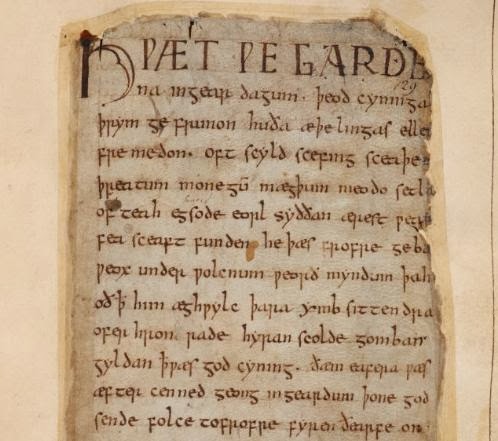
I'm kind of gobsmacked by how much I liked this. Most of the negative reviews I see of this movie are grounded in pretty shallow critiques along the lines of "That's not how Beowulf goes!" And, I mean, that's technically correct—this is not how Beowulf goes. But these aren't just idle changes; the specific points at which this movie differs from the original epic are rich in a way that indicates they have been made by people with a deep understanding of the original, such that they know exactly which parts to tweak to completely transform the narrative. For example, the often-excised digressive sections of the original Anglo-Saxon poem are the ones where, in song, the Danes tell the mythological histories of their society, but rather than mythical digressions, what takes their place in this movie (following the fight with Grendel's mother, traditionally where "Hrothgar's sermon" occurs) is a reading of the actual text of the Beowulf poem (in Old English!) by the men of Herot. However ahistorical this is (what are Danes doing speaking Anglo-Saxon?), what it's done is position Beowulf the Epic Poem as mythology within the film, with the film itself occupying a similarly role in revising and mythologizing the stoic yet absurdly out-sized masculinity of both contemporary action films and masculine heroes without history. The whole movie becomes something of a meta-text for our sanctimonious posture toward our own literary heroes. And what are these heroes, as laid bare in this movie? Freakin' toxic males about whom we tell lies to make ourselves feel better for venerating them. I know it feels very "woke in 2019" to say that this movie is about toxic masculinity, but if not that, then at the very least this movie is about the myths about masculinity that our societies tell that end up propping up reprehensible, society-destroying behavior generation after generation. And look, maybe you don't care about yet another movie about bad dudes being bad, which is fair. And further in your defense, I will say this: 2007 gave us two PG-13 animated movies that include lengthy actions sequences hinged on a naked guy running through landscape that hides his junk in increasingly absurd ways, and what a world we live in that the one that actually had the guts to show the penis in the end was The Simpsons Movie. Grade: B+

Finds M. Night Shyamalan in full mad-scientist mode. At once an elaborate piece of dark fantasy, a treatise on the nature of narrative fiction, a testy refutation of The Village's critics, a social allegory, and also a commentary on the Iraq War (?!?), Lady in the Water can't be accused of being understuffed. I'm not sure if it would be a better movie if it were doing less, but lordy, is it doing too much. The oddly convoluted mythology of the fantasy makes an ill fit with some of the more straightforwardly metaphorical moments, and when the movie turns toward a sort of cock-eyed autobiography for Shyamalan, it feels vindictive and petty and self-aggrandizing. But then again, critics were wrong about The Village, which makes Shyamalan's self-mythologizing technically correct in a way that kind of makes all the self-aggrandizing feel somewhat badass, too. The movie's a complete mess, but it's kind of endearingly so, and regardless, it remains one of the foremost examples in recent memory of truly weird cinema somehow Trojan-horsing itself into a mainstream studio release. Grade: B-

A lot soapier than I was expecting my first Almodóvar to be, which isn't necessarily bad, although the dramatic beats have that kind of muted impact of those in soaps, too. It has a really stellar score and great acting all around and above all some truly tremendous cinematography/lighting/set design/location scouting, so the movie looks and sounds fantastic front-to-back. But still, I had a hard time connecting to this lumpily structured, winding film, which I think I'm going to have to lay on the writing—there's a thrilling way to be off-format as far as act-structures go, and then there's this, which merely feels mushy and directionless and cloaks its fraught emotional territory in a vague conflictual haze. I enjoy the warmth of the portrayal of the trans community here, but even with that, I've seen some of the modern trans community critiquing the way it frames trans folks through the experiences of a cis woman, which I understand. So yeah. Good pieces, frustrating whole. Grade: B-

A very middling (if raucous) sex comedy is elevated somewhat by some great cinematography from Emmanuel Lubezki. It's amazing how mature the aesthetic dimensions of the Cuarón/Lubezki partnership are at this early a stage in their careers—this is the theatrical debut for both, and even here, it's a fruitful collaboration. So this movie looks great. The rest... ehhh, well, first of all, it's not very funny, outside of one sequence that's basically the adult version of the old "Oh no! I've invited two different girls to the same dance!" plot. And second of all, the idea—esp. in 1991, very much within the peak years of the AIDS epidemic—of using a fake AIDS scare as a tool for teaching some rando dirtbag straight dude a lesson about being a slightly better rando dirtbag straight dude: that scans as majorly iffy for me. Grade: C

It's not all that uncommon for a second sequel to be thematically redundant; the Toy Story movies didn't have a single new thematic idea after the first one. So that the third Godfather film isn't really saying anything new isn't an inherent evil, and in fact, the movie does accentuate the religious subtexts of the previous two movies in interesting ways (though again, it's hardly revolutionary in the context of the franchise), which alone makes the movie undeserving of the hate it gets in some circles; that and that the film is sumptuous to an extreme degree, no surprise from a F. F. Coppola production, esp. at this stage of his career—this is essentially the same iteration of Coppola who made Bram Stoker's Dracula two years later, if that gives you an idea of the visual richness here. Still, there's not really a compelling reason for this movie to exist, and certainly not three hours of it; unlike Toy Story, this movie's thematic remixing of its predecessors doesn't result in anything dramatically urgent. Like, in theory I dig the way that this movie links crime and religion and corporate capitalism in a much more explicit way that in the '70s Godfather films, in much the same way that the third Toy Story makes the mortal implications of the series literal. But also, I kind of have a hard time caring beyond that theory; interesting theory, but it's all head and no heart, you know? Grade: B

It's fine and good and has a really, really great climax. But the whole time, I couldn't stop thinking how much I wanted to rewatch that episode of The Simpsons where Sideshow Bob is Robert Mitchum's character. It doesn't help that the movie is, in a lot of ways, a less-interesting remake of Night of the Hunter. Grade: B

A very fun screwball adaptation of a play adapting a very not fun fairy tale. Claudette Colbert is great, per usual, and Gary Cooper is surprisingly good as her co-lead—a far cry from the "strong, silent type" of his reputation. You really can't go wrong with a Billy Wilder screenplay (co-written with frequent collaborator Charles Brackett) directed by Ernst Lubitsch, and while some of the character work gets a little inconsistent at times, the whole is just so airy and hilarious that I'll forgive a few out-of-character moments. Grade: B+

My first silent Ozu ever and my first Ozu at all in several years. This is definitely the work of the master of Tokyo Story. Even if that master isn't quite at the top of his game yet (the character of Otaka, for example, feels too one-note both to make her woman-scorned role interesting and to carry the pivot toward nuance in the film's final minutes), it's still got that same heady combination of a simple story dealing with some anguishedly complex emotions—emotions made even more complex by the misogynist violence of the protagonist near the film's climax. We're supposed to feel for this man's situation while also feeling the depth of his destructive impulses while also understanding the social forces that guide him toward resorting to violence while also recognizing the internalized classism he wrestles with daily while also completely understanding the reactions of everyone around him. Like I said, complex emotions. Maybe more complex than is strictly responsible. Maybe more complex than I'm quite up to handling at this particular moment. But also, isn't that what happens when something is truly complex? Grade: B+

I'm not sure this story is better served by giving it more space to be naturalistic (and have random comic relief from the stage players?), but it's also much, much more consciously gorgeous in that classic Ozu way—my word, the colors. One of the bit characters says it best: "The sky is so blue; it's sad." So between this one and the 1934 original, I'd say it's six of one, a half dozen of the other. Grade: B+
Television

The third season of The Good Place is by-far its least consistent. In previous seasons, the show's constant shape-shifting has been thrilling; this season marks the first time that the show shifts into shapes that don't completely work. The early goings of the season, in which our cast get a chance to continue their Earthly lives, has some interesting things to say about the show's central inquiry into "What does it mean to be a good person?", but that doesn't stop the majority of these episodes from feeling rudderless at times—simultaneously underdeveloped and not engaging enough to sustain more development. But on the plus side, the show's restlessness in format means it never settles down long enough for the weaker pieces of the season to truly curdle, and along the way, we're treated to some of the very best episodes the series has done yet: the metaphysical "Jeremy Bearimy," the please-give-D'Arcy-Carden-an-Emmy grandeur of "Janet(s)," the deeply wistfulness season finale. For as shaky as some of the individual pieces are, taken as a whole, this season gives the show's emotional core a resonance it's not previously had, and that new resonance lends the show's philosophical and ethical questions a new weight alongside the usual jokiness evoked by past seasons' dalliances with philosophy. That a network comedy would arrive at a particularly meaningful invocation of "no ethical consumption under capitalism" has me thrown completely on my backside. God bless this show. Grade: B+

It dials back some of the gleeful whimsy of the first season in favor of something more akin to dadaism ("NOSFERATU??"); this mixes with an often more straightforwardly satirical bent, of, for example, language ("Sailor Mouth"), standup comedy ("Squirrel Jokes"), and factory farming ("Jellyfish Hunter"), and the result is some of the show's best and most iconic episodes. This second season is just a tremendous season of television, and it's nice that, for once, an object of such intense millennial nostalgia is actually good. Grade: A
Books

Rachel Held Evans takes a break from the memoir-ish mode of her previous books to create a work about the big kahuna of all books: the Bible. She seems to be at about the same place I am regarding the Bible, which is to have moved on from the literal, legalistic lens of her upbringing toward a more diverse, open-handed approach to Biblical interpretation, which is cool; I like where I'm at right now. However, as is often true of the whole post-Evangelical crowd once they get past the telling of their own deconstruction/reconstruction stories, Inspired finds Held Evans basically realizing that a key part of moving forward toward a more inclusive faith is the inclusion of more voices. So Inspired is mostly a survey of a lot of different interpretive lenses for the Bible: here's liberation theology! Here's historical criticism! etc. Which is good; those are important ideas to know and use. But also, if these are important ideas, it begs the question of why I'm reading what Rachel Held Evans has to say about these things rather than just going straight to the source and picking up any of the many, many books used as references for Inspired. There's value in an accessible 101 orientation to the broader world of biblical interpretation, which is what Inspired is. I definitely heard from voices I hadn't heard from before, and I got stuff out of this book. But also, if the post-Evangelical movement is going to be worth my time going forward, it's going to have to figure out its place within this broader world rather than just observing it all as if it were a buffet set before it. Honestly, my gut tells me that the post-Evangelical movement's place is in critically engaging with the Evangelicalism of its past, and while I realize that's an exhausting prospect, it's probably the most critical. All of which is to say, this is not Rachel Held Evans's best work, although it's hardly a waste of time either. Grade: B

I guess I thought this was going to be a sentimental message novel. What it actually is is a pretty bracing depiction of the hardships of self-actualization in the early stages of middle school. This is (rightly) focused most on August, the central character whose facial disfigurement throws into relief all the prejudices of the early-adolescent social sphere, but one of the biggest surprises of the novel for me was the extent to which the novel grants a voice to the satellite secondary characters, who also struggle to navigate the nuances of their social strata—either due to their own tangled selfishness or the inconsideration of others. While I did kind of look askance at the extent to which this book resolves each and every conflict in the seeming happiest way possible, its journey there is a lot more honest and mature than most YA books intended for a supposedly more "mature" audience. Grade: A-

For its... uh, penultimate entry, the series returns to the social satire of its best books after the lackluster Grim Grotto, and the results are excellent. Being a kind of big reunion novel (the setting this time is a hotel, and the guests are a veritable who's who of the series' characters), there's no particular strata of society that the book puts through its funhouse mirror; rather, this novel positions its hotel as the intersection of all the various settings of the series's past, and as such, the plot becomes something of a culminating satire, an examination of how all these various worlds interact with one another. This feeds right into the book's primary philosophical idea and its most concerted and honest wrestling with the series's ethical questions yet: that the sheer complexity and accumulation of narratives and information in the modern world makes it impossible to gather enough knowledge to make truly informed ethical evaluations—especially compared to the curated, artificially pared down world presented to children. It's a fascinating and sophisticated development for a series that leaned into deceptive simplicity for its early books, and more so than the periodic birthdays that crop up in the series's plots, this development best signals the Baudelaire's growth from childhood into adolescence. The book's climax involves the novel's entire cast trying to run a courtroom while all wearing blindfolds, and really, I can't think of a better evocation of the human condition in all of children's literature. Grade: A

In one of the more audacious literary allusions in the series, The Penultimate Peril is explicitly centered around a quote from Richard Wright's Native Son: "Who knows when some slight shock, disturbing the delicate balance between social order and thirsty aspiration, shall send the skyscrapers in our cities toppling?" That book answers the question definitively, culminating in the crumbling of the series's plurality of societies in the book's final chapters. The fire that ends the book is, for all intents and purposes, the end of the world as defined by the previous 11 books, so it's unsurprising—though no less audacious—that the final book in this series is about the creation of a new world: physically, socially, and even morally. It only makes sense; each book up to the penultimate one has been, in some form or another, about the dysfunctional orderliness and incomprehensible complexity of modern society, so it's incredibly satisfying that the series would end by examining the cosmic fabric by which social order is created in the first place. What's got me completely gobsmacked is just how intricate and rich this final book's approach to that idea is. Washing up on an island along with the rubble of their past adventures, the Baudelaires end their story with a group of humans trying to build a new society quite literally out of the broken pieces of the past, and on top of that is the way that this new society takes the fragments of all the linguistic tics of the series to try to build a new moral framework by which they can understand Count Olaf, Kit Snicket, and all the other characters who wash up from the series's past. It is supremely complex, bending the series in on itself to build this final novel out of the flotsam of the previous books and in the end arriving at something that's almost literally biblical in its scope (Edenic imagery litters the book): a novel about the entire sweep of human history, realized with beautiful simplicity in the microcosm of the Baudelaire family. If the penultimate book focused on that Richard Wright quote, then this final book could just as easily organized itself around another famous literary excerpt: Faulkner's claim that "the past is never dead; it's not even past." Each generation, The End argues, must build their world from the artifacts left by previous generations—artifacts whose context is increasingly lost to time and yet who inevitably drag that mysterious, obscure context with them into the future. We are both compelled to make our world better and doomed to repeat the errors of the whole series of unfortunate events of human history, and somehow, both of the betterment of the world and the cyclical inevitability of the past's traumas coexist in each new iteration of our universe. The world is both new and the same. Frankly, folks, The End is the best novel I've read in years and a flat-out masterpiece—something I would have never have guessed I would have said about any piece of this series when I started it last year. I'm shocked how good this whole series is but even more shocked that it ended with one of the great novels of the 21st century. Bravo. Grade: A+