Sunday, April 16, 2017

Mini-Reviews for April 10 - 16, 2017

To all those who celebrate and remember: Happy Easter! He is risen indeed.

Unrelated: here are some reviews.

Movies


Melancholia (2011)
I think about the end of the world a lot. Whether or not you think this is helpful probably depends on how likely you think an existential threat to humanity is, and the answer to that question is beyond the scope of this review. But supposing that it does happen, we should all be so lucky for it to be as beautiful as Lars von Trier's massively pessimistic yet unquestionably gorgeous-looking depiction of an apocalypse via Earth's collision with another planet. That's not a spoiler—a jaw-dropping opening montage shows how this is going to all end right up front, and so when we flash back to the weeks (months?) immediately prior to the interplanetary collision, we're left with no choice but to see the cast's petty squabbles and neuroses in an even pettier light. Convincing us that humanity is essentially worthless before destroying them in totality is a bridge too far, philosophically, for me, but I'll be jiggered if this movie isn't chock full of some of the most perfectly composed and lushly illustrated shots of the past twenty years of cinema. And that counts for a lot—regardless of how withering von Trier's contempt is against the world, it's undercut just the slightest by the immense value of the images on display, so it's hard not to feel the slightest bit sorry to see it all go. Grade: B+


Letter Never Sent (Неотправленное письмо) (1959)
Letter Never Sent very nearly verges on—in fact, let's not beat around the bush: it pretty much is—Soviet nationalist propaganda. A group of geologists go on a horrifically fatal expedition to find diamonds in Siberia, and their deaths are unambiguous heroic goods in the face of the Greater Good of their country and how the USSR won't have to rely on foreign trade to get their industrial diamonds. So yeah, there's that. But given that this is a mostly benevolent form of nationalism and not the purge-all-impure-races-and-destroy-all-other-countries variety, maybe we can just let bygones be bygones here and instead focus on the towering twin successes of this film's tense adventure narrative and its brilliant cinematography. Regarding the former, Letter Never Sent is an absolute winner, providing a taught man vs. nature story that never relents in its intensity, regardless of some of the more nationalistic tones to our protagonists' suffering at the hands of nature. On the latter, let's again avoid that poor, beaten bush: this movie contains some of the most astounding images I have ever seen captured on film. It's never not a marvel to look at, particularly (as with cinematographer Sergey Urusevsky's other famous picture, The Cranes Are Flying) the way it renders camera movement into nearly abstract impressions of action. It's beautiful. Besides, what's a little Soviet propaganda among comrades, anyway? Grade: A

Television
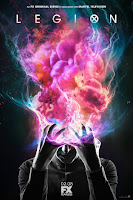

Legion, Season 1 (2017)
I should be overjoyed that a show features musical sequences set to The Who, Radiohead, and Pink Floyd all in one season. This is what I've been waiting for for years! But there's something oddly deflating about a work of art that meets you exactly where you are, taste-wise, and no farther. In fact, there are things about this show that ostensibly hew so closely to my sensibilities that I'm a little suspicious that I may have been the subject of covert observation by the powers that be at FX: showy cinematography, deadpan humor, Aubrey Plaza in a magnificent villainous turn (the best part of the show, hands down), 1970s affectations, slow-motion footage, nonlinear plotting. In another show, I might be overjoyed—and actually, Legion resembles most a more conventionally plotted version of Hannibal (a show I am overjoyed about) with less of a fixation on drone metal—but in the service of what is covertly an entry in the X-Men cinematic universe, I'm frankly wary. Don't get me wrong: nearly every element of the show is good-to-great, and as a whole, the series is admirably weird (its best episode is entirely devoted to the psychological interiors of its characters over just a few seconds of real time). It's just that these various good-to-great elements are assembled with seemingly little care, to the effect that the final product, though impressive on a moment-by-moment basis, gives the impression of a blender where the creators kept throwing in more things they thought were awesome without worrying how they would complement the rest. This is most detrimental when it comes to the characters, whom we are supposed to approach as these sort of psychological cyphers of trauma and contradiction but are really just kind of broad archetypes with quirks that are interesting but not enough to make them actually humanly interesting. It's all very cool, but there's really not a lot running under the hood either. Grade: B


Orange Is the New Black, Season 2 (2014)
In some respects, Orange Is the New Black's second season represents a significant improvement over its first: foremost, Piper has become no longer a main character and pandering audience surrogate but rather just another inmate and as such gets (with the exception of an excellent episode involving furlough) about as much screen time as any other character; the series has either figured out or finally got around to its full potential as an ensemble piece without borders, and when it buckles down to that, it's routinely exceptional. On the other hand, Season Two has sprouted a couple new problems of its own, primarily the introduction of Vee, an organized-crime-aspiring new inmate whose plot (which ends up occupying a gigantic portion of the season) tries and fails to be the sort of top-to-bottom drug trade exegesis that The Wire was—again, this show's strength is as an ensemble dramedy with social subtext, not as an intricately plotted crime saga. A second (but possibly longer-term problematic) issue that crops up is the same as that other great flashback-heavy series, Lost, eventually had to wrestle with, too, which is that it's become increasingly unsure of how to utilize its flashback structure once the general character exposition is finished. On Lost, the flashbacks became increasingly irrelevant to the show's trajectory, while on Orange, they are used as ham-fisted storytelling bludgeons, mostly for the Vee plot, of which, again, I'm not a huge fan. Regardless, it might be time for a format shakeup here. So I'll call it a draw with Season One. Grade: B+

Sunday, April 9, 2017

Mini-Reviews for April 3 - 9, 2017

I actually have a few non-movie reviews this week! How about that!

Movies


20th Century Women (2016)
When movies go to depict the tensions between generations, they typically approach it loudly, often through the device of ultra-conservative parents who hate their progressive children's freedom. So it is just one of 20th Century Women's multitude of lovely touches that it couches the changing mores of generations through the gentler (but no less piercing) dynamic of a son and his already open-minded mother who, for all her open-mindedness, still feels left behind. It's beautiful and nuanced and textured with arresting moments of self-reflection. What is ostensibly (and, I suppose, is still) a coming-of-age tale set in the late '70s becomes, under this relationship and the myriad other equally gentle, equally textured human bonds (among whom are perfectly cast Greta Gerwig and Elle Fanning [who, between this and The Neon Demon, had quite the 2016]), becomes this lived-in collage of what it means to find community from within the larger noise of the culture of a given historical moment. And speaking of culture: a mix of post-rock-ish ambient motifs and period-specific punk and post-punk tunes (Talking Heads feature prominently, as does Black Flag), the film's soundtrack is absolute catnip for me. So of course that affects the grade here (as if this weren't A-grade to begin with). Grade: A


Elle (2016)
If, after the film's open thirty minutes, you're left wondering about the proprietary of having a movie about a rape survivor then reveal said survivor to be a raging sociopath, that's exactly the trap that director Paul Verhoeven, legendary confounder of good taste, means for us bourgeois simpletons to fall into. It's not so much that the movie is outrightly trash; it's that the movie plays its cards so close to its chest regarding what exactly it's trying to say about sexual assault that it's tough to tell if Elle is some smart satire or just an exercise in lurid shock. The film gestures toward both readings without committing strongly enough to either to make its endgame clear even after seeing the entire film once (who knows what repeat viewings will offer). Verhoeven's film's tend to make a lot more sense with a little distance from their specific cultural moment (e.g. Starship Troopers), so maybe it'll take a few years for this one to sink in. As for now... ? Grade: B


Stanley Kubrick: A Life in Pictures (2001)
Very much coasting on the vibes of your average PBS TV doc, it's nevertheless a good—if a bit hagiographic (understandably; the man was barely cold in the grave when the film was made)—source of info on one of cinema's greats. There's some cool footage here (child Kubrick is adorable, btw), and the talking heads—a diverse cross-section of his collaborators and admirers--have smart things to say. None of it is particularly groundbreaking, particularly if you're at all familiar with the critical discourse surrounding Kubrick's work, but it's a solid watch with an infectious enthusiasm for the work of a filmmaker whose work I'm already pretty enthusiastic about. Grade: B


The Big Kahuna (1999)
Three businessmen contemplate life and death in the lead-up and aftermath of a pivotal social mixer. This is the kind of movie where you don't need to look at the production credits to know that it's based on a play (Hospitality Suite, Roger Reuff [the film's screenwriter, in fact])—single-location setting, dialogue that takes the most winding path to get to its destination and loves repeating itself ("Are you mad?" "Am I mad?"), cinematography that mostly sticks to the point-and-shoot variety. As play adaptations go, it's a particularly play-like one, and were it not for a few sequences of ambient interludes, we'd be in the territory of Richard Linklater's Tape. Luckily for The Big Kahuna, though, is that its play is much, much better than Tape's, and its depiction of white male ennui (evoked marvelously by Danny Devito with probably the best performance I've seen from him) has, if not something new to say about that well-trod subject, a uniquely dark and complicated pathos in communicating it. Grade: B+


Hurlyburly (1998)
A meandering, aimless movie about how its characters are meandering and aimless has a hard time justifying its meandering aimlessness beyond the straightforward thematic concerns. There are perks to the ride, though: the acting is generally excellent, both for those playing type (Sean Penn, Kevin Spacey) and those playing very against it (Gary Shandling and a frankly shocking Meg Ryan), and the cinematography does a good job of transcending the film's stage roots (based on a 1984 play of the same title). There are, too, a few moving moments within the mostly tropey treatment of hedonistic aimlessness, notably a tortured Chazz Palminteri navigating a life that is clearly crumbling into some kind of abyss. Nothing spectacular, but nothing altogether awful either. Grade: B-


The Cranes Are Flying (Летят журавли) (1957)
A Soviet film about a woman whose fiance must leave to fight in WWII while she stays behind and deals with the crushing destruction of her home through the German blitzkrieg. So of course it's an exercise in heartbreak. More surprising, though, is the way that director Mikhail Kalatozov is able to sneak some startling abstract imagery into what initially seems to be a straightforwardly naturalistic style—during action scenes, the camera moves with a rapidity that smears out each frame into a kind of Impressionism that's as gorgeous as it is unsettling in its transformation of the warm, domestic landscapes. Did I mention this is super sad, though? Because really, it's going to break your heart. Grade: A-


Books


The Ocean at the End of the Lane by Neil Gaiman (2013)
I sometimes find Neil Gaiman's approach to fantasy to run a bit abstract. This cuts both ways: it can make his stories feel at times frustratingly oblique and sometimes hard to follow, but at its best, it can also lend his work a fantastic sense of the sublime that's virtually unparalleled among authors playing the same game. The Ocean at the End of the Lane has a bit of the former, occasionally exhibiting that frustrating immateriality that makes the story and characters hard to grasp on a tangible level. But at its best—and it is, more often than not—Ocean is wonderfully otherworldly and inventive. Like Coraline (my favorite Gaiman novel and one that Ocean parallels in quite a few ways, right down to its fixation on ominous/demonic female caregivers), the more abstract pieces of Gaiman's prose latch onto tangible details in the story's world in a way that grounds the supernatural in a way that is both frightening and fantastic, obliterating the usual dichotomy between magic and mundane. Grade: B+

Music


Radiohead - Pablo Honey (1993)
People like to critique this album on the basis that it's derivative and straightforward, which is unfair on two counts: 1) Radiohead is always derivative, only now it's modern classical and Aphex Twin, not the Pixies and the Smiths (their ability to synthesize is, in fact, a crucial part of their genius), and 2) of course it's straightforward—clearly these guys were, at this point, more interested in making an alternative rock album than a work of murky dance grooves and pristine art rock. I don't want to overstate this; Pablo Honey is only barely not mediocre, and there are quite a few tracks that are undercooked—"Vegetable," "I Can't," and a couple others. But people pile on this record in a way that ignores that "Creep" is a classic of its angsty kind, "You" is an opener every bit as good as "Planet Telex," and "Blow Out" is the birth of the Jonny Greenwood, guitar experimenter extraordinaire, that we all know and love today. Grade: B-

Sunday, April 2, 2017

Mini-Reviews for March 27 - April 2, 2017

This week was that time of the month where I frantically work through the expiring Netflix titles. So it's a bit of a mix bag.

Movies

Doctor Strange (2016)
The rare Marvel movie where the special effects are far and away the best part. I'll forgive the movie for wasting "Interstellar Overdrive" on a completely mundane sequence, because it more than makes up for it with the outlandish, otherworldly visuals later on, and I like the way the action sequences look like a cross between a kaleidoscope and the first Ellen Page dream sequence in Inception. The rest of the movie has some major problems, though, mostly in the realm of characterization; the Doctor himself is a nobody, and the movie loses the plot of his anguish over losing his hands so quickly it's almost embarrassing. The villain(s) are, per usual in Marvel movies, generally wastes of space, too, and poor Rachel McAdams gets the Natalie Portman treatment in a really bad way—she's pretty much a non-presence, which is such a shame. Still, it's so cool to look at, relative to other Marvel movies, that I'm feeling charitable: it's a pretty good movie. Grade: B

Approaching the Elephant (2014)
Formally, this is a pretty standard—even haphazard—documentary, wherein the structure seems to be a roughly chronological splicing together of fly-on-the-wall footage. And as tends to be the case with that sort of doc, Approaching the Elephant lives and dies by its subject matter. Luckily, its focus—the first year of a newly founded "free school" (read: Montessori cross-bred with anarchy)—is a fascinating one, and watching the kids' psychology in this unusual and almost Edenic scenario play off not just each other but also the increasingly harried school staff is never uninteresting, right up to and including the moment when this experiment in childhood development turns lightly Lord of the Flies-ward. Grade: B+


Menace II Society (1993)
The hard thing about movies like  this and the similarly themed Boyz N the Hood is that, at least for this middle-class white viewer (and my race and class seem essential to mention in my reviewing this film), they are the height of "eat your vegetables" cinema: the depiction of Southern California ghetto life is vital social commentary, and that's really the point of the movie. And it's a good point—one of the most powerful possibilities of film is its ability to evoke setting and transport viewers, and the co-opting of this ability to promote social awareness is an important application of cinematic language. So is it a flaw that on a character and narrative level, Menace II Society works in very broad archetypes and tropes? I dunno—it's cool that the film uses these archetypes toward fatalistic tragedy, but I can't help but feel that the tragedy might have been just a bit more trenchant if it had been bolstered by characters that feel just a tad less like educational tools. Still, there's an earnestness behind the film's commentary that gives it a compelling energy. And I'd be curious to know how a movie like this plays for someone who's a native of the environment depicted here—I have no pretensions to having any sort of insight into this life, so there should be a big asterisk by this review. Grade: B

Caddyshack (1980)
It's always a bit of a rude shock to discover just how douchey so many beloved comedies of the '80s are. Take Caddyshack, a movie so amused with the reprehensibility of its own cast of country-club jerks that its ostensible ribbing of them wraps around into a sort of astounded admiration of them in the vein of "Wow, isn't it hilarious how awful these people are, and isn't that kind of cool?" It's turtles all the way down with character douchebaggery, I'm afraid, with even our ostensible POV character, Michael O'Keefe's Danny, a caddy in need of a college scholarship, is so single-mindedly intent on bedding the few young women at the club that he cares very little about the effects of his cavalier attitude toward them (and, to be fair, neither does Caddyshack as a whole: never is this movie's misogyny more apparent than in the fact that Cindy Morgan's character plays a central role right up until her topless scene, after which, her boobs having been some sort of erotic Chekhov's gun in the grand tradition of '80s nudity, the movie has apparently expended her use and gives her not a single line for the remainder of its runtime). And yet in spite of how enormously off-putting everything is, the movie is almost saved by its performances, which are across-the-board (outside of Michael O'Keefe, who's a drip) fantastic at line delivery and physical comedy—most notably, Bill Murray's groundskeeper and Ted Knight's astounding, acerbic club dignitary, both of whom drag several of the movie's structureless, slack scenes into actual comedy gold. They certainly try their best, but it's too late: the movie commits the double sin of being unpleasant and not being quite funny enough to justify it. Grade: C+

The Boys from Brazil (1978)
I should have been having a lot more fun with a movie that's essentially a sneakily pulp yarn about an attempt to stop a nefarious Nazi plot to clone Hitler (complete with an American clone that talks by way of Holden Caulfield: "Far out" and "Phew, man," being prominent among his vocabulary). But this movie's sheen is respectable enough—directed competently by Franklin J. Schaffner (notably of Patton and Planet of the Apes, and The Boys From Brazil is every bit the cross-pollination of those two)—that it's unclear just how ludicrous this movie is willing (nay, hoping) to be until well into its two hours. So half the film, I felt a deep frustration at just how easy these Nazis were: they twirl their mustaches, plot literal genocide, they create scientific experiments to turn brown eyes blue, they pontificate in cleanly evil monologues that cast the plot in appealing blacks and whites—in short, a far cry from the far more insidious, nefarious Nazism that we face in real life and sits perilously close to our state department. Current events have a way of making fun movies no fun, turns out. Grade: B-

Sunday, March 26, 2017

Mini-Reviews for March 20 - 26, 2017

Well, I'm starting to work through all the recommendations people gave me on Facebook. So far so good, I suppose.

Movies

The Eyes of My Mother (2016)
You might easily be fooled into thinking this movie—one involving torture, dismemberment, murder, ritual abuse, and body mutilation, for the record, so watch out—is the most violent, brutal American horror movie since the Saw franchise went into decline. It's certainly an entirely skeevy, horrific watch. But the more you think about it, the more you realize just how little violence there actually is in the film—at least, violence shown explicitly on screen—and what becomes clear is that The Eyes of My Mother, rather, is the best American horror movie in forever at making you feel that brutality and violence. The way to do so, it turns out, is not to bludgeon us viewers in the face with gruesome, sausagey imagery but rather to utilize fantastic sound design and some of the most beautiful cinematography from any movie period of the past decade and use that to construct an alien, claustrophobic viewing space. It's rattling and masterful. Grade: A-

Go (1999)
This film has a reputation as one of the good Pulp Fiction wannabes, but honestly, it's at its worst when it's at its most Pulp Fiction-est: namely, the lengthy "Simon" sequence involving digressive, quippy discussions, crime hijinks, black comedy, etc. It's dull and trying way too hard. The rest of the movie fares better as two different pieces of edgy indie comedy involving either side of a drug sting, wherein both Katie Holmes and Scott Wolf both turn in not just passable but actually interesting performances, which is sort of a miracle on its own, even if the rest of their sections are more just "passable" than actually engaging—the self-congratulatory cleverness that puts a turn of phrase and structural gymnastics over real emotions and dramatic stakes is least objectionable outside of Simon's section, but it never really goes away. And passable doesn't hold a lot of water with the gaping hole of bleh sitting right there in the middle of the film, vis-a-vis Simon. So that's a net loss. Grade: C

Valley Girl (1983)
Look, there's nothing particularly "wrong" with Valley Girl, a relentlessly wish-fulfillment-y teen romantic dramedy in that pre-John Hughes mode that makes angst unlikely and nudity basically a given. There's just not anything particularly "right" with it either. Well, nothing significant, that is; the soundtrack is pretty neat, a collage of poppy new wave tunes that do a lot to drag its "he's a greaser, she's a prep" archetypes into the plastic '80s. And speaking of the he and she: the male lead here is Nicolas Cage, giving a pretty nice performance as the love interest from the other side of the tracks, while the female is Deborah Foreman, who, while she doesn't quite have that Cage charisma, turns in an alright performance of her own, at least enough to make the romantic chemistry seem at least a little plausible, right up to the admittedly lovely final few shots that feel everything like the happy ending version of The Graduate (and I mean that in the best way possible). But outside of these small pleasures, there's just not a lot going for this movie. The plotting is generic, the dialogue is tepid, and the direction and camerawork is that typical Hollywood invisible style, which is great for showcasing crackerjack plotting and dialogue, but well... you know. Grade: C+

Belle de Jour (1967)
This movie subverts expectations in at least two significant ways: 1. It is a purportedly "erotic" film without so much as a frame of nudity or sex, and 2. It is a Luis Buñuel film with only a hint of surrealism. The first can probably be explained by the release date of the movie, in the supposedly simpler time of 1967, when I'd imagine that plots involving prostitution and sexual fantasy were erotic, even without explicit sexual content. And honestly, I care very little about how erotic a movie is; it's #2 up there that gives me pause. Maybe it's an issue of expectation vs. reality, but I couldn't help missing the high-concept shenanigans of the two other (wilder) Buñuel movies I've seen. But taken on its own terms—those being, for the record, a psychologically inflected rumination on monogamy and perversion, told from the perspective of an aimless and vaguely discontented woman (though of course actually told from a male POV, given that sterling set of testosterone in the production credits)—it's decently successful without being anything that really lights my world on fire. Grade: B

The Old Dark House (1932)
This being directed by James Wale, the guy behind the all-time-great 1931 Frankenstein, it's no surprise that this is tightly and supremely directed. Unfortunately, the rest is a bit of a mess, from the haphazard characterizations of its broad and genial cast right up to the fact that the plotting here doesn't amount to much but an almost comically exaggerated atmosphere to a relatively mundane situation. Given that Wale went on to direct The Bride of Frankenstein a few years later, a film that pretty much invented camp as a device of self-aware horror, the way Old Dark House tip-toes its events right up to the line between scary and silly shouldn't be a strike against it—and I guess it isn't, in the end. It's just clear that Wale is stuck between idioms here, between the dark, tortured classicism of traditional horror and the theatrical, hammy spookiness of Elvira, etc. And being stuck in the middle is frustrating—it's all good, but without completely committing one way or the other means that it's never great. Grade: B

Sunday, March 19, 2017

Mini-Reviews for March 13 - 19, 2017

Out-of-town vacationing prevented me from engaging with the volume of media I normally consume. But I still had time for a little.

Movies

Beauty and the Beast (2017)
Credit where credit is due: the set design and costuming in Disney's live-action Beauty and the Beast is gorgeous and fascinatingly inflected with the aesthetics of multiple periods of French cultural history, and the movie is never not awesome to look at. But credit where credit is due again: director Bill Condon and cinematographer Tobias Schliessler nearly ruin it with muddy, indistinct compositions and a wandering camera that does a giant disservice to the beautiful design of pretty much every physical object onscreen. The task of remaking in live action one of the most perfect animated movies in the Disney canon and one of the unequivocal high points of animation over the past three decades was never going to be an easy one, and certainly there are many strains on this movie that speak to that difficulty: a script that seems pulled between the classicism of the original and the winking, jokey style of the modern family filmmaking, awkwardly inserted storylines that seem to have been chopped to dysfunction during rewrites (there's a subplot involving Belle's mother that is the single biggest missed opportunity in the film), the strange dissonance of having the movie gesture toward shot-by-shot remake in its iconic scenes while making them also just different enough to feel askew. But there's also quite a lot to like about the movie, too, from the admirable voice acting of the animate furniture (Ian McKellan's Cogsworth is a highlight) to an inspired Gaston performance from Luke Evans. If the movie had been able to pull off the visual wonder promised by its aesthetic, then I might have been willing to call this a flawed success. But when the basic blocks of filmmaking break down like they do here, it's hard to call it anything but just flawed. Grade: C+

Alien 3 (1992)
This movie has a reputation as a bit of a disaster, and while it's certainly not capital-G Great like Alien or balls-to-the-wall fun like Aliens, it's still not too shabby. Essentially splitting the difference between the slow-burn horror of the original and the action pyrotechnics of the James Cameron sequel, Alien 3 (like, for real, screw that superscript 3) does have a bit of an identity issue, right down to the attempt to wipe the slate clean with the coldest of cold moves of killing off every surviving non-Ripley character from Aliens in the opening sequence. And I'd be lying if I said I wasn't disappointed to see the horror textures of the early movie give way to decidedly less interesting action a bit disappointing. Still, there's no denying the fact that I was captivated the entire film, and in the end, that's kind of what matters when it comes to pop sci-fi. I had a good time. Grade: B

Books

The Autobiography of Malcolm X by Malcolm X with Alex Haley (1965)
I'll be honest here: long sections of this book, upon a first read, feel sluggish and meandering, particularly when depicting Malcolm's criminal days. But as the book goes on and it becomes clear the clever conceit that this book has in approaching its subject—mainly, that it was written progressively over a few of the most transformative years of Malcolm X's life, during which, most significantly, he had his falling out with the Nation of Islam and took his trip to Mecca—those early sections take on a retrospective vitality. In these pages, you see Malcolm X change and grow in front of your very eyes, the early sections written at the height of his Black Muslim fervor and the later sections written during the period of intense reflection and re-evaluation that led him to embrace multi-racial unity and spiritual community in the months before his eventual assassination. Biographies usually approach their subject from an ossified position, an unmoving point of view from some future and unmoving time. But having this book's point of view move through time along with its narrative yields fantastic results. The way that both X and Haley leave intact Malcolm's earlier ideas, even when they contradict later beliefs expressed, makes for an organic evocation of "warts and all" biography, and when Malcolm changes his mind about something, it has weight because it never felt predestined or telegraphed in the way that sometimes happens in more conventional biographies. It's an intimate and profound exploration of the ways that convictions are shaped and revised, the role of faith in racial healing, and the relentless drive that propels people to greatness. A moving and essential read if there ever was one. Grade: A

Sunday, March 12, 2017

Mini-Reviews for March 6 - 12, 2017

I'm posting this early because I'm going out of town this week. Spring break and east-coast snow, here I come!

Movies


Logan (2017)
I'm as surprised as anyone that the first superhero movie to get this close to greatness since Guardians of the Galaxy is one from Fox's X-Men franchise, a series that, despite its admirable ludicrousness, I've always been tepid toward outside of the few-and-far-between highlights (i.e. X2 and sorta First Class). It probably helps that Logan wants basically nothing to do with its X-Men peers, having set its story a decade into the future and, in what is likely as much out of spite for its franchise as dystopian despair, killed off pretty much every single recognizable mutant outside of its title character and a doddering, senile Charles Xavier (who, in one of the movie's more sadistic touches, is strongly implied to have accidentally caused a good portion of those X-Men deaths). It also helps that this is the first X-Men film where the central metaphor works; whereas the "X-Men as [insert marginalized group]" subtexts in past films have felt flimsy at best, Logan's positioning of mutants (really, children of mutants, since, you know, the original ones are all dead) as immigrants feels absolutely inspired. Scratch that: not just inspired; it's downright subversive, inverting the traditional American immigration narrative by having mutants fleeing north to Canada in response to the hostility of the American social climate of 2029. This is, I think, the first American film that feels post-2016 in the way that movies in the early 2000s felt post-9/11 and in the mid-'70s felt post-Watergate—there's a militarized border wall between Mexico and the USA; water is contaminated; eminent domain is resisted; social infrastructure is fragmented beyond repair; there's the unshakable feeling that the good guys, well-intentioned as they may have been, played a role in making the world this way. It's heavy and grim and ponderous and everything I hope superheroes don't overwhelmingly become. But as a deconstructive one-off, Logan feels vital. Grade: A-


Kate Plays Christine (2016)
It's understandably a difficult task to embody anyone in the way that acting asks an actor to, but Kate Plays Christine shows a decidedly more difficult task still. This documentary follows actress Kate Lyn Sheil as she prepares for the central role in a film adaptation of the life of Christine Chubbuck, a news reporter who committed suicide on live television in 1974 (something that—and the documentary backs me up here—seems to have been a vital influence on the film Network). An intriguing subject for a doc, for sure, and if the way it goes about documenting it—a disorienting mix of traditional fly-on-the-wall documentary film, talking heads, excerpts from the finished film (a cheapie, from the looks of it), and what seem to be dramatic and somewhat hyperreal reenactments of Sheil's experiences playing Christine—is a bit too mannered to be as compelling as the movie wants it to be, it's still an interesting look into the mechanics and ethics of acting. Grade: B


Oasis: Supersonic (2016)
This fairly dense, comprehensive documentary of the Britpop titans Oasis during their golden '90s years, stretching from the band's inception through the release of their megasuccess sophomore album (What's the Story) Morning Glory?, has plenty of great footage from concerts and behind the scenes, making it a rewarding document of, as is pointed out in the film, one of the last pre-internet, pre-cultural diaspora rock and roll monoliths. That relial on you-are-there footage also does a fantastic job of both capturing what made this group the towering force of rock and roll songwriting and performance that it was and also showing the exact factors (namely, sibling rivalry, inconceivable ego, and an unholy amount of drugs) that inevitably led to their collapse years down the line. And it does all this without so much mentioning traditional whipping boy Be Here Now, which is sort of a feat unto itself. Plus, if nothing else, this doc features plenty of interview footage of the incomparable Liam Gallagher, the most consistently entertaining musician in interview for nearly thirty years running. Grade: B+


Boy (2010)
Writer/director Taika Waititi has quite a résumé as pretty much the sole non-Wes-Anderson master currently working in the quirk dramedy idiom, a genre I'd be quick to call dead (or at least hibernating) if it weren't for those two. Boy is far and away his best, too, which is not to say anything negative about the immense fun of What We Do in the Shadows and Hunt for the Wilderpeople but rather just to stress just how freaking GREAT Boy is. That it sports Waititi's tremendous facility with gentle mockery and hilariously failed precociousness is no surprise; what's a bit more unexpected is just how emotionally raw the film is willing to get—a precipitous dip toward deep domestic pain in the film's third quarter feels as well-observed and human as any of the comedy here, and what's better is that the film still manages a happy ending without undoing or cheapening any of that pain. A lovely coming-of-age film not to be missed. Grade: A


Star Wars: The Clone Wars (2008)
I've softened on the Star Wars prequels over time; there's something to be said for the purity of Lucas's artistic vision on display, and for every "I don't like sand," there's an arresting image or fantastic creature design or inventive piece of worldbuilding. But this hot garbage—the quickie 2008 animated disaster that somehow made it to a wide theatrical release—I can't imagine ever warming to. Devoid of all but the barest thread of characterization and plot and completely lacking in any wonder or artistry, The Clone Wars is a gigantic bore, giving scarcely more than a cursory glance at any of the litany of interesting threads to pick up in Lucas's universe (look, I know people complain about the focus on the politics in the prequels, but this is what those prequels would be without the political angle, and let me tell you: it's dire). The cruel joke, too, is that although the monotone dialogue and mechanical, overly smooth animation gives the impression of watching a film at 1.25 speed, there's still 100 minutes of the thing here. Reportedly, the television series that spun off this movie is pretty good (and given the richness of the Old Republic world depicted in the prequels, I can believe it), and preparing to watch the show was my initial reason for watching this. But now I'm rethinking everything. Grade: D


The Game (1997)
Typical of at least half of director David Fincher's output (but even more so here), The Game is an immaculate, meticulously designed, beautifully constructed rendering of an altogether ridiculous and absurd premise. In brief: a rich dude pays lots of money to play a game that might not be a game, and thus gives him a heck of a head trip and thrusts him out the other side a marginally better person. I'm a big fan of Fincher's more serious-minded work (namely Zodiac and The Social Network), but works of gonzo pulp like this and the more recent Gone Girl suggest that Fincher's direction is more at ease in this weird, Hitchcockian element, hoisted into the space between smut and art by sheer force of formal elegance. Grade: B


Knife in the Water (Nóż w wodzie) (1962)
Roman Polanski, it seems, is one of those lucky magicians who arrives to this world with a full bag of tricks—his directorial debut, the tense Knife in the Water, is every bit the kind of film we'd come to expect from the acclaimed (and infamous) director down the line: tight compositions, patient and foreboding cinematography, paranoia, etc. The film all these flourishes are in service of isn't really much to write home about, a Bergman-esque chamber drama on a boat that's just a bit too familiar to be anything great, but it's solid and engrossing enough. Grade: B+


Books


Every Day by David Levithan (2012)
Every day, the protagonist wakes up inhabiting a different body. For much of the novel, the rules of this inhabitation are left vague, and that's fine, the book being more interested in telling a sort of high-concept fantasy romance than being any treatise on identity or body autonomy ethics (just what exactly is it okay to do when you're inhabiting another person's body for a day?), although both subjects are touched on. It's only after a late-book twist wants to make the mechanics and ethics of body inhabitation a major plot point—and in fact rushes the book toward an underexplained ending—that that vagueness becomes a liability and overtakes what is otherwise a fine romance between the protagonist and the girl whom s/he must, of course, confront as a different person each day. There are apparently sequels/companions to this book. Perhaps they could make this ending more satisfying. But as it is on its own, Every Day is a breezy but flawed read. Grade: B-

Music


Bruce Springsteen - Nebraska (1982)
This being me, of course I find Bruce Springsteen's most despairing album also one of his most accomplished. Rarely have the Boss's narratives felt more alive or more tragic, and rarely have his protagonists been more down on their luck. It all culminates in the closer "Reason to Believe," one of Bruce's most deliciously ambivalent tracks, where it's unclear whether or not it's foolish to hope—perfect in its ambiguity. Because even among the most hopeful of us all, who really knows? Grade: A

Sunday, March 5, 2017

Mini-Reviews for February 27 - March 5, 2017

Reviews. Y'all know the drill.

Movies

Get Out (2017)
Jordan Peele's debut writer/director outing (yes, Key & Peele Jordan Peele) is a work of horror love: the shots are lovely and allusive (both Rear Window and, if I'm not mistaken, Night of the Living Dead get shout outs), the tension is smart and earned, the core mechanics are frightening and emotive. But let's also take some time to appreciate that it's also basically a feature-length Key & Peele sketch, its first 2/3s playing out the various permutations of its clever, socially conscious premise (basically, The Stepford Wives, but about the black experience rather than the female one) before veering into a crazy, borderline absurd finale. It's all great fun, and I adored every minute of it. Grade: A-


London Road (2015)
I guess I shouldn't be surprised when a head-scratching premise leads to head-scratching results, but here we are: a murder mystery musical that culminates with a large flower sale and features a slew of actors, both recognizable and anonymous, and singers, both tone-deaf and talented. The results, I'm afraid, are just kind of pasty and dry in their weirdness, and while I'm all for nontraditional singing styles in musicals, so many of the singers here struggle to hit the already kind of iffy notes (the songs are dinner-theater-caliber) that the effect is kinda numbing. Grade: C


Our Vinyl Weighs a Ton: This Is Stones Throw Records (2013)
I'm not as familiar with the output of experimental hip-hop label Stones Throw as I probably should be for this film to have its full impact, but even so, it's cool to have the history of MF Doom, etc., laid out like this. The structure is a bit scattershot at times—there's not really much of a narrative besides "And then this happened"—but it's got a busily engaging visual style that sets it apart from your standard talking heads/stock footage doc. Also, some great music (from Stones Throw's catalog, of course) underlines everything. Grade: B


The Ghost Writer (2010)
A super tight political thriller in the vein of The Parallax View, complete with a haunting, evocative ending. Ewan McGregor, playing the ghost writer for the memoir of a former Prime Minister who has been accused of war crimes, does great work as a guy who's in way over his head but doesn't know he's in over his head, so he's kind of foolishly confident, and Pierce Brosnan makes for a surprisingly compelling slimy politician as the Prime Minister. The sense of dread ratchets up consistently over the film's two hours until it reaches an almost unbearable climax by its end, which is both colossally depressing and too aesthetically marvelous to dismiss as mere nihilism. Good stuff. Grade: A-


Hard Candy (2005)
A tremendously mean little thriller that, in flipping the script by having a teen psychologically torture a presumed pedophile, maybe encourages too much sympathy in a man who may in fact be a monster. But that implications are just details. Hard Candy is breathless and tense throughout, culminating in a moment that's not exactly unexpected but shocking nonetheless. And thus the career of Ellen Page was born. Grade: B+


Point Break (1991)
Very stupid, but deliciously so. Faced with the revelation that a notorious band of bank robbers are, in their less criminal personas, surfers, new rookie Keanu Reeves must himself become a surfer in order to bag the baddies, and oh yes, you'd better believe he's the "methods are unconventional but dammit, you get results" kind of rookie (shoutout to John C. McGinley as a particularly fine specimen of the disgruntled superior). In a way that seems specific to the late '80s/early '90s era of big-budget action heroics, Point Break manages to leverage its mountain of silliness into something almost sublime through the sheer power of its sincerity and gonzo disregard for reality. So naturally the final product is both eye-rolling and a great time. Grade: B+

Battle for the Planet of the Apes (1973)
The worst thing about the worst of the original Planet of the Apes series isn't its tepid, interminable battle scenes (although they are interminable and woefully tepid). It's that it all but abandons the myriad of thoughtful questions it poses. Can the future be altered? Is violence justified if it results in good? Is the subjugation of the human race by the apes a result of the violence inherent in the ape society? If you're interested in knowing the film's take on any of these questions, too bad! It manages to sidestep each and every one of them on its way to its clumsy anticlimax. A disappointingly safe (and entirely unsatisfying) ending to one of the most recklessly ambitious sci-fi series of all time. Grade: C


Television

Adventure Time, Season 5 (2012-14)
The show has had better—much better—seasons, but its bizarre, sprawling (52 episodes!), heartbreaking, ruminative, uneven, intermittently brilliant fifth season is, I think, what establishes Adventure Time as an all-time great TV series, no longer the type of show that people will say, "Oh yeah, I remember that one," but will instead interrupt people rhapsodizing on the merits of The Simpsons and The Wire to say, "But have you seen this??" With Season 5, Adventure Time proves that the structural gamble of sections of its fourth season—unannounced plot arcs and symbolic character studies intermingled with the normal standalone adventures and outright technical experiments—can work stellarly as a conceit for an entire season, not just intermittent sections. I've expressed unease at the increasing serialization of the show before, and while Season 5 is easily the most serialized yet, it also does what I was afraid the show wouldn't, which is to effectively recontextualize its playful absurdity within a more logically consistent world required of more series continuity. What's more, it's able to find great poignancy within that recontextualized, serialized absurdity, probably best exhibited by the out-of-nowhere epic quest two-parter "Lemonhope," but more conventionally presented in the now-standard Ice King weepfests "Betty" and "Simon & Marcy," the swashbuckling-cum-coming-of-age of "Mystery Dungeon," and the art criticism of "James Baxter the Horse." And that's not even accounting for the weird, stylistic experiments that the show's expanded episode count allows for, like the intentionally buggy 3D animation in "A Glitch Is a Glitch" or the one-off noir "Root Beer Guy." And of course we've got a handful of the best episodes the show has ever produced, most notably the Lump Space Princess-centric "Bad Timing," a time-travel episode that easily fits among the stylistic innovators of "A Glitch Is a Glitch," with its Don Hertzfeldt-inspired visuals while also doing some of the most inventive storytelling and poignant character work in the show's history. The season doesn't always work, and at times it really doesn't—far too much time is spent on Finn's romance/breakup with Fire Princess, to the point that our once protagonist is easily the weakest link in the show. But make no mistake: this is greatness. This is legend. This is one of the greatest shows of all time. Grade: A-

Music

The Men - Open Your Heart (2012)
It's easy enough to see Open Your Heart, The Men's sophomore LP, as a mere sum of its influences. The opening one-two punch of "Turn It Around" and "Animal" wouldn't have sounded out of place on an album from The Jam or even early Foo Fighters, and later tracks sound very much like, for example, country-rock Rolling Stones ("Candy") or Oasis ("Open Your Heart") or Sonic Youth ("Presence"). And I know bands who wear their influences this flamboyantly can be kind of hit-and-miss with people looking for new sounds, which... fine. But I dare you to listen to this album and not marvel at least at the sheer colorfulness on display, the reckless abandon with which the band jumps from one genre to the next, the tireless energy with which they derive their chord changes and sonic textures, the overall excellence in the songwriting, regardless of precedent. It's hard. Originality is overrated anyway. Grade: A-