Showing posts with label Steven Soderbergh. Show all posts

Sunday, February 20, 2022

Mini Reviews for February 14 - 20, 2022

Ready for spring.

Movies

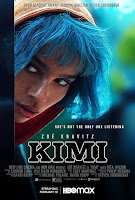
Kimi (2022)
A front-to-back great time. Zoë Kravitz is terrific as the agoraphobic protagonist, and the Rear Window/The Conversation/Blow Out influences feel razor-sharply updated into our pandemic world. I imagine it could have been kind of cringe how it employs these very zeitgeist-y talking points (COVID lockdowns, surveillance capitalism, urban protests, etc.), but in practice, the way the movie has these elements inform the conventions of the paranoid thriller feels very smart and never distracting: a natural result of making a movie in 2021/2022 rather than a self-congratulatory conceptual flourish of having made a movie about 2021/2022. Great stuff. Grade: A-


Drive My Car (ドライブ・マイ・カー) (2021)
Exceptionally patient (3 hours long???) and capital-L Literary (a Murakami adaptation), but ultimately in ways that I ended up really connecting to. The symmetries of the plots and characters scratched the English major part of my brain for the first half of the movie and moved me to tears in the second half, ultimately creating one of the better depictions in recent memory of people grappling with the frayed ends of memories left when someone close to you dies prematurely, and the fear of the profound self-reflection that the engagement with those frayed ends necessitates. It had me thinking a lot about my brother, who died very suddenly of an opiate overdose two and a half years ago, and like the characters in this film, the ambiguities and unresolved nooks of our relationship are haunting, not just for the ways that they represent the loss of my brother but for what they represent about myself. What did he think about what I said in that one conversation ten years ago? What should I have done in that one instance five years ago? With him gone, all that's left is my own interiority in relation to those questions, which can be a cavernously mysterious place. Not sure this needed to be as quite long as it is, but the generous space this movie gives itself with its story is definitely productive, and I wouldn't have connected at all with whatever cool 90-minute version of this might otherwise exists—reminds me a lot of Margaret in that regard. Anyway, cool that a movie this oblique and textured and pointedly international got nominated for the Best Picture Oscar—in a weird way, it fits right alongside my other two favs for the BP (Power of the Dog and Licorice Pizza) in its meandering unpredictability. Grade: A-

Bad Luck Banging or Loony Porn (Babardeala cu bucluc sau porno balamuc) (2021)
What begins as a farce about a teacher whose private sex tape gets uploaded to the internet eventually transforms into a pretty didactic but nonetheless effective treatise of how the moral panics that frequently grip the public perception of education are really proxy wars for broader tensions over the reinforcement/defense of imperialist, racist, capitalist norms. As an educator, it is existentially terrifying to watch this, but then again, watching 60% of school board meetings now is existentially terrifying as an educator, too. At the very least, it's nice to know that this isn't a uniquely American problem, though I can only imagine the looks of befuddlement I would get from some members of the Knox County Board of Education if I started quoting Hannah Arendt to them. Grade: B+

Poetic Justice (1993)
Kind of does the When Harry Met Sally gambit of introducing the male half of the romantic duo by having him spew some blindingly misogynist garbage at the beginning of a road trip (e.g. all women are the same because they all get their periods, ya see) and then daring us to like him on the grounds of his becoming friends with the female half of the romantic duo, despite the fact that he never really changes in this regard. It doesn't work for me nearly as much as it does in When Harry Met Sally because the relationship between Tupac Shakur and Janet Jackson never really comes alive like it does for Harry and Sally; this movie is way too picaresque and easily distracted by interesting environmental/cultural textures like a black family reunion or an African heritage festival or a terrifically lived-in South Central LA beauty parlor for the romance ever to get enough center stage to fill its characters with the sufficient amount of nuance to land the ending. And I guess I don't blame John Singleton for getting distracted, because his facility with those textural details is excellent—I would have actually probably preferred a Before Sunrise-esque walk-and-talk through these cultural landscapes than the more conventional romance we have here. It's easy to see what the movie wants to happen for this pair: Tupac and Janet's shared trauma from gun violence helps them find a deep connection for each other in the end, which helps their love transcend Janet's grief and Tupac's misogynist anger at being functionally a single father; but there just aren't enough dots to connect satisfactorily. That said, whenever this movie spaces itself out and allows itself to meander, it gets really good, and for as much as I feel like the central romance is thin on paper, Pac and Janet having a fair amount of onscreen chemistry on the virtues of them just both being very attractive human beings. Tupac is also a great actor, and even in the scenes that don't completely work in concert with the rest of the film (his discovery of his cousin's murder), he sells his character's emotional journey 100%, which helps a lot to transcend the shortcomings of the writing.

I was part of a conversation about this movie on the Cinematary podcast. Here's the link, if you're interested!


Music

Spoon - Lucifer on the Sofa (2022)
Another Spoon album, another good Spoon album. The band has been making a lot in the press about the way that this album was meant to be more live and spontaneous than their last couple of releases, and Lucifer on the Sofa does share a scruffiness with their notoriously rough-around-the-edges 2010 release, Transference. But also, that press does seem to be underplaying the ways in which this has echoes of the sonic experimentation of 2017's Hot Thoughts, most notably in the title track's use of pensive saxophone but also elsewhere in subtle flourishes. There's something so satisfying about a band who is so reliable in their sound and songcraft but also willing to accumulate subtle new flavors along the way. Grade: B+

Sunday, January 9, 2022

Mini Reviews for January 3 - 9, 2022

Hey, I got HBO! I'm cool now.

Movies

Malignant (2021)
A deranged, no-holds-barred throw-down against any sense of "respectability" that horror as a genre has tried to gain for itself in the past decade. James Wan goes absolutely bonkers with his camera, whipping that thing around in wild, virtuosic spins, and everything else in the movie follows suit. The plot kind of resembles one of those toothpick-and-marchmallow towers you had to build in middle school science class, where the facts at how ludicrously this thing is assembled and how shakily it reaches its heights aren't problems but the entire premise of the appeal, and if you aren't going to cackle gleefully as the movie pulls rug after rug out from under you, you're not going to like this movie. I was on-board as soon as it starts getting silly after its admittedly tepid warm-up half hour, though, so I had a great time. Really wish I could have caught this in a theater. Grade: A-


No Sudden Move (2021)
A quirk in my phone plan got me HBO Max*, so now I finally get to check out Soderbergh's two movies he did for them (and that HBO probably wouldn't have put out on physical media for years). This one's good! A really, really terrific film noir screenplay from Ed Solomon, who wrote things like the Super Mario Bros. movie, the Bill & Ted movies, etc.—surprise of the century that he has a movie this grimy and menacing and tightly written in him. It's no surprise that this material attracted Soderbergh; he's been directing crime thrillers about the perils of capitalism since I was in elementary school, so it probably would have been more of a shock if it hadn't turned out good. People don't seem to like the fish-eye lens used throughout, but I thought it looked cool. Grade: A-

*Also, I've been out of the HBO ecosystem for most of my life, so I'm open to suggestions on what series to watch. Assume I've already seen the big ones like The Sopranos, because I have!

Cry Macho (2021)
Too cute by half and doesn't have anything real to say about the US-Mexico border, despite that figuring prominently into the plot. But it is nice to see Clint palling around rural Mexico and making friends, and this movie has its low-key charms as long as it sticks to that. Grade: B-


Let Them All Talk (2020)
Second HBO Soderbergh I've seen! This one is also very good. It's basically a distillation of Soderbergh's proclivity with talented ensembles, and almost nothing else. Allegedly, most of the scenes in this movie were improvised, and you can kind of tell because of all the stammering, but also, it's an incredible exhibition of just how magnetic a great actor can be with a character given the right framing. Dialogue wanders with inventively circuity around the characters' relational dynamics, but always lands exactly where it needs to to advance to the next scene or plot beat; I've seen a lot of people compare it to jazz, and that sounds exactly right to me, capturing that same live-wire energy and virtuosity that can make a jazz performance so riveting. It's a spacious, generous movie, but also a tight one in its own way, and I was never bored. This is pretty near top-tier Soderbergh for me, though given that almost all his movies are hovering in the B+/A- range for me, it's not a super high ceiling to clear. Grade: A-

S He (女他) (2018)
An incredibly inventive stop-motion film using shoes and other found objects as stand-ins for oppression under the modern state; given its cycle of revolution-->oppressive new normal, I don't know that it would be accurate to classify it as anti-capitalist, as I've seen some people do—maybe anti-industrial and anti-hierarchical, but it seems to be going broader than a specific political system. Whatever; it's still cool. I wish I could be as over-the-moon about this as some people are, but I think the version I watched (tried both Amazon and Tubi) is broken. I can't be sure that this isn't intentional, given the already experimental nature of this thing, but it looked like the film's frames got slightly jumbled in the conversion to whatever file these streaming services are using, and as a result, the whole thing has this jittery, almost strobe-like look that was kind of hard to watch. Would love to know if other people had this experience and if this is the intended effect. If it is, then I don't like that effect.

EDIT: Okay, I rewatched this on Plex (never heard of that streaming service? Me neither!) and confirmed that the Amazon and Tubi versions were broken. Plex is the way to go! Seeing this with a lot more clarity now. On the one hand, I'm even more in awe of the technical prowess on display here; truly jaw-dropping craft, so much so that I'm bumping this up from what I had originally rated it. On the other hand, now being able to follow the story a lot better, I think I am going to have to change my take and agree with the consensus that this is anti-capitalist—though of a kind of Animal Farm variety that's ultimately not so much concerned with the theory of deconstructing capitalism as much as it is with the ways that the oppressions and hierarchies present within capitalism can manifest themselves in other systems, too, so long as they are reliant on the same kind of industrialism that subjugates bodies and the planet. So far so good, except that this movie frames it in gendered terms, which is kind of cool for the way that it shows the limitations of the "more female CEOs" line of thinking and how the enforcement of gender roles is a way of upholding modes of production but also feels pretty iffy in the ways that it evokes trans identity (especially given the English title and tagline). I genuinely don't know what to do with this movie's relationship with transness, and the film is opaque enough that I couldn't say for sure that it's transphobic, but I can't say for sure that it isn't transphobic either. For that reason, I'm hedging my bets by not rating this even higher, but know that this is absolutely amazing in most other aspects—heavily reminiscent of The Wolf House and 1986's The Pied Piper in terms of its grotesque, mind-melting animation, so if you were at all into those movies, SEEK IT OUT (but on Plex, though). Grade: B

The Adventures of Mark Twain (1985)
It's more or less a Twain anthology, and the decision to focus on Twain's later, less-read works like The Mysterious Stranger (which provides the film's lone top-to-bottom great segment) is extremely cool. But given that, it's pretty disappointing how aggressively dopey the execution of so much of it is. This is a fairly niche reference, but the writing and voice acting (esp. for the vapid children—character from The Adventures of Tom Sawyer for some reason) reminded me of those episodes of Adventures in Odyssey where the kids would jump in the Imagination Station to live through some edges-sanded-off depiction of American history or The Bible or whatever, and while it's impossible to turn Twain (and especially his unrelentingly cynical late career) into something as leadenly wholesome and whitewashed as Focus on the Family's radio-drama versions of beloved white Christian myths, there's an aw-shucks folksiness to this movie's relationship with Twain that overlaps a little bit with that, mixed with those "Read" library posters and an anachronistic dash of The Pagemaster. Even so, the general thematic arc of the film is kind of wild in its obsession with mortality (if I'm still on my Odyssey analogy, it's basically "The Mortal Coil" with a secular-humanist gloss—why do I remember so much about Adventures in Odyssey?), and the claymation yields some genuinely incredible imagery, especially near the end with the Halley's Comet sequence. It's kind of sad that outside of the extreme polish of Aardman, clay-based stop-motion has basically gone extinct, because in its heyday, the medium's capacity for rough-edged phantasmagoric worlds was something special. Grade: C+

The Wiz (1978)
The pacing and some of the creative decisions early on (why is Munchkinland so dimly lit?) make it pretty clear why short-sighted audiences and critics didn't respond well to this upon release. But holy cow, this movie is magnificent for long stretches, including the entire last 45 minutes. Michael Jackson is a revelation to me as the Scarecrow, the colors, set design, and choreography are jaw-dropping, and the cinematography does the thing that a lot of '70s musicals did, where it mixes scuzzy '70s grime with the aesthetic maximalism of the musical genre's 1950s heyday. I wasn't initially sold on Diana Ross as Dorothy, but good lord does she sell it by the end, especially in the final song, "Home." It's incredible that in a movie as ostentatious in its style makes its most ostentatious stylistic flourish in its final minutes with that one-take medium close-up of Ross decontextualized from any scenery, just absolutely belting "Home" at the top of her lungs as tears pour down her face—maximalist minimalism of the highest order. This is kind of a tangent, but I'd also be shocked if the "Home" sequence wasn't a direct inspiration for the "Fools Who Dream" sequence in La La Land, and I'm also shocked that for as much as The Discourse surrounding La La Land involved people excavating its influences and pointing and sneering at how La La Land was allegedly a weaker/less pure pastiche of its predecessors (unfair, but whatever), nobody mentioned The Wiz and how much "Home" and Ross completely and totally eclipse anything "The Fools Who Dream" and Stone are capable of. Not sure if it's fair to say that The Wiz needs to be reclaimed, given as I understand it that it was never really lost on the black audiences it was made for. But it certainly surprised me. Grade: A-


Television

Dear White People, Volume 4 (2021)
Conceptually, one of the most baffling final seasons of a show I've ever seen. There are a couple of things here that defy explanation. Firstly, the season is given a framing device where the characters are sitting around sometime in the future (I think it's supposed to be the late 2020s/early 2030s, though I don't remember it ever being clarified) reminiscing about the events of Volume 4 as we see them unfold—I suppose we get to see where these characters ended up in their careers, but none of that proves to be particularly illuminating, and anyway, the framing mostly is an outlet for tired jokes about Zoom and "oh no, the pandemic never ended." The second and far harder bizarre creative decision to swallow is that as the characters flash back to the events of the season, they remember them as a '90s R&B jukebox musical, complete with reality-breaking choreography. And, like..... what?? Dear White People has always been a stylistically arch series, but having characters suddenly break into song (and not just any song but distractingly famous songs) is such a radical break from the show's normal that I have to ask: why? We get a few clever recontextualizations of lyrics, some nice dances, but that's about it. It's an extremely tall request for an audience to go along with the series blowing up its format like this, and in return, there's no immediate thematic payoff or urgency to it, much less a suitable explanation. I do kind of admire the sheer audacity of the concept, but the concept itself is just never justified enough to warrant the dissonance of its inclusion. People joke about Community's "gas leak year," but this genuinely feels like the writers were in a chemical-induced fugue state. I might be more charitable about this stuff if the season didn't also feel like a major step down in terms of writing. There's a thematic throughline about the tensions between working within the system vs. tearing the system down, and the season does a reasonable job of showing why someone would choose the former despite believing in the latter. However, the moment-to-moment dialogue and character development feels strained and thin, diluted by the musical sequences and the constant flashing back and forth between the framing device. Plus, the catalyst for this tension is a new character named Iesha Vital, a freshman activist who attacks the cast (especially Sam) from the left. It's not a theoretically bad catalyst, and like most of the characters on the show, Iesha is premised on a contemporary political archetype. But Iesha never feels like she's given the life and messy humanity that the rest of the show's cast is afforded, and on a political level, the show seems unduly skeptical of her political motivations. In fact, the series makes the questionable decision to have her be somewhat disingenuous in her critiques of the older cast, being propelled by what the series explicitly labels as "immaturity" and emotional confusion. In the past, Dear White People has done a great job having imperfect people in ideological dialogue with one another, and oftentimes the show uses interpersonal psychology to inform its characters' politics. But Iesha's characterization feels strikingly slim on generosity, and even at the end of the season, when she's made more sympathetic, she's still a fairly flat character. I dunno, it's just a weird look for a show that's usually so sharp in terms of evoking current extremely online political discourse that it fails to believably render this dynamic. Just another miscalculation in a season full of them. An exceptionally disappointing end to what has perennially been one of Netflix's freshest shows. Grade: C


Books

Appleseed by Matt Bell (2021)
Wildly ambitious climate change fiction (a real genre now, it seems). The novel tells three parallel stories: one of a mythical faun and his human brother in late-1700s Ohio, another of ecologically collapsing late-21st century when the world's resources are owned by a tech giant run by a Jeff Bezos/Elon Musk analog, and the third thousands of years in the future as a 3D-printed cyborg searches for the last remnants of human civilization—all three tales riffing on Johnny Appleseed, the Orpheus myth, and biblical echoes to form an arc of North America under human industrialism. It's clear that Bell knows exactly what he's doing; the novel's plausibility is extremely stressful (as are all clear-eyed looks at the titanic realities and frightening possibilities of climate change), and its mythological preoccupations are inventive and often profound. I was sure that a novel with so many threads and sweeping ideas would spin out of control by the end, finishing on an unsatisfactorily tangled attempt to tie everything together, but astoundingly, Bell lands this incredible machine with the most elegant series of pages in the entire novel as he dovetails all three stories in the book's finale. The novel isn't perfect (it has a habit of over-explaining itself in the late-21st century story), but it's compelling nonetheless, not to mention impressive: a fully realized treatise on the fatal incompatibility of our planet's health with humanity's compulsion to subjugate, which reads not like a treatise but like a myth. Grade: A-
Sunday, October 3, 2021

Mini Reviews for September 27 - October 3, 2021

We're three days into October, and I've only watched one proper horror movie. What's wrong with me?

Movies

Come True (2020)
An exceptionally cool movie whose ending takes one of the clumsiest nosedives into stupidity that I've ever seen. Before that, though, it's a very stylish little bit of light sci-fi about a girl with night terrors going to a sleep study—complete with some fantastic dream sequences that indicate that somebody was paying close attention to Possessor last year (though it's never as cerebral as that other, superior film). Solid, even top-shelf stuff, until lordy, the ending. Though to be fair, it's not as if the movie doesn't have its warning signs earlier on: most notably, the supposed-to-be romance between the protagonist and some thirtysomething dude, the only thing about which you need to know is that there's barely a single line of dialogue separating this high school girl's declaration that she's eighteen years old and the jump cut to the two passionately humping in bed. Yikes, movie. Grade: B-

The Limey (1999)
A pretty engaging crime thriller with buttery smooth direction from Steven Soderbergh—the kind of direction he can probably do in his sleep by now (exactingly precise yet somehow hangout-y, with light experimental touches), but oh boy, does it scratch an itch in my brain. Really great, surprisingly winsome villain performance from Peter Fonda, too. Grade: A-


Blue (1993)
It's really hard to say anything about this movie that isn't expressed to such perfection in the movie itself that it would be profane to try to explain it. An unspeakably pained, unspeakably beautiful work of art. Grade: A


The Rapture (1991)
There are very few pop works of religious skepticism that both take religious claims seriously while also keeping a critical edge—the New Atheism movement, for example, has always felt somewhat anemic to me because it largely refuses to consider religion as anything except its ostensibly obvious contradictions with scientific materialism; there's of course value in critiquing the limitations of religion's ability to explain the world, but there's a stubborn literalism in the obsession to prove religion "wrong" that itself feels stuck in fundamentalist apologetics' binaries. This is maybe one of the reasons that Philip Pullman's His Dark Materials trilogy stuck with me as a young evangelical Christian over, say, Christopher Hitchens: it actually engages Christianity on its most basic terms, which makes the grip of its critiques that much tighter. The Rapture (a movie that would have absolutely ruined my year if I had watched over the same summer I was reading The Golden Compass) does something similar. It takes with complete sincerity a woman's arc of conversion and radicalization into a post-Jeus-Movement charismatic Christianity during what turns out to be the actual for real for real biblical End Times, and I truly don't think I've ever seen anything like it outside of actual Christian films. I could nitpick about the depiction of theology here: there's a curious emphasis on "loving God" over "accepting Christ," which maybe I could chalk up to a difference in milieu from my own upbringing, which was Baptist-y and Southern instead of the Pentecostal-y and Californian world of this movie. But I dunno, there's something about the film's understanding of the emotional realities of the Christian faith (or at least the born-again variety depicted here) that feels more powerful than whatever hairs I could split about the theology: the way that Christianity provides a framework of meaning for unspeakable tragedy, the striking transformation of the converted into someone with an almost unrecognizable personality, the mingled grief and joy in the face of death, which separates loved ones on earth but reunites them in heaven. The movie walks this incredibly fine line between accepting these emotions are true while also problematizing them: giving actual believers a ring of recognition followed by a bleak chill. And that goes doubly for the titular event at the movie's climax, which is nothing less than a completely straight depiction of the Premillennial understanding of the Second Coming, and throughout the entire sequence, I was incapable of picking up by jaw from the floor. Growing up, I was never part of a church that explicitly taught Premillennialism, nor would I have said I believed in it myself, but this stuff was so thoroughly infused in the water of '90s/2000s conservative Christianity that even now, when I am further removed from Premillennialism than ever, watching that imagery of trumpets and horsemen and people talking about "wars and rumors of wars" and being "caught up in the air" made my hair stand on end with a shock of deeply rooted familiarity. The Rapture understands what I think few explicitly Christian media will admit, which is that eschatology—particularly the Premillennial kind—is really, really scary: the idea of the earth suddenly flooded with these mysterious cosmic forces whose purpose is to purge humanity is not that far removed from Lovecraft, and I remember this sort of stuff being seriously spooked about this as a kid, even if that feeling was confusingly mixed with the excitement of seeing Jesus and going to heaven (unless you were, per one of the most chilling verses in the Bible, one of those unfortunate people who only thought they were a Christian before being told by Christ that "I never knew you"). Left Behind popularized a kind of stupid (and honestly materialist) understanding of the End Times where the locusts in Revelation are Apache helicopters or whatever, which I think was in-part an attempt to soften the terrifying otherworldiness of Revelation (and the end of the Book of Daniel) by grounding it in a known "reality," but The Rapture has no interest in softening anything, becoming something that feels more in the vein of Frank Peretti's eerie novel The Door in the Dragon's Throat (a children's book, no less—evangelical Christianity is weird), where an archeological dig discovers an unopenable door behind which dwell the buzzing hordes of supernatural forces to be released on Judgement Day, only unlike in Peretti's novel, we actually get to see those forces released here. The Rapture is nothing short of a horror movie by the end, both in terms of what we see onscreen and in the ideas about God and Christian belief that its ending confronts. Its horrors are so grounded in the specifics of a certain kind of understanding of the world that I wonder if people without any background in these beliefs are going to find it effective or even conceptually horrifying (instead of silly, which it also kind of is at times). But wow, did it work on me. Frightening, incredible. Grade: A

The Beyond (...E tu vivrai nel terrore! L'aldilà) (1981)
I only knew what was going on like half the time, but it looked pretty cool, and the gore effects were incredibly gnarly. Looks like it's an Italian horror film! I don't really have a lot to say about it. I liked it, and people say this is one of the best Italian horror movies, but honestly I'm not sure I could tell a significant difference in quality from the other Italian horror I've seen, except maybe that the gore was a little more extreme. Grade: B

Sunday, November 10, 2019

Mini Reviews for November 4-10, 2019

You know the drill. Reviews.

Movies

Parasite (기생충) (2019)
Believe the hype. This is easily my favorite Bong Joon-ho movie, mostly because it takes everything that he's good at—vibrantly realized characters within a pointedly genre framework, mordant comedy that curdles into bitter pathos, scenes of barely-hanging-together mayhem, wild shifts in tone, scathing anti-capitalist themes, scenes involving people being trapped hidden in a room while a couple has sex and then having to sneak out undetected as the couple snoozes in the post-coital glow—and does it all extremely well, while at the same thing doing a few new things, like wrestling in a very tangible way with the present realities of climate change, which feels like a first not just for Bong Joon-ho but also for this recent wave of mainstream-ish anti-capitalist cinema as a whole. A tragedy wrapped in a satire wrapped in a cracking thriller more than worthy of its clear Hitchcock influences, this is the kind of movie that starts out small and unassuming (a poor teen takes a job tutoring the daughter of an obscenely rich couple) and then proceeds to open up further and further until its scope is nearly unimaginable in its ambition; saying more would spoil what truly is a movie that really should be experienced blind. Among my top three movies of the year so far and not likely to move from that tier by the end of next month. Grade: A

The Laundromat (2019)
The whole hook of The Big Short was to render a subject too arcane or too boring for the general public to understand both engaging and capable of inspiring the populist, righteous anger that the subject clearly deserves. I know McKay's stock has fallen since, but I still think The Big Short is pretty successful at accomplishing that mission. The Laundromat, in its attempt to do for the Panama Papers what The Big Short did for the 2008 financial crisis, only has half the equation down, and it turns out that this sort of movie completely doesn't work without both halves in tandem. They got the righteous anger down pat; Soderbergh in the director chair and Burns in the screenwriter's... chair(?) are clearly pissed off about this whole situation. But somewhere along the way, this movie missed the part where it takes the arcane, boring ideas and makes them interesting. This movie is about a bunch of rich people going to absurd lengths not to pay their taxes; this should make me livid. It does when I read about things like this in the newspaper every day. But in The Laundromat, it doesn't. Here, it makes me yawn. The effect is curiously and unfortunately like listening to a friend go on a lengthy, furious tirade about a coworker you've never met from a job you're only barely familiar with. Points for passion, but... Grade: C

Scary Stories to Tell in the Dark (2019)
My feelings on Scary Stories to Tell in the Dark are pretty much identical to the other André Øvredal features I've seen, which are that it has some very good ideas wrapped in a dubious package. The good: the cinematography, the lighting, the capricious storytelling, the recontextualizing of the tales from Alvin Schwartz's book as mutating legends made real through pain and fear—oh, and of course the sequence in which the movie faithfully and horrifyingly recreates the eternally cursed image of the pale woman from Stephen Gammell's illustrations from the original book. This film's really not fooling around with the "horror" part of its quest to make a horror movie for kids, which is admirable. But then there's the bad/dubious. These characters have no life outside of the limited charisma its teen actors bring to them—debilitating for a story that revolves around turning these characters' fears into folk tales. And the setting is similarly undercooked: as far as I can tell, the movie is set in 1968 solely so it can use Donovan's "Season of the Witch" and make a strained metaphor out of Richard Nixon's election and the Vietnam War. Also, the obvious plug for a sequel at the end is dumb and forced. A mixed bag, for sure, but enough that I enjoyed to make me still curious about this Øvredal fellow. Grade: B-

The End of Evangelion (新世紀エヴァンゲリオン劇場版 THE END OF EVANGELION) (1997)
**If you're interested in my take on the series that led up to this movie, scroll down to the "Television" section of this post**
Before I watched it, I was well-aware of this movie's reputation as an ambitious, genre-bending head-trip and a landmark of anime. Yet even knowing that going in, I'm still gobsmacked that this is a movie that exists: a daringly inventive sci-fi yarn merging mecha anime with the Christian and Jewish mythology of Adam, Eve, and Lilith (!!), using a mix of gorgeously traditional and blazingly avant-garde animation to tell a story that's simultaneously a cosmic saga encompassing the entire human race and a bracingly intimate exploration of one human being in particular and his frightened, solipsistic psychology—all while satisfyingly wrapping up the anime series that birthed it (and much more so than the similarly surreal but narratively non-sequitur final two episodes of the show that this movie replaces), and doing it all in less than 90 minutes! It's one impossible premise stacked upon another, and that this movie is real at all is almost as miraculous as the fact that it not only pulled it all off but also did it brilliantly. Grade: A

Deep Red (Profondo rosso) (1975)
The plot barely hangs together, and I could barely tell you a thing that happens on a literal level. But the score—by Goblin, of course!—is great, and there are some exquisitely baroque kills. Breaking news: a classic giallo flick is classic giallo! Grade: B


The Phantom Carriage (Körkarlen) (1921)
I was expecting more horror and less melodrama from this Swedish gothic classic, but oh well—the melodrama is good, and the double-exposure effect that creates the ghostly image of the titular carriage and the lost souls that drive it is simply but extremely effective. The movie is moralizing to a fault—it's as much a morality play as it is a melodrama, with saintly Christian women and reprobate sinners and everything. But as heavy-handed as it is, that moralizing is also inextricable from the movie's power. I think if we're honest, we can all relate to the central anguish of the protagonist; we're not all horrible men who have ruined the lives of women and children, but most of us—or at least me—feel at least a little bit that horrible feeling that the movie strikes in its climax of realizing that some of our actions (however small) have caused actual pain in others that can never really be undone. The way The Phantom Carriage then intertwines that feeling with a rumination on death hits deeply at what is most disconcerting about mortality for me: not the idea that I will die in general but rather that there will be a point at which a period will be placed at the end of my life's work, and thenceforward there will be nothing I can do to alter what came before nor the effects that will stretch on after. I suppose this is a rather solipsistic approach to life and death, and neither the movie nor I let that be the only thesis regarding life and death on the table. But when The Phantom Carriage manages to contort its moralizing into this kind of existential horror, it's tapping into something primal. Grade: A-

Television

Neon Genesis Evangelion (新世紀エヴァンゲリオン) (1995-96)
I'm not super well-versed in anime, but I know enough to recognize how much the early-to-middle parts of Neon Genesis Evangelion give themselves over to the tropes of mecha anime. The first 3-4 episodes are pretty much exactly what I was expecting from a series lauded for its ambition and its subversiveness: beautifully drawn, compellingly realized, off-beat, and deeply human. But once the series starts getting deeper into the school hijinks and the "monster-of-the-week" format, it risks feeling a little stale as everything congeals into familiar shapes, even within its decidedly weird "Christian mysticism meets Ultraman" world: the gang does something wacky at school; there's a new "Angel" to fight; maybe Shinji has some interpersonal conflict at home with Asuka; repeat. It's never not fun to watch, but I definitely was scratching my head for a good stretch of episodes there, wondering why this series was so well-regarded and considered so groundbreaking. But as longtime fans of the show no doubt know, these gestures toward conventionality is just the calm before the storm of the final ten episodes, which radically alter the show and make it into the sprawling, cosmic, mind-bending Freudian psychodrama it's reputed to be. Arguably, the show needs to establish conventionality before blowing it up, and I guess that does give an artistic purpose to that middle stretch, though I don't think the series ever quite feels like a cohesive whole, more resembling a Frankenstein series stitched together from competing impulses rather than a unified thesis; this is even true within those last ten episodes, especially the final two, which plunge the series finale into high abstraction comprising of half-drawn frames and even just shapeless lines—either a "when the budget gives you lemons, make it avant-garde" flourish out of necessity or just a complete breakdown of vision on the part of director Hideaki Anno, I can't tell. Whichever the case, those final two episodes are a huge left turn, and maybe I'm stupid, but to my eyes it seems like a total departure from any sort of continuity the show had built up. It's really out-there, which I dig, but also, I can't help but feel that the movie The End of Evangelion (which is supposed to replace these final two episodes anyway—see my review above) does a much better job of this sort of abstraction while still remaining coherently connected to the arc of the series. Anyway, I dunno if Real Anime Fans will taunt me for this, but Neon Genesis Evangelion feels compromised in a lot of ways and not really the masterpiece I was led to believe it was. But the ways in which it is compromised are fascinating, and it's endlessly rewarding to think about, so if you're going to make a big mess like this, it might as well be this kind of beautiful mess. Grade: B+

Music

Lana Del Rey - Norman Fucking Rockwell! (2019)
I'm sorry, Mom. That's just the title of the album.

I've liked bits and pieces of Lana Del Rey's output before, but this album is a gigantic step forward, perfecting that sort of damaged kitsch / Americana-on-Xanax aesthetic she's been working on this whole time. Her dystopian chamber-pop squalor and Nancy Sinatra swagger come together to form this endlessly mutable environment in which both ten-minute lovelorn epics and wry, coffee-house covers of Sublime songs not only coexist but feel deeply personal. And all this is buoyed by some of the sharpest lyrics I've seen from any artist all year, which reveals her to be something like a female counterpart to the barbed-tongue, persona-obscured pathos that Father John Misty has been going for this decade. The album is entirely too long, and I probably would have cut "The Next Best American Record" and a couple other songs to bring this thing closer to 50 minutes. But even with the occasional slack in pacing, you're unlikely to find a sharper vision elsewhere in 2019. Plus, the title track is maybe the song of the year. Just sayin'. Grade: A-

Sunday, March 24, 2019

Mini Reviews for March 18-24, 2019

Hello, everyone! In case you missed it, I did another progressive rock post this week—this time about the inimitable Frank Zappa and his album Joe's Garage.

Movies

High Flying Bird (2019)
This movie belongs to Tarell Alvin McCraney's crackling screenplay and the whole crowd of excellent acting performances that animate it so well. I don't pay attention to basketball at all, but this movie made me care about the specifics here in a way I really wasn't expecting, which is a minor miracle. And how about Steven Soderbergh? I could take or leave his intentionally flat iPhone cinematography experiment here, which strikes me as significantly less interesting than what he did in last year's Unsane, but as a piece of his larger filmography, High Flying Bird is a fantastic continuation of his now nearly decade-long fascination with the minutiae of the proletariat experience. Nowhere else in mainstream filmmaking are you going to find films so dedicated to dramatizing all the mundane legal and bean-counting details of what it means to be exploited labor in the 21st century than Soderbergh's run from Magic Mike until now. Credit, again, screenwriter McCraney for making this immensely engaging instead of tedious, even with at least half of the legal terminology sailing far above my head. Grade: B+

Burning (버닝) (2018)
Of Lee Chang-dong's decades-long filmography, I've only seen Peppermint Candy, and compared to that film, this definitely feels like the more "mature" work in the sense that it's patient and withdrawn in contrast to the earlier movie's busy exuberance. That also makes Burning less thrilling as a viewing experience, lacking Candy's high-wire showmanship. It's also not nearly as ambiguous as people have been saying, is it? Like, I'm pretty sure it completely tips its hand—but maybe I'm missing some complicated element. Lemme know. Anyway, I'm being negative, but this is really very good. It has an elliptical, hangout quality that, somewhat magically, gives the film not the usually relaxed tone of a movie this easy-going but rather an eerie foreboding that suffuses every corner of the plot. Conversations wind on in discursive, always surprising ways as the world around the characters is populated by crumbling rural estates and uneasy city streets—unlike the plot, the hazy setting is never quite forthright about why it feels so "off," and the unknowing is indelible and unshakeable and plays perfectly into the clearly broken point of view of our protagonist. That's exactly the sickness at this film's core: a perspective warped into a self-validating feedback loop that violently rejects any complicating narrative, each conversation a building pressure for that ultimate rejection. Grade: B+

(2017)
On the one hand, this is just a really impressive archival project: a montage of every effects shot of stars ever put to film. As such, there are a lot of fun, archival details, such as just how monumental and game-changing Star Wars was—no surprise, really, but it's still shocking when put into the whole context of cinema history like this. On the other hand, the movie is also pretty funny for the way the timeline juxtaposes bits of narration and dialogue, not to mention strikingly beautiful as an aesthetic and philosophical experience—there's something really profound about being in a dark room for 100 minutes just staring at these pinpoints of light that represent how human beings have framed their existence since the late 19th century. Grade: A-


Entertainment (2015)
It's a lot more inscrutable and weird than Rick Alverson's previous feature, The Comedy, which goes a long way toward making it more tolerable. It's a lot more outwardly surreal, and whatever point it's making is certainly a lot less obvious. It's also, like, watchable. At least, at parts. There's a real, mesmerizing quality to the central comedian's intentionally hacky, offensive anti-comedy routine—sort of like watching whatever's between a complete trainwreck and an Andy Kaufman bit about a complete trainwreck. But I dunno, it's still a pretty miserable experience, and while Alverson's vision is for sure a singular one, I'm not sure if I have the energy to peel back all the layers of irony I need to to find the movie's emotional core. It's a lot more for me than The Comedy, but we're still pretty close to the Not For Me border. Grade: B-

Evolution (Évolution) (2015)
A hyper-Freudian voyage through some really delicious body horror. I don't know that there's a literal sense to make out of this movie, and that's perhaps a liability, setting, as it does, the symbolic engine of the film on such unsteady ground. But also, in its essential unknowability on any rational level, the movie also completely nails its point of view as that of a child trying (and failing) to understand scary adult stuff and the ways that confusion manifests in his own body and the bodies of others. Bodies are really freaking scary things, especially when you're young and seemingly in a constant state of flux and adults don't give you a ton of body autonomy. So it makes a weird sort of instinctual sense that adults might actually be harvesting your organs to birth a bizarre human-mermaid hybrid. Or something. I don't even know. Grade: B

Planet Terror (2007)
I imagine this movie might be more fun if in the intervening twelve years between 2007 and now there hadn't been such an onslaught of similarly ironically so-bad-it's-good, over-the-top knowing pulp trash in the vein of Sharknado or what have you. As it is, the idea of Rose McGowan with a machine gun for a leg is fun enough, but the execution is pretty tedious, buried in so many layers of forced "haha, isn't this stupid and/or awesome?"-brand humor that it can barely breathe. There are some nice effects, particularly a supremely gross one near the end involving an otherwise unwelcome Quentin Tarantino acting cameo, but then that gets to another thing—what's with all the good effects? Tarantino's half of Grindhouse at least leaned into the lo-fi, homespun charm of real exploitation films with some care for verisimilitude, but here's Robert Rodriguez in his half with an obviously robust FX budget and a complete disregard for the ramshackle nature of exploitation cinema, as if digitally superimposing a scratchy film grain over everything and then doing an unfunny "reel missing" gag is enough to evoke the whole grindhouse experience, which strikes me as pretty cheap. Kinda wish Rodriguez had ditched the whole grindhouse affectation entirely and instead picked up the "2000s direct-to-DVD" affectation he's clearly more interested in pursuing. Grade: C

Heat (1995)
I'm shocked at how similar this is to The Dark Knight (or rather, vice versa). Either I've never heard about the two in relation to one another or I just tuned it out (likely). Both are about the symbiotic relationship between law enforcement and law breakers and how this blurs the line between the two; both are about the personal costs of getting involved in either side of that dichotomy; both are heavily reliant on cross-cutting; both are extremely sound-driven, with driving scores and action scenes animated by sound mixing more than visual cues. And I'll eat my hat if Christopher Nolan didn't watch the bank robbery scene here and think, "Needs more zip-lines." The biggest difference is that in Heat, all the characters aren't big symbols for poli-sci abstractions. Anyway, Heat is very good, very exciting, very complex in this cerebral way that's never so cerebral that it loses the sheer earthy impact of its story. De Niro is excellent; Pacino is very near the end of his tolerable years, with his absurdly big performance here only working because of how all the other characters spend the whole movie awkwardly uncomfortable at how extra this dude is all the time. So yeah. It's good. I know this is supposed to be THE Michael Mann movie, but I think that one's still Manhunter for me, y'all. Grade: A-

Television

Big Mouth, Season 1 (2017)
On paper, this should be exactly my thing. An animated coming-of-age TV series about the awkward, painful adolescent experience that doesn't shy away from sexuality and family drama and the gross body details and all the really interesting stuff that stories about middle schoolers often like to sweep under the rug? And it's also prone to flights of whimsy and even absurdism? There's a runner about a guy getting his pillow pregnant and the pillow running off with their lovechild? And there are musical sequences? And it also does this Peanuts-esque thing where a lot of the humor comes from the slight uncanniness of having adult-sounding voices and sentiments come out of the characters who look like children? Sign me up. Except... well, it's just not very good, is it? Look, there is some fertile soil here, and maybe the second season takes some of that promise to better places. But as of right now, this is a huge disappointment to me. The last couple episodes build some dramatic steam and interesting conflict, but for the majority of the season, the episodes just circle around the same few ideas: "gosh, boys sure masturbate a lot!" "golly, hormones sure do make girls emotional!" "did we mention semen? you know, semen!" Like, okay, I like that the show isn't afraid to plunge into the deeply embarrassing ways that adolescent bodies and impulses seem to be conspiring against themselves, but also, it's just not written very dynamically—almost invariably, scene after scene seem to be premised solely on the triggering of one of the hormone monsters to appear and say something grotesquely sexual or irresponsibly impulsive (or both), and the tension is supposed to arise from how these characters have to basically act like well-adjusted, nice middle schoolers while these monsters are shouting disgusting things in their ears, which, like a lot of the show, is interesting in theory but quickly wears thin in practice, especially since the show is so firmly grounded in the straight(ish) male perspective (it does give some voice to the girls, though none of it is that engaging, to be honest—or maybe that's just because I'm just a straight dude myself? I dunno, it didn't work for me). Pieces of the show work super well—the whole pillow baby-mama thing is hysterical, and at times the series gets at some of the deep insecurities that the strangely out-of-sync puberty experiences among peers create. I also just really love the character of Missy, both from a visual design sense and a dramatic sense. But so much of this show feels like it's just trying too hard without actually having a lot of ideas as to how to make that hard work pay off. Andrew Goldberg, one of the show's creators, used to be a writer and producer on Family Guy, and I hate to say it, but that's actually kind of the vibe I get from this show (sans a bunch of MacFarlane's edgelord sensibilities)—not altogether uninspired but also far too trusting in its relentless puerility as enough to carry it through its mostly limited ideas. Grade: C+

Books

Camp So-and-So by Mary McCoy (2017)
I complain somewhat frequently on here about YA literature's reliance on pedestrian prose and a narrow set of tropes. For the most ascendant literary genre in the past decade, it often feels hamstrung by both genre expectations and the myopia of its own ambition. Neither of these things, thankfully, can be said about Camp So-and-So, a wildly strange and fascinating novel. I could tell you that it's based very loosely on Shakespeare's A Midsummer Night's Dream, and that would not at all prepare you for just how out there the book is. The opening pages at first feel boilerplate: there's a summer camp, and parents are dropping off their children, who have a pretty stock set of neuroses and insecurities; however, as this opening sequence progresses, it becomes clear that this book is something else completely when all manner of odd things start happening: based on which of the camp's five cabins the narration focuses on, the storytelling changes drastically, moving from a typical teen romantic drama to a backwoods slasher to a chosen-one epic quest to a sports competition to a survival tale—each cabin seemingly occupying its own little world. And then these storytelling types begin to overlap, and, for example, the slasher story intrudes on the epic quest, and the survival story begins disrupting the romantic drama. And then there's the writing itself, which involves a self-aware narrator and a bunch of stage directions in addition to the typical plot-centric prose. It's all deliciously meta and unpredictable and inventive—a YA story about YA stories, told with an eye for the demented and the bizarre and (eventually) the uncannily beautiful. The cure for the common YA novel. Grade: A-

Sunday, June 24, 2018

Mini-Reviews for June 18 - 24, 2018

The rare A+... I guess it was a pretty good week at the movies.

Also, don't forget to catch up with my Disney retrospective if you haven't already. You can read this week's entries here, here, and here.

Movies

Hereditary (2018)
I don't think I've ever been so frightened by a theatrical experience as I was by Hereditary, and to find the last horror movie that terrified me like Hereditary did, you'd have to go way back to The Blair Witch Project (which I saw at home, in the reassuring light of day). I nearly left the theater in fright during the film's final act. When it was over, I emerged from Knoxville's Downtown West theater with pit stains of pure fear. Fear is subjective; you may not have the same experience I did. But hopefully we can agree on this film's magnificent craft: on the sumptuous uneasiness of every shot in the movie, on the pristine uncanniness that, like the otherwise completely dissimilar Game Night from earlier this year, the camera is often manipulated in such as way as to make the even outdoor establishing shots look like dollhouses. Or on this film's acting, wherein Toni Collette gives the performance of her life, and Alex Wolff comes out of freaking nowhere to maybe do the same. Or the way that the movie depicts not one but two of the most realistic psychotic breaks I've ever seen on film, as if they were snatched straight from my own family's memory, and all the terror and deep, deep sadness that entails. Or on the overall sweep of what this film means: the inexorable gravity of family as a force of both creation and desolation. Family is cosmos—science has not yet decided whether the mass and energy of our world will send us spinning further apart into eternity or pull us back together into a bright and terrible crunch. It's the unknowing that's the deepest horror of them all. I know we won't agree, because art, like fear, is subjective and arguments for perfection are an albatross, and to push back at the chaos is to lose. But Hereditary is nearly perfect, the best movie I've seen all year, and the best movie I've seen in a very long time, and at the very least, there's no way I'm giving a movie this dialed in to my own psychology and sensibilities anything but the highest marks. Grade: A+

Unsane (2018)
God bless Steven Soderbergh for continuing to sneak his weird little genre and technology experiments into multiplexes time and time again. It's not the most consistent movie (and the fact that this story of a woman being gaslit changes genres almost every fifteen minutes certainly doesn't help it cohere), but it's a fun, mean little B movie with a fresh take on digital video cinematography. Claire Foy is also very good as the lead, and that freeze frame at the end is *kisses fingers like a French chef*. Grade: B


Fences (2016)
As a movie, it's not much more than a dramatizing of the stage play with camera edits and outdoor settings (though there is some very nice photography thrown in there). But this is one of those instances where the source material is so strong that it doesn't matter that the movie doesn't do a lot with it—because no matter how you slice it, Fences will always be a singularly great play, and so long as the movie lets it be that (and this movie does), you're in for a ride. Plus, Viola Davis and Denzel Washington (who also directs) revise their roles from the 2010 run of the play, and they absolutely CRUSH IT. Grade: B+


Ballet 422 (2014)
With the exception of The Nutcracker at the Orpheum Theatre in Memphis when I was like 13, I've never seen a ballet live, much less the sort of high-class "op-er-ah" that this documentary captures. So for me, this documentary is largely an experience of learning what something is at the same time I'm learning how it's made. It's a at-times fascinating, at-times a little tedious depiction of how a large collaborative work of art is created, and while I wish it sometimes went a little more into how all these details all collectively contribute to the whole (the movie is essentially a collection of fly-on-the-wall scenes without any real sense of what the final product is going to be like), it's still valuable as that kind of portrait. Grade: B


Them! (1954)
A fine vintage of B-movie pulp and Nuclear-Age panic. It takes itself just seriously enough, and the result is the most sober-minded, competent version of "gigantic ants have overrun the American Southwest!" I can imagine (though if you're going to have your whole first act revolve around a mystery, maybe don't give away that mystery on your movie poster). Cleanly shot, excitingly staged, and entertaining in spades. Grade: B+


Ball of Fire (1941)
The film makes hay out of the objective fact that it's funny to see square old white dudes try to reason out contemporary slang (even diagramming the phrases out on a chalk board!), and also out of the objective fact that Barbara Stanwyck is wonderful. There's a plot and stuff, but does that really matter? Grade: B+


Television

American Vandal, Season 1 (2017)
When a show as sublime as American Vandal appears on Netflix, as if from the aether, you have to ask where it came from. In the case of American Vandal, the answer is "pretty much out of nowhere." Created by Tony Yacenda and Dan Perrault, who have collectively only a few dozen writer/director/producer credits (most of them online at places like CollegeHumor) and starring a cast of virtual unknowns, American Vandal is a small miracle of a series, immaculately conceived and beamed right into our screens. Even more miraculous is that the show is good—shockingly good, one-of-the-very-best-Netflix-shows-ever good. What begins as a very funny parody of the Making a Murderer-style true-crime docudrama—someone has spray-painted penises on 27 cars in the faculty parking lot of a high school, and two students try to figure out if the school board's convicted suspect, a senior with a reputation for dick-drawing, is actually guilty—quickly morphs into both an engrossing true-crime docudrama in its own right and a rather sobering rumination on media ethics and identity, all without losing that tongue-in-cheek hilarity that makes the first few episodes such a blast. This is an uncommonly rich show, somehow managing to elevate the social minutia of modern high school (here depicted with more accuracy than I've ever seen on TV) into the tenor of Very Serious Journalism, a tonal decision that's both very funny for its straight-faced absurdity—an early sequence parses the meaning of putting two y's at the end of "hey" in a text with all the urgency of a linguist deciphering an ancient holy text—and kind of profound for the philosophical and emotional territory this allows the show to sneak into in the long run. It's tremendous. I know I'm a little behind the curve on this one, but if you, like me, had been putting this show off, stop it. It's only eight episodes, and it's incredible. Grade: A

Music

Amen Dunes - Freedom (2018)
Slightly forgettable indie rock, and probably a bit too anonymous for its own good. But the songwriting is solid, and the production plays a good game of balancing the ethereal with the concrete. Grade: B-


Beach House - 7 (2018)
For a long while, I thought I only needed one Beach House album (either Teen Dream or Bloom), and the band seemed determined to prove me right, releasing album after album that did virtually nothing to expand on the sound of their early 2010s work. But here's 7, their aptly titled seventh album, and I guess I'm finally wrong. Without moving completely away from the otherworldly dream pop of their earlier records, the music of 7 feels at the same time more than dream pop, infused with strange electronic textures and dark disco underpinnings and kaleidoscopic song structures that, (as in the mid-album track and early single "Drive") at the slightest touch rearrange themselves from slow, brooding grooves to euphoric explosions of sound and dance. It's an album that's constantly shifting and shimmering, psychedelic and mesmerizing and probably Beach House's best album to date. Grade: A-