Between the holidays and a bout of sickness, it's been hard to fit blogging in, so please take this super-sized post as penance for all the missed time!
P.S. My wife and I released another podcast episode, this time about The Tale of Despereaux, which you can listen to here. Enjoy!
Movies

I haven't seen the original Avatar since I watched it in 2010 on a dorm CRT TV during a floodwatch weekend interrupted by tornado sirens, so there's a pretty good chance I'm wrong about this, but The Way of Water feels superior to the first one. It's basically the same movie: broad, hokey, but achingly earnest anti-imperialist environmentalism filtered through some of the most stunning FX work of all time in the service of some very cool-looking prog-rock-album-cover production design. But as an iteration of that formula, this feels sturdier than my memories of the first, probably because it doesn't do the Pocahontas / Dances with Wolves thing of having the anti-imperialism hinge on a romance and also probably because James Cameron just has a way with water photography in a way that he doesn't with Roger Dean forests and also also probably because the limp context of contemporary Hollywood blockbusters in 2022 just makes it easier to appreciate this film's increasingly rare brand of impeccable technical craft mixed with sincere, archetypal storytelling. I was not entirely sold on this movie for probably the first half mostly because these Avatar movies stubbornly refuse to create interesting characters, and there's a lot of character melodrama in the opening salvo of the film. But once I got to the whaling sequence and felt myself getting palpably upset at the slaughter of the creatures (seriously, one of the most stomach-churning and brutal scenes in a big PG-13 Hollywood release in recent memory), it struck me at how impressive it was that this movie could get me to care about an ecosystem in the way I might care about a character, which is probably the more thematically important thing to do for this movie than to make me care about the actual characters. Anyway, once that scene hits, the rest of the movie is basically nonstop righteous-anger action, executed to perfection—weirdly parallel to the Top Gun sequel in that regard, though of course ideologically polar opposite. Also, I'm struggling to remember the last mainstream Hollywood release that explicitly had the U.S. military as its villain (maybe it was the last Avatar movie?), and as silly and hippy-ish as some of the screenplay's approach to race/imperialism/environmentalism can be, I gotta give it props for not softballing that part. Grade: A-

Glass Onion: A Knives Out Mystery (2022)
I liked this a little bit less than the first one—its structure is a little more ungainly (and the first already had a somewhat ungainly structure), and the knowingly obvious reveal of the killer (punctuated by the "It's so dumb it's brilliant," "No, it's just dumb" interchange) is only really satisfying on a meta level. But it's still a cracking good time because it has all the strengths of the first: the game cast, the pocket-watch-tight technical craft, the almost-camp deployment of mystery tropes, and of course the presence of the delicious, ludicrously fun Benoit Blanc. I wish I could have caught this in a theater (one week only? I truly don't understand this business model, Netflix), but instead, my wife and I watched it on Netflix and still had a ball. Speaking of the internet, though, I'm legitimately perplexed at how apoplectic some people are about the alleged "terminally online" qualities of the movie. Maybe I'm missing some of the nuances because I'm not on Twitter (though make no mistake: I spend too much time online nonetheless), but there's a long tradition in mystery stories of having characters who are broad caricatures of public figures or types, and the satirical easter-egg-ish allusions to contemporary political discourse and celebrities is another thing that doesn't strike me as particularly egregious—just wait until people find out about The Great Gatsby or Citizen Kane! Not saying this is anything on the level as those two, but just because time has obscured the references in them doesn't make them any less allusive. The only thing that felt a little forced to me was the "May 13, 2020" date, which feels less like lockdown commentary (the specter of COVID is hand-waved away with a magic spray mere minutes into the film) and more of a strained attempt to symbolically connect the film's ending with the 2020 BLM protests, since George Floyd's death is just a few days after this film takes place—I appreciate the intent behind the gesture, but also, it's kind of a wish-fulfillment treatment of the outcomes of that political moment, which have had a lot more "pretense for the state to crack down on left-wing organizing" consequences than this movie's ending allows for. But see, the very fact that I can write that sort of thing about this movie is evidence not that this movie is too glib with its politics but that I'm waaaay too extremely online myself. I say this with a note of dismay, since part of my project as a teacher has been to try to get people to understand contemporary resonances and themes in texts, but most people simply do not watch movies that way, even most people clued into politics and literary theory, like my wife. Yeah, sure, I think a lot of people are going to recognize that this movie is dunking on Elon Musk, especially post-Twitter-purchase, but beyond that broad level, I think we're way down the iceberg when it comes to the movie's allusions. I dunno, maybe the fact that I recognized the Lana Del Rey mesh mask thing here is more of an indictment of my spending too much time on the internet than it is of the film itself. Anyway, this is just a long way of saying, "It didn't bother me." This movie is fun! Grade: B+

Strange World (2022)
We're now elbows-deep into a bona fide Walt Disney Animation Studios dark age, so I guess it's time to trot out the daddy-issues sci-fi inspired by 19th-century European lit. This feels about on-par with Treasure Planet in that regard, both for its choice of source material (my childhood Jules Verne phase was basically concurrent with my childhood Treasure Island phase) and in terms of quality (which in both cases is decidedly mediocre). Strange World is mediocre in different but not especially productive ways from Treasure Planet: no Goo Goo Dolls this time around, nor does it have the horrendous CG "virtual sets" mixed with cel animation (Strange World's animation is quite nice as a whole, if a bit auto-pilot for WDAS CG animation at this point—I did love the creature designs and how palpably billowy everything was). But it's also much less enthusiastic in embracing the pulp swashbuckle of its inspiration, and for as much as the characters don't completely work in Treasure Planet, they at least aren't the hopelessly bland mush that comprises the cast of Strange World, who seem to have been conjured whole-cloth from either a mad libs or AI prompt: a son who wants to be different from his father? A father who... doesn't understand??? Gimme a break. A listless shrug of a movie that I hoped would be at least a little bit fun. I'm tempted to suspect that Disney astroturfed the (very dumb) culture war surrounding its racial diversity and gay representation just to give people a reason to care about this movie. Grade: C

A sharp piece of anti-nostalgia—I for one am glad to see the '80s being portrayed as a monumentally bleak time rather than whatever is going on with the seemingly endless '80s revival wave I've been experiencing for most of my adult life. In stretches, this equals its obvious "portrait of the artist as a young man" cinematic companion, The Fabelmans (a few of the family scenes, for example, as well as the scene where the mom chews out her kid for smoking weed), and there's an admirable impulse to make the protagonist just an absolute pain in the specific way that middle schoolers often are, but ultimately this is a lot more prosaic and thinner than Spielberg/Kushner's vision in that film. I don't really understand the distinction people are making between this being a product of white guilt (derogatory) instead of an interrogation of white privilege and the way it interacts with the Jewish assimilation the protagonist's family is aspiring to, and I would say that we need more movies that do the latter. As with everything else in the film, there are stretches where this part of the film is tremendous, but the main problem re: the racial dynamics is simply that Johnny, the black kid, is just not fleshed out whatsoever. There's a kind of logic to that, given the way that the film's point of view is intentionally limited to the white/Jewish half of the friendship, and that limitation could deploy an even more damning exploration of privilege, but if that's the route the film wants to take, it needs to be a little more clever at suggesting depth in Johnny just outside the frame. Instead, he's purely a thematic construct, which is ultimately unsatisfying, especially as that becomes the dramatic fulcrum in the film's climax. When this movie works, though, it really works, and I'd honestly love to see James Gray return to this well rather than going back to the stately period dramas he's been doing (outside of Ad Astra, which feels like an outlier in a few different ways). Grade: B+

A rigidly literal-minded adaptation of a novel that definitely needed some creative liberties taken to be successfully brought to the screen. In general, I found it kind of dull, especially once I realized that Baumbach's screenplay was not interested in doing much beyond visualizing the novel. Kudos to Baumbach for trying something legitimately outside of his wheelhouse, even if it didn't really work—there's an admiral refusal to Baumbach-ize this material, which I appreciate. There are a few signs of life, though: the production design and costuming are terrific, and I dug the LCD Soundsystem dance party in the credits (one of the few places where the movie finds something new to do that nevertheless feels in the spirit of the book). Grade: C

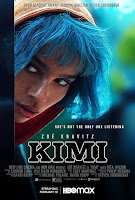
A fun little Vertigo riff, and I'm honestly having a hard time seeing it as anything other than that (there's even a green dress). Which is okay, because—hot take!—Vertigo rocks! That said, credit to Park Chan-wook for doing something genuinely new with depicting digital communication (e.g. SMS) onscreen. Grade: B+

For at least an hour of its runtime, this movie is a tense little satire about the discomfort people will undergo in the interest of maintaining a veneer of politeness. The film is great at teasing out its social nightmare scenario: a family agrees to spend the weekend with another family that they only barely know, and once the weekend begins, things immediately feel off but not starkly enough that they can articulate them in a way that would completely justify the impropriety of bailing before the weekend is up. The final thirty minutes of the film take a hard turn into the most absurd and upsetting conclusion possible from the preceding hour, and while I respect in theory the utter nastiness of the film's ending, in practice it just feels like a desperate play at being edgy and dark. Make no mistake: it is pitch dark in a viscerally unpleasant and impressively bleak way, but the extremity of it ruins the sublime tightrope that the film's first 2/3 has managed. For that first 2/3, though, it's one of the best movies of 2022. Grade: B

Watcher (2022)
I don't think I have much interesting to add to what people have already said, re: Maika Monroe being extremely good here, and re: this being basically Rear Window meets Polanski's apartment trilogy. I ended up kind of feeling the same way about it that I did Park Chan-wook's Decision to Leave in that I never really found a way to stop being distracted by this movie's being a riff on older movies and therefore felt a little distanced from it. Maybe I missed what's special about it. Really well-done for what it is, though. Grade: B

A well-done but not particularly notable psychological thriller—not notable, that is, except for Rebecca Hall's performance, which is an all-timer. She's been slowly building an incredibly impressive résumé of performances in this vein, in which her character's fraying understanding of objective reality begins to unmask a brutal, even feral internalized violence, and this is handily the best of the bunch. Grade: B

I remain firmly fascinated with Peter Strickland's "thing," despite the fact that this and his previous film were both middling. It's got an incredible hook: a guy in a culinary arts commune is having gastrointestinal issues but has a deep fear of farting in front of others, so he painfully holds his gas in until he learns how to embrace his body and make it art. The resultant movie is intermittently inspired, especially when it focuses on the weirdo stuff that the commune is doing—some bizarre confluence of cooking, performance art, and noise show, which turns out to be super cinematic and visually/aurally interesting. But a lot of the rest of the movie just feels too buttoned-up and mannered to make full use of its setting and premise, and of all of the Strickland features I've watched, this feels the most stylistically inhibited, which is weird given that the whole point of the film is about being less inhibited. Whatever; I'll probably still watch whatever "kink turned textual art film" thing Strickland puts out next. Grade: B-

This Place Rules (2022)
Can't believe I wasted my last movie-watching opportunity of 2022 on this garbage. I haven't watched a ton of Andrew Callaghan's online work, but I've seen enough to know that he has a preternatural, almost Nathan-Fielder-esque ability for using his flat affect to draw incredible comments from the people he interviews, and that's on display here. There are a dozen fascinating documentaries to be made from the raw material captured here (the influencer street fight at the beginning, the heartbreaking QAnon family stuff, the surprisingly lucid Alex Jones interview, any number of the people-on-the-streets rants, etc. etc.), but in maybe one of the most egregious editing hack jobs of all time, this film realizes exactly none of those possibilities, creating instead a flimsy and specious narrative around "wow, people sure were crazy in 2020." Even worse, there's an attempt at political commentary that is so impoverished that it's insultingly obvious (you mean to say that social media and news media have a financial incentive to divide us along cultural and political lines??) when it's not borderline irresponsible, such as the handful of times that the film cuts between footage of left-wing protesters talking about abolition and footage of right-wing protesters talking about Joe Biden being a Chinese communist socialist child molester as if these are equivalent displays of unhinged political fringes. And then after all that, Callaghan didn't even get to attend January 6?? It's not his fault he got COVID, but maybe it would have been a good idea to rethink the whole conceit of "here's how the build-up to Jan. 6 looked from the frontlines!" when you couldn't even make it to the main event. The documentary ends with an almost literal shrug in which Callaghan and a few other people look at the aftermath of Jan. 6 and ask what the point of all of it was, to which Callaghan basically just says, "Money," which is true in perhaps the broadest sense that most things in a capitalist society boil down to being about money, but also it kind of makes me wonder what the point is of making a big, flashy HBO documentary about a major fascist movement in America if you don't seem to understand the point of fascism beyond "money" or the urgency of this moment beyond "huh, people seem upset and misinformed." Andrew, you seem like a good dude, but please give your footage to like Frederick Wiseman or Laura Poitras or someone who actually knows how to assemble the incredible material you clearly have buried here. Grade: C-

Ryusuke Hamaguchi's movies always tip-toe right up to the line of being "too long" before whacking me in the face with emotional catharsis so powerful that I lose track of how long it took to get there. But I think I've decided that five and a half hours is too long even for that approach. Even breaking this up into several sittings, I found myself getting restless as this movie slowly and novelistically wound its way toward its cathartic final hour. I don't really know what I'd cut, though, because the length is totally baked into the whole project here, a warm study of the friendship among four different women and the way that foursome friendship reverberates through their romantic lives, in which the fact that we spend hours with these characters accumulating details and scenes that illuminate their interior lives and connections to each other is a key component of this movie's ability to pay off at the end. More than anything, it reminds me of Rivette, only without the aggressive experimental impulse or the mystical bent. So maybe it's a me problem that I got bored at times, or maybe the best way to watch this is held rapt for hours in a theater rather than watching it over three days on my laptop. Whatever the case, when this gets to the parts where things start happening, it gets really good. Grade: B

Legitimately funny. Reminds me of Altman's Popeye movie in the sense that at least half the fun is its dedication in recreating a thoroughly outdated property with as much fidelity as possible within the then-contemporary studio system. It's impressively committed to the bit, and even though I was only ever a moderate Three Stooges fan at best, I got a lot of joy out of this. The other half of the fun are the bizarre details filling in the corners of this movie. Iggy Pop doing the theme song? Larry David as a nun? "Peter and Bobby Farrelly" appearing before the credits to tell kids not to try this slapstick at home? Delightfully strange. I'm imagining the alternate (superior) universe in which this got Peter Farrelly his Oscar. Grade: B+

An incredible piece of analysis of the moment when (in retrospect) the tide turned toward capitalism's eventual "victory" over the 20th century. Given that capitalism is, like, evil and that we really have never returned to anywhere close to the collective revolutionary consciousness in the late-'60s/early-'70s that this film depicts, it's a pretty dispiriting watch, but that said, for as depressing as it is, it's also remarkably fun and funny at times, too, mostly because of the terrific eye for archival footage—Fidel Castro describing how to make lasagna, for example. It also struck me as I watched this how few documentaries are truly like this now, i.e. actively analytical instead of explanatory. Most political documentaries that aren't just vérité are usually busy explaining information, but this documentary barely does any of that, which makes it, in that regard, much more of an "essay" in form than documentaries usually are. I haven't watched much Adam Curtis, but I guess he's the big one carrying on the torch? Otherwise, it's hard to think of many documentaries released in the past couple decades that are formatted like this. Grade: A

The Mortal Storm (1940)
Mostly notable for being 1) an early anti-Nazi Hollywood film, and 2) unrelentingly bleak in its depiction of the Nazis—Chaplin is obviously the better filmmaker in general, but The Great Dictator is kind of embarrassing in its comparatively soft and vague treatment of Nazism when something like this already existed. As with another big 1940 Jimmy Stewart film (The Shop Around the Corner), it's amusing how Stewart's performance here just kind of refuses to pretend to be anything resembling Central European. Grade: B
Books:

A really entertaining and surprisingly political Newbery Medal winner. One of my favorites I've read so far, and you can hear more about it in the episode on it my wife and I did on our Newbery Medal podcast! Grade: A-

A fun, fairy-tale-esque Newbery winner. I really like the bemused narrative voice (shades of Lemony Snicket) and the interlocking story structure. Some of the characters work better than others. You can hear more thoughts on the episode on it my wife and I did on our Newbery Medal podcast! Grade: B+