Showing posts with label Newbery Medal. Show all posts

Sunday, February 5, 2023

Mini Reviews for January 30 - February 5, 2023

Still (slowly) working on that 2022 music post. It will come out eventually, mark my words!

Movies

Infinity Pool (2023)
This was a lot of fun, and it seems like everyone making this movie had a lot of fun, too, including (especially!) Mia Goth, who basically crams every single impulse of her career into her character's arc here. She's having a five-course meal. It's also a much funnier movie than I was expecting. I suppose there's a way to make a satirical story about rich people behaving badly on a poor island nation into something scary, and the movie tepidly gestures toward that, but it's mostly just outrageous in an Old Testament kind of way that mixes its oddly archetypal premise (you can create clones to accept the capital punishment you deserve) with the extreme debasement that Alexander Skarsgård undergoes in response to his initial hubris of being enamored at finding a beautiful young fan of his writing. Watching Mia Goth just humiliate this dude over and over again is hilarious. Certainly not for everyone, but it is for me, for sure. Grade: B+


Three Thousand Years of Longing (2022)
I went in expecting something weird and messy, and it is to a degree, but it's not manic in the slightest, which was really what I was geared up for. Instead, it's this thoroughly melancholy and pensive piece of theater about the passage of time and the ways that we use story to create meaning out of that passage. Idris Elba and Tilda Swinton have unexpectedly great screen chemistry, and the storybook framing of the movie is not nearly as twee as it should have been. I was really moved by the end. That last scene in the park with Idris and Tilda walking into the horizon is perfect. Grade: A-


Yes, Madam! (皇家師姐) (1985)
I watched this for this week's episode of Cinematary (listen to it here!), thinking it was a good, early Michelle Yeoh showcase. And it's about 30% that! The other 70% is a fairly unengaging film about some bumbling low-level thieves getting up to Three-Stooges-esque shenanigans. This was probably a victim of my expectations, and it may have been more engaging if I had approached the movie understanding what it would be like, but I came here for Michelle Yeoh, dangit! Anyway, Michelle Yeoh is very good in the scenes she's in. Grade: B-


Silent Movie (1976)
It's more of a pseudo-silent movie in the vein of Modern Times or a Tati film (has Mel Brooks watched Tati??) than a true silent film, and it's a bit too reliant on title cards for my tastes. But there are some good gags here, impressive considering that visual gags aren't usually Brooks's strong suit. My favorite is the scene with Burt Reynolds showering and slowly acquiring more hands (you'll know it when you see it). That said, this runs out of gas majorly by the end, and also, there's a running "joke" where the punchline is simply a character yelling the f-slur (plus a quick transphobic aside in another case), and while I know it's no fun to make the very innovative observation that an old Hollywood movie is queer-phobic, those bits definitely put a damper on this movie's charm for me, which is a problem when this movie coasts so heavily on the quaint charm of its concept. Grade: B-


L'Atalante (1934)
When I approach movies that are typically considered among the greatest of all time, they usually inspire one of two responses: 1) I am as enthusiastic about it as its reputation warrants, or 2) I like the movie fine but don't get why it's considered one of the greats. L'Atalante is definitely in the latter camp, and I'm not sure why people think this is so amazing, especially when Murnau's Sunrise beat this movie to its punch several years earlier. That said, this movie is often very lovely, and I'm glad I watched it. I like the ship's crew, who are fun to watch. Also, the underwater sequence is really good. Anyway, good movie. Not sure why it's so canonized. Grade: B+


Books

Gay Neck, the Story of a Pigeon by Dhan Gopal Mukerji (1928)
About as dull as its title suggests, though once the titular pigeon goes to WWI, the book gets strangely high-minded and philosophical about the nature of conflict. Still, most of this is about a young Indian boy training a pigeon, without a lot of development of either the boy or the pigeon. Beautiful illustrations by Boris Artzybasheff, though. Stay tuned for a Newbery Chronicles podcast in the next couple weeks. Grade: C+

Sunday, January 8, 2023

Mini Reviews for December 19, 2022 - January 8, 2023

Between the holidays and a bout of sickness, it's been hard to fit blogging in, so please take this super-sized post as penance for all the missed time!

P.S. My wife and I released another podcast episode, this time about The Tale of Despereaux, which you can listen to here. Enjoy!


Movies

Avatar: The Way of Water (2022)
I haven't seen the original Avatar since I watched it in 2010 on a dorm CRT TV during a floodwatch weekend interrupted by tornado sirens, so there's a pretty good chance I'm wrong about this, but The Way of Water feels superior to the first one. It's basically the same movie: broad, hokey, but achingly earnest anti-imperialist environmentalism filtered through some of the most stunning FX work of all time in the service of some very cool-looking prog-rock-album-cover production design. But as an iteration of that formula, this feels sturdier than my memories of the first, probably because it doesn't do the Pocahontas / Dances with Wolves thing of having the anti-imperialism hinge on a romance and also probably because James Cameron just has a way with water photography in a way that he doesn't with Roger Dean forests and also also probably because the limp context of contemporary Hollywood blockbusters in 2022 just makes it easier to appreciate this film's increasingly rare brand of impeccable technical craft mixed with sincere, archetypal storytelling. I was not entirely sold on this movie for probably the first half mostly because these Avatar movies stubbornly refuse to create interesting characters, and there's a lot of character melodrama in the opening salvo of the film. But once I got to the whaling sequence and felt myself getting palpably upset at the slaughter of the creatures (seriously, one of the most stomach-churning and brutal scenes in a big PG-13 Hollywood release in recent memory), it struck me at how impressive it was that this movie could get me to care about an ecosystem in the way I might care about a character, which is probably the more thematically important thing to do for this movie than to make me care about the actual characters. Anyway, once that scene hits, the rest of the movie is basically nonstop righteous-anger action, executed to perfection—weirdly parallel to the Top Gun sequel in that regard, though of course ideologically polar opposite. Also, I'm struggling to remember the last mainstream Hollywood release that explicitly had the U.S. military as its villain (maybe it was the last Avatar movie?), and as silly and hippy-ish as some of the screenplay's approach to race/imperialism/environmentalism can be, I gotta give it props for not softballing that part. Grade: A-


Glass Onion: A Knives Out Mystery (2022)
I liked this a little bit less than the first one—its structure is a little more ungainly (and the first already had a somewhat ungainly structure), and the knowingly obvious reveal of the killer (punctuated by the "It's so dumb it's brilliant," "No, it's just dumb" interchange) is only really satisfying on a meta level. But it's still a cracking good time because it has all the strengths of the first: the game cast, the pocket-watch-tight technical craft, the almost-camp deployment of mystery tropes, and of course the presence of the delicious, ludicrously fun Benoit Blanc. I wish I could have caught this in a theater (one week only? I truly don't understand this business model, Netflix), but instead, my wife and I watched it on Netflix and still had a ball. Speaking of the internet, though, I'm legitimately perplexed at how apoplectic some people are about the alleged "terminally online" qualities of the movie. Maybe I'm missing some of the nuances because I'm not on Twitter (though make no mistake: I spend too much time online nonetheless), but there's a long tradition in mystery stories of having characters who are broad caricatures of public figures or types, and the satirical easter-egg-ish allusions to contemporary political discourse and celebrities is another thing that doesn't strike me as particularly egregious—just wait until people find out about The Great Gatsby or Citizen Kane! Not saying this is anything on the level as those two, but just because time has obscured the references in them doesn't make them any less allusive. The only thing that felt a little forced to me was the "May 13, 2020" date, which feels less like lockdown commentary (the specter of COVID is hand-waved away with a magic spray mere minutes into the film) and more of a strained attempt to symbolically connect the film's ending with the 2020 BLM protests, since George Floyd's death is just a few days after this film takes place—I appreciate the intent behind the gesture, but also, it's kind of a wish-fulfillment treatment of the outcomes of that political moment, which have had a lot more "pretense for the state to crack down on left-wing organizing" consequences than this movie's ending allows for. But see, the very fact that I can write that sort of thing about this movie is evidence not that this movie is too glib with its politics but that I'm waaaay too extremely online myself. I say this with a note of dismay, since part of my project as a teacher has been to try to get people to understand contemporary resonances and themes in texts, but most people simply do not watch movies that way, even most people clued into politics and literary theory, like my wife. Yeah, sure, I think a lot of people are going to recognize that this movie is dunking on Elon Musk, especially post-Twitter-purchase, but beyond that broad level, I think we're way down the iceberg when it comes to the movie's allusions. I dunno, maybe the fact that I recognized the Lana Del Rey mesh mask thing here is more of an indictment of my spending too much time on the internet than it is of the film itself. Anyway, this is just a long way of saying, "It didn't bother me." This movie is fun! Grade: B+


Strange World (2022)
We're now elbows-deep into a bona fide Walt Disney Animation Studios dark age, so I guess it's time to trot out the daddy-issues sci-fi inspired by 19th-century European lit. This feels about on-par with Treasure Planet in that regard, both for its choice of source material (my childhood Jules Verne phase was basically concurrent with my childhood Treasure Island phase) and in terms of quality (which in both cases is decidedly mediocre). Strange World is mediocre in different but not especially productive ways from Treasure Planet: no Goo Goo Dolls this time around, nor does it have the horrendous CG "virtual sets" mixed with cel animation (Strange World's animation is quite nice as a whole, if a bit auto-pilot for WDAS CG animation at this point—I did love the creature designs and how palpably billowy everything was). But it's also much less enthusiastic in embracing the pulp swashbuckle of its inspiration, and for as much as the characters don't completely work in Treasure Planet, they at least aren't the hopelessly bland mush that comprises the cast of Strange World, who seem to have been conjured whole-cloth from either a mad libs or AI prompt: a son who wants to be different from his father? A father who... doesn't understand??? Gimme a break. A listless shrug of a movie that I hoped would be at least a little bit fun. I'm tempted to suspect that Disney astroturfed the (very dumb) culture war surrounding its racial diversity and gay representation just to give people a reason to care about this movie. Grade: C


Armageddon Time (2022)
A sharp piece of anti-nostalgia—I for one am glad to see the '80s being portrayed as a monumentally bleak time rather than whatever is going on with the seemingly endless '80s revival wave I've been experiencing for most of my adult life. In stretches, this equals its obvious "portrait of the artist as a young man" cinematic companion, The Fabelmans (a few of the family scenes, for example, as well as the scene where the mom chews out her kid for smoking weed), and there's an admirable impulse to make the protagonist just an absolute pain in the specific way that middle schoolers often are, but ultimately this is a lot more prosaic and thinner than Spielberg/Kushner's vision in that film. I don't really understand the distinction people are making between this being a product of white guilt (derogatory) instead of an interrogation of white privilege and the way it interacts with the Jewish assimilation the protagonist's family is aspiring to, and I would say that we need more movies that do the latter. As with everything else in the film, there are stretches where this part of the film is tremendous, but the main problem re: the racial dynamics is simply that Johnny, the black kid, is just not fleshed out whatsoever. There's a kind of logic to that, given the way that the film's point of view is intentionally limited to the white/Jewish half of the friendship, and that limitation could deploy an even more damning exploration of privilege, but if that's the route the film wants to take, it needs to be a little more clever at suggesting depth in Johnny just outside the frame. Instead, he's purely a thematic construct, which is ultimately unsatisfying, especially as that becomes the dramatic fulcrum in the film's climax. When this movie works, though, it really works, and I'd honestly love to see James Gray return to this well rather than going back to the stately period dramas he's been doing (outside of Ad Astra, which feels like an outlier in a few different ways). Grade: B+


White Noise (2022)
A rigidly literal-minded adaptation of a novel that definitely needed some creative liberties taken to be successfully brought to the screen. In general, I found it kind of dull, especially once I realized that Baumbach's screenplay was not interested in doing much beyond visualizing the novel. Kudos to Baumbach for trying something legitimately outside of his wheelhouse, even if it didn't really work—there's an admiral refusal to Baumbach-ize this material, which I appreciate. There are a few signs of life, though: the production design and costuming are terrific, and I dug the LCD Soundsystem dance party in the credits (one of the few places where the movie finds something new to do that nevertheless feels in the spirit of the book). Grade: C


Decision to Leave (헤어질 결심) (2022)
A fun little Vertigo riff, and I'm honestly having a hard time seeing it as anything other than that (there's even a green dress). Which is okay, because—hot take!—Vertigo rocks! That said, credit to Park Chan-wook for doing something genuinely new with depicting digital communication (e.g. SMS) onscreen. Grade: B+


Speak No Evil (Gæsterne) (2022)
For at least an hour of its runtime, this movie is a tense little satire about the discomfort people will undergo in the interest of maintaining a veneer of politeness. The film is great at teasing out its social nightmare scenario: a family agrees to spend the weekend with another family that they only barely know, and once the weekend begins, things immediately feel off but not starkly enough that they can articulate them in a way that would completely justify the impropriety of bailing before the weekend is up. The final thirty minutes of the film take a hard turn into the most absurd and upsetting conclusion possible from the preceding hour, and while I respect in theory the utter nastiness of the film's ending, in practice it just feels like a desperate play at being edgy and dark. Make no mistake: it is pitch dark in a viscerally unpleasant and impressively bleak way, but the extremity of it ruins the sublime tightrope that the film's first 2/3 has managed. For that first 2/3, though, it's one of the best movies of 2022. Grade: B


Watcher (2022)
I don't think I have much interesting to add to what people have already said, re: Maika Monroe being extremely good here, and re: this being basically Rear Window meets Polanski's apartment trilogy. I ended up kind of feeling the same way about it that I did Park Chan-wook's Decision to Leave in that I never really found a way to stop being distracted by this movie's being a riff on older movies and therefore felt a little distanced from it. Maybe I missed what's special about it. Really well-done for what it is, though. Grade: B


Resurrection (2022)
A well-done but not particularly notable psychological thriller—not notable, that is, except for Rebecca Hall's performance, which is an all-timer. She's been slowly building an incredibly impressive résumé of performances in this vein, in which her character's fraying understanding of objective reality begins to unmask a brutal, even feral internalized violence, and this is handily the best of the bunch. Grade: B


Flux Gourmet (2022)
I remain firmly fascinated with Peter Strickland's "thing," despite the fact that this and his previous film were both middling. It's got an incredible hook: a guy in a culinary arts commune is having gastrointestinal issues but has a deep fear of farting in front of others, so he painfully holds his gas in until he learns how to embrace his body and make it art. The resultant movie is intermittently inspired, especially when it focuses on the weirdo stuff that the commune is doing—some bizarre confluence of cooking, performance art, and noise show, which turns out to be super cinematic and visually/aurally interesting. But a lot of the rest of the movie just feels too buttoned-up and mannered to make full use of its setting and premise, and of all of the Strickland features I've watched, this feels the most stylistically inhibited, which is weird given that the whole point of the film is about being less inhibited. Whatever; I'll probably still watch whatever "kink turned textual art film" thing Strickland puts out next. Grade: B-


This Place Rules (2022)
Can't believe I wasted my last movie-watching opportunity of 2022 on this garbage. I haven't watched a ton of Andrew Callaghan's online work, but I've seen enough to know that he has a preternatural, almost Nathan-Fielder-esque ability for using his flat affect to draw incredible comments from the people he interviews, and that's on display here. There are a dozen fascinating documentaries to be made from the raw material captured here (the influencer street fight at the beginning, the heartbreaking QAnon family stuff, the surprisingly lucid Alex Jones interview, any number of the people-on-the-streets rants, etc. etc.), but in maybe one of the most egregious editing hack jobs of all time, this film realizes exactly none of those possibilities, creating instead a flimsy and specious narrative around "wow, people sure were crazy in 2020." Even worse, there's an attempt at political commentary that is so impoverished that it's insultingly obvious (you mean to say that social media and news media have a financial incentive to divide us along cultural and political lines??) when it's not borderline irresponsible, such as the handful of times that the film cuts between footage of left-wing protesters talking about abolition and footage of right-wing protesters talking about Joe Biden being a Chinese communist socialist child molester as if these are equivalent displays of unhinged political fringes. And then after all that, Callaghan didn't even get to attend January 6?? It's not his fault he got COVID, but maybe it would have been a good idea to rethink the whole conceit of "here's how the build-up to Jan. 6 looked from the frontlines!" when you couldn't even make it to the main event. The documentary ends with an almost literal shrug in which Callaghan and a few other people look at the aftermath of Jan. 6 and ask what the point of all of it was, to which Callaghan basically just says, "Money," which is true in perhaps the broadest sense that most things in a capitalist society boil down to being about money, but also it kind of makes me wonder what the point is of making a big, flashy HBO documentary about a major fascist movement in America if you don't seem to understand the point of fascism beyond "money" or the urgency of this moment beyond "huh, people seem upset and misinformed." Andrew, you seem like a good dude, but please give your footage to like Frederick Wiseman or Laura Poitras or someone who actually knows how to assemble the incredible material you clearly have buried here. Grade: C-


Happy Hour (ハッピーアワー) (2015)
Ryusuke Hamaguchi's movies always tip-toe right up to the line of being "too long" before whacking me in the face with emotional catharsis so powerful that I lose track of how long it took to get there. But I think I've decided that five and a half hours is too long even for that approach. Even breaking this up into several sittings, I found myself getting restless as this movie slowly and novelistically wound its way toward its cathartic final hour. I don't really know what I'd cut, though, because the length is totally baked into the whole project here, a warm study of the friendship among four different women and the way that foursome friendship reverberates through their romantic lives, in which the fact that we spend hours with these characters accumulating details and scenes that illuminate their interior lives and connections to each other is a key component of this movie's ability to pay off at the end. More than anything, it reminds me of Rivette, only without the aggressive experimental impulse or the mystical bent. So maybe it's a me problem that I got bored at times, or maybe the best way to watch this is held rapt for hours in a theater rather than watching it over three days on my laptop. Whatever the case, when this gets to the parts where things start happening, it gets really good. Grade: B


The Three Stooges (2012)
Legitimately funny. Reminds me of Altman's Popeye movie in the sense that at least half the fun is its dedication in recreating a thoroughly outdated property with as much fidelity as possible within the then-contemporary studio system. It's impressively committed to the bit, and even though I was only ever a moderate Three Stooges fan at best, I got a lot of joy out of this. The other half of the fun are the bizarre details filling in the corners of this movie. Iggy Pop doing the theme song? Larry David as a nun? "Peter and Bobby Farrelly" appearing before the credits to tell kids not to try this slapstick at home? Delightfully strange. I'm imagining the alternate (superior) universe in which this got Peter Farrelly his Oscar. Grade: B+


A Grin Without a Cat (Le fond de l'air est rouge) (1977)
An incredible piece of analysis of the moment when (in retrospect) the tide turned toward capitalism's eventual "victory" over the 20th century. Given that capitalism is, like, evil and that we really have never returned to anywhere close to the collective revolutionary consciousness in the late-'60s/early-'70s that this film depicts, it's a pretty dispiriting watch, but that said, for as depressing as it is, it's also remarkably fun and funny at times, too, mostly because of the terrific eye for archival footage—Fidel Castro describing how to make lasagna, for example. It also struck me as I watched this how few documentaries are truly like this now, i.e. actively analytical instead of explanatory. Most political documentaries that aren't just vérité are usually busy explaining information, but this documentary barely does any of that, which makes it, in that regard, much more of an "essay" in form than documentaries usually are. I haven't watched much Adam Curtis, but I guess he's the big one carrying on the torch? Otherwise, it's hard to think of many documentaries released in the past couple decades that are formatted like this. Grade: A


The Mortal Storm (1940)
Mostly notable for being 1) an early anti-Nazi Hollywood film, and 2) unrelentingly bleak in its depiction of the Nazis—Chaplin is obviously the better filmmaker in general, but The Great Dictator is kind of embarrassing in its comparatively soft and vague treatment of Nazism when something like this already existed. As with another big 1940 Jimmy Stewart film (The Shop Around the Corner), it's amusing how Stewart's performance here just kind of refuses to pretend to be anything resembling Central European. Grade: B


Books:

Dead End in Norvelt by Jack Gantos (2011)
A really entertaining and surprisingly political Newbery Medal winner. One of my favorites I've read so far, and you can hear more about it in the episode on it my wife and I did on our Newbery Medal podcast! Grade: A-


The Tale of Despereaux by Kate DiCamillo (2003)
A fun, fairy-tale-esque Newbery winner. I really like the bemused narrative voice (shades of Lemony Snicket) and the interlocking story structure. Some of the characters work better than others. You can hear more thoughts on the episode on it my wife and I did on our Newbery Medal podcast! Grade: B+

Sunday, October 30, 2022

Mini Reviews for October 24 - 30, 2022

My wife and I released a new episode of our podcast, which you can listen to here if you're interested!

Movies

Lightyear (2022)
I went into this expecting it to be bad, and it was, but I think this actually would have been a tolerable, if forgettable, piece of children's sci-fi if it weren't for the fact that it's about the "real" Buzz freaking Lightyear. It's a weird bind that I'm sure the filmmakers found themselves in making this movie: scrubbed of its forced connections to the Toy Story franchise, the screenplay is not nearly good enough to make this movie be notable as a standalone film, but the Toy Story connections that make it notable unmistakably flag this movie as a piece of cynical corporate brand management as opposed to the sincere work of middlebrow family entertainment it wants to be. I'm sorry, but I just cannot suspend my disbelief enough that I can hear the characters in this movie on multiple occasions saying word-for-word memorable lines from the first Toy Story and not come to the conclusion that some middle-management Disney husk with an MBA ghost-wrote the film. It's like watching that unbearable pre-show Regal ad where everybody just says random famous movie lines, only at feature length. Also, on the animation front, this is a major step back from the past few Pixar films' attempts to broaden the studio's style outside of their familiar aesthetic. We're in mildly cartoony photorealismville again, baby, and it's boring. Complete dreck. Almost certainly the worst Pixar movie—or at least the most dispiriting. Grade: C-

Bride of Chucky (1998)
Easily the best Chucky movie up to this point in the series. Chucky as an entity was never particularly scary to me anyway (even when I was a kid), so this movie's abandonment of any semblance of "scary" plus its commitment to weird camp and outsider sensibilities helps it sail past every previous movie in the franchise. Explicitly tying itself to The Bride of Frankenstein should be a movie-ruining bit of hubris, but it's absolutely deserved here, as it embraces that early classic's penchant for the playful and absurd over the spooky. Plus, my god, the voice acting of the central duo: the addition of Jennifer Tilly as functionally the lead is an incredibly canny move, and Brad Dourif puts in his series-best performance. Also, barely related, but I just happened to click on Dourif's Wikipedia page when writing this up, and I realized he plays Wormtongue in Lord of the Rings, which is kinda blowing my mind at the moment; I should have made that connection before the fourth entry in this series. Grade: A-

Seed of Chucky (2004)
What an absolute blast. Some of the running bits don't really work (e.g. the "Made in Japan" thing or Jennifer Tilly's eating disorder), but for the most part, this is intoxicating and ridiculously fun and has the good sense to realize that two Jennifer Tilly performances are better than one. Whereas Bride of Chucky explicitly presents itself as the Chucky analog to The Bride of Frankenstein, Seed openly claims to be the Glen or Glenda of the franchise, which is 100% the logical conclusion to the camp flourishes of the previous film. Along the same lines, I gotta hand it to this movie for having the guts to evoke one of the most repulsive parts of Pink Flamingos (the kidnapping/insemination plot). Speaking of insemination, people talk about weird Hollywood synchronicity like the time there were two Snow White movies in the same year, but I've never heard anyone talk about the much more improbable parallelism of 2004's duology of CGI sperms (i.e. this and She Hate Me). A true unicorn pairing. Grade: A-

Curse of Chucky (2013)
A soft reboot after the franchise reached the delirious heights of Bride and Seed was not at the top of the list of things I would want to see out of the follow-up. But allowing for that, this was really solid—probably the most overtly "scary" (relatively—Chucky's not very scary) Chucky movie since the first one, and it does a lot of good with that aim to return to the series's horror roots. It's set in a big, spooky house, which is a tremendous setting, and appropriately, the direction is the series's most baroque, filled with moody lighting and sweeping steadicam shots (maybe my favorite direction of the series). And for us lovers of post-Child's Play 3 Chucky, the last ten minutes or so does let us know that Don Mancini hasn't forgotten about us. So, a good time, if not the great time delivered by its immediate predecessors. Grade: B


Books

A Gathering of Days; A New England Girl's Journal, 1830-32 by Joan W. Blos (1979)
What if a children's book looked exactly like a child's journal from the 1830s? Impressively committed to its conceit, to the point that it's willing to be extremely boring in the interest of looking like a historical document. If that sounds cool to you, you can listen to my wife and I talk about it on our podcast. Grade: D


Music

Taylor Swift - Midnights (2022)
I've heard people call this album a "grower," and it certainly has the hallmarks of that: low-key production, murmured melodies, few open bids for radio play. However, after having spent a week with this album, I'm feeling like it's the opposite... a shrinker? I'm sad to report that the more I listen to it, the thinner Midnights feels. Everything on here is something that Taylor Swift has done elsewhere (and better): the nocturnal Antonoff production hearkens back to the simmering, weary back-half of Reputation and the warmth of the Lover deep cuts; the semi-ironic self-critique of "Anti-Hero" is a less sardonic revision of "Blank Space"; "Vigilante Shit" and "Karma" again evoke Reputation, but this time the cringey, forced "bad girl" camp villainy. I wouldn't mind as much if the writing on these songs were actually good, but a lot of these lyrics feel like first-drafts, with a main idea only barely developed (and certainly not as idiosyncratic and nuanced as I'm used to hearing from Swift). That's to say nothing of the outright howlers, like the already infamous "sexy baby" line on "Anti-Hero" or how Taylor Swift still seems to employ the word "fuck" like a middle-schooler giddy about saying grown-up words. The melodies on the tracks fare better, but there isn't a single song where I enjoy both the melody and the lyrics, which is disappointing coming from Taylor Swift. It's disappointing after folklore seems to usher in a new phase of maturity and hindsight for Taylor Swift that she's come up with an album that feels like ersatz Taylor Swift, mimicking the rhythms and themes of past successes without the spark of what made those earlier works cook. I guess we'll see how I feel after spending a little more time with this—maybe this will prove to be a true grower after two weeks, or ten. But right now, this strikes me as one of Taylor Swift's weakest album, if not her outright worst. Grade: C+

Sunday, June 19, 2022

Mini Reviews for June 13 - 19, 2022

Happy Father's Day! Happy Juneteenth!

Movies

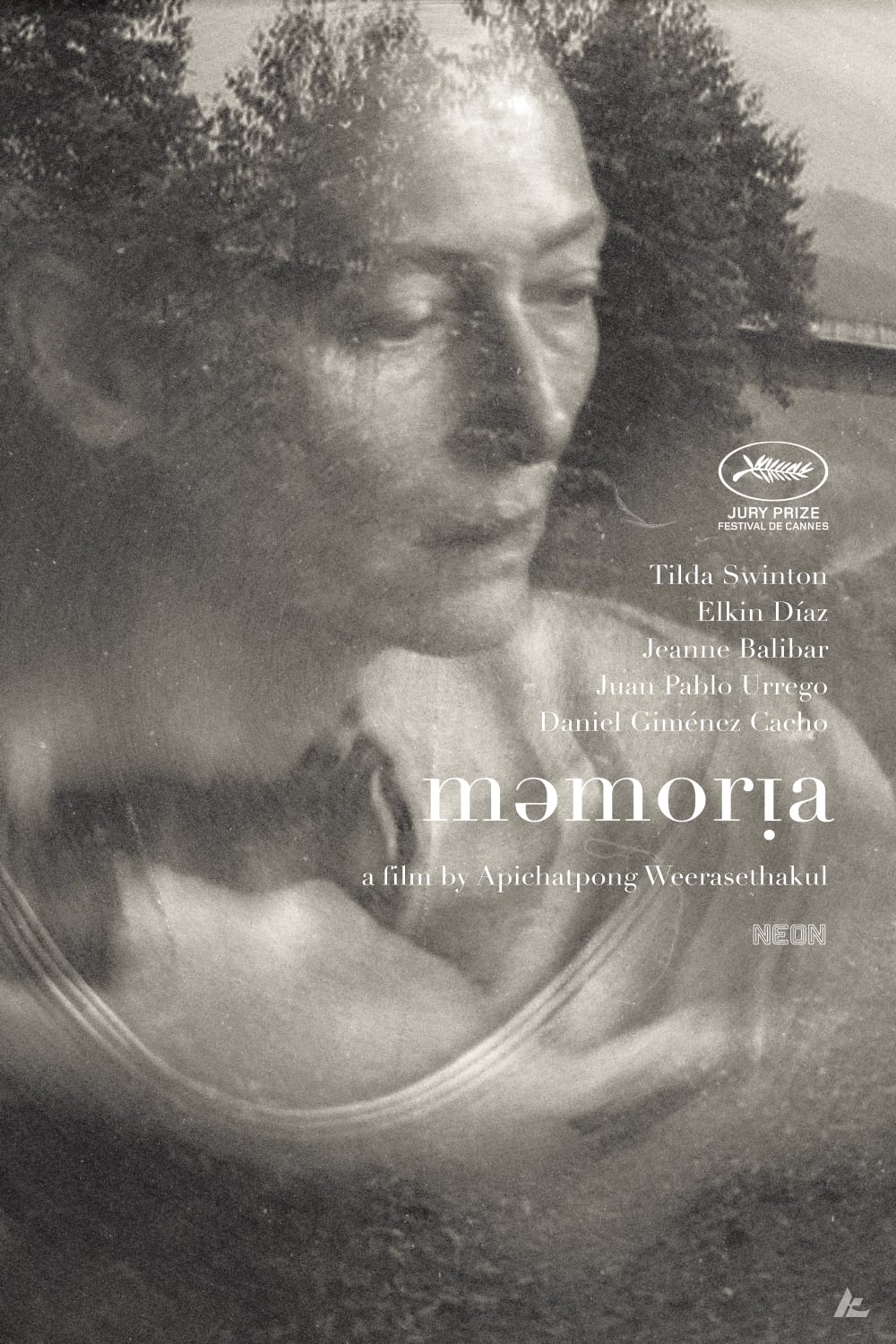
Memoria (2021)
Apichatpong Weerasethakul's movies usually stick with me in bits and pieces, with the dreamlike structures of his films being often too slippery for me to remember in whole. But the entirety of Memoria has been absolutely dominating my conscious mind all day since I saw it—probably in no small part because it's the first of Apichatpong's movies I've seen in a theater. But also, there's something very specifically intriguing about the manifestations of Apichatpong's typical tropes here that I find just magnetic: the spiritual dimensions of the past intruding into the present, the urban-rural tensions, the languorous, lightly psychedelic slow cinema, the exquisite soundscapes—these are all present in the other movies of his that I've seen, but somehow, Tilda Swinton's character's quest to discover the source of a mysterious booming noise that only she can hear is immediately beguiling to me in a way that none of his other films have been. Ignorant Westerner that I am, it's probably also got to do with the rather embarrassing reality that I simply am more familiar with the Colombian setting (embarrassing because I am only barely familiar with Colombia) and especially the white, Scottish protagonist than I ever was with the Thai milieu of his other films, so I can more easily pinpoint the precise ways in which he plays with political subtext one moment, gentle absurdity the next, and then cracks reality wide open in the third. But whatever it is, this is an exquisitely mind-bending film made all the more exquisite by the patience of Apichatpong's edits and the pristine intricacy of the sound design. The film is so slow that it's easy to be fooled into thinking that nothing is happening, but then you'll get something like the moment where, all in one shot, the film slips from being about one woman's walk through the woods into being about thousands of years of human history, and I can just feel my brain melting out of my ears. I can't remember the last film I saw in a theater that felt this profoundly mystical and intoxicated on the feeling of accepting the monumental incomprehensibility of the universe. Grade: A

Mad God (2021)
In the Bible, the story of the Tower of Babel comes immediately on the heels of the flood story. This is funny because the flood is supposed to be God wiping humanity's squalor and evil from the face of the earth and starting the human race afresh with the righteous family of Noah, and yet, without skipping a beat, the text just jumps right from the optimism of Noah's surviving the flood to humanity being back in a state of depravity that must be decimated by God. Realistically, I have to imagine that the continuity between the Flood and the Tower of Babel sections is probably just an effect of an ancient editor trying to stitch together two separately composed stories, but taking the text at face value, this seems to suggest two things: 1) that the entire scope of human history is a cyclical pattern of human society trending toward monstrosity until God destroys it and starts over again; and 2) God is somewhat powerless to stop humanity from spiraling into a state that God views worthy of destruction. I bring all this up not just because Mad God begins with a visual evocation of the Tower of Babel but also because in some ways, this film's whole project is taken up with those two suggestions from the Genesis primeval history. Like the Book of Genesis, Mad God has been stitched together, though this one is all at least the vision of a single dude: legendary effects supervisor Phil Tippett, who apparently worked on and off for 30 years on the various sections that eventually were combined to become this movie, a completely stunning extravaganza of stop-motion animation bolstered by a kitchen sink of other practical effects. Knowing this (which I didn't until I read about it after seeing the movie) makes the lumpily recursive structure of the movie make a lot more sense, at least on a meta level, as the movie is less a coherent continuity than it is a collection of sequences, each an iteration on the same basic premise. That premise is one that more or less assumes those Genesis implications of the inevitability of civilization to become depraved and the inability of God to stop it. Everything we see is some extremely gross evocation of just how messed up the world is, some futile attempt of a divine(?) saboteur to blow up this civilization, or a combination of the two. But mostly the first. This is a truly disgusting piece of cinema, exhibiting a seemingly endless imagination for finding new configurations of misshapen bodies, guts, and poop to throw across the screen, and the fuzzy, gooey tactility of stop-motion animation makes it even more putrid, as if once every few years, Phil Tibbett had a new brainwave about a troll chortling poop from an electrocuted gremlin's butthole and put this film back into production to realize that vision. There's something kind of depressing about how a thirty-year passion project resulting in some of the most stunning animation in the history of the medium is all to the effect of making us repulsed by the fruit of that immaculate craft, and I could never bring myself to actually enjoy this movie. But it's also such an incredible piece of craft that I cannot imagine anyone not being at least a little impressed by it, if not what's onscreen then certainly how it got there. I'm sure mileage will vary, but I found stretches of this to be strikingly beautiful, a sort of transcendent filthiness that's both kind of funny but also kind of sad—as if the movie keeps trying to be purely nihilistic but can't completely shake the impulse to mourn what the gift of life has become. There's a rather stunning sequence toward the end of the movie that flips us back to the movie's own little version of Genesis 1 as we see life being seeded on the planet, and that sequence makes plain the tragedy of the madness of a god who would (as in Genesis following both the flood and the Tower of Babel) want not to annihilate a creation so prone to suffering but to rebirth it with the hopes that this time, the miracle of existence can occur without the curse of pain. The poignancy of a moment such as that makes it hard to dismiss this as simply a gross-out example of extreme cinema. Though lordy, it is gross. Grade: B+

Elephant (2003)
Feeling kinda weird about this one. In 2022, this feels pretty thin as a treatise on school shootings. I can't really blame a twenty-year-old piece of media made in the shadow of the first modern school shooting for not speaking to the multi-faceted epidemic of school shootings that has evolved in the United States since its release, but suffice to say, it doesn't. Part of this is that it is just beamed in from another era—gun culture and school security are just in such wildly different (arguably worse) places than they were at the turn of the millennium, and besides that, this is such an artifact of how schools (presumably? I was in elementary school at the time) used to work in a pre-high-stakes-testing, pre-Columbine world, which is interesting as a piece of history but also kinda distancing as I try to engage with the Big Issue. More to the fault of the movie, the characters are all extremely flat, and while maybe this is an intentional effect (something about the mundanity of their final moments?), it just doesn't excuse the amateurish, frankly mean-spirited characterization of, say, the mean girl clique who have synchronized their bulimia, or the extremely lurid way the movie characterizes the shooters with all the sensationalist media tropes of a school shooter (violent video games, repressed homosexuality, etc.) and literally nothing else. On the other hand, this movie is undeniably unsettling and powerful in a way that transcends all of the above. It is a masterpiece of craft; the camera floats through the pointedly quotidian details of the school day in the minutes immediately preceding the shooting in a way that is hypnotic and eerie despite (maybe even because of) how ordinary and clichéd everything around it is. It's as if the mere fact of observing this is otherworldly, the setting already haunted by some force of evil even before the violence ensues. Forcing us viewers to sit, slow-cinema-style, through every minute, especially the unremarkable minutes that comprise the majority of the film, of this harrowing event gives the film a texture and a posture toward the central tragedy that simply would not have been possible through a more conventional dramatization of the shooting, and for all my issues with the finer points of the film, what this movie does aesthetically and how that impacts our relationship to what is actually happening is a really singular achievement. So... I dunno. Grade: B-

Bent (1997)
As a movie about gay men being put into a Nazi concentration camp, this strikes all of the emotionally harrowing territory you would expect, albeit through a fairly distinctive lens of having it all filtered through this slightly Brechtian staging that foregrounds artificiality in the dialogue and almost abstract spaces. But I was also really distracted through a big chunk of this movie because after a little while, I suddenly remembered that my great uncle had described this movie (or, more accurately, the play it's based on) to me when I was like 16 or 17 when describing art that had been meaningful to him as a Catholic gay man. I had long forgotten the title of the play as well as this conversation with him, but it all just flooded back to me, during the first no-touching sex scene in fact, which is an added layer of weird, and I spent the rest of the movie thinking about him. My relationship with him is complicated now for reasons not worth getting into here, and I haven't seen him in person in years. He hasn't been doing too well recently, either. It's tough the things that time does to our connections with people, which is actually something of a theme in this film, too, so I guess that's appropriate. Grade: B

The Masters of Time (Les maîtres du temps) (1982)
René Laloux's second feature after Fantastic Planet, and it's basically the Saturday-morning-cartoon version of Fantastic Planet: noticeably cheaper animation, bizarre pacing, stilted voice acting (though that one's maybe my fault, since the only version I could find was a frankly awful English dub). Famed French comics visionary Mœbius did the visual design for the movie, and it shows through the frequently excellent creature design (the faceless angels in particular are stunning). But unfortunately, only a few sequences in the film actually take these designs and put them into motion as they deserve, with the rest moving stiffly and awkwardly, like something on the tier of Masters of the Universe. A disappointingly compromised film with just enough promise to make you long even more for the better version that obviously could have been had the finances panned out. Just give weirdo animators the budget to make their cool animation, okay? Grade: C+

The Tale of the Fox (Le Roman de Renard) (1937)
Uproariously funny and bawdy—basically, stitching together the "Renard the Fox" cycle of folktales into an impish, anti-authority fable about the nature of power and its relationship to storytelling. Exactly what I would have expected from a feature film by the dude who did "The Cameraman's Revenge." It's also worth noting that this completely blows all the other early stop-motion feature films out of the water in terms of sheer craft. This is some of the most intricate and fluid stop-motion animation I've ever seen, all the more impressive that, even though it was released just a couple years after The New Gulliver and a few months prior to The Seven Ravens (i.e. the other two films with claims to inaugurating the stop-motion feature), the actual animation of The Tale of the Fox was finished way back in 1930, making this handily the earliest stop-motion feature. On those terms, this movie feels similar to what Snow White and the Seven Dwarfs (which also came out in '37—what a year for animation) did for the cel-animated feature: a proof of concept for the format that is so technically masterful that it embarrasses imitators for decades. Grade: A-


Music

The Smile - A Light for Attracting Attention (2022)
With production by Nigel Godrich and music by the two most visible members of Radiohead (Thom Yorke and Jonny Greenwood), this is more or less a Radiohead album in terms of the public-facing understanding of what a Radiohead album is (i.e. not a whole lot of attention to the pieces that Colin Greenwood, Phil Selway, and Ed O'Brien contribute). As it is, I'm not really sure what's going on with the other members of Radiohead that this isn't an official Radiohead album, especially considering that the other musician here, Sons of Kemet drummer Tom Skinner, isn't really doing anything that's wildly divergent from what the percussion would normally sound like on a Radiohead release. I mean, Sons of Kemet are cool and I'm glad that Thom and Jonny are in their orbit, but if you'd told me this was Selway's drumming, I wouldn't blink. Whatever the case, this is a very good album, certainly the most fleshed out of Yorke's non-Radiohead work and of course a lot more rock-oriented and straight-ahead-banging than Greenwood's (excellent) film work. Tracks like "Pana-vision" have that woozy, off-kilter string swell that made A Moon Shaped Pool so intoxicating, while "You Will Never Work in Television Again" and "We Don't Know What Tomorrow Brings" are the most straightforwardly rocking Radiohead-adjacent songs have been since "Bodysnatchers" and "Jigsaw Falling Into Place." "We Don't Know What Tomorrow Brings" in particular has these two incredible synths snaking through the track's background, one wailing, the other rumbling, giving the song a tremendous sense of urgency and scale—probably my favorite track on here, though there's steep competition throughout. This is sure to be near the top of my favorite albums list at the end of the year. Grade: A-


Books

The Story of Mankind by Hendrik Willem van Loon (1922)
I read this, the first Newbery Medal winner, for a podcast my wife and I are doing (stay tuned! more details to come soon!). It has all the hallmarks of a book written in 1922 by a European white man purporting to tell the whole history of mankind: i.e. disproportionally (read: nearly completely) focused on Western Europe, kinda white supremacist, misrepresents colonialism as a mostly benevolent operation, etc. On a more theoretical level, this is definitely written from the perspective of a kind of liberal progressivism that mostly died out in the wake of WWII and the Holocaust, which is the presumption that human history is a linear path from barbarism toward enlightened scientific rationalism. Subsequent editions that add to the post-1922 history (I read a version published in 1984) walk some of these things back a little by necessity as they recount more of the 20th century, though adding to the mix a heaping portion of Red-Scare-ish anti-communism and an undercurrent of American Exceptionalism (to van Loon's credit, he barely focuses on the United States at all in his original edition). So anyway, this is pretty compromised as a history book, really only worthwhile as a trapped-in-amber document of a certain worldview at a particular place and time. It's also pretty dull, though not as dull as it could be—van Loon's narration has a lot more personality than this kind of textbook-adjacent nonfiction necessitates, and as outrageous as his editorial asides can sometimes be (he has a habit of characterizing whole people groups with wry little sentences like "they didn't have any friends" or "these people had no moral code"), they are at least a little entertaining. But that's a fairly small comfort in the landscape of tedium that is the rest of the book. I imagine I'll have more to say about this in the podcast (again, stay tuned!), but overall, it's hard to imagine a child would want to read this book, and it would be hard to trust the judgement of an adult who would require a child to read it. Grade: D