Showing posts with label Big Ears 2018. Show all posts

Sunday, April 1, 2018

Mini-Reviews for March 26 - April 1, 2018

SOME EXCITING STUFF BEFORE THE REVIEWS:

  • Firstly, don't forget to vote on what project you'd like me to do over this summer! If you voted on the Blogger widget yesterday, you'll have to vote again on the Google Form... I'm sorry for the terribleness of that Blogger poll.
  • Secondly, as I mentioned last week, I went to the Big Ears festival. I'm now excited to announce that my first piece of coverage has been published (view it here), and the podcast in which I recap the festival in more general terms with my friend Andrew is live here.
Okay, now onto the reviews.

Movies

Goodbye to Language (Adieu au Langage) (2014)
Though it lacks the highest highs of the other two 21st-century Godard movies I've seen (e.g. the Carnival Cruise sequence on Film Socialisme), Goodbye to Language holds together much better, and it *thankfully* finds a meaningful philosophical position beyond the political nihilism of some of Godard's other movies. Even better is the way that though the movie is essentially plotless, it still finds a way to endear me to its two central human characters (whose relationship I feel weirdly invested in, even though it largely consists of them being naked and the dude pooping) and even the dog (who becomes the doggiest of audience surrogates). This movie made me feel things besides the impulse to roll my eyes, which is an enormous step up from Film Socialisme. Also, the 3D is pretty neat. Grade: B

Atari: Game Over (2014)
What I assumed was going to be a goofy puff piece about the investigation of the "Atari dumped millions of E.T. cartridges into a landfill" urban legend turns out also to be part familiar history of the Atari company (sans all the sexual harassment allegations, so okay) and part weirdly sentimental defense of the E.T. game. It's quite boring. Also, Ernest Cline is all over this movie, and he wants you to know the E.T. game is great. Grade: C


Death Proof (2007)
Tarantino's half of Grindhouse is mesmerizing in that Tarantino way of long, long, talky tension and then sudden release. There's not a lot to Death Proof beyond its studied commitment to certain old-school aesthetics (both the opening slasher-like half and the twisted-metal chasing of the second half are unapologetic throwbacks, right down to the grainy film and freeze-frame ending), its rambling-but-measured pacing, and its blunt-force feminism/rape-revenge metaphor, and people who call the movie "slight" aren't wrong. But it's a good time. (I talk about this movie in more detail on Episode 189 of Cinematary podcast, which you can listen to here.) Grade: B


Charlie and the Chocolate Factory (2005)
I won't tell you that Tim Burton's adaptation isn't a disaster, because it most definitely is. But that disaster is mitigated by the saving grace that Charlie and the Chocolate Factory is at least a fascinating train wreck, full of bizarre and intriguing ideas that more often than not just plain don't work together but in isolation are dazzling to think about: the garish, colorful set design that's something akin to Disney World by way of German Expressionism, the rollicking Oompa-Loompa musical sequences (each in their own musical style from across the spectrum of 20th century music), the way the film really embraces the nastiness of the book (nobody ever hated children quite so deliciously as Roald Dahl, but John August's screenplay comes pretty close), the utterly strange and uncomfortable decision to lampshade the evils of capitalism (Charlie's dad loses his low-wage factory job to automation, for example) and the fact that Willy Wonka is basically a colonizing capitalist who uses slave labor while at the same time maintaining the story's wide-eyed adoration for the Wonka brand—I could go on and on. None of this works in concert with one another, and not all of it even registers as "good" when taken in isolation. But the fact that Burton decided to mash it all together into one big nauseating gobstopper of a film remains endlessly entertaining to consider. It's one of the last glimmers (however faint) of Burton the Visionary before Burton the "I'm Trapped in a Prison of My Own Design, and Oh Please, Why Alice in Wonderland" fully overtook his career. We also hadn't quite reached the point where Johnny Depp's "celebrity impression, but with funny hats" thing had worn thin yet (to say nothing of the uncovering of his abusive behavior, which is of course inescapable now), and his Willy Wonka is a riveting, profoundly alien presence (though the Wonka Daddy Issues subplot is a huge part of why this movie doesn't work). So no, this is not good. But ask me about it—I'd love to talk. Grade: C

Whale Rider (2002)
This film's depiction of a young girl's fight against her community's patriarchal structure is maybe a bit staid, but Keisha Castle-Hughes is really, really good as the lead, Paikea, and New Zealand's Whangara community is a fascinating and (to me) unfamiliar setting in which to tell this story, however sedate. Grade: B


Drugstore Cowboy (1989)
It's a movie about drug users, so you know what to expect. There's not a lot going on thematically in Drugstore Cowboy that, at this point, you wouldn't have already seen in Trainspotting or the less hysterical parts of Requiem for a Dream, though I suppose Cowboy deserves points for getting there first. It's also considerably less self-consciously "cool" and show-off-y than the aforementioned movies and a lot less ponderous than something like Leaving Las Vegas, which are also marks in its favor. Plus, the cast is excellent from top to bottom, and I appreciate the clear-eyed way in which the screenplay views its characters—affectionately, but never under the delusion that the drug-rustling protagonists nor the cops in pursuit are heroes. Grade: B


Polyester (1981)
Having seen only Hairspray years ago and now Polyester, I'm sort of backing my way into John Waters's legendarily uproarious filmography (at least, I'm led to believe). I can only imagine what lays in store for me as I explore the rest of his work, because Polyester is plenty uproarious: a relentless parody of the nuclear family that feels like the unholy lovechild of a live-action cartoon and a Ramones song. It's consistently hilarious and also oddly sweet and sad in ways I wasn't expecting. My screening also came with scratch-and-sniff Odorama cards, as John Waters intended. All ten scents all just kind of smelled like a cross between B.O. and petroleum byproduct, but maybe that was the point. Grade: A-


Property (1979)
This (criminally under-seen) movie checks a lot of my boxes: economic critiques of urban renewal, depictions of community organizing, activism, '70s bohemianism, long discussions about city planning. Property is rambly and very '70s American indie in the Altman vein, but it's also much more intimate than, say, Nashville or McCabe & Mrs. Miller or any of Altman's community-focused features. I credit the cast, which depicts this Portland, OR, community with a liveliness that threatens to pop right off the screen and join me in the meetings I go to in my own neighborhood. I relate deeply to the scenes in this movie that involve block residents just sitting around a table and trying to get stuff done in that chaotic, incredible way that anyone who's been involved in community organizing will recognize. The movie isn't perfect—most notably, it ends with an ellipsis when it should by all means have concluded pointedly with a period. But it's my favorite discovery from my time at the 2018 Big Ears festival, and it gets a big ol' thumbs up from me. Grade: A-

Sunday, March 25, 2018

Mini-Reviews for March 19 - 25, 2018

In addition to my normal movie watching, I've been at the Big Ears festival this weekend, and as a result, I saw a metric ton of movies, not all of which I've had a chance to review. Stay tuned next week for more Big Ears movies.

Movies


Love, Simon (2018)
"Warm" is an adjective that gets thrown at any halfway-sincere coming-of-age film, but Love, Simon is doubly deserving of the qualifier. The plotting and film style aren't going to blow anyone's mind, but that doesn't matter one bit in the face of a film that regards its characters with such affection and has the decency to imbue them all with vibrant life. Even while painting within the lines of the archetypes typical of your Hollywood teen movie (the best friend, the nerd, etc.), Love, Simon gives its cast a wealth of personality and pathos that pulls off that neat movie trick of having them all feel universally familiar (I'm positive I've had at least five versions of Logan Miller's nerd/bully amalgam in my classes) while also making them feel like distinct people. The movie flubs the ending a bit, but only in the way that most Hollywood coming-of-age movies trip over their own grand gestures at one point or another, and I guess what I'm saying overall is that we can all let out a collective sigh of relief: the first major studio release focusing on a gay teen romance is not only representationally important but also quite good. Grade: B+


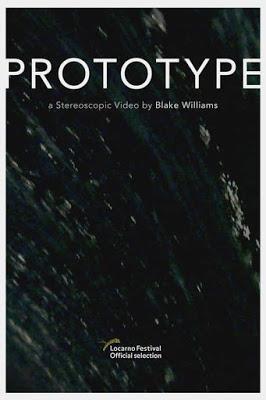
PROTOTYPE (2017)
A Big Ears movie. I never could quite get on this movie's wavelength, and given that this was an almost completely abstract 3D avant-garde feature, it was sometimes difficult for me to tell if this was because: 1. I was sitting in the very front row of the theater and thereby experienced a small measure of physical discomfort while watching; or 2. I'm truly just not tracking with what the film is doing. That said, this movie's use of archival footage of the 1900 Galveston hurricane and aftermath creates some occasionally indelible imagery, most notably during two sequences, one involving the layering of TV screens within the film's 3D space and the other concerning a completely abstract static of distorted imagery that slowly fades into footage of ocean waves. The latter has probably the coolest texture I've ever seen in a 3D movie. Grade: B-


Ulysses in the Subway (2017)
Another Big Ears movie. What the avant-garde collective of filmmakers behind this movie have done here is taken a field recording of a single trip on the New York subway and used some digital process to convert that sound into this abstract imagery. That's the whole movie: sometimes it looks like a wave form, and other times it looks like a tunnel or electrical lines or the rails of the train tracks themselves. This is the kind of movie that you have to be in a very particular kind of mood to enjoy, but luckily, that's where I was, and I found it frequently breathtaking, especially once I got tuned into enough the movie's hypnotic flow that the subtle changes the movie makes to its premise felt like bombs going on, or ghost reaching out their icy hands. Grade: B+


Kedi (2016)
I'm not really a cat person, so I'm not sure why I watched this, a documentary about stray cats in Istanbul. But it was on my Netflix queue, and so here I am. It was pretty boring. What can I say, I'm a monster. Grade: C


Sixty Six (2015)
More Big Ears. An experimental feature that, in the most obvious ways, is more a collection of shorts than a proper feature, all unified by the striking style: making collages of cutouts from old comic books and animating them to tell stories of varying levels of abstraction. The early goings get pretty dull at times, to be honest, but about midway through, it becomes apparent that aside from style, what's also unifying these pieces (particularly a lovely short set to "Clair de Lune" followed by a silent short completely devoid of any human figures) is the feeling of loneliness that pervades them—in particular, the loneliness you feel when you ruminate on memories and the ways life has changed and left you isolated from that past. The loneliness of nostalgia, I suppose you could call it. Grade: B-


Kiki's Delivery Service (魔女の宅急便) (1989)
Ghibli's heavy hitters are the visionary fantasies, and I love those, too, but honestly, I feel like the more consistent bet are the nostalgic, quietly sad coming-of-age flicks like this and Only Yesterday. So anyway, I finally filled in this blind spot in my Miyazaki viewing, and of course, it's very good and well-observed and small-scale melancholic in the best way, right down to its surprisingly stressful finale. Grade: A-


American Pop (1981)
The premise—telling the story of 20th-century American pop music through four generations of a single family—is interesting, but the execution indulges in the absolutely worst of musty music industry lies, the most notable being that the apex of American pop music is some white dude with a guitar (playing, to add insult to injury, Bob Seger, nonetheless). Even giving the film the tremendous benefit of the doubt that, in 1981, playing "Freebird" over the ending credits to your rock history movie was not yet a deeply unfortunate act of unintentional self-parody (to say nothing of the other Forrest Gump-level song choices), we're still left with a film that completely erases the role of people of color in American pop music. This is the kind of pass-the-Budweiser revisionism that makes me dislike Elvis and wish I didn't like Led Zeppelin so much, and it's putrid. That said, the movie looks amazing, and Ralph Bakshi was absolutely the right person to tell if not this story then a better execution of the same premise. Bakshi's usual parade of pop-art rotoscoping and mixed-media collage and the way that it captures both the weary grime and the irrepressible energy of the American urban landscape is never less than stunning on a visual level here. Shame about the rest of the movie, though. Grade: C

Books


The True Meaning of Smekday by Adam Rex (2007)
Adam Rex's alien-invasion novel veers between satire and farce in ways that aren't always beneficial to the satire end of things (a major thread depicting the invading Boov as a satirical analog to European colonialism is smart but muddled later in the novel by the introduction of a second race of alien invaders). But given how much Rex's prose and worldbuilding is indebted to The Hitchhiker's Guide to the Galaxy, that scatteredness shouldn't be surprising, given how much that original book is obsessed with incident and wordplay over consistent plotting or theme. Smekday isn't nearly so good as Hitchhiker, of course, but it shares that same rambling charm and goofy hilarity. The True Meaning of Smekday is very funny, especially in its details—a map of the "United State" of America, Arizona (where the alien race has relocated all Americans), is filled with renamed AZ cities like "The Democratic People's Republic of Phoenix" (ruled by harsh dictators and constantly torn by revolution, naturally) and "Las Vegas Dos," and mid-novel comic interlude tells the story of the Boov race, which involves a lot of asphyxiation. The quest of our protagonist, Gratuity Tucci, may not always hang together on the level of characterization or motivation, but the book itself is consistently entertaining and a great delight. Grade: B+