Sunday, December 30, 2018
Mini Reviews for December 24-30, 2018
This summary is not available. Please
click here to view the post.

Wednesday, December 26, 2018
Favorite Music of 2018
I listened to a ton of jazz this year, much more so than in previous years. I think I'm becoming one of Those People, which is fine, but given how much my siblings and I made fun of my dad for listening to jazz when we were growing up, it seems just the teensiest bit like some cosmic prank. Maybe free will really is an illusion, and we are all genetically predetermined to eventually fall into the same patterns of musical tastes as our parents. If so, I dread the CCM and Jim Croce phrase that will one day awaken in me from my mother's share of the DNA.
In all seriousness, here are my favorite albums of the year. As I've done the past few years, I've linked to my original reviews of albums, in case you'd like to read my initial thoughts in my weekly reviews posts. And as always, I feel compelled to mention that it is physically impossible to have listened to every music release, and some genres especially (e.g. metal and hip-hop) got short shrift this year from me. So be sure to fill me in on what I missed! Or to tell me how wrong I am! Or to send help to rescue me from my jazz impulses!


 3. Laurie Anderson & Kronos Quartet: Landfall
 4. Szun Waves: New Hymn to Freedom
 5. Noname: Room 25
 6. Father John Misty: God's Favorite Customer
 7. R+R=Now: Collagically Speaking
 8. Harriet Tubman: The Terror End of Beauty
 9. Helena Hauff: Qualm

In all seriousness, here are my favorite albums of the year. As I've done the past few years, I've linked to my original reviews of albums, in case you'd like to read my initial thoughts in my weekly reviews posts. And as always, I feel compelled to mention that it is physically impossible to have listened to every music release, and some genres especially (e.g. metal and hip-hop) got short shrift this year from me. So be sure to fill me in on what I missed! Or to tell me how wrong I am! Or to send help to rescue me from my jazz impulses!
Favorite Albums:

1. Let's Eat Grandma: I'm All Ears
Sometimes, it's not until I've lined up all the albums I've listened to in a year that I realize what my favorite is. It's not as if I've ever not loved I'm All Ears. It's great. But it's still something of a surprise to see it land here. But no matter. This is good music for goth indie kids, and great music for all-around nerds like yours truly.

2. Sleep: The Sciences
I'm really not much of a metal guy, and The Sciences was the only metal release I bought this year. But it owns. The tongue-in-cheek "marijuanaut" mythology, the heavy, heavy riffs—I dig it.

Eerie, spacious, apocalyptic: pretty much everything you'd want from a collaboration between Laurie Anderson & Kronos Quartet. I've probably spent more time thinking about "Nothing Left But Their Names" than any other one composition all year.
[Read original review]
[Read original review]

Astral jazz. I'm still not exactly sure how to describe it. I'ms till sure it owns.
[Read original review]
[Read original review]

I didn't listen to a ton of hip-hop this year, and my impression from people who do follow hip-hop more closely is that this was a bit of an off-year for the genre, Cardi B excepted (and I'm still pretty miffed that Cardi B's album never came out on CD, meaning I didn't really get to dive into it much). But Noname's album is really good! And if you're cheap, you can get it for free on her Bandcamp page!
[Read original review]
[Read original review]

I think this is the only 2018 album I gave an A grade on the blog. Grades are weird. I don't think any less of this album now, but somehow, an A doesn't feel right anymore (nor the #1 slot that would necessitate). But anyway, it's still very good. FJM pulling way back on the smirking and the social commentary and instead making a deeply personal record that sounds like the White Album but is a tight Revolver-esque single LP. Probably my favorite lyrics of the year, and certainly the one most likely to make me cry.
[Read original review]
[Read original review]

Probably the best recent example of jazz's ongoing attempt to position itself within contemporary pop music discourse, fusing trap and R&B with a real jazz-head lineup of Robert Glasper, Christian Scott, and Terrace Martin.
[Read original review]
[Read original review]

This jazz trio is back, serving up more of their electric Miles-style fusion. This time around feels particularly indebted to John McLaughlin's work, suffused with squalling electric guitars fed through some rather cosmic pedal effects. Very cool stuff.

I never got a chance to formally review this, but here it is: the rare electronica album to make it onto one of my year-end lists. This Hamburg-born, UK-based DJ still makes her brand of house music on analog machines, which I suppose could be regarded as something of a throwback. And, I mean, we're not in cutting-edge Arca territory or anything. But it's anything but resting on nostalgic laurels. This is exploratory music, setting its horizons wide. And even if it had been done before, just try telling me that "Hyper-Intelligent Genetically Enriched Cyborg" isn't great.

10. Thom Yorke: Suspiria: Music For The Luca Guadagnino Film
I'll be perfectly honest: this moody, ambient-leaning 81-minute OST is on this list almost entirely on the virtues of 6 songs and about 29 minutes of music: "Suspirium," "Has Ended," "Open Again," "Unmade," "Volk," and "Suspirium Finale." But WHAT VIRTUES. Almost definitely the best music of Thom Yorke's solo career.
Great 2018 Songs Not On These Albums:
Beach House: "Dive"—Beach House didn't exactly re-invent themselves this year, but they did manage to take their music in the most interesting direction (meaning, any direction at all) in years, chopping up their usual sounds into dance beats and odd structures and strange acoustics. "Dive" is the perfect execution of this new inspiration, beginning as what sounds like a spaced-out, Beach-House-y version of Belle & Sebastian's "Electronic Renaissance" before, at its midpoint, exploding like a turning kaleidoscope into an anthemic collision between shoegaze and Arcade Fire indie pomp. It's awesome.
Daughters: "Long Road, No Turns"—A venomously sarcastic explosion of a song reminiscent of the 1980s' No Wave, but lyrically, it's all 2018: "It may please your heart to see some shackled, wrists and throat naked as the day they were born, but no one's going to do that for you." Whether you read that politically or personally, the power of the lines is unshakable.
Ariana Grande: "thank u, next"—Sweetener was a really good pop album, but nothing there comes within spitting distance of this non-album single, a track that stands alongside Beyoncé's "Irreplaceable," Kelly Clarkson's "Since U Been Gone," and Taylor Swift's "All Too Well" as one of the great breakup songs of the 21st century. In the grand tradition of the best breakup songs, it postures confidence and dismissal (that chorus, y'all) while being laced with crippling sadness. Skip the Mean Girls music video, though, because that's so uninspired baloney.
Jenny Hval: "The Long Sleep"—The centerpiece of Hval's excellent 2018 EP is a 10-minute, hypnotic ambient track. Hval remains one of the best at finding the cavernous unexplored spaced in indie rock, and this is a great exhibition of that.
Carly Rae Jepsen: "Party for One"—Quit teasing us, Carly; where's that new LP??
Janelle Monáe: "Pynk (feat. Grimes)"—Unfortunately, not a ton has stuck with me from Dirty Computer (a first for me and a Monáe album). The two exceptions are great exceptions indeed: the slinky Prince-esque banger "Make Me Feel" and this, the tender, soaring PC Music-ish pop gem. They're both good, but if I'm going to be only giving props to one, it's gotta be "Pynk." Maybe it was just the music video.
Preoccupations: "Espionage"—Preoccupations seems to have become one of those bands that everyone kind of agrees puts out good music but to whom nobody really gives the time of day. Maybe it's because they're a post-punk guitar-rock band, and 2018 just isn't the year for that. But it's too bad, because their music pretty much owns, especially "Espionage," which is propulsive and brooding in that specific combination that only post-punk can really evoke.
Pusha T: "What Would Meek Do (ft. Kanye West)"—Outside of the political ramifications (which are bad), one of the most unfortunate things about Kanye West's on-again/off-again MAGA embrace is that it overshadowed some of the actually really good work that came out of the Wyoming sessions. Pusha T's DAYTONA is front-to-back strong, but my favorite is, unsurprisingly, the one with the beat based off a Yes sample, because I am nothing if on-brand. Also, though I might be falling victim to the very same Kanye-based overshadowing that I just complained about, I'd be remiss if I didn't mention that it's got what's probably Kanye's best, most thoughtful verse of the year, wherein he wonders if his MAGA stunts will protect him from racial profiling. Like... I dunno, y'all. It's good.
Robyn: "Missing U"—For me, Robyn continues to be mostly a singles artist, which is fine, because the singles are great. This one in particular. Crying in the club with the best of them.
Jeff Rosenstock: "USA"—A 7-minute punk-rock epic that ends with everyone shouting "Et tu, USA." It's kind of shameless, but it's also kind of great.
Sons of Kemet: "My Queen Is Harriet Tubman"—Probably the most energetic jazz release I heard this year was Your Queen Is a Reptile, a fusion of jazz, worldbeat, and black nationalism. Presumably with this song, they are talking about the abolitionist hero and not the jazz trio featured on the albums section of this list, but I'd accept either answer.
SOPHIE: "Immaterial"—I was thinking that SOPHIE's demented, bludgeoning pop(?) album, OIL OF EVERY PEARL'S UN-SIDES was going to make my top 10 albums, but then the CD release of the album was pushed back, and I didn't get a chance to dive in as deeply as I would have needed to justify that top-10 spot. But anyway, here's the album's catchiest, sunniest song, which I like a ton.
Spiritualized: "On the Sunshine"—Pretty much classic Spiritualized, if a tad less tortured (so, good for Jason Pierce). You've got Pierce's droning vocals, the swelling guitars, the eclipsing feedback, the wild brass. My thing exactly.
St. Vincent: "Fast Slow Disco"—Annie Clark's lone full-length release this year was a slow, acoustic re-imagining of last year's Masseduction tracks, but her best work this year is in the exact opposite direction: "Fast Slow Disco," a faster, poppier, dancier, better iteration of what was already one of Masseduction's standouts. Bonus points for the excellent music video.
Underworld & Iggy Pop: "Bells & Circles"—"Losing My Edge," but ragging on Baby Boomers. Iggy Pop gives a hilarious vocal performance as a ranting, great-uncle-like character who complains that nowadays "nobody wants you to be able to do the things that make you feel good," like smoking on airplanes and sexually harassing airplane stewardesses. The lyrics turn increasingly crazed and surreal as the driving Underworld beat becomes more and more sinister. Profoundly funny and disquieting at the same time.
U.S. Girls: "Time"—It was a great year for female-fronted indie rock, and if I hadn't been such a loser listening to so much jazz, more of it would have made it onto my album list. You can't do much better than this careening closer to U.S. Girl's In a Poem Unlimited.
Kamasi Washington: "Will You Sing"—Speaking of closing tracks, here's the finale to Kamasi Washington's epic Heaven and Earth. As Washington steps further away from the Coltrane-style hard bop he cut his teeth on and more toward ornate, symphonic jazz, he's sounding more and more like Ennio Morricone, and "Will You Sing" is Washington's very own "Ecstasy of Gold."
Kanye West: "Lift Yourself"—Maybe Kanye just did it for the memes. But I'm serious when I say that this is a legitimately great piece of avant-garde hip-hop. There's a playfulness on display here, and not just with the literal scat lyrics but with how the song plays with its structure and its central soul sample in a way that feels fresh and interesting and fun. Kanye is at the nexus of a lot of what is terrible about 2018, and his position there is almost entirely his own fault, which is both infuriating and dispiriting (and worrying, given his recent statements about his stance toward his medication). But I am at least grateful that he left us this before he completely jumped off the deep end.
Great 2018 Songs Not On These Albums:
Beach House: "Dive"—Beach House didn't exactly re-invent themselves this year, but they did manage to take their music in the most interesting direction (meaning, any direction at all) in years, chopping up their usual sounds into dance beats and odd structures and strange acoustics. "Dive" is the perfect execution of this new inspiration, beginning as what sounds like a spaced-out, Beach-House-y version of Belle & Sebastian's "Electronic Renaissance" before, at its midpoint, exploding like a turning kaleidoscope into an anthemic collision between shoegaze and Arcade Fire indie pomp. It's awesome.
Daughters: "Long Road, No Turns"—A venomously sarcastic explosion of a song reminiscent of the 1980s' No Wave, but lyrically, it's all 2018: "It may please your heart to see some shackled, wrists and throat naked as the day they were born, but no one's going to do that for you." Whether you read that politically or personally, the power of the lines is unshakable.
Ariana Grande: "thank u, next"—Sweetener was a really good pop album, but nothing there comes within spitting distance of this non-album single, a track that stands alongside Beyoncé's "Irreplaceable," Kelly Clarkson's "Since U Been Gone," and Taylor Swift's "All Too Well" as one of the great breakup songs of the 21st century. In the grand tradition of the best breakup songs, it postures confidence and dismissal (that chorus, y'all) while being laced with crippling sadness. Skip the Mean Girls music video, though, because that's so uninspired baloney.
Jenny Hval: "The Long Sleep"—The centerpiece of Hval's excellent 2018 EP is a 10-minute, hypnotic ambient track. Hval remains one of the best at finding the cavernous unexplored spaced in indie rock, and this is a great exhibition of that.
Carly Rae Jepsen: "Party for One"—Quit teasing us, Carly; where's that new LP??
Janelle Monáe: "Pynk (feat. Grimes)"—Unfortunately, not a ton has stuck with me from Dirty Computer (a first for me and a Monáe album). The two exceptions are great exceptions indeed: the slinky Prince-esque banger "Make Me Feel" and this, the tender, soaring PC Music-ish pop gem. They're both good, but if I'm going to be only giving props to one, it's gotta be "Pynk." Maybe it was just the music video.
Preoccupations: "Espionage"—Preoccupations seems to have become one of those bands that everyone kind of agrees puts out good music but to whom nobody really gives the time of day. Maybe it's because they're a post-punk guitar-rock band, and 2018 just isn't the year for that. But it's too bad, because their music pretty much owns, especially "Espionage," which is propulsive and brooding in that specific combination that only post-punk can really evoke.
Pusha T: "What Would Meek Do (ft. Kanye West)"—Outside of the political ramifications (which are bad), one of the most unfortunate things about Kanye West's on-again/off-again MAGA embrace is that it overshadowed some of the actually really good work that came out of the Wyoming sessions. Pusha T's DAYTONA is front-to-back strong, but my favorite is, unsurprisingly, the one with the beat based off a Yes sample, because I am nothing if on-brand. Also, though I might be falling victim to the very same Kanye-based overshadowing that I just complained about, I'd be remiss if I didn't mention that it's got what's probably Kanye's best, most thoughtful verse of the year, wherein he wonders if his MAGA stunts will protect him from racial profiling. Like... I dunno, y'all. It's good.
Robyn: "Missing U"—For me, Robyn continues to be mostly a singles artist, which is fine, because the singles are great. This one in particular. Crying in the club with the best of them.
Jeff Rosenstock: "USA"—A 7-minute punk-rock epic that ends with everyone shouting "Et tu, USA." It's kind of shameless, but it's also kind of great.
Sons of Kemet: "My Queen Is Harriet Tubman"—Probably the most energetic jazz release I heard this year was Your Queen Is a Reptile, a fusion of jazz, worldbeat, and black nationalism. Presumably with this song, they are talking about the abolitionist hero and not the jazz trio featured on the albums section of this list, but I'd accept either answer.
SOPHIE: "Immaterial"—I was thinking that SOPHIE's demented, bludgeoning pop(?) album, OIL OF EVERY PEARL'S UN-SIDES was going to make my top 10 albums, but then the CD release of the album was pushed back, and I didn't get a chance to dive in as deeply as I would have needed to justify that top-10 spot. But anyway, here's the album's catchiest, sunniest song, which I like a ton.
Spiritualized: "On the Sunshine"—Pretty much classic Spiritualized, if a tad less tortured (so, good for Jason Pierce). You've got Pierce's droning vocals, the swelling guitars, the eclipsing feedback, the wild brass. My thing exactly.
St. Vincent: "Fast Slow Disco"—Annie Clark's lone full-length release this year was a slow, acoustic re-imagining of last year's Masseduction tracks, but her best work this year is in the exact opposite direction: "Fast Slow Disco," a faster, poppier, dancier, better iteration of what was already one of Masseduction's standouts. Bonus points for the excellent music video.
Underworld & Iggy Pop: "Bells & Circles"—"Losing My Edge," but ragging on Baby Boomers. Iggy Pop gives a hilarious vocal performance as a ranting, great-uncle-like character who complains that nowadays "nobody wants you to be able to do the things that make you feel good," like smoking on airplanes and sexually harassing airplane stewardesses. The lyrics turn increasingly crazed and surreal as the driving Underworld beat becomes more and more sinister. Profoundly funny and disquieting at the same time.
U.S. Girls: "Time"—It was a great year for female-fronted indie rock, and if I hadn't been such a loser listening to so much jazz, more of it would have made it onto my album list. You can't do much better than this careening closer to U.S. Girl's In a Poem Unlimited.
Kamasi Washington: "Will You Sing"—Speaking of closing tracks, here's the finale to Kamasi Washington's epic Heaven and Earth. As Washington steps further away from the Coltrane-style hard bop he cut his teeth on and more toward ornate, symphonic jazz, he's sounding more and more like Ennio Morricone, and "Will You Sing" is Washington's very own "Ecstasy of Gold."
Kanye West: "Lift Yourself"—Maybe Kanye just did it for the memes. But I'm serious when I say that this is a legitimately great piece of avant-garde hip-hop. There's a playfulness on display here, and not just with the literal scat lyrics but with how the song plays with its structure and its central soul sample in a way that feels fresh and interesting and fun. Kanye is at the nexus of a lot of what is terrible about 2018, and his position there is almost entirely his own fault, which is both infuriating and dispiriting (and worrying, given his recent statements about his stance toward his medication). But I am at least grateful that he left us this before he completely jumped off the deep end.
Sunday, December 23, 2018
Mini Reviews for December 17-23, 2018
2018 catch-up time.


Movies

Mandy (2018)
I'm far from the first to observe that there is a prog half of this film and a metal half, and given that I have a whole section of my blog devoted to progressive rock, there's no surprise which half of this movie I prefer. That said, there's definitely a version of the movie's second half that I would enjoy very much: maybe it's all just for the memes, as some people have insinuated, but a movie in which Nicolas Cage gives a performance of loony Face/Off-style intensity while going on a cartoonishly violent rampage to kill lizard-people cultists sounds like a good time and a half to me. But here, being only half the movie, it feels somewhat cut off at the knees, and besides, juxtaposed with the far trippier, wilder first half of the movie, it feels like a disappointingly ordinary way to finish a film that opens with a bravura credits sequence set to King Crimson's "Starless." In fact, juxtaposed with director Panos Cosmatos's previous feature, Beyond the Black Rainbow, which remains one of the great cinematic sensory experiences of the 2010s, even the first half of the movie feels disappointingly ordinary. I dunno, maybe the secret to Black Rainbow was that it was impossible to track the plot; even when Mandy is going full Yes album, it's never that difficult to follow, and it just becomes clear that there's not a lot going on beyond the diluted psychedelia. Inspired in spots but unsatisfying overall. Grade: B-

Roma (2018)
As with most of Alfonso Cuarón's output, there's a sort of nagging feeling that this dude is just showing off with all the precisely choreographed long takes and immaculately blocked cinematography (this time filmed and edited not by his longtime collaborator Emmanuel Lubezki but by Cuarón himself—all the more reason to think he's simply flexing here). And the schematic screenplay, which somewhat contrivedly has grand character confessions and shocking revelations intersect at exactly the moments of highest cinematic sheen, bears this out. But honestly, I don't care one bit how artificial it feels when the results are this gorgeous. It's without a doubt the most visually stunning film I've seen all year, as well as the most pristinely constructed. And as much as the underwritten touches might undercut some of the character development, the cinematic style lifts it right back up again; those long takes tracking through crowded streets and violent tableaus become a sort of characterization of their own, crafting a grandly tragic emotional landscape nearly whole cloth from the film style alone, and as much as I can intellectually pick apart some of the decisions on paper, I didn't have much trouble getting swept up either. Grade: B+

The Green Fog (2018)
That something which, on paper, seems to amount to nothing more than an impressively-but-pointlessly difficult and theoretical archival project (recreating Hitchcock's Vertigo by stitching together footage from other films) actually adds up to a functional movie is sort of miraculous on its own. That it's not only one of the best movies of the year but also one of the funniest and also one of the most beautiful is nothing short of impossible. But here we are, with this amazing little impossible movie somehow existing and being great, having slipped in from another dimension or something. AND TO BOOT, it's got probably the best use of Michael Douglas in a decade, possibly in his whole career. Grade: A

Fahrenheit 11/9 (2018)
I don't know why Michael Moore didn't just make a full movie about the Flint water crisis, since that's far and away the best part of this scattered, shambling movie. Moore's populist fury for what has been done to his hometown remains his most compelling characteristic, and the 30 minutes that the film devotes to the whole sordid disaster is borderline great and alone probably justifies Moore's sharp turn toward actual agitprop in this film. However, the rest of the movie is this whirlwind of what feels like a survey of Daily Beast headlines from the past 2-3 years, unified under the really vague umbrellas of "Donald Trump" and "activism." Full of Moore's typical bluster and stuntery (hey, you lip-synced Adolf Hitler footage with audio of a Trump speech, you sure owned the MAGA crowd, don't know how they'll recover from that one), it's this heap of a film that just kind of flops around under its own many-tentacled weight, and it just plain doesn't work. It's viscerally upsetting because watching footage of the Stoneman Douglas shooting or Trump's threats toward protesters is viscerally upsetting just by virtue of those events having occurred at all. But as a coherent take on the modern American political landscape or even as the call to revolution that the finale so dearly wants to be, this is just ineffectual thunder. Grade: C

Food, Inc. (2008)
Normally, I would damn with faint praise by lumping this in with the rest of that tedious activistcore wave of documentaries from the mid-2000s. And... it's not like this isn't that (though it has good taste lacking in every other activist docs, in that it forgoes the obligatory ironic animated sequence). But this film's argumentation against industrial farming is particularly ruthless and cleared-eyed—impressively so. It also yields two legitimately great documentary moments. One involves a beef farmer cutting a hole in the side of a living cow and excitedly showing the camera how he can reach his hand into one of the cow's stomachs like it's the greatest thing since the microchip. The enthusiasm is infectious, both figuratively and literally (being part of a whole segment involving E. coli in meat). Errol Morris would be proud. The other, much more in-tune with the doc's overall rhetorical aims and almost without a doubt the most pointed and effective use of the film's take-no-prisoners posture, is when footage of immigrants being shoved into vans by immigration officials after raids of meat-packing plants plays over audio of an impassioned interview which tells us relentlessly that this is the real cost of our holiday hams and turkeys. It's the film's most bracing deployment of pathos, or at least it is for me eight months after a mass-scale version of that footage occurring just a county over from my house. Grade: B

Beverly Hills Cop (1984)
I mean, this is certifiably pro-cop in this really icky "ends justifying the means" way, to say nothing of the '80s trademark homophobia on display in a few key scenes (apparently the only thing more villainous than a vaguely Russian drug dealer is a vaguely Russian drug dealer who might be gay). But Eddie Murphy is extremely good in this movie—so good that he does a decent job of papering over some of the more objectionable qualities of his character. This is maybe the best Murphy performance that I've seen, and while that's not exactly saying much, given that I've seen only a handful of pre-Shrek Murphy roles, it is pretty stunning what he's doing here. Grade: C+

Vanishing Point (1971)
I'm of two minds regarding this film. Well, of many minds, actually. The film is complete and utter worship of the automobile, which my train-loving spirit objects to strongly, to say nothing of the mythologizing of the Ruggedly Individual American Male, which just sort of bores me. But also, as something of a 20th century folk tale, with all the kaleidoscopic cul-de-sacs and slippery meanings that come with the genre—I mean, is it a lionizing of the Ruggedly Individual American Male, what with that self-destructive ending and all? It's not as simple as it seems. But also, it falls handily into the fallacy of reducing the counterculture to a mere quest for Freedom, Maaaaan, wherein anti-authority sentiments are an end to themselves, which is the same kind of thinking that landed the movement at Altamont and later Ronald Reagan. So screw that. But also... maybe this movie is aware of that? But not enough to avoid casting its almost arbitrarily defiant (and of course white—they're always white, the salvific figures of these counterculture movies) protagonist as some sort of larger-than-life hero of the people? But also, the car goes vroom, and the rock music kicks, and the cinematography is brilliant. I dunno, man, I gotta lotta feelings here, and most of the time, I was feeling like I was having a good time. Grade: B
Television

Joe Pera Talks with You, Season 1 (2018)
I don't even know where this came from. Seemingly out of the clear blue sky (or, more likely, the cold, overcast sky of Michigan's Upper Peninsula) appears this beautiful little Adult Swim gem, featuring none of the aggressive weirdness that's characterized the Adult Swim brand, instead going for a quiet, contemplative wholesomeness that feels more in-line with, like, Mr. Roger's Neighborhood or The Joy of Painting—only infused with an idiosyncratic philosophic impulse and a deep well of melancholy that makes every one of its 11-minute episodes feel like something of a soft-spoken treatise on the human experience. I barely know how to describe it; what I'm saying here barely conveys the wonderfulness of Joe Pera Talks with You. When people talk about "Peak TV," they're usually referring to the explosion of ambitious content on streaming services, but honestly, this is the Peak TV I'm here for: these graceful little pockets of brilliance in the odd corners of the television landscape, both a piece of television tradition and curiously apart from it. Seriously, go watch this, folks. Grade: A
Books

The Slippery Slope by Lemony Snicket (2003)
The tenth book in A Series of Unfortunate Events is something of a transitional book. Being set on a relatively nondescript mountainside for its entirety, the novel lacks the inventiveness and little satirical microcosm societies that the best books in the series often develop; it's also something of an info-dump as far as the ongoing mysteries in the series go, which feels uncharacteristically inelegant for these books. But it's still that same wonderful wit as the other books, and Snicket's metafiction is both funny and interesting in the ways it's developed here. The payoff to all the ethical questions of the previous few books feels earned, too. Grade: B
Music

Noname - Room 25 (2018)
Chicago rapper's sophomore effort (or debut, if we're counting 2016's Telefone as a mixtape instead of an album, which... is confusing, but okay) is jazzy in production and quietly profound in its exploration of both the personal and the social. But let's take a moment just to appreciate how uproariously funny Room 25 is: "My pussy teaches 9th-grade English/My pussy wrote a thesis on colonialism" is maybe the funniest lyric in any music anywhere this year. Grade: A-
Sunday, December 16, 2018
Mini Reviews for December 10-16, 2018
It's 2018-catch-up time, y'all.




Movies

Spider-Man: Into the Spider-Verse
I'm not an avowed superhero movie hater, but I have been pretty frustrated at the Marvel corner of the genre's insistence on doubling down on some of the more irritating aspects of superhero comics (the convoluted interconnectivity of stories, the increasingly burdensome continuity, the reliance on "game changing" plots that just actually mask a commitment to the storytelling status quo) while ignoring some of the best elements (the visual splendor, the playful fluidity of characters and storytelling types allowed by decades of different writers piling storylines onto the same universe). Into the Spider-Verse reverses this to great effect, being not just the best-looking superhero movies of this year (of all time??) but also being the one superhero movie that truly capitalizes on the fact that, by golly, comics are weird as hell so let's just lean into that as hard as we can and see what happens. It's great. Visually, it's the rare polygonal, computer-animated feature that actually uses CG animation for every inch of possibility that the format is worth. The film's mixed-media, collage approach is some of the most formally radical animation I've ever seen in a mainstream American animated feature; it's closer to the work of Masaaki Yuasa than anything I can think of in North America, and the film's climax, which is basically a fight scene set within a complete abstraction of computer rendering, filled with free-floating polygons and digital noise, feels entirely without precedent. On a storytelling level, Into the Spider-Verse feels a lot like The Lego Batman Movie's approach to superhero mythology, diving right into the weirdest, most uncool corners of the superhero's past with gleeful abandon—it's one thing to make fun of the way the Amazing Spider-Man storylines have trended toward wallowing self-pity; it's an entirely different ballgame even to acknowledge the existence of Peter Porker, the Spectacular Spider-Ham, and that's the game Into the Spider-Verse is playing. Like Lego Batman, there are parts of this plot that feel like they're held together with string, and the movie is, frankly, overstuffed to the point of shortchanging far more characters than I'd like. But to its credit, it's also got much more serious things on its mind than Lego Batman, using this bizarre confluence of all the various Spider-Man bric-a-brac not just to tell a compelling story for the in-movie characters (Miles Morales's plot is legitimately moving in a way that gets at the real heart of Spider-Man like no other film since the second Sam Raimi Spider-Man film) but also to gently nudge its own fandom into realizing how absurd it is to gripe about the changing (and diversifying) superhero landscape when there are things like Spider-Ham and Spider-Man Noir rumbling out there in canonized past that so-called purists want to preserve; what the film does with Kingpin is as effective (and subtle) a take on white male internet rage as anything I've seen recently—take that, Ralph Breaks the Internet! Grade: A-

The Favourite (2018)
Watching this movie, I thought for sure it was using quasi-historical figures to make a parable about modern authoritarianism and the self-motivated sycophancy politics that springs up in its wings. But no, this movie is shockingly historical, at least more so than I realized when I was watching it—emotionally ill-adjusted tyrants and their aspiring puppet masters are just evergreen, I guess. But anyway: you could do a lot worse with adapting the Queen Anne/Sarah Churchill/Abigail Hill scenario for the screen than the razor-witted insult comedy fronting a deeply twisted sexual power game that The Favourite is: All About Eve for the 18th century, you could say. The three leads (Olivia Colman as the queen, Rachel Weisz as Sarah, Emma Stone as Abigail) are all tremendous, chewing over the screenplay's wicked turns of phrase with visible delight; the costumes and set design are exquisite; the camerawork, restless and often filtered through a fish-eye lens that serves the pervert the setting's ostensible "high class" even further than the characters themselves do, feels like a pointed subversion of Barry Lyndon, the inevitable (only?) 18th-century-set film to which this one will inevitably be compared; the film's disdain for the monarchy and aristocracy is never not great. This movie ticks a lot of my boxes, and if it's sadistic to say I had a great time with it, I think I at least had an engaging time with it, which is more than I can say for The Killing of a Sacred Deer. Grade: B+

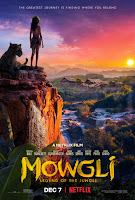
Mowgli: Legend of the Jungle (2018)
The other heavily-CGI Jungle Book movie of recent years. Disney being Disney of course was able to muscle its way into a mainstream theatrical release, leaving this one to float around from medium to medium before landing on Netflix, and while I remember Disney touting the 2016 Favreau adaptation as something of a return to the darker tone of the original Kipling book, don't be fooled: Mowgli: Legend of the Jungle is far more in-tune with Kipling's sensibilities than anything Disney could muster. There are no songs, only the folk-myth power hierarchies and jungle battles that Kipling evoked of his beloved (if patronized) India. It's a strange and somewhat ethereal movie grounded only by its strikingly brutal PG violence, though there are some tonal and structural issues; people forget that Kipling's Jungle Book is essential a short story cycle, and Mowgli sometimes struggles to figure out how to stitch those stories together into a coherent film—the iconic monkey palace scene feels entirely expendable and disconnected from the larger thrust of the plot. If I were making this, I'd abandon the idea of a coherent plot altogether and just go full anthology film. But I didn't make the film, so here we are. More fascinatingly flawed than truly "good," but probably worth a watch anyway for those interested in the project of adapting Kipling to screen. Grade: B-

Shirkers (2018)
The opening minutes of Shirkers—a montage of abstract footage, often upside-down and/or reversed and/or in photonegative—promise a much more formally wild film than we ultimately get, which is both disappointing and something of a relief (I love me some avant-garde, but on a school night? In this economy?). What Shirkers actually is is something like a cross between a personal essay and a twisty docu-drama mystery not all that different from this year's Three Identical Strangers or 2009's Art of the Steal), in which Singapore-born filmmaker Sandi Tan recounts the very strange saga of how her debut feature was stolen by a French-New-Wave-obsessing con man. It's as much an autobiography as it is a mystery, and the best parts of the movie have nothing to do with the central yarn at all and have more to do with Tan's friends (who were involved with the making of her debut) reminiscing about their prickly relationship with Tan herself. Grade: B

The Meg (2018)
Everyone's least-favorite part of Titanic is the framing device where all the douchey treasure hunters are using the submersible to explore the ocean depths, but let me ask you this: what if we made a whole movie about that framing device? Not sold? Well, what if we added a gigantic prehistoric shark to the mix? Hm? HMM?? This is definitely a "They don't make 'em like they used to" type of movie, though I suppose your excitement about this particular film is based on how much you wish they still made dumb '90s action movies. I'm mostly ambivalent, but there is something charmingly quaint about it all. Grade: C+

The Voices (2014)
A strange little black comedy whose tonal slips effortlessly (and disorientingly) among actual horror, indie-dramedy quirk, animal reaction shots, and borderline-surreal gore humor. It doesn't cohere at all, but it's an interesting little experiment with a knock-out performance by an unsettling Ryan Reynolds (maybe not his BEST role, but certainly his most impressive). It also saves its most sublime surprise for the end, with the credits, "Directed by Marjane Satrapi." I guess I knew in theory that she did more than Persepolis, but I'll be damned if I could have guessed that her name was going to pop up here, of all places. Grade: B-
Music

Szun Waves - New Hymn to Freedom (2018)
Sorta this jazz-fusion/space-rock/ambient thing. You know, for as much as I listen to jazz, I still really don't have the vocabulary to describe it very well, and that goes doubly for some of the more fusion-y, unconventional stuff, of which New Hymn to Freedom definitely qualifies. Consisting of six entirely improvised compositions performed by a trio—Luke Abbott on synths, Laurence Pike on drums, Jack Wyllie on saxophone—it's a real journey, feeling like the intersection of Sun Ra and Aphex Twin and John Coltrane. In fact, the opening motif of "Constellation," the first track, feels like a synth version of Coltrane's "Acknowledgement" from A Love Supreme, and if you can imagine A Love Supreme as filtered through those influences and slowed down a bit, you'd have a pretty good idea of what to expect here. Whatever it is, I like it a lot. Grade: A-
Sunday, December 9, 2018
Mini Reviews for December 3-9, 2018
Can this semester please be over now?




Movies

Crazy Rich Asians (2018)
I am profoundly ambivalent on the fact that 2018's "romcom revival" seems intent on reviving the romcom as defined by the mid-2000s, my least-favorite era of the genre's history. Could we not have revived the screwball romcom? Or the walking-and-talking, When Harry Met Sally-style romcom? Anyway, Crazy Rich Asians is a strikingly faithful evocation of the mid-2000s romcom wave, not just in its plotting tropes (though lordy, they're all there, from the gay friend to the kooky best friend to the third-act breakup to the air-travel-related climactic proposal to even the music cues, which consist of Mandarin covers of the usual suspects of 2000s pop music, right down to Coldplay's "Yellow") but also in its half-hearted, underwritten execution. I understand why people are excited about the way this movie transposes the whole genre into a heritage heretofore unrepresented within the genre. Heck, I was stoked just by how this year's crypto-PureFlix Little Women depicted some of the nuances of the homeschool experience so well, so I can only imagine how gratifying it must be for Asians and Asian-Americans to see a mainstream Hollywood film evoke their experiences with this much specificity (though I myself don't have the heritage to recognize most of the details of that specificity). But still—I was never too jazzed about this type of movie to begin with, and representational milestones are only so compelling when the results are basically Monster-in-Law. I will say this, though: the sets and costuming in this movie are AMAZING, and the one considerable difference that Crazy Rich Asians has from most 2000s romcoms (besides culture) is that it is consistently, jaw-droppingly spectacular on the mise-en-scène front in a way that's usually reserved for lush period dramas and effects-heavy action extravaganzas. The movie's characters are as crazy-rich as advertised, and the film makes the absolute most it can out of that fact, filling every single frame with some of the most dazzling lifestyle porn I have ever seen in a movie. Down with the oligarchical rich, etc., sure, but y'all, this is the magic of cinema. If this film doesn't win the Production Design and Costume Design Oscars, it will be a heinous crime against self-evident excellence. Grade: C+

Cam (2018)
This thriller begins a bit more conventionally than I would like, puttering around just a little too long on the screen-watching end of the "cam girl" world that it lives in. But once this gets going, it gets into some seriously weird doppelganger stuff—if not full-on Persona-level reality-breaking (though several sublime moments get close in the most deliciously drawn out pieces of disorientating tension I've seen all year—you'll know it: "GET OUT OF MY ROOM"), then definitely akin to what's going on in Altman's 3 Women. The film's climax is nearly transcendent in its doubling down on mirrored imagery. Very much My Thing. Grade: B+

War on Everyone (2016)
Well, this was terrible. A satirical take on police corruption and brutality that forgets to be a satire, which leaves us with nothing more than a "haha, isn't it hilarious how terrible these cops are?" thing. The answer, of course, is NO, it's not even mildly amusing. I take that back: Michael Peña is mildly amusing by virtue of being Michael Peña and therefore gifted with great comic timing and line delivery. But the rest of the movie is awful and intentionally offensive in that dreadful manner that's not so much punk rock or insightful as it is indicative of a lazy white dude sitting on the couch thinking he's clever by virtue of just hurting people's feelings in elaborate and profane ways. Also, the plot makes no sense and feels rushed in delivery: a real "the food is terrible—and such small portions!" situation here. Grade: D+

Happy Valley (2014)
This movie's larger point—that the intersecting cultures of football fandom and male hero worship create an atmosphere that reinforces dominant culture to the detriment of those hurt by the dominant culture—is a familiar one. But there's something uniquely powerful about this film's documentary footage of Penn State football fans ranting about how of course they care about those sexually abused by Jerry Sandusky, blah blah blah, but WON'T SOMEONE THINK OF THE FOOTBALL PROGRAM?!? Like I said, a familiar point, but it's not every day you get to see a mob of angry football fans basically start a riot over the punishment of those complicit in child abuse. Talk about making your subtext text. Grade: B+
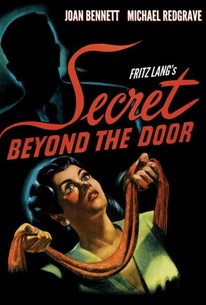
Secret Beyond the Door (1947)
A film-noir adaptation of the "Bluebeard" fairy tale incorporating a heavily Freudian lens on the story and directed by Fritz Lang—and somehow it's boring?? The math just doesn't add up, but that's the score, folks. The film's biggest gaffe is turning the relatively straightforward Bluebeard story archetypes into a convoluted family melodrama in the style of Rebecca, only unlike Hitch's very good earlier film, Secret Beyond the Door's script is nowhere near nimble enough to juggle all the various pieces, and consequently, important pieces of information zip by in the blink of an eye while inessential scenes linger well past ripening (especially during the movie's extremely protracted beginning—why does it take so long for the titular door to show up?). It's Fritz Lang, so it all looks really good (if never nearly as stunning as the director's best), and the Freudian stuff is a pretty interesting take on the material, once we get there—though grounded in some deeply regressive ideas about gender, because... well, Freud. But none of that makes the movie's long stretches of tedium any more fun, nor does it explain how such a waterproof concept let all the water leak out. Grade: C
Television

GLOW, Season 1 (2017)
Netflix's half-hour dramedy about the world of '80s women's wrestling shares a couple of producers with one of the foundational "Netflix Original Series" experiments, Orange Is the New Black (one of whom is Jenji Leslie Kohan, that earlier show's creator), and it's not hard to see the shared DNA: a sprawling, diverse cast of mostly women, the juxtaposition of quirky sitcom humor with serious dramatic stakes, a fascination with society's margins, an interest in peeling back the layers of (often male) power that affect the female experience, an exploration of the intersections of gender, class, and race. It's a lot less ambitious and a lot more outwardly comedic in its premise (professional wrestling vs. mass incarceration... you get it) than its spiritual predecessor, and as such, it falls down on its face a lot less frequently than OItNB; it's also a lot more comfortable to just let its character interactions be an end to themselves, and GLOW is mostly free of the thematic mouthpieces that are frustratingly a cornerstone of most OItNB episodes. Basically, it's the irreverent middle child to Orange's valedictorian, eager-to-please oldest child. That GLOW has a lot less to prove (and therefore can take a more lackadaisical route to its end) than its predecessor is a testament to just how much terrain OItNB cleared in its first few years; it's also a great example of how a lot of the creative energy of American independent film has recently found a home on television rather than in cinemas. I cannot imagine anything resembling GLOW appearing on televisions even just ten years ago, but it feels very much akin to what was happening 15-20 years ago in independent cinema, and honestly, there's not a lot—neither thematically nor stylistically—separating GLOW from, say, this year's Support the Girls (written/directed by American indie veteran Andrew Bujalski). All of which is to say that GLOW's first season is a lot of fun, bolstered by an absolutely killer ensemble and directed with a non-intrusive but sharp style. Moreover, it understands the theater of wrestling better than most media I've seen, and the way it interweaves character dynamics with the piece-by-piece construction of an aesthetic of wrestling pays off marvelously in the genuinely rousing season finale, in which the women tape their first episode, an elaborate exhibition of solidarity among these disparate characters. It takes a bit to get there, and honestly, the first third of the season is not great (not coincidentally, when the women's stories exist mostly in isolation of one another), but the back half of the season is a marvel. Grade: B+
Music

Ariana Grande - Sweetener (2018)
It's not as if Ariana Grande needs to prove that she's one of the best pop stars of our current moment, and honestly, "thank u, next" has deservedly overshadowed this album. But let's think back to mid-August, those halcyon days of summer before all the nasty winter weather, and remember that one of our best pop stars released an album this good without even including her best song of the year on it. It's a record that's by turns tender and confident, sometimes in the same song ("Sweetener," "No Tears Left to Cry"), walking that well-trod path of empowerment pop and heartbreak soundtrack in a way that feels all her own. It's a pop album, so there's going to be some filler and awkwardly placed singles (I'm not a huge of "The Light Is Coming" nor its sequencing within the album), but those instances are relatively few and far between for this genre. Anyways, "God Is a Woman" covers a multitude of structural sins. Grade: B+
Sunday, December 2, 2018
Mini Reviews for November 26-December 2, 2018
Happy December, everyone.


Movies

Ralph Breaks the Internet (2018)
There's a moment in the mid-film sequence where Vanellope finds herself in a physical manifestation of a Disney fan site (best not to sweat the mechanics of this) and, amid a procession of stormtroopers and a cavalcade of Star Wars sound effects and musical cues, we hear the Wilhelm Scream—which seems to posit that either the use of the Wilhelm Scream in Star Wars is so iconic that an entire generation assumes it's a "Star Wars Sound," or else Disney really, really wants to will this into being. It's a strange little instant that's just one of a whole cascade of strange, disorienting choices in this film—the bright "Inside Out Meets The Internet" design of the film's environments crashing into the cynical brand exploitation of that same setting; the out-of-nowhere '80s-kids-movie style traumatizing imagery, like a dude with a talking cyst on his neck; the ouroboros of Disney's own muddled instinct for self-critiquing brand maintenance that the trailers promised. It's a film that flirts with a sort of conceptual Uncanny Valley, where we're presented with things (mostly brands) familiar to us from our years as digital natives or transplants, only twisted and personified in such a way that they're both cutesy and slightly zombified. It's an exceptionally creative film, but it doesn't have a clue where to focus that energy. Of all the feature films Disney has released in the Lasseter era onward, Ralph Breaks the Internet is certainly the weirdest, which I dig quite a bit. But it's also probably the least successful overall of those features, too. Grade: C+

Widows (2018)
A political thriller in which a coalition of women steal power and resources from an oppressive male oligarchy? Yes, please. It's not nearly so cut-and-dry "woke" as that, being much more about the knotty ways in which corruption and public good intertwine and make real, clean political reform difficult. But I'd be lying if I said it wasn't cathartic to see women of color going all Robin Hood on the racist old white dudes like it were the 2018 midterm elections. Not being from Chicago, I can't say if this is a particularly good depiction of the political climate of that city in particular, but as a vividly rendered mythological plane of byzantine political forces (reminiscent of David Simon's version of Baltimore in The Wire), it's wonderful. My only reservation is that the extension of one of the city's rail transit lines serves as a central metaphor for the corruption of political capital—dunno how my urbanist self feels about that. Grade: B+

Blindspotting (2018)
There is a lot to like in this movie. I'd even go so far as to say that the movie has no bad ideas, which is impressive (and a good sign) for a movie which is practically premised on being nothing but ideas. An Edgar-Wright-style urban comedy about dealing with how the world of your youth changes as you leave your youth (complete with tons of Wright-esque edits)? An incisive look at race identity that explores the interlocking layers of what defines whiteness and blackness? A soulful but really legitimately angry look at the collateral cost of a rapidly gentrifying Oakland, CA? An easy-going buddy comedy with naturalistic but frequently hilarious dialogue? A, like, freakin' rap opera? These are all A+ ideas executed sharply, and I've barely scratched the surface of what the film has on its mind. It's too bad that the only good idea the filmmakers couldn't think of was any idea of how to stitch all this together into anything resembling a cohesive film, since the whole thing feels like a particularly interesting but typically disjointed example of the old "exquisite corpse" writing experiment. But the individual pieces are so compelling that I'm willing to go along with the bumpy ride. Grade: B

Gertrud (1964)
If I'm being completely honest, I probably need to rewatch this, since I kind of rushed through the film distractedly because it was due back at the library and I had no renewals left. That said, what did stick with me I like a whole lot. The long takes of brutally honest conversations, the gorgeous but subdued cinematography, the way that the men float in and out of Gertrud's screentime like benevolent and malevolent spirits on her existential quest, the casting of love (or its dissolution) as some kind of history-ending, cosmic struggle—it's all very good. I just probably retained 70% of it at most, and I'd like to spend more time on it once the library isn't breathing down my neck. Grade: B+

Rebel Without a Cause (1955)
Masculinity—or at least, the traditionally performed signifiers of it within American society—is a prison, and I've not seen many films that evoke the agony of society's gendered weights as poignantly as this one does. I was kind of blown away; I dunno what I was thinking, but I was imagining more of a "bad boy has smoldering stare, rides a motorcycle" thing, not something this excruciatingly pained and well-observed.
If you're interested, the Cinematary podcast's 223rd episode discussed this movie this week, and I was on it! You can listen here.

Out of the Past (1947)
Solid film noir with tremendous lighting. It's a Jacques Tourneur movie, so of course the blacks are as black as they come, and the shadows are practically blotted onto the screen with India ink. There's probably more going on visually than narratively, which isn't to say that the narrative is "bad," but it does wear its film noir tropes on its sleeve perhaps to too naked an extent. Robert Mitchum is merely fine as the hard-boiled protagonist, which is a bit disappointing in light of Night of the Hunter. But Jane Greer is incredible as the femme fatale, and Kirk Douglas is doing this fun proto-Joe-Pesci heel turn. Grade: B
Television

Party Down, Season 2 (2010)
I basically have nothing to say about this cancelled-too-soon show's second season that I didn't already say about its first season. Megan Mullally does a good job of replacing Jane Lynch, who left for Glee, without recreating her exact dynamic, and this second year overall is a good example of how to lightly tweak the chemistry on the show without entirely re-inventing itself (Adam Scott's Henry becoming the team leader, for example). Anyway, the cast is great, the show is very funny and surprisingly poignant, the jokes sometimes edge into an unfortunate homophobia-adjacent space, etc. This season is at pretty much the precise same level of quality that the first season was. Too bad about that early cancellation, though it does have what seems like the perfect ending. Grade: B+
Books

The Truth Lies Here by Lindsey Klingele (2018)
A decent YA pastiche of Stranger Things and that kind of creepypasta-lite mystery. It's always fun in this type of story to see how the threads of the mystery creep out to tie together the whole town in a conspiracy; however, I can't help but remember all the William Sleator I read as a kid and wish that this whole thing were just a bit weirder--it ultimately boils down to a pretty standard (though tenderly rendered) daddy issues book, just with Men in Black creeping around. Klingele is no prose stylist, either, though I feel like I say that about most YA novelists I read these days. Maybe I'm just getting old. Grade: B-
Subscribe to:
Posts (Atom)