Spooky season's almost over, which makes me sad. But I saw some good movies this week, which makes me happy.
Movies
Creep 2 (2017)
A very clever riff on the first film, which I thought was good but also kind of forgettable (I myself had to skim Wikipedia to remind myself of some of the details before watching this). This is much better and also not forgettable.
Creep 2 is both a retread and a subversion of its predecessor, playing out a lot of the same beats but contextualizing them in a way that makes them land with a completely different effect. Duplass really comes into his own here, too, with a much fuller embodiment of the central character than in the first film, and Desiree Akhavan is a great foil. BIG laugh that Netflix lists these two movies together as "The Creep Collection," though, like it's a set of fine china or something.
Grade: B+
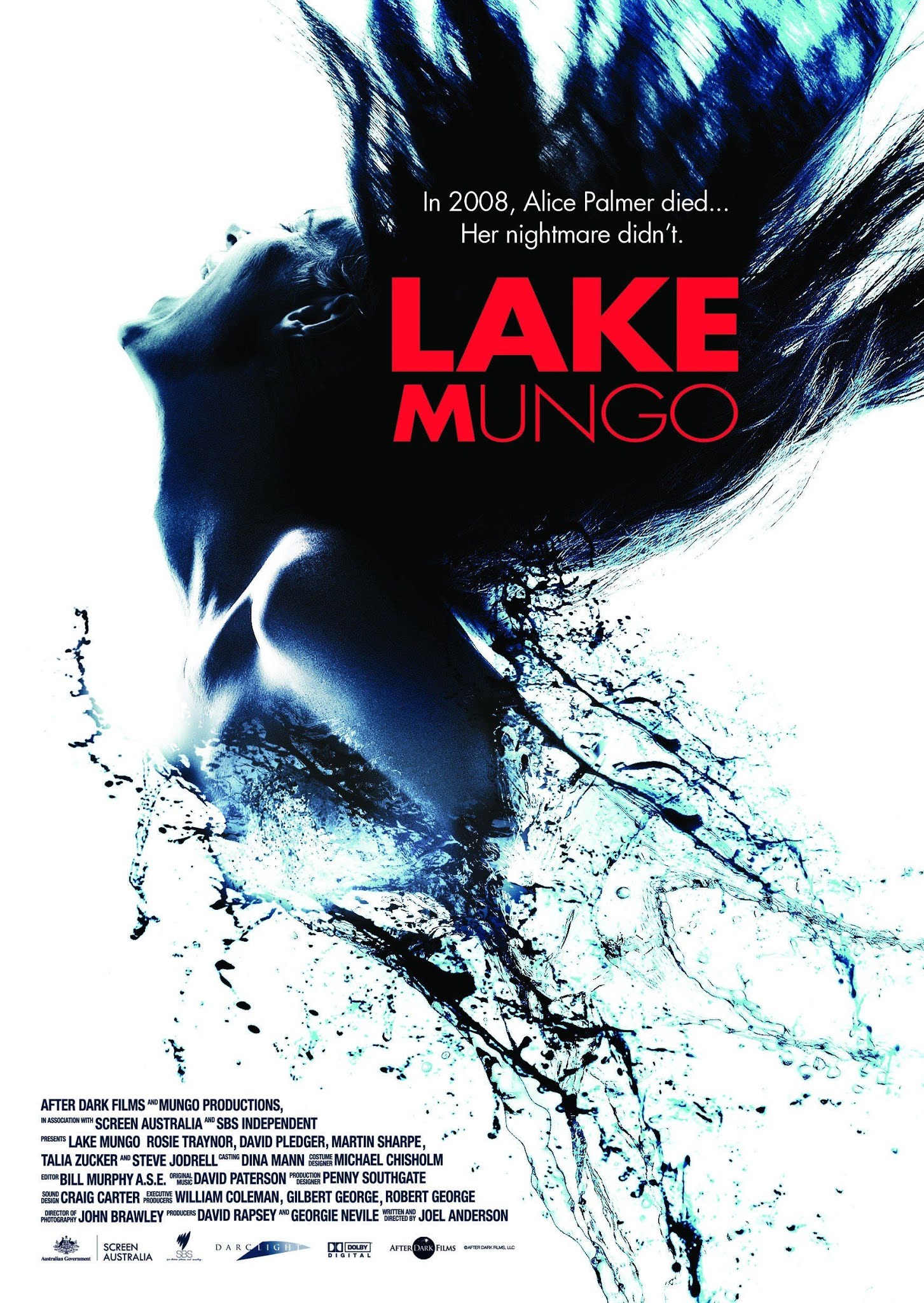
Lake Mungo (2008)
Holy cow. I'm not sure why this isn't mentioned more often in the same breath as David Lynch's 21st century output or
The Blair Witch Project, but alongside those works, this Möbius strip of a movie feels like one of the definitive statements of the haunting, reflexive unreliability of humanity's quest to document itself in at the overlap of digital and analog spaces. It's also bone-chilling, and also heartbreaking. This is almost certainly going to be my favorite new watch of my October horror viewings.
Grade: A
Bloody Mama (1970)
A kind of admirable attempt at a gangster picture totally de-glamorized from any residual
Bonnie and Clyde mythic counter-culture associations. These are some wicked, wicked people trapped in a go-nowhere cycle of violence. But I say it's only "kind of" admirable, because to be completely admirable, it'd have to have been anything but a amateurish collection of disjointed scenes just piling up one after the other without any sense of pacing or character until the shootout. This was sooooooooooo boring.
Grade: C-
Kill, Baby... Kill! (1966)
A fun little Gothic horror movie heavy on the cobwebs and spooky atmosphere and light on the sensible plot or interesting, which is fine by me. Plot should always be subservient to mood in these kinds of stories, and this one delivers that, though I do wish that it would stop explaining its creaky plot so insistently so long as it's going to take as lackadaisical an approach to tying everything together as it is. Just let me vibe, you know? When the movie gets out of its own way, there are some delightful proto-giallo touches, like the way that the creepy estate is bathed in green-tinted light for no apparent reason except that it looked cool—and speaking of the lighting, Wikipedia says that the lighting was an influence on the look of Scorsese's
Last Temptation of Christ, so if that's true, I suppose we have this movie to thank for that exquisite aesthetic. So thanks,
Kill, Baby... Kill! Grade: B
Werewolf of London (1935)
I like some of the individual moments here, like the first transformation scene. But on the whole, there's really not a ton to recommend about the first big Hollywood feature about a werewolf, given the tedious stretches between the good moments, and oddly focused on botany to boot. I almost wish the movie were given over entirely to the batty secondary characters that populate the margins of this movie; I would definitely spend more time with the kooky landlady.
Grade: C
Music
Sufjan Stevens - The Ascension (2020)
Sufjan Stevens has never been an apolitical artist, nor has he even been an exclusively optimistic one, but with
The Ascension, he's really going full-bore into the kind of disillusioned, terrified fervor that right now animates everyone left-of-center in the United States political spectrum.
The Ascension is, with little contest, Sufjan's most embittered, confrontational record, and Sufjan knows it; even if he hadn't declared the album
"bossy and bitchy" in The Atlantic, there's no mistaking an album that closes with a 12-minute song called "America" as anything other than that. The feeling of betrayal is inescapable when at the chorus of that song, Sufjan sings, "Don't do to me what you did to America," and it makes sense; early records like
Michigan,
Illinois, and (to a slightly more opaque degree)
Seven Swans show a Sufjan Stevens preoccupied with a sense of Americana that, while not always innocent, has a kind of romanticism to it: the Midwest suffused with a divine light, an imago dei. But now, over a decade removed from those albums, Sufjan finds those ideals sick and corrupted, perhaps even revealed as total sham."I have lost my patience / Make me an offer I cannot refuse," Sufjan sings on the opening track, a kind of last-ditch ultimatum before launching into this profoundly weary, emotionally grueling album. "There is no time for innocence," the song goes on, as if reflecting on and rebutting the wide-eyed wonder of the "States" albums and the state of our country in general (and I can definitely relate). The obvious companion record to
The Ascension in Sufjan's discography is
The Age of Adz, another anxious double LP positioned as a repudiation of Sufjan's past work by way of heavily electronic production. But unlike
Adz and its glitchy, noisy beats,
The Ascension is much more musically straightforward, opting for smoother and more immediate beats and more melodically accessible song craft. I know people who have found this change of pace from
Adz's production to be refreshing, and I'm happy for them, but for me, the more pop-oriented sounds of this album are a big part of why I don't think
The Ascension is nearly as good as
The Age of Adz—not because I have anything against pop music, but on specifically this album, I just don't think Sufjan finds a good way to sustain this sound over the course of 80 minutes.
Adz is a long album, but the relentlessly busy, often thorny nature of the instrumentation is a lot better at finding interesting permutations over the course of the record's lengthy run than the beats on
The Ascension (a longer album than
Adz, but only barely), which get a little thin and redundant over the procession of mid-tempo club-music downers. The stretch of the album from "Landslide" to "Sugar" is pretty weak, honestly, not because the individual songs are bad (though I really don't care too much for "Sugar," the most obvious and uninteresting song Sufjan has made in quite a while) but the sequencing of them one after the other after the other makes their individual moments kind of collapse into each other as a monochromatic sludge of samey music. I'm not at all sure why some of these songs made the cut when a song as good as "My Rajneesh," the B-side to the single "America" that Sufjan dropped a couple months before the full album itself, was left out. I'd happily replace "Sugar" and one or two other songs on here to make room for "My Rajneesh," not only because it would give the record some sonic diversity in its third quarter but also because it would have some fruitful interplay with
The Ascension's deconstruction of Americana and Sufjan's older releases—the focus on a personally transcendent but ultimately hallucinatory and even dangerous cult in the Pacific Northwest is an intriguing mirror to Sufjan's sentiments on the album proper of having been mislead and lied to by our national ideology and also having participated himself in perpetrating the fiction of the American myth. Like "My Rajneesh," the best moments on
The Ascension render broader sociological observations through personal and spiritual anguish. Sacramental imagery abounds, marriage and Eucharist and death twisted and maybe even blasphemed by the rituals of nationalism and personal pursuits: "I have broke your bread / For a splendor of machinery," Sufjan confesses on "America"—"I have worshipped, I have cried / I have put my hands / In the wounds on your side / I have tasted of your blood / I have choked on the waters." Elsewhere on the record, Sufjan is even more explicit: "Is all for nothing? Is it all part of a plan?" he asks, Job-like on "Ativan," and on "Tell Me You Love Me," it's simply, "I've lost my faith in everything." As with the best of Sufjan's work, it's never quite clear where he is talking to a lover and where he is talking to God and where he is talking to himself, and
The Ascension adds the component of conflating a national identity with those things, too. It's often be sublime, especially when Sufjan takes all of this thematic complexity and turns it completely inward, as he does on the title track, hands-down the best song on the record and one of the greatest songs of Sufjan's career. Here, the slick production fades to negative space that allows Stevens's voice to fill a void, confessing and prophecying like nowhere else in his career: "And now it frightens me / The dreams that I possess / To think I was acting like a believer / When I was just angry and depressed," he says, only to invert this despair a couple verses later to declare, "Now it strengthens me / To know the truth at last / That everything comes from consummation / And everything comes with consequence / And I did it all with exultation / While you did it all with hopelessness." Sufjan Stevens has written a lot of good lyrics over his decades as a songwriter, but I don't know if he's ever written something as piercingly true about a specific moment in history as he does in that song. At its worst,
The Ascension merely dilutes that insight, but at its best, the record becomes luminous.
Grade: B